guides
Too Much Screen Time? Signs in Young Children and What Helps
The signs of too much screen time in young children, from poor sleep to switch-off meltdowns, what the guidance says by age, and the swaps that help.
The clearest signs of too much screen time in young children are poor sleep, big meltdowns when the screen goes off, less interest in active or imaginative play, irritability and trouble focusing. They say less about the number of hours than about what screens push out: sleep, movement and time together. Small, steady swaps help more than a ban.
You hand over the tablet for five minutes of peace, and now it's an hour later and taking it back sparks a meltdown. Sound familiar?
Most parents worry they've let screens creep in too far. The good news is that the numbers are simpler than the headlines suggest, and the signs to watch for are practical, not shameful.
This guide walks you through the real signs of too much screen time in young children, what the numbers actually are by age, and the simple swaps that help fill the gap.
What are the signs of too much screen time in young children?
The clearest signs are less about hours and more about what screens are pushing out. Watch for disrupted or poor sleep, big meltdowns when screens go off, less interest in active or imaginative play, irritability, and trouble focusing. In short, screens crowding out movement, rest and connection.
The children's mental health charity YoungMinds suggests talking about how to balance screen time with offline rest, connection and movement. Two questions help here. First, is screen time crowding out the things that matter, like family time, sleep and movement? Second, has a screen become your child's main way to calm down or wind down before sleep?
That second point matters. If a screen is the only thing that soothes your child, they may need other ways to self-soothe.
Sleep that's harder to settle
Poor or broken sleep is one of the most common signs. The NHS advises not letting children look at tablets, phones or laptops in the 30 to 60 minutes before bed, because the light from screens can interfere with sleep.
If bedtime has become a battle, late screens are worth looking at first. Our guide to screen time and sleep explains why, and what a screen-free last hour can look like.
Meltdowns when the screen goes off
Big tantrums when it's time to switch off are common, and they're a signal rather than a character flaw. When a screen is doing the emotional regulation, your child hasn't yet built other calming skills. Our guide to helping children switch between activities covers the moment the screen goes off.
Less interest in real-world play
If your child used to build, draw or run around and now reaches straight for a device, that shift is worth noting. It often means screens are displacing the active, imaginative play young children need.
How much screen time is actually too much, by age?
It depends on age. The UK government's Best Start in Life guidance says under-2s should avoid screens except shared family activities, such as a video call, and that for children aged 2 to 5 you should "try to keep it to 1 hour a day. Less if possible." The WHO and the NHS set the same ceiling for 2 to 4-year-olds.
Here's how the main authorities line up.
- Under 1, UK government: Avoid, except shared activities such as video calls; WHO: Screen time not recommended; NHS: Not needed under age 2
- 1 year, UK government: Avoid, except shared activities such as video calls; WHO: Sedentary screen time not recommended; NHS: Not needed under age 2
- 2 years, UK government: Try to keep it to 1 hour a day, less if possible; WHO: No more than 1 hour (less is better); NHS: Less than 1 hour a day
- 3 to 4 years, UK government: Try to keep it to 1 hour a day, less if possible; WHO: No more than 1 hour (less is better); NHS: Less than 1 hour a day
- 5 years, UK government: Try to keep it to 1 hour a day, less if possible; WHO: Not covered; NHS: Not covered
Sources: UK government guidance, WHO guidance and NHS screen time advice. For a fuller breakdown, see our screen time by age guide.
From age 6, UK health guidance doesn't set a single overall cut-off. NHS advice is to agree clear boundaries together as a family, such as screen-free mealtimes, and to find a balance between screens and other activities.
So if you've read alarming claims about a fixed "toxic dose", relax a little. That framing has been overstated.
Are the effects of screen time on children really harmful?
The honest answer is that much of the concern is about displacement, though UK guidance also says fast-paced, social media-style videos may affect how young children learn to concentrate, so what they watch matters too. The NHS frames the risk around inactivity, saying under-5s should not be inactive for long periods and that long stretches of sitting are not good for a child's health and development.
In other words, the worry is what screens replace. Young children are built to move, and too much sedentary time is a big part of the issue.
That's why the "signs" above are best read as symptoms of displaced sleep, movement and attention, rather than proof that a device is directly harming your child.
When to get proper advice
UK guidance links a large amount of screen time with effects on development, including language, but one sign on its own is not a diagnosis, so try not to jump there. If you notice your child losing skills they had, or not meeting milestones, that's the moment to speak to your GP or health visitor.
The NHS's early learning and development guide is a helpful reference for what to expect at each age through the early years. How a child plays, learns, speaks, acts and moves all offer clues, and acting early is always sensible.
What actually helps? Movement, sleep and connection
The goal isn't really "less screen", it's more of what screens crowd out. Aim for daily movement, protected sleep, and screen-free wind-down time. Fill the gap with active, playful, hands-on things your child genuinely enjoys, and the screen loses its grip naturally.
The NHS recommends that toddlers and pre-schoolers get at least 180 minutes (3 hours) of activity spread across the day. From age 5, that shifts to an average of at least 60 minutes of moderate or vigorous activity a day across the week.
That sounds like a lot, but it's just play. Here are the swaps that make the biggest difference.
Protect the hour before bed
Make the hour before sleep a screen-free zone. Swap the tablet for a bath, a story, or a few slow stretches. A calm, predictable routine does more for sleep than any app.
Give your child a non-screen way to calm down
If screens are your child's off-switch, offer a different one. Slow, playful movement like children's yoga gives them a way to settle their own bodies, which is exactly the kind of self-soothing skill that helps once a screen is no longer doing the calming.
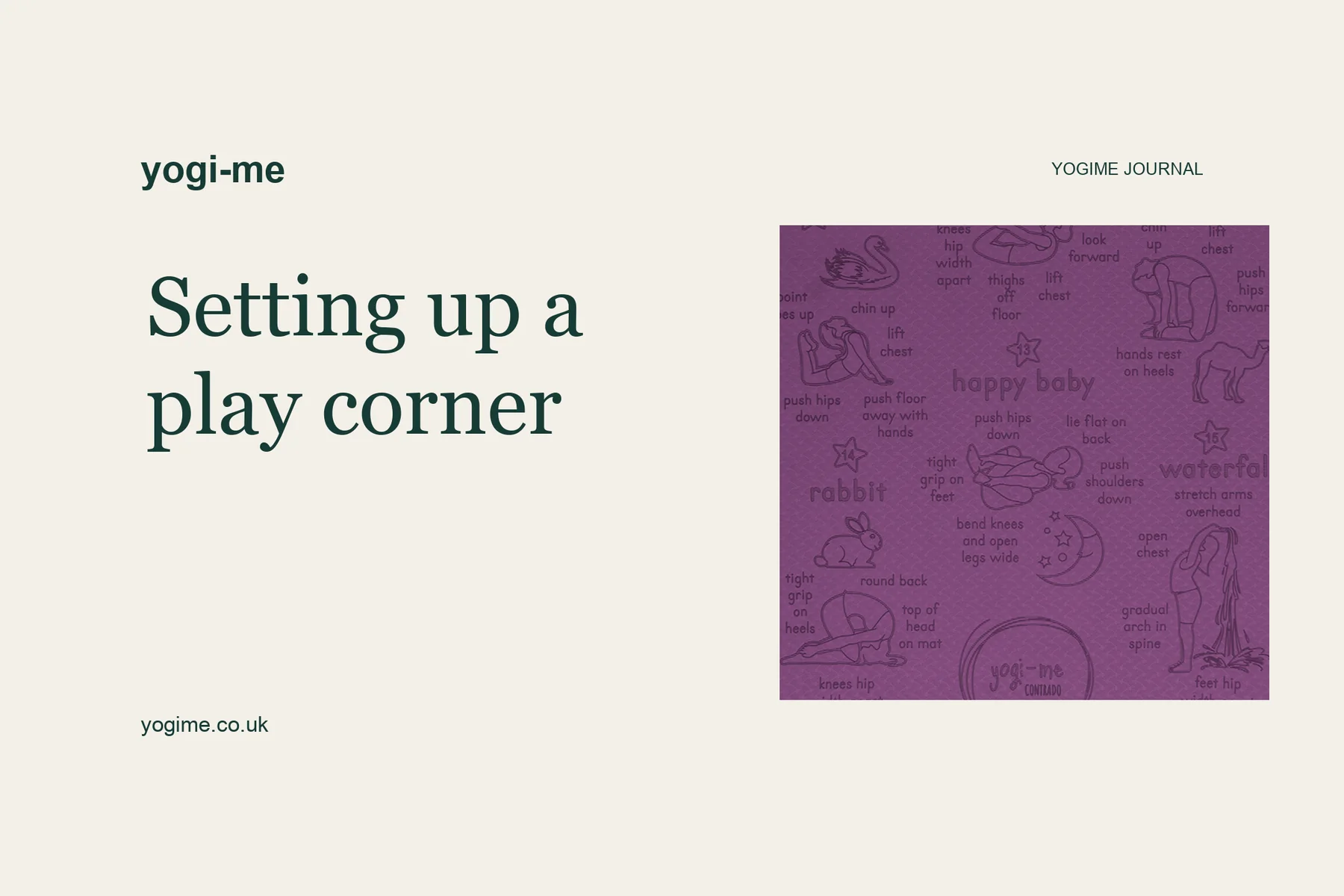
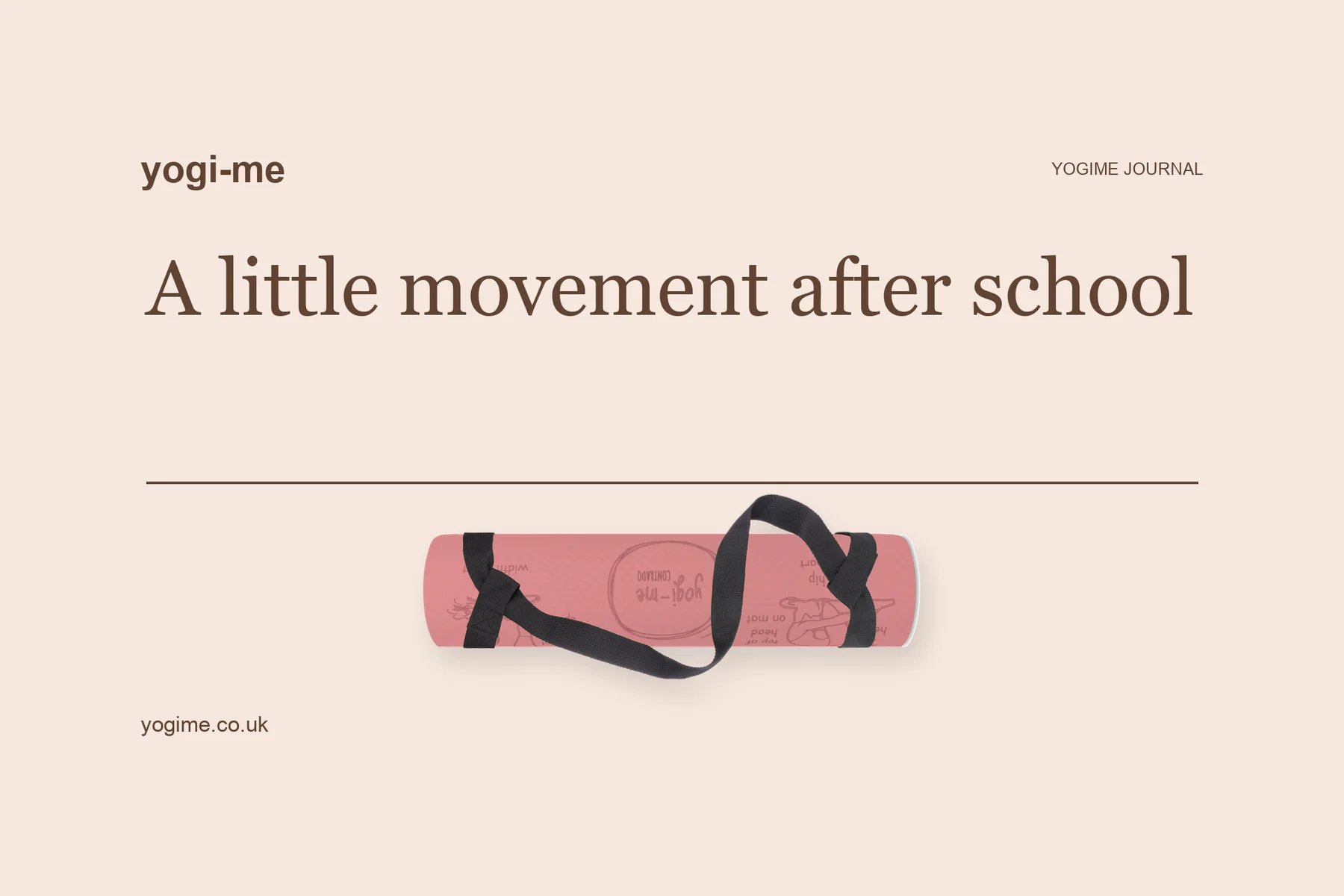
Try a few gentle animal poses together. Our five animal poses for kids is a friendly place to start, and a marked mat like the Yogi-Me mat, with 15 numbered poses marked into it, turns wind-down into a game your child asks for.
Build habits that stick
One good day won't undo screen habits, but small, consistent swaps will. Our guide to screen-free habits that stick has practical, low-effort ideas for making movement the easy default. For the upside to aim at, read about the benefits of less screen time.
Frequently asked questions
Is it too late if my child already has a screen habit?
No. Habits shift with small, consistent changes rather than a single hard cut. Start by protecting the hour before bed and adding one active swap a day. Children adjust surprisingly quickly when the alternative is fun rather than a punishment.
My toddler melts down when I turn the tablet off. Is that normal?
Yes, it's very common. Big reactions usually mean the screen is doing the calming for your child. Giving plenty of warning before switching off, and offering a hands-on activity straight after, helps. Over time, a non-screen calming routine like gentle yoga gives them their own off-switch.
How much activity does my young child actually need?
The NHS suggests at least 180 minutes (3 hours) a day for toddlers and pre-schoolers, spread across the day, and an average of at least 60 minutes a day once children are 5 and older. It doesn't need to be structured exercise. Free play, dancing and movement games all count.
Should I worry that screens are causing developmental delays?
UK guidance links a large amount of screen time with effects on development, including language, but one sign on its own is not a diagnosis, so try not to assume the worst. If your child is losing skills or missing milestones, speak to your GP or health visitor. The NHS's early learning and development guide is a useful reference for what to expect at each age.
Ready to swap a screen for a stretch?
If you'd like a simple, screen-free way to help your child move, sleep and settle better, a Yogi-Me mat gives them 15 numbered poses to explore on their own. It turns wind-down into play, not a battle. Have a browse of the full Yogi-Me shop and find the mat your child will want to roll out every day.
Sources
- UK government, Best Start in Life: Screen time for under-5s
- NHS - Physical activity guidelines for children (under 5 years)
- NHS - Physical activity guidelines for children and young people
- NHS - Sleep and young children
- NHS - Screen time advice for young children
- NHS - Your baby's health and development reviews
- NHS - Early learning and development (Best Start in Life)
- WHO - To grow up healthy, children need to sit less and play more
- YoungMinds - Social media: mental health advice for parents