practice
Five Animal Yoga Poses for Kids to Calm a Busy Mind
Five animal yoga poses for kids, cat, flamingo, turtle, lion and starfish, with simple steps and a five-minute story to calm a busy little mind.
Five animal yoga poses that calm a busy mind are the cat, flamingo, turtle, lion and starfish. Do them in that order: a stretch, a wobbly balance, a small tuck, a big roar to let feelings out, then a still, wide starfish. Each takes about a minute, so the whole set fits into five minutes before bed or after a wild afternoon.
Children do not need a yoga class to feel the benefits of moving and breathing, they just need it to feel like play. Animal poses are perfect because they are silly, memorable and easy to copy.
What are animal yoga poses?
Animal yoga poses are simple yoga shapes named after the animal they look like, so a child can remember them by picturing the animal and making its noise. A cat arches its back, a flamingo stands on one leg, a lion roars.
That naming does the teaching for you. "Be a grumpy cat" lands with a four-year-old in a way that "round your spine" never will.
Why do animal poses help children calm down?
They pair movement with slow breathing, and both help. Active play counts towards the 180 minutes a day the NHS recommends for under-5s and the hour a day for 5 to 18-year-olds, and the UK Chief Medical Officers' early years guidelines say activity encourages movement and co-ordination and improves sleep.
The calm comes from the breath. YoungMinds suggests breathing out for one or two counts longer than you breathe in, because it helps the body relax, and Anna Freud lists slowing down your breathing among the simplest relaxation techniques. Every pose below ends on a long out-breath.
The five poses, step by step
Go in this order. It runs from moving to still, which is what brings a busy child down rather than winding them up.
1. Cat
Start with the cat: on hands and knees, arch up like a grumpy cat, then dip down.
- Hands under shoulders, knees under hips.
- Breathe out and round your back up high, head dropping.
- Breathe in and let your tummy dip, chin lifting. Add a "meow" each time.
Do it four or five times, slowly. It loosens a back that has been hunched over a table or a screen.
2. Flamingo
Then the flamingo: stand tall and balance on one leg (wobbling is allowed and encouraged).
- Stand on one foot, and tuck the other up behind or rest it on the ankle.
- Hold your arms out like wings, or hands together at your chest.
- Count five slow breaths, then swap legs.
Balancing asks for a bit of concentration, which is exactly what pulls a scattered mind into the room.
3. Turtle
Move into the turtle: fold forward and tuck in small and quiet.
- Kneel, sit back on your heels and fold forward until your forehead rests on the floor.
- Tuck your arms in by your sides, like a turtle in its shell.
- Breathe slowly, and feel your back rise and fall.
This is the quietest pose in the set, a little hiding place for big feelings.
4. Lion
Then the lion: take a big breath and roar it all out, brilliant for shaking off a tantrum.
- Kneel up tall with your hands on your knees.
- Breathe in through your nose.
- Open your mouth wide, stick out your tongue and roar the breath out. Do it three times.
Coming after the turtle, the lion lets out whatever is left. It's also the pose most children ask to do again.
5. Starfish
Finish with the starfish: lie on your back, stretch arms and legs wide, and shine.
- Spread out on the floor like a starfish on the sand.
- Let your arms and legs go heavy.
- Take five slow breaths, making each out-breath a little longer than the in-breath.
Five poses, five minutes, and a much calmer little person at the end of it.
How do you turn the poses into a story?
Tell it as a walk. "We're off to the pond. Here's a cat stretching on the wall. Here's a flamingo standing in the water. A turtle is hiding under the reeds. A lion comes down to drink and roars. Then we lie on the beach like starfish and listen to the sea."
Children remember the story, so the next time they will lead it. Swap animals once they know the shape of it: our list of easy yoga poses for kids has a cobra, a butterfly and more, and our yoga poses for preschoolers are pitched at the under-5s.
Which pose for which moment?
- Stiff after sitting, Pose: Cat; Why it helps: Moves the whole back gently
- Can't concentrate, Pose: Flamingo; Why it helps: Balancing needs attention
- Upset or overwhelmed, Pose: Turtle; Why it helps: Small, quiet and safe
- Cross or frustrated, Pose: Lion; Why it helps: Lets the feeling out with the breath
- Bedtime, Pose: Starfish; Why it helps: Still, heavy and slow breathing
For a fuller wind-down, put the turtle and starfish at the end of our bedtime yoga routine.
Are animal poses safe for young children?
Yes, kept gentle. Never push a child into a shape, stay close during the flamingo in case of a topple, and clear hard edges from the space first. If your child has a health condition that affects movement, check with your GP or health visitor before starting anything new.
Frequently asked questions
What are animal yoga poses for kids?
Animal yoga poses are simple yoga shapes named after the animal they look like, such as cat, flamingo, turtle, lion and starfish. Children copy the shape and make the animal's sound, which makes the poses easy to remember and much more fun than following instructions. They need no equipment and very little space.
What age can children do animal yoga poses?
From about two or three, as soon as a child enjoys copying you. Toddlers will manage the cat, lion and starfish with plenty of noise. Balances like the flamingo get steadier from about four or five, so expect a lot of wobbling before then, and treat the wobbling as part of the game.
How long should we hold each pose?
For young children, a few seconds to five slow breaths is plenty. The whole sequence of five poses takes about five minutes. Stop while your child is still enjoying it, because a short, happy session is the one they will ask to do again tomorrow.
Can animal poses help my child calm down?
They can help, especially when each pose ends with a long, slow out-breath, which YoungMinds says helps the body relax. They are a calming habit, not a treatment, so if your child's worries or anger are affecting everyday life, talk to your GP or health visitor.
Keep the poses in front of them
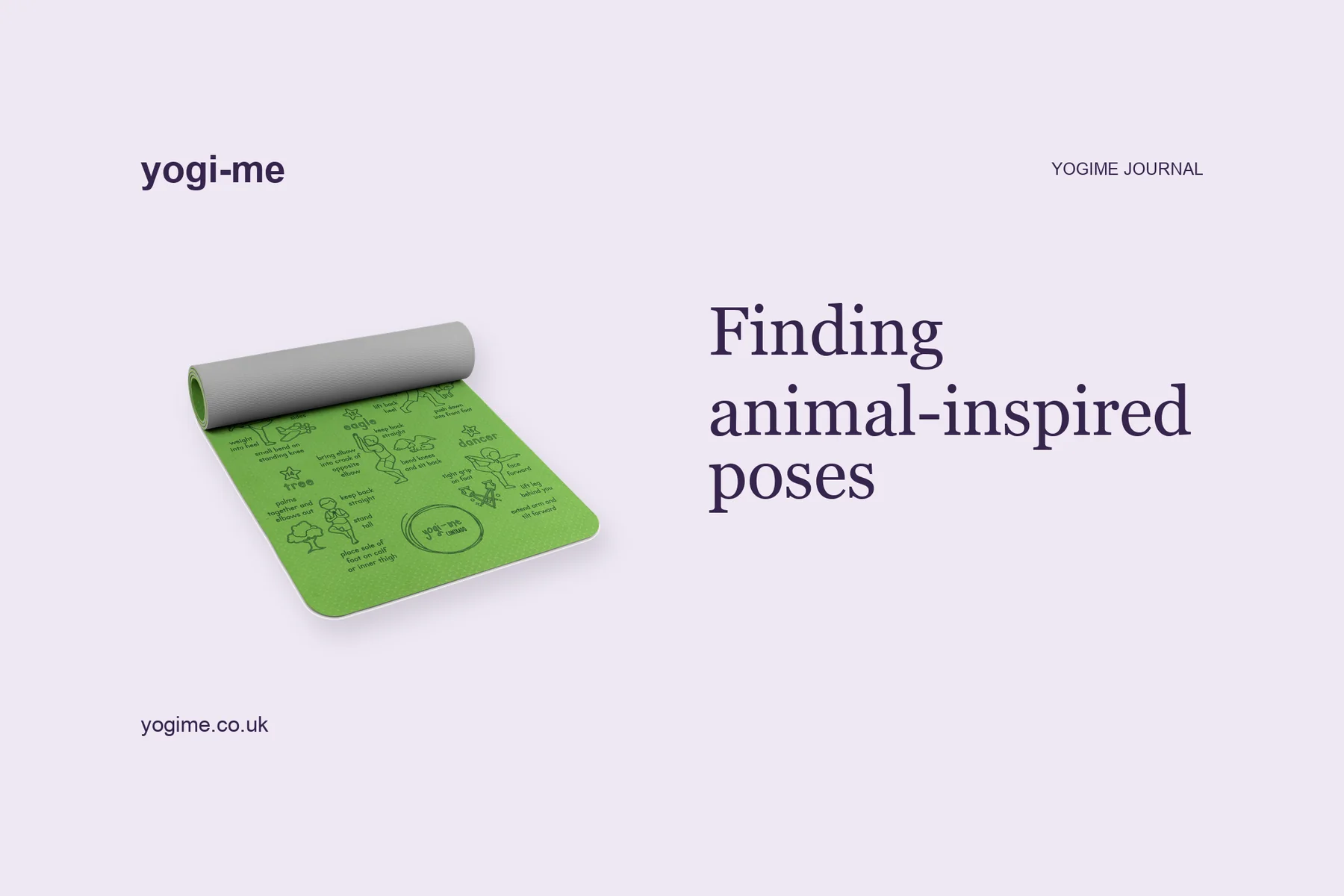
A mat gives the five minutes a place to happen. Our kids' yoga mat has 15 numbered poses marked into it, the cat among them, so once your child knows these five there are plenty more to learn. Our guide to the poses on our mats walks through every one.