
guides
How to Help Children with Transitions Between Activities
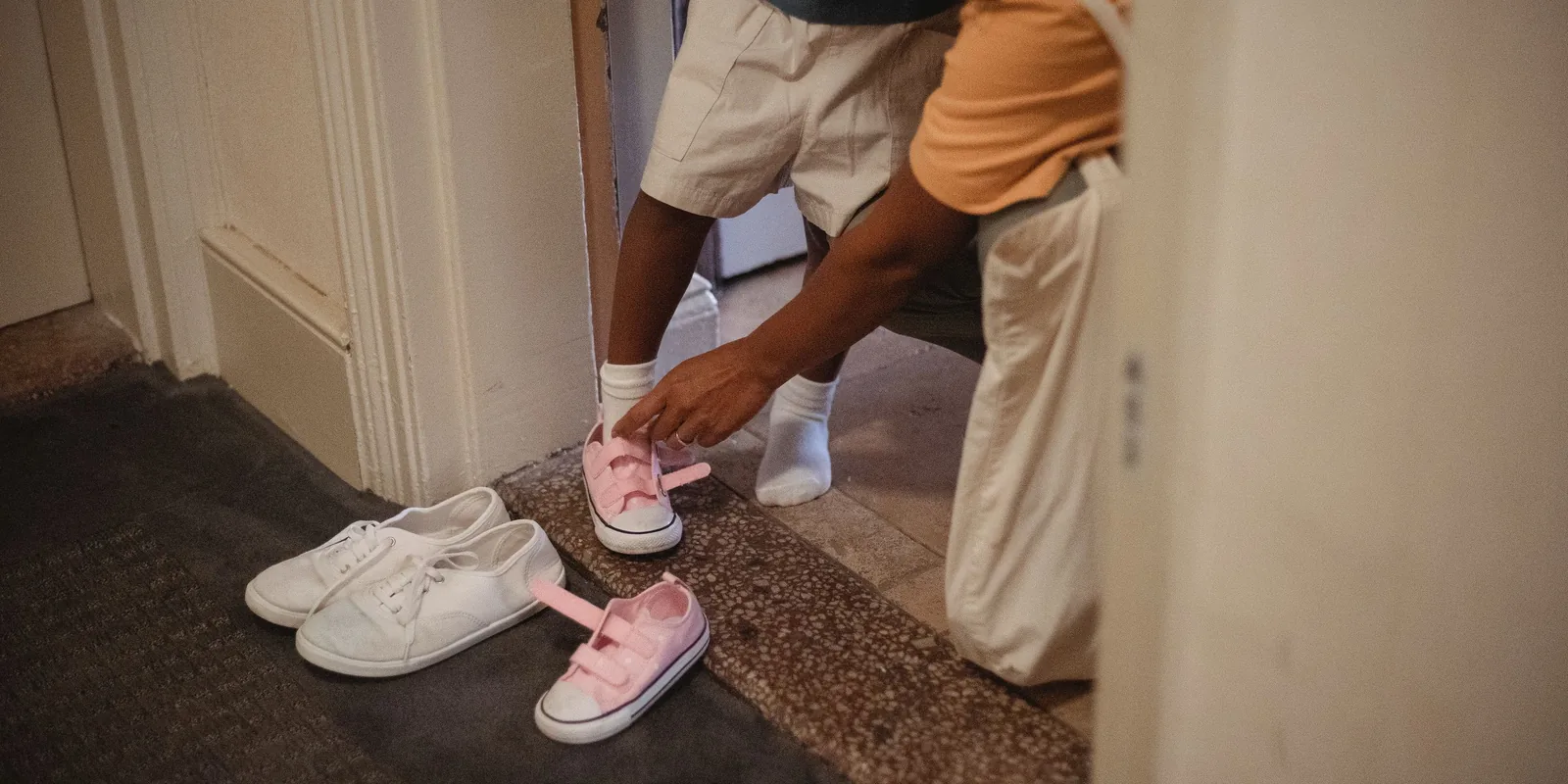
Leaving the park, switching off the TV, getting in the bath: how to help children with transitions, with UK guidance and a 30-second reset they lead.
To help children with transitions, get their attention first, give a warning they can count, say what comes next, and give their body something to do on the way. Finding it hard is expected at this age. Stopping something you're enjoying is a skill still being learned, and the same steps every time make it easier.
What are transitions for children?
A transition is any moment a child has to stop one thing and start another, like switching off the TV, leaving the park or getting into the bath. The big ones, like starting nursery or school, use the same skills on a larger scale. Most of the friction in a day happens at the small ones.
Everyday transitions are tidying up for tea, switching off a screen, leaving the park, getting in (and out of) the bath and shoes on for the school run. Big ones include a new baby, moving house, a new childminder and starting nursery or school.
The NHS's page on dealing with child behaviour problems says any change in a child's life can be difficult for them, listing a new baby, moving house, a change of childminder and starting playgroup, "or something much smaller". The something much smaller is most of this page.
What does the UK guidance say about transitions?
It says three things: get the child's attention before you ask them to switch, keep routines predictable, and have every adult respond in the same way. None of it is complicated.
The Department for Education. Its Development Matters guidance for the early years asks: "By around 3 years old, can the child shift from one task to another if you get their attention?" Its next line is the practical bit: "Using the child's name can help". It also says children need "consistent routines and plenty of time so that play is not constantly interrupted", and suggests "consistent and predictable routines, with flexibility when needed".
The NHS. The same NHS behaviour page says "Children need consistency", and that it's important everyone close to your child deals with their behaviour in the same way. It suggests explaining why you want your child to do something, and praising specifically.
YoungMinds. Its page on transitions and times of change suggests keeping familiar routines going where you can when other things are changing.
Why "five more minutes" shouted from the kitchen isn't a warning
A warning only works if it arrives. A child deep in play often hasn't heard it, which is why the Department for Education's checkpoint is worded "if you get their attention". Shouting "five more minutes" from another room is a warning to yourself.
So go to them. Get down to their level, use their name, and wait until they look at you. Then give the warning.
Make the warning something they can count or see, not a clock time: "two more goes down the slide", "when this song ends", "last page". That's practical advice rather than a claim about how young children understand time. A countable end is simply easier to agree with, and harder to argue about when it arrives.
How can I help my child transition between activities?
Use the same five steps every time: get their attention, give a warning they can count, say what comes next, give their body a job on the way, and praise the switch. That's how to help children with transitions at home, and it works the same at the park gate, the TV and the bath.
- Get their attention. Go to them, use their name, wait for eyes.
- A warning they can count. "Two more goes, then home."
- Say what comes next. First this, then that: "First bath, then two stories."
- Give their body a job. Carry the towel, frog-hop to the bathroom, or do the 30-second reset below.
- Praise the switch. Specifically, as the NHS suggests: "You came off the slide as soon as I asked. Thank you."
Here's what that sounds like at the five moments that cause most of the trouble. The words are illustrative. Use your own, and use the same ones every time.
Leaving the park. Say their name, then: "Look at me. Two more goes on the slide, then we're walking home to make pancakes." Count the goes out loud together.
Switching off the TV. "When this episode ends, the TV goes off and it's Lego time." Have the Lego out before the credits. If the switch-off often ends in tears, see our guide on when switching off the TV ends in tears.
Getting in the bath. "Last page of the book, then bath. You carry the towel." A job makes the walk upstairs part of the activity rather than the end of one. If evenings in general are a battle, a calmer bedtime routine puts every step in the same order.
Shoes on for the school run. "Breakfast finished? First shoes, then you can open the front door." A small, specific next thing beats "we're late".
Leaving Grandma's. "Two more hugs, then coats." Use the same words and the same reset at Grandma's as at home. The NHS says everyone close to a child should respond in the same way, and that includes the grandparents.
What are good transition activities for preschoolers?
Good transition activities for preschoolers are short, low-prep and the same every time, so the activity itself becomes the signal that one thing is ending. Six that work at home:
- A tidy-up song that only ever plays at tidy-up time.
- A countdown out loud together, from ten to zero.
- Animal moves to the next room, such as a frog hop to the bathroom.
- A job to carry: the towel, the book bag, the car keys.
- A transition object: "Teddy can come and watch the bath."
- The 30-second reset, which a child can lead themselves.
The reset is three shapes, about ten seconds each:
- Mountain: stand tall and still, and take three slow breaths.
- Rag doll: bend the knees, flop forward and shake the arms loose.
- Mountain again: stand tall, and your child says out loud what happens next.
That's 10 + 10 + 10 = 30 seconds. A frog hop to the next room is optional. The reset isn't a way to calm a child down. It's a signal that one thing has finished and the next is starting, and it's one your child can run themselves. If your child likes having the pictures to follow, a mat with mountain, rag doll and frog marked in lets them run the reset without you demonstrating.
How do you support children with big transitions, like starting nursery or school?
Use the same skills, with a longer run-up. Talk about the change in advance, keep the rest of the routine steady, and visit the new place if you can. To support children with transitions this size, bring the everyday words and signals you already use.
In England, most children start reception full-time in the September after their fourth birthday, according to GOV.UK. In nurseries and reception classes, staff usually plan their own transition activities for the EYFS, and Development Matters describes young children learning to "find ways of managing transitions, for example, from their parent to their key person".
So tell the key person or teacher the words and the reset you use at home. The cue then travels with your child.
When is a hard switch worth raising?
Speak to someone if switching between activities stays very hard after weeks of the same steps, gets worse, or starts to affect everyday life. Start with your child's key person or class teacher, who sees them at the other big transitions of the day.
YoungMinds suggests contacting your child's school or GP if you need more help. For under-5s, the NHS suggests talking to your health visitor, and points to Family Lives' free parents' helpline on 0808 800 2222. If you're seriously concerned about your child's behaviour, the NHS says to talk to your health visitor or GP. For the big feelings that can come with a switch, our guide to co-regulation explains how your calm helps.
Frequently asked questions
Is it normal for a 3 year old to struggle with transitions?
Yes, it's a skill still being learned at that age. The Department for Education's Development Matters guidance asks whether, by around 3 years old, a child can shift from one task to another if you get their attention. So a three-year-old who needs your attention before they can stop and switch is doing what the guidance expects.
What are some examples of transitions for children?
Everyday transitions include tidying up, switching off a screen, leaving the park, getting in the bath, coming to the table and getting out of the door. Big transitions include a new baby, moving house, a new childminder and starting nursery or school. The NHS notes that any change in a child's life can be difficult for them.
What should I say instead of five more minutes?
Give a warning your child can count or see, rather than a clock time: two more goes down the slide, when this song ends, last page. Say it once you have their attention, close to them and using their name. Then say what comes next, so the end of one thing is the start of another.
Should I use a reward to get my child to stop playing?
Praise works better than a bribe. The NHS says to be specific when you praise, giving the example 'Well done for putting your toys back in the box when I asked you to', and not to give a reward before your child has done what they were asked. That's a bribe, not a reward.
One signal, in every house
If the reset catches on, the poses are marked into our full range of mats, so the same signal works wherever the mat is rolled out. Each is £34.99 with free UK delivery and 30-day returns.
The NHS says consistency across the adults matters, so the same words and the same reset at Grandma's help as much as at home. The mat rolls up with a carry strap, and there's 10 per cent off two or more: one for home, one for Grandma's. If the hardest switch of all is the one at the school gate, see after-school restraint collapse.