guides
The Real Benefits of Less Screen Time for Children
The benefits of reducing screen time for children: better sleep, more movement and calmer evenings, what UK guidance says, and swaps to start tonight.
The main benefits of reducing screen time are better sleep, more movement and more time to play and talk. It is less about the screen itself than what it crowds out: the NHS wants 5 to 18-year-olds active for an average of at least 60 minutes a day and toddlers and pre-schoolers for at least 180 minutes across the day. Less screen time makes room for both.
You already know your child is on a screen more than you would like. The guilt is real, and so is the tantrum when the tablet goes away.
Here is the reassuring part. The goal is not a total ban. Official guidance does set a daily limit for under-5s, but at every age it cares just as much about what screens push out of the day.
The better question is simpler: what is the screen crowding out? Almost four in ten 8 to 17-year-olds say they think they spend too much time on screens, according to Ofcom's 2025/26 report. This guide is about what less screen time gives back.
What are the benefits of reducing screen time for children?
Reducing screen time gives children back the hours they need to grow: movement, sleep, play and family connection. Rather than a strict ban, the benefit comes from stopping screens crowding out an average of at least 60 minutes of daily activity, decent sleep and real-world time together.
The NHS says children aged 5 to 18 should aim for an average of at least 60 minutes of moderate or vigorous activity a day and break up long periods of sitting. That target is easy to miss when a screen fills the gap.
Government guidance for parents puts it well. Its expert panel found that long periods on screens alone can get in the way of sleep, physical activity, creative play and time with parents.
How does less screen time help children sleep?
Less screen time, especially before bed, protects your child's sleep. Good sleep supports how children learn, focus and regulate their mood. WHO guidance for the early years puts 3 to 4 year-olds at around 10 to 13 hours of sleep over a day, including naps. Screens in the hour before bed can quietly eat into that.
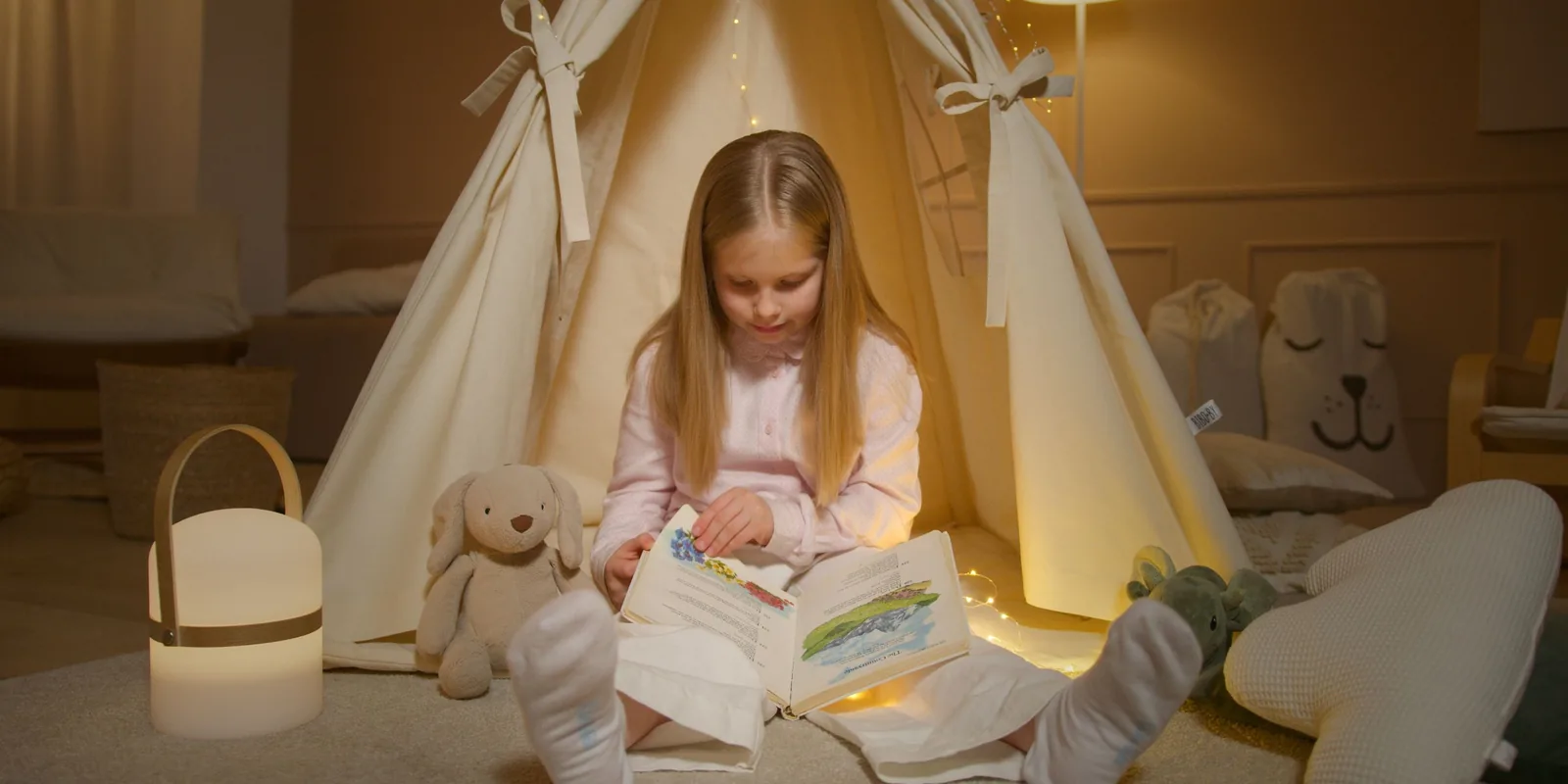
This is the single change you can make tonight. YoungMinds suggests keeping devices out of bedrooms and having no screens for a period before bed to protect sleep.
A calm, screen-free wind-down works far better than a bright display. A few slow animal poses and some quiet breathing on the bedroom floor make a gentle bridge into sleep.
Can cutting screen time improve children's mood and behaviour?
It may help, though the evidence shows a link rather than proof. YoungMinds says being online can sometimes heighten feelings of anxiety, insecurity or low mood. Freeing up that time for movement and connection gives children calmer, more grounded alternatives.
Government guidance echoes this. When screen time crowds out sleep, physical activity and time with family, it gets in the way of the things children need to thrive. So the fix is rarely about the screen alone. It is about what fills the space instead. If you'd like to test it in one go, here's how to run a screen-free week with your kids.
Physical, playful movement is one of the most reliable answers, which is part of the wider benefits of yoga for children. If you are not sure whether screens are crowding things out in your house, our list of signs of too much screen time is a useful check.
What should young children do instead of screens?
For under-5s the guidance is clear: no screens under 2 except shared ones such as video calls, no more than an hour a day from 2 to 5, and plenty of movement. The NHS says toddlers and pre-schoolers should be physically active for at least 180 minutes across the day. The WHO does not recommend screen time for babies or sedentary screen time for one-year-olds, and advises no more than an hour for 2 to 4 year-olds.
That sounds like a lot of activity to fill. In practice it is floor-based play, crawling, dancing, stretching and simple poses, most of which toddlers love anyway.
Here is how the main UK and international guidance lines up by age.
- Under 2, Screen time guidance: Avoid, except shared activities such as video calls (UK government). Sedentary screen time not recommended (WHO); Daily physical activity: Active throughout the day under 1, then at least 180 minutes a day from age 1 (NHS); Sleep: Enough to support development
- 2 to 5, Screen time guidance: Try to keep it to 1 hour a day, less if possible (UK government). No more than 1 hour, less is better, for 2 to 4 (WHO); Daily physical activity: At least 180 minutes up to age 4, then an average of at least 60 minutes a day from 5 (NHS); Sleep: Around 10 to 13 hours over a day for 3 to 4 (WHO)
- 6 to 12, Screen time guidance: No UK hourly limit. Keep screens from crowding out sleep, activity and family time; Daily physical activity: An average of at least 60 minutes a day (NHS); Sleep: Enough for a consistent, rested routine
For a fuller breakdown, see our screen time by age guide, and for the practical side, our step-by-step guide to reducing screen time for kids.
Frequently asked questions
Is a total screen ban the best approach?
Probably not. The government's guidance for under-5s does suggest limits, such as no more than an hour a day for 2 to 5-year-olds, and it also stresses that screens shouldn't crowd out sleep, play, activity and family time. Balance and good habits beat a ban that nobody can keep.
How much screen time is too much for a 4-year-old?
The WHO recommends no more than one hour of sedentary screen time a day for 2 to 4-year-olds, and less is better. UK government guidance for 2 to 5-year-olds also says no more than an hour. Pair that with the NHS target of at least 180 minutes of activity spread through the day.
What is one change I can make tonight?
Move devices out of the bedroom and add a screen-free wind-down before sleep. YoungMinds recommends this to protect sleep, and it is an easy first step that most families can keep up. A few slow stretches or a story in the last hour before bed gives your child something to do instead of a screen.
Does less screen time really improve behaviour?
Government guidance says screen time that crowds out sleep, physical activity and time with parents can get in the way of healthy development. So less screen time helps mainly by making room for the things that support mood, focus and calm. If behaviour worries you, talk to your GP or health visitor.
Bring calm and movement back in
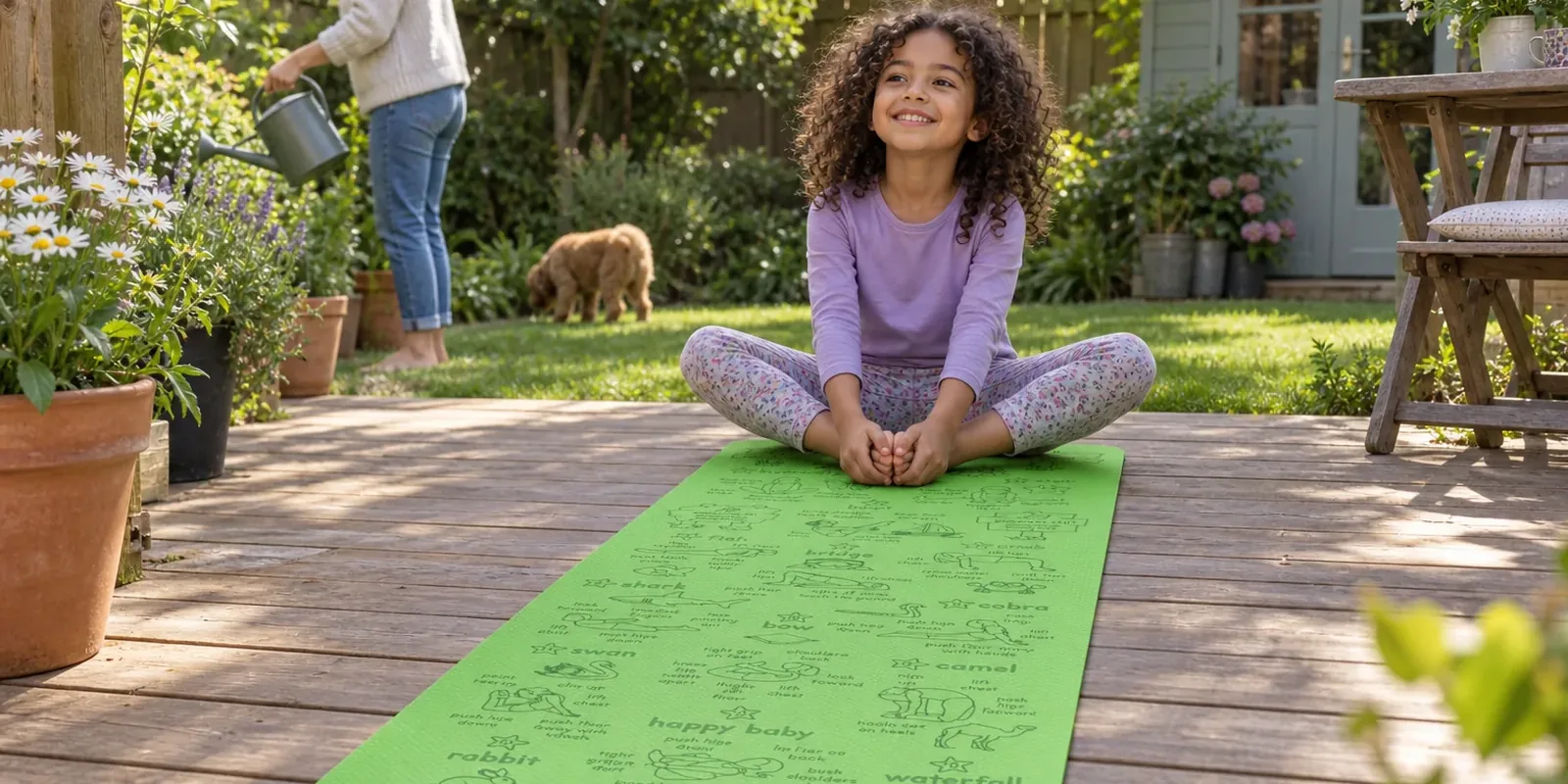
If you want a simple, screen-free way to fill the space, a kids' yoga mat makes it easy. Ours has 15 numbered poses marked into the non-toxic, PVC-free surface, so your child can roll it out and play without a device in sight, starting with your bedtime wind-down.
Sources
- NHS - Physical activity guidelines for children and young people
- NHS - Physical activity guidelines for children under 5 years
- WHO - To grow up healthy, children need to sit less and play more
- GOV.UK - New screen time guidance for parents of under-5s
- YoungMinds - Social media (parents' A-Z mental health guide)
- Ofcom - Children and parents: media use and attitudes report 2025/26