guides
Screen Time by Age: A UK Parent's Guide (Ages 2 to 8)

Screen time recommendations by age for UK children aged 2 to 8: the one-hour guidance for 2 to 5s, what changes from age 6, and the rule that matters most.
UK screen time recommendations by age are simple for the youngest: under-2s should avoid screens except shared family activities such as video calls, and for 2 to 5-year-olds the advice is to try to keep it to an hour a day, less if possible, with none at meals or in the hour before bed. From about six there is no fixed limit; protect sleep, movement and play first.
You want a straight answer: how many hours a day is too much? It is the question every parent of a two to eight-year-old asks, usually while a tablet is glowing in the next room.
For under-5s the UK government gives one. For school-age children nobody gives one tidy number, and that gap is confusing, so this guide lays it out plainly and gives you a rule you can actually remember.
Think of it less as a stopwatch and more as a balance. Screens are fine until they start crowding out the things your child genuinely needs.
What are the screen time recommendations by age?
The UK government's screen time guidance for parents of under-5s sets clear limits for the youngest children, and the World Health Organization's numbers are almost the same. For school-age children neither sets an hourly cap, and the focus moves to balance. Here is how the main guidance compares.
- Under 2, UK government guidance: Avoid screens other than shared family activities that encourage bonding and conversation, such as video calls; WHO: Screen time not recommended under 1, and sedentary screen time not recommended at 1; What else matters: Active play, sleep and interaction
- 2 to 4, UK government guidance: No more than 1 hour a day, less if possible. None at meals or in the hour before bed; WHO: No more than 1 hour a day, "less is better"; What else matters: At least 180 minutes of activity a day (NHS)
- 5, UK government guidance: No more than 1 hour a day (the 2 to 5 band); WHO: Not covered; What else matters: An average of at least 60 minutes of activity a day (NHS)
- 6 to 8, UK government guidance: No fixed hourly limit; WHO: Not covered; What else matters: An average of at least 60 minutes of activity, enough sleep, screens out of bedrooms
The WHO under-5s guidance is the strictest: no sedentary screen time for one-year-olds, and no more than an hour of sedentary screen time a day for two to four-year-olds, with the note that "less is better".
The UK government's guidance lands in the same place for under-5s and adds two habits: keep screens away from mealtimes and the hour before bed.
How much screen time for a 4 year old?
No more than an hour a day, and less if possible. The WHO advises no more than one hour of sedentary screen time a day for children aged two to four, adding that less is better, and UK government guidance for 2 to 5-year-olds says the same. It also asks for slow-paced, age-appropriate content, watched together where you can.
So if you are aiming for a target, an hour a day of good-quality content is a sensible ceiling for a four-year-old, and less is genuinely fine.
But the NHS activity guidance for under-fives reframes the question. It says three and four-year-olds should be physically active for at least 180 minutes a day, spread throughout the day. It warns that prolonged screen viewing, or long periods strapped in a buggy, are not good for a child's health and development.
Read together, the message is simple. An hour of screen time matters far less than whether your four-year-old is moving, sleeping and playing enough around it. If those boxes are ticked, you are doing well.
Why is there no fixed limit for older children?
For school-age children, the UK Chief Medical Officers said in 2019 that the research was not conclusive enough to set guidelines on the best amount of screen time. NHS advice for families is to agree clear boundaries together, such as screen-free mealtimes, and to find a balance between screens and other activities. The central question is whether screens are displacing the healthy things.
Charities that support parents take the same line. YoungMinds suggests talking about balance and asking how your child feels before and after being online, alongside ground rules such as keeping devices out of bedrooms at night. Two hours of a shared, educational programme is not the same as two hours of solo late-night scrolling.
This can feel unhelpful when you just want a rule. But it is actually freeing. You are trusted to judge your own child rather than hit an arbitrary quota.
If you want to know when it has tipped into too much, our guide on how much screen time is too much covers the warning signs, and our family screen time rules turn the boundaries into something everyone agrees.
What matters more than the number of minutes?
Content and context matter more than exact minutes. Health experts encourage families to choose high-quality programming, watch it together where possible, and keep screens out of meals and bedrooms. The same show can help or hinder depending on when, how and with whom your child watches it.
A few habits do most of the heavy lifting:
- Co-view when you can. Watching alongside your child turns passive time into shared time, and lets you talk about what you both see.
- Protect meals and bedtime. Screen-free meals support conversation, and screens before sleep can make settling harder. Our guide to screen time and sleep explains why the last hour matters.
- Favour quality over quantity. A slow, gentle programme beats a fast, endless feed of short clips.
- Model it yourself. Children copy the adults around them more than they follow the rules we set.
NHS advice is to avoid screens before bedtime and keep devices out of bedrooms overnight, which is far easier to agree as a household than to police minute by minute.
How do you protect sleep, movement and play?
The most useful rule is that screens should never crowd out three things: sleep, daily movement and face-to-face play. These are the non-negotiables. Screen time simply fills the space that is left, not the other way round. UK and global bodies put numbers on the first two.
Sleep
The Sleep Charity sets out how much sleep children need by age. Toddlers need around 12 hours a night, children aged three to six need about 10 to 12 hours, and children aged seven to twelve need about 10 to 11 hours. If a device is eating into these hours, that is your signal to pull it back.
Daily movement
For toddlers and pre-schoolers, the NHS calls for at least 180 minutes of activity a day. For children and young people aged 5 to 18, its activity guidelines recommend an average of at least 60 minutes of moderate or vigorous activity a day across the week, plus muscle and bone-strengthening activities, and breaking up long stretches of sitting still.
Face-to-face play
Unstructured, active play is where much of early development happens. The NHS Best Start in Life guidance says every smile, cuddle, chat and game in the first five years helps a child learn to communicate, develop confidence and make friends. These are exactly the areas that real play, movement and interaction support, in a way passive screen time does not.
Is my child on screens too much?
If you feel your child is on screens a lot, you are far from alone, and that feeling is worth listening to. The government says about a quarter of parents of 3 to 5-year-olds find their child's screen time hard to control.
The same announcement says 98 per cent of two-year-olds watch screens every day. So if the norm feels high, that is because for most families it is. Our round-up of average screen time for UK children has more on what the surveys measure.
The point is not to panic or to shame anyone, least of all yourself. It is a nudge to check the balance. If sleep, movement and play are protected, the exact number matters less. If they are slipping, that is the lever to adjust, and it helps to know what less screen time can change.
How can yoga help you go screen-free?
Kids' yoga is one of the easiest ways to hit the daily movement target and wind down without a screen. A short session before bed can help a child settle, supports movement and self-regulation, and gives you a calm, shared activity that replaces scroll time rather than just banning it.
It works because it is genuinely fun, not a chore. Copying a cobra, a cat or a butterfly feels like play, but it is real physical activity and gentle self-control practice rolled into one.
If you are cutting back step by step, our guide to reducing screen time for kids pairs well with this one. If you are new to yoga, our beginner's guide to yoga for kids shows you how to start with just a few poses and no experience at all. It is a tool in the toolkit, not a magic fix, but it is a lovely place to begin.
Frequently asked questions
Is one hour of screen time a day OK for a toddler?
For a two to four-year-old, up to an hour a day of good-quality content sits within both UK government and WHO guidance, and less is better. Keep it away from meals and the hour before bed, and make sure screens do not displace the 180 minutes of daily activity and the sleep young children need.
Should children have no screens at all before a certain age?
UK government guidance says under-2s should avoid screen time other than shared family activities that encourage bonding and conversation, such as a video call with grandparents. The WHO does not recommend screen time for babies, or sedentary screen time for one-year-olds. For very young children, real interaction and active play matter far more than any programme.
Does educational content count as screen time?
Yes, it still counts, but quality and context change its value. Choosing slow-paced, age-appropriate programmes and watching together where possible makes a real difference. A shared, educational show is very different from solo scrolling, even if the minutes on the clock look the same.
How do I cut screen time without daily battles?
Replace rather than remove. Offer an appealing screen-free option like yoga, drawing or outdoor play, and protect fixed screen-free zones such as meals and bedtime. Agreeing the plan as a family causes far fewer arguments than policing minutes, and warning before the screen goes off helps too.
Are screens before bed bad for children?
They can make settling harder. The NHS advises no laptops, tablets or phones in the 30 to 60 minutes before bed because the light from screens can interfere with sleep, and UK guidance for under-5s suggests avoiding screens for the hour before bed. A story or a few slow stretches is a good swap.
Bring more screen-free calm into your home
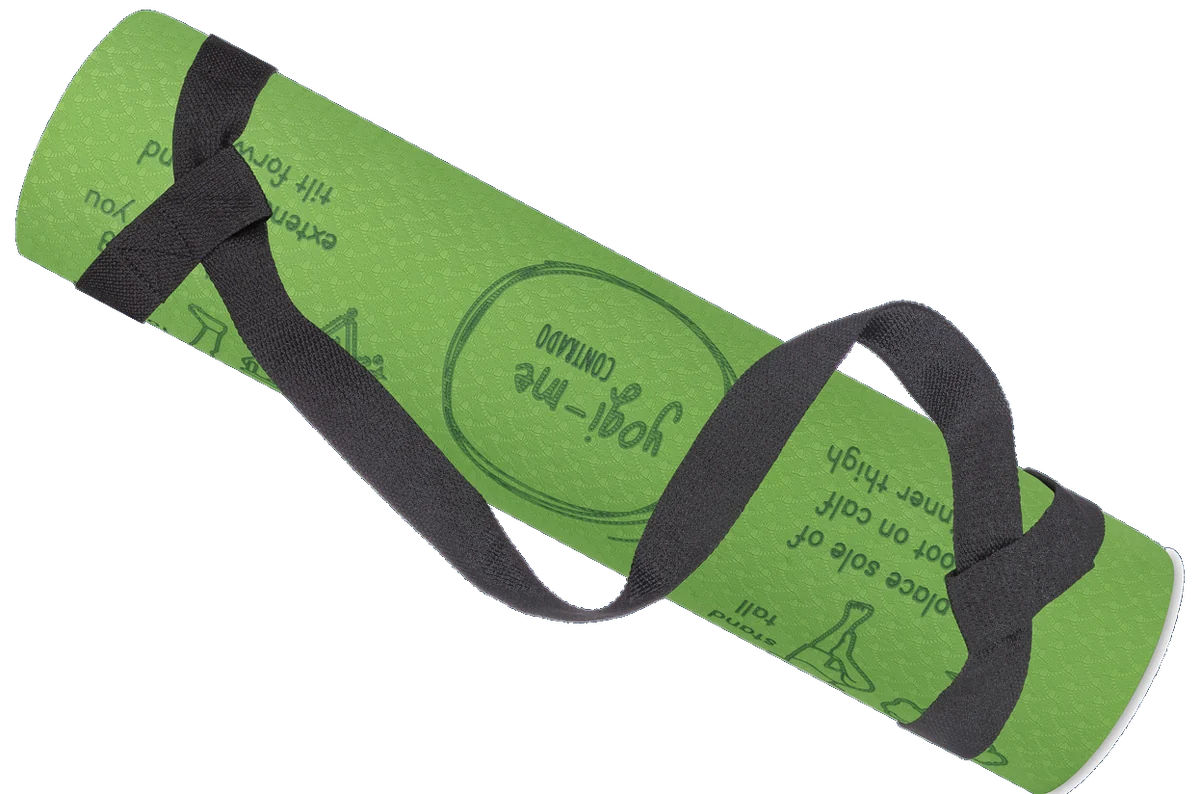
You do not need a perfect number, you need a few good habits and something better to reach for than the tablet. A soft, non-toxic yoga mat with 15 numbered poses marked into it turns "put the screen down" into "let's do the butterfly", which is a far easier sell at teatime.
Have a look at our kids' yoga mats in the Yogi-Me shop and find a gentle, screen-free way to help your child move, wind down and play every day.
Sources
- GOV.UK: New screen time guidance for parents of under-5s
- Best Start in Life (Department for Education): Screen time for under-5s
- World Health Organization: To grow up healthy, children need to sit less and play more
- NHS: Physical activity guidelines for children under 5 years
- NHS: Physical activity guidelines for children and young people
- NHS (Bedfordshire and Luton children's health): Screen time
- NHS: Sleep and young children
- GOV.UK (DHSC) - UK Chief Medical Officers' commentary on screen time and social media, 7 February 2019
- The Sleep Charity: How much sleep does my child need?
- NHS Best Start in Life: Early learning and development
- YoungMinds: Social media and screen time advice for parents