guides
How Much Exercise Do Kids Need? UK Guidelines and What Counts

How much exercise do kids need? Ages 1 to 4 need 3 hours of activity a day. From 5, an average of 60 energetic minutes. Here's what counts.
Children aged 1 to 4 need at least 3 hours of physical activity a day, and for 3- and 4-year-olds at least an hour of that should get them breathing faster. From age 5, the UK Chief Medical Officers recommend an average of at least 60 minutes a day of that energetic kind, across the week.
That's the short answer to how much exercise do kids need. The rule changes on the fifth birthday, in the middle of the 3 to 8 years most parents reading this are dealing with. Below: what the guidance says, what counts towards it on an ordinary day, and what changes at five.
How much physical activity do children need a day?
The physical activity guidelines for children in the UK come from the four UK Chief Medical Officers, and the NHS publishes them for parents. They set a daily amount for under-5s and a daily average for everyone from 5 to 18. Here's how they divide up by age:
- Babies (under 1): active throughout the day, every day, including at least 30 minutes of tummy time spread through the day, according to the NHS.
- Toddlers (1 to 2): at least 180 minutes a day "at any intensity", spread through the day, the Chief Medical Officers say.
- Pre-schoolers (3 to 4): at least 180 minutes a day, which "should include at least 60 minutes of moderate to vigorous physical activity".
- Children and young people (5 to 18): "an average of at least 60 minutes per day across the week" of moderate to vigorous activity. The same 60 minutes applies to teenagers.
Moderate to vigorous activity is anything that raises your child's heart rate and makes them breathe faster and feel warmer. The NHS's test is simple: if they can still talk but not sing, it's moderate. If they find it hard to talk without pausing, the Chief Medical Officers call it vigorous.
The word "average" matters. The Chief Medical Officers say the evidence "does not support a specific minimum daily threshold of 60 minutes", so the hour is an average across the week. A wet Tuesday with not much running can be balanced by a busy Saturday, although the NHS still asks for activity to be spread through the day where you can.
What counts towards the 60 minutes?
Anything that leaves your child too puffed to sing counts, wherever it happens. The Chief Medical Officers say it can include "physical education, active travel, after-school activities, play and sports". Most of it isn't exercise in the gym sense. It's the brisk bits of an ordinary day:
- Counts towards the 60: a brisk walk to school, running and jumping in the playground, PE, swimming, skipping, dancing and cycling, all on the NHS's list.
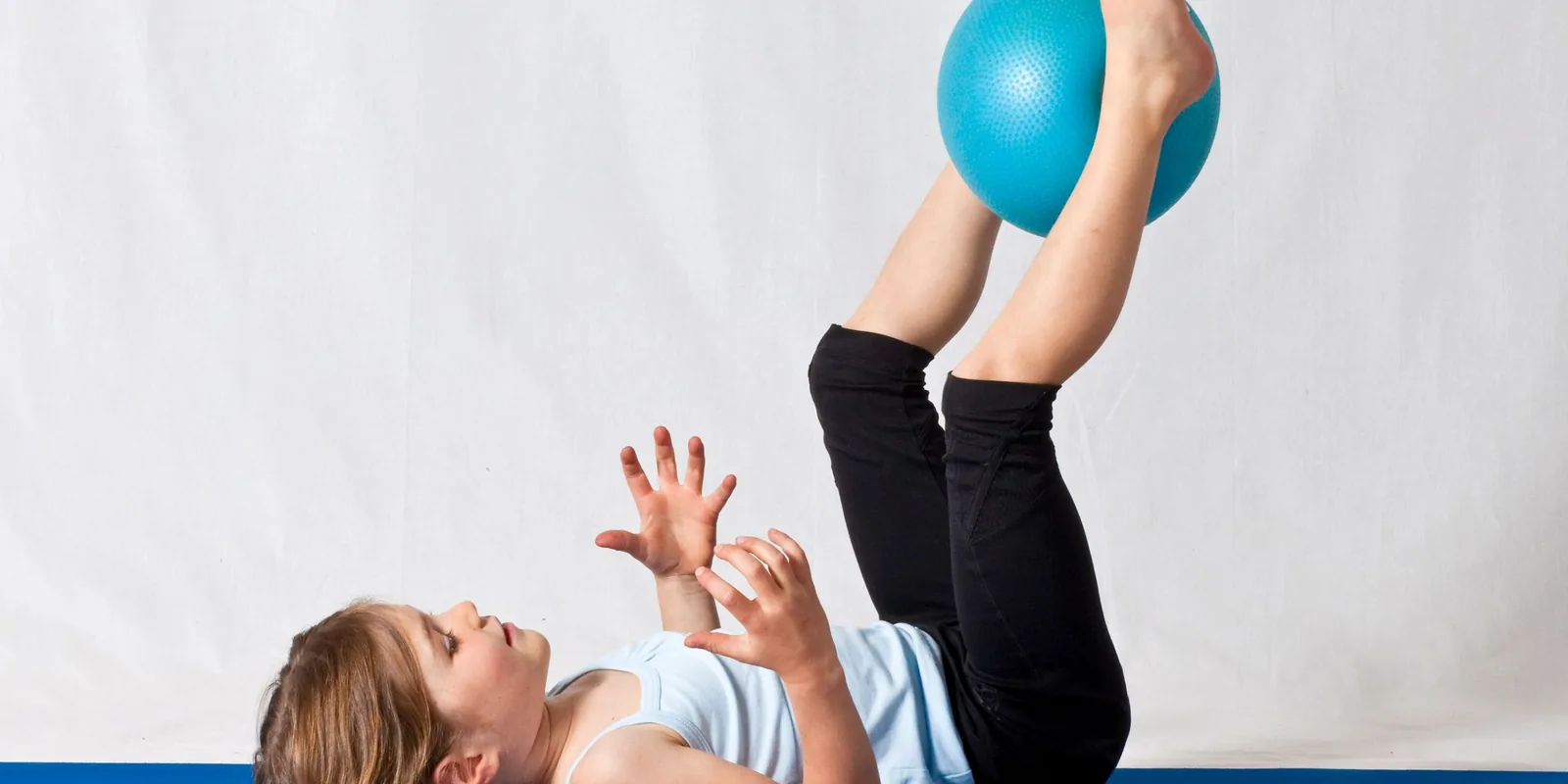
- The variety and strength part: climbing, jumping, hopping and gymnastics. The NHS lists jumping and gymnastics among the activities that strengthen muscles and bones.
- Breaks up sitting: anything that gets them off the sofa between screens or homework. It may not count towards the 60, but the guidance asks for it as well. A five-minute wake and shake before school is an easy one.
Here's an illustrative school day for a six-year-old: a 15-minute walk to school, 10 minutes of running at morning break, 20 minutes of chasing at lunchtime and a 15-minute walk home. That's 60 minutes on paper, but only the brisk parts count. A slow walk home with a stop to look at every dog may not.
Step counters measure this differently, and our guide to how many steps a child should do a day explains why the guidance uses minutes instead. For games that build the strength part, see our gross motor activities by age.
What changes when your child turns five?
Two things change on the fifth birthday: the amount and the effort. Up to five, the target is 180 minutes of activity, where any movement counts and only an hour of it needs to be energetic. From five, the target is a 60-minute daily average, and only the moderate to vigorous minutes count towards it.
In a Reception class, that means a child who's still four and a classmate who has just turned five are under different guidelines, though they spend the same day doing the same things.
It also changes what quiet play is worth. For a four-year-old, building a den, rolling on the carpet and stomping round the garden all count towards the 180, because the NHS says "All movement counts" for under-5s. For a six-year-old, the same activities are valuable, but they aren't the hour. They're the variety, and they're time not spent sitting.
The NHS also says under-5s shouldn't be inactive for long periods except when asleep, and names watching TV, car journeys and long spells strapped into a buggy.
Do children need muscle- and bone-strengthening activity, and how often?
Yes, but the UK sets no number of days for it. The Chief Medical Officers ask children aged 5 to 18 for "a variety of types and intensities of physical activity across the week to develop movement skills, muscular fitness and bone strength". The World Health Organization says at least 3 days a week.
That difference trips people up. In September 2019 the government corrected a children's infographic that had said "3 times per week" so it matched the guidelines, which say "across the week" (change log). The WHO's 2020 guidelines for children and adolescents aged 5 to 17 do say at least 3 days a week.
For a child of 3 to 8, strengthening looks like play: climbing a frame, jumping, hopping, cartwheels. Balance play belongs here too. The Chief Medical Officers set no balance target for children, but they define balance activities as "activities that involve the maintenance of the body balance while stationary or moving", which covers standing on one leg as much as walking along a line.
Why is 60 minutes of physical activity important?
Because the benefits the Chief Medical Officers list cover far more than fitness. Their infographic for 5 to 18 year-olds says being active:
- builds confidence and social skills
- develops co-ordination
- improves concentration and learning
- strengthens muscles and bones
- improves health and fitness
- improves sleep
- makes you feel good
They also say the benefits sit on a scale. For a child who isn't very active, "any increase in physical activity or any reduction in sedentary time is likely to provide health benefits and should be encouraged". So 20 minutes more is worth having even if 60 feels a long way off.
How do you fit it in when it's dark after school?
Use the walk home, the kitchen and the living room floor. The clocks go back an hour on the last Sunday in October, according to GOV.UK, and from then until spring the park is often dark by tea time. Some ideas that don't need daylight:
- Walk home the long way while it's still light, and race to the next lamppost on a quiet stretch, stopping at every kerb.
- Put music on and dance in the kitchen while tea cooks. Dancing is on the NHS's list.
- Run our 15-minute circuit for the living room, which needs a wall and two sofa cushions.
- Build a sofa-cushion obstacle course with a still finish.
- Do a short pose session for balance.
Be honest with yourself about what the last one is for. For a three- or four-year-old, a pose session counts towards the 180 minutes, because the NHS says all movement counts for under-5s. For a child of five or over, holding poses rarely leaves them too puffed to sing, so by the talk test it usually won't count towards the 60 minutes. What it does is break up time spent sitting and add the variety the Chief Medical Officers ask for.
That's where a mat with the poses on it earns its place. Our Sun Salutation mat has 15 numbered poses laser-engraved into it, from mouse at 1 to dancer at 15, so a child can roll it out and work through them without a screen or a grown-up demonstrating. Tree (14) and dancer (15) are both held on one leg, which is a balance activity by the definition above. For the dark months, that's a yoga mat your child can follow on their own: £34.99, with free UK delivery.
If your child digs their heels in at the very word exercise, our guide on how to encourage kids to exercise is about exactly that.
Does the guidance change for a health condition or disability?
Speak to your GP if your child has a health condition and you're unsure what activity is right for them. The NHS says children should "get medical advice about exercising if they have a health condition".
For children aged 5 to 18 living with a disability, the NHS suggests 20 minutes of activity a day, in smaller chunks if needed, plus challenging but manageable strength and balance activities 3 times a week. Their healthcare team can tell you what suits them.
If you're worried about how your child moves, keeps up with others or copes with activity, talk to your GP, your health visitor for under-5s, or the school nurse.
Frequently asked questions
How much exercise do kids need a week?
From age 5, the UK guideline works out at 420 minutes a week, seven hours, because it's an average of at least 60 minutes a day across the week. A quiet day can be balanced by a busier one. Children aged 1 to 4 are different: the NHS asks for at least 180 minutes every day, spread through the day.
How much exercise does a 5 year old need?
From their fifth birthday, the UK Chief Medical Officers recommend an average of at least 60 minutes a day of moderate to vigorous activity across the week, the kind that makes them breathe faster and feel warmer. Up to their fifth birthday, the target was 180 minutes a day, including at least 60 energetic minutes.
Is it okay for a 7 year old to work out?
Yes, if the activity suits their age, ability and experience, which is the NHS's own wording. At seven that means play that builds strength, such as climbing, jumping and gymnastics, rather than an adult workout. The NHS lists press-ups and sit-ups for young people, and weights only when a qualified adult trains and supervises them.
Does yoga count as exercise for kids?
It depends on their age. For a three- or four-year-old, a pose session counts towards the 180 minutes, because the NHS says all movement counts for under-5s. For a child of five or over, it usually won't count towards the 60 minutes, but it breaks up sitting and adds variety to their week.
Sources
- UK Chief Medical Officers' physical activity guidelines, Department of Health and Social Care (first published 7 September 2019)
- Physical activity guidelines: UK Chief Medical Officers' report, publication page and change log
- NHS - Physical activity guidelines for children and young people, last reviewed 23 October 2024
- NHS - Physical activity guidelines for children (under 5 years)
- GOV.UK - Physical activity for children and young people (5 to 18 years): text of the infographic
- World Health Organization - Guidelines on physical activity and sedentary behaviour, 2020
- GOV.UK - When do the clocks change?