
guides
How Many Steps Should a Child Do a Day? What the NHS Says
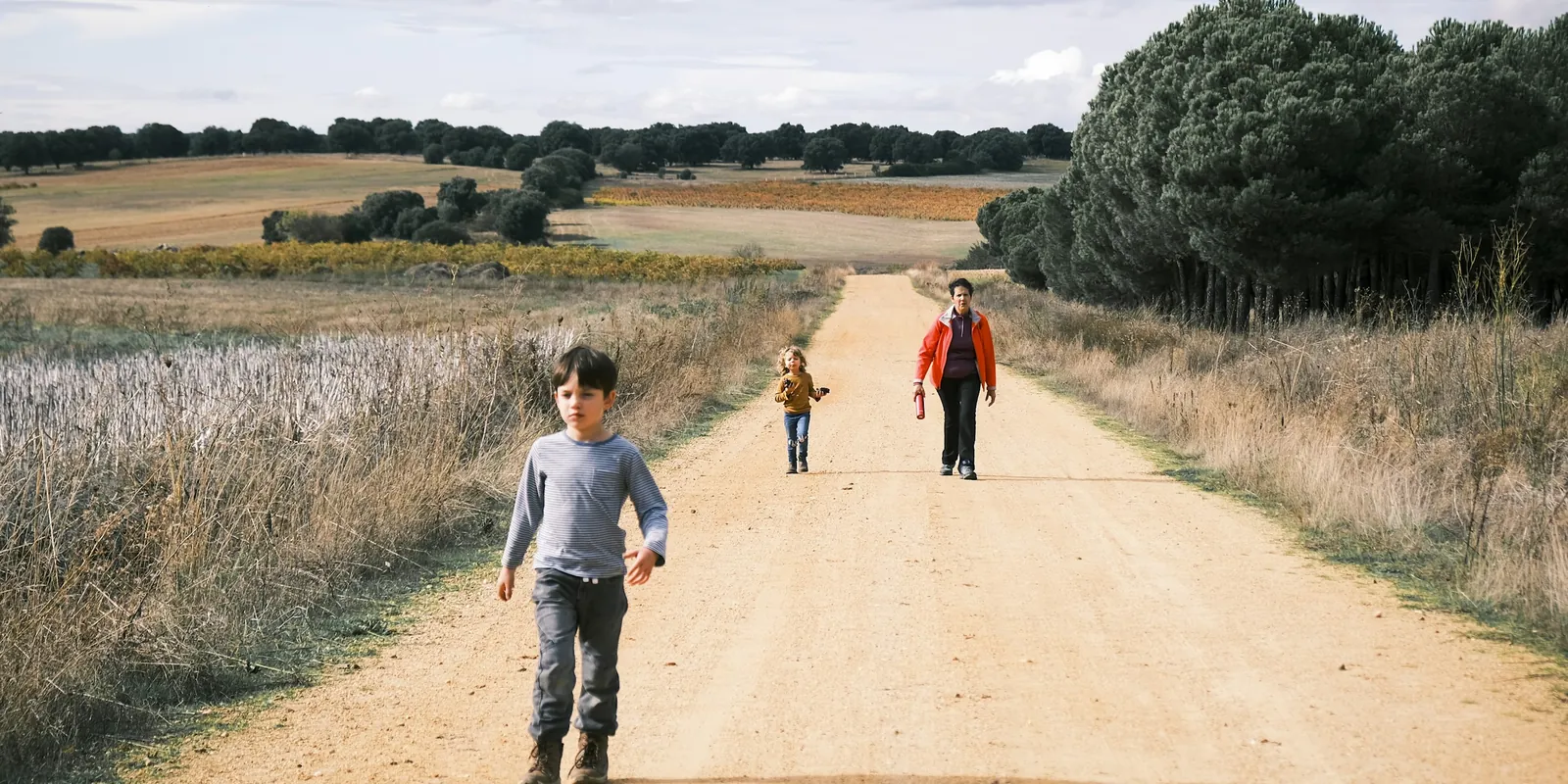
How many steps should a child do a day? The NHS counts minutes, not steps. What research suggests by age, and what a step count misses.
There's no official number. The NHS and the UK Chief Medical Officers measure children's activity in minutes, not steps. They ask for at least 3 hours a day for ages 1 to 4, and an average of 60 energetic minutes a day from age 5. Researchers who converted similar targets into steps suggest around 12,000 a day for school-age children and about 6,000 to 9,000 for pre-schoolers.
So that's how many steps a child should do a day, as far as the evidence goes. The rest of this page shows where each figure comes from, and what a step count can't see.
Does the NHS say how many steps a child should do a day?
No. If you've searched "how many steps should a child do a day NHS", the short answer is that the NHS doesn't give one. Its guidance for children and young people aged 5 to 18 and for children under 5 is in minutes only.
The NHS pages follow the UK Chief Medical Officers' physical activity guidelines. Those guidelines give step figures only for older adults. For healthy older adults, they say 30 minutes of daily moderate to vigorous activity on top of their usual daily activity is "equivalent to taking approximately 7,000 to 10,000 steps per day". That's also why 10,000 isn't a children's number.
A step count is the number of steps a pedometer, phone or watch records in a day. It measures walking and running, not how hard a child worked or what else they did. For the minutes themselves, see the full UK activity guidelines by age.
How many steps a day for a child, by age?
The step figures come from research papers, not guidance. Each study measured a different group of children in a different country, so the numbers don't agree, and none of them is UK data.
Pre-schoolers:
- Gabel and colleagues (2013), researchers at McMaster University in Canada, studied 133 pre-schoolers and suggested 6,000 steps a day for 3 to 5 year-olds, as the match for 180 minutes of activity, a guideline much like the UK's for ages 1 to 4.
- Vale and colleagues (2015) studied 916 children aged 3 to 6 in Portugal and found the best match for 3 hours of activity was 9,099 steps a day.
- A 2011 international review led by Catrine Tudor-Locke said "limited evidence suggests" 10,000 to 14,000 steps a day goes with 60 to 100 minutes of energetic activity in children of about 4 to 6.
Primary school, 6 and over:
- Colley, Janssen and Tremblay (2012) used data from 1,613 children and young people aged 6 to 19 in Canada and proposed 12,000 steps a day as the equivalent of 60 energetic minutes.
- The 2011 review put 60 energetic minutes at 13,000 to 15,000 steps a day for boys of primary-school age and 11,000 to 12,000 for girls.
Five-year-olds fall between the two groups, which is why their figure is in the FAQ below rather than here. The review's own conclusion is the most useful line: there is "no simple or 'magical' number of steps/day that cuts across all ages". Its authors called their figures "preliminary".
What does a step count miss?
Everything that isn't walking or running. A swimming lesson or a bike ride barely registers on a step counter, though the 2011 review says swimming and cycling "are also valuable".
The guidance also asks for more than distance. The Chief Medical Officers want children aged 5 to 18 to do "a variety of types and intensities of physical activity across the week to develop movement skills, muscular fitness and bone strength". A child climbing a frame, doing a handstand against the wall or holding a pose on one leg is doing some of that, and a pedometer records almost none of it.
It works the other way too. A child can reach a big number on a long, slow walk and never get out of breath, while another swims hard for an hour and looks inactive on a watch. The better check is the NHS's talk test: moderate activity is when they can still talk, but not sing. For games that build the strength and balance part, see our balance and climbing games by age.
When in the day do children get their steps?
Mostly after school. The 2011 review reported that after-school activity accounted for about 47 to 56 per cent of boys' daily steps on school days, and 47 to 59 per cent of girls'. PE lessons made up a smaller share, roughly 9 to 24 per cent for boys and 11 to 17 per cent for girls.
So the walk to school, break times and the hours between home time and tea do most of the work. A brisk walk to school counts towards the UK's 60 minutes, and the NHS lists it first among its examples.
That's also the half of the day a UK winter squeezes, when the after-school hours are often dark.
How can you add what a step count misses?
Aim for variety rather than a bigger number. On a school day, the walk to school and break times already add steps. What's worth adding is the movement a pedometer can't see:
- A swim or a bike ride at the weekend. Both are on the NHS's list of activities for children, and both can be energetic minutes that barely register as steps.
- Jumping and hopping. Hopscotch on the path or a skipping rope in the garden. The NHS lists jumping among the activities that strengthen muscles and bones.
- Climbing. A climbing frame at the park asks for arms and grip, which walking doesn't.
- Standing on one leg. Balance takes no space at all, so it's the easiest of the four to do indoors.
Our 15-minute circuit for the living room puts jumping and balancing together for a wet evening.
A pose session won't add much to a step count, and it isn't meant to. Tree (14) and dancer (15) are both held on one leg, and they're two of the 15 numbered poses laser-engraved into our Sun Salutation mat, so a child can work through them on their own after the walk home. If yoga is new to you both, start with yoga for kids, from the beginning. Our kids' yoga mats are £34.99, with free UK delivery.
Should a step count ever worry you?
Not on its own. A step count isn't a measure of whether something is wrong, so don't use one to decide. If you're worried about how your child walks, moves or keeps up with other children, talk to your GP, your health visitor for under-5s, or the school nurse.
If your child has a disability, the NHS guideline for ages 5 to 18 is different: about 20 minutes of activity a day, which can be split into shorter bursts, with strength and balance work 3 times a week. The NHS also says children should get medical advice about exercising if they have a health condition.
Frequently asked questions
How many steps should a 5 year old take a day?
There's no set figure. Studies that include five-year-olds have put it at about 6,000 steps a day (Canada, 2013) or about 9,000 (Portugal, 2015) to match 3 hours of activity, and a 2011 review linked 10,000 to 14,000 steps with 60 to 100 energetic minutes at around 4 to 6. The UK guidance switches on the fifth birthday, from at least 3 hours of activity a day, an hour of it energetic, to an average of 60 energetic minutes.
How many steps should a toddler do a day?
None of the studies we could find gives a step figure for ages 1 to 2; the early-years research starts at 3. The NHS asks toddlers for at least 180 minutes of activity a day, and says that can include light activity such as standing up, moving around, rolling and playing.
Is 10,000 steps a day enough for a child?
It may not be for a primary-age child. 10,000 is an adult's round number, not a children's guideline. The research that converts 60 energetic minutes a day into steps lands higher for school-age children, around 12,000 in a 2012 Canadian study. For pre-schoolers, the two studies that converted the 3-hour guideline came in lower, at about 6,000 and 9,000.
How many steps does the average child take a day?
A 2011 international review of the research found that boys of primary-school age average 12,000 to 16,000 steps a day, and girls 10,000 to 13,000. Those are typical figures from studies in several countries, not targets, and children in your child's class could sit well either side of them.
Sources
- NHS - Physical activity guidelines for children and young people, last reviewed 23 October 2024
- NHS - Physical activity guidelines for children (under 5 years)
- UK Chief Medical Officers' physical activity guidelines, Department of Health and Social Care (first published 7 September 2019)
- Tudor-Locke C and colleagues. How many steps/day are enough? For children and adolescents. International Journal of Behavioral Nutrition and Physical Activity, 2011
- Colley RC, Janssen I, Tremblay MS. Daily step target to measure adherence to physical activity guidelines in children. Medicine and Science in Sports and Exercise, 2012
- Gabel L and colleagues. Step count targets corresponding to new physical activity guidelines for the early years. Medicine and Science in Sports and Exercise, 2013
- Vale S and colleagues. Step based physical activity guidelines for preschool-aged children. Preventive Medicine, 2015