guides
Obstacle Course Ideas for Kids: 10 Stations, Indoors and Out
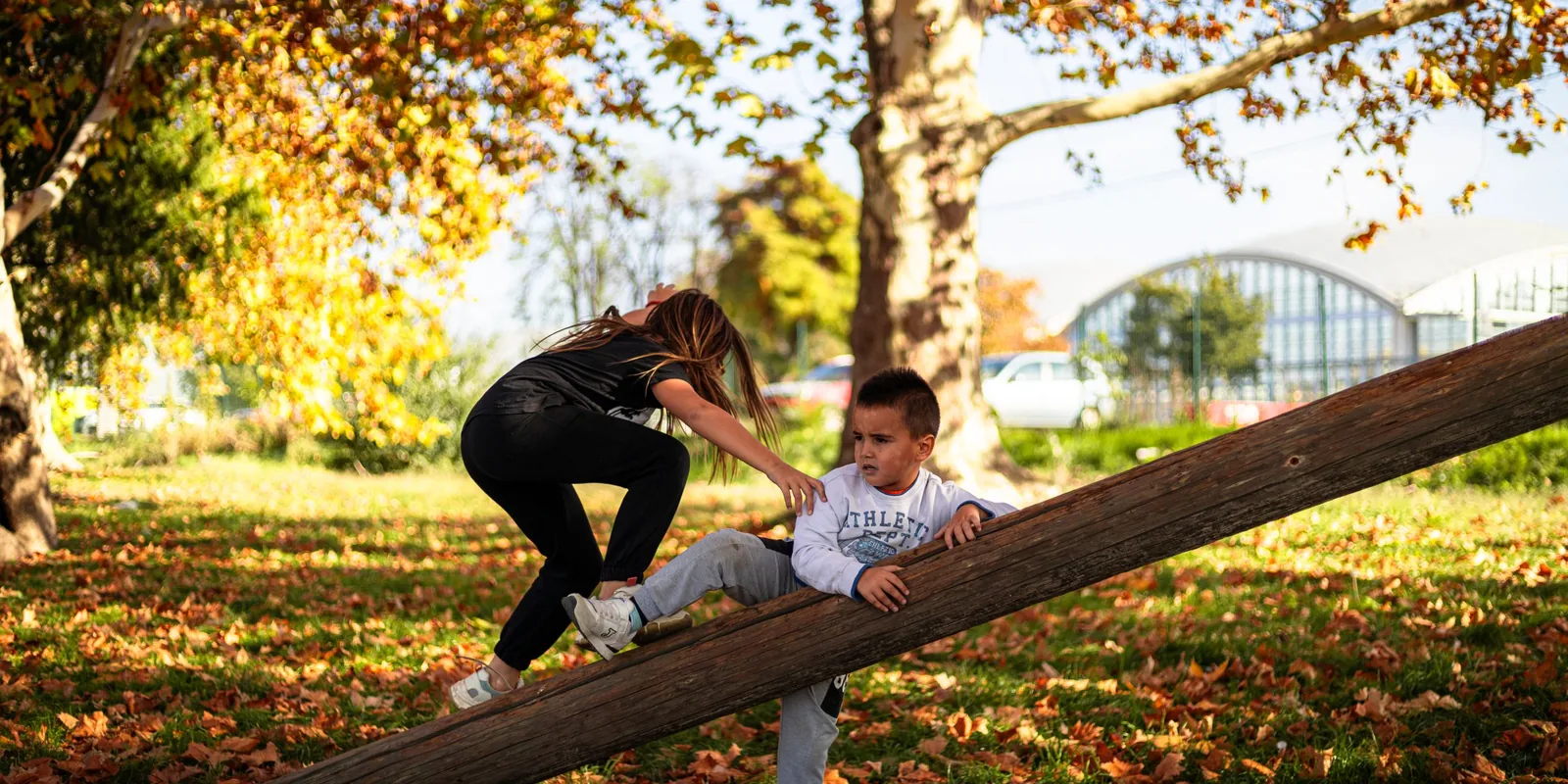
Obstacle course ideas for kids aged 3 to 8: ten stations from cushions, tape and a blanket, run in order and finished standing still, indoors or out.
These obstacle course ideas for kids give you ten stations built from cushions, tape, a blanket and a cardboard box, for children aged 3 to 8, indoors or in the garden. Pick four to six, run them in order, and finish standing still.
An obstacle course is a short route of stations, each asking a child for one movement, such as crawling under, stepping over or balancing along, done in order.
Most obstacle course activities for kids stop at the finish line. Ours stops when the runner is still, which turns a race into something a three-year-old can win.
How do you make an obstacle course at home?
Choose four to six stations from the list below, set them out in a loop or a line, walk the route once with your child, then let them run it. Start with any station you like, but always end with number 10, the still finish. Those are all the obstacle course ideas for kids at home you need to begin.
What you need: sofa cushions, a blanket, two kitchen chairs, masking tape, a cardboard box, a broom handle, a laundry basket, a few pairs of socks, and a rug or mat. Nothing bought.
One rule, kept throughout: cushions stay on the floor, children go under tables and chairs but never on them, and nothing is climbed on or jumped off. Any hurdle should fall away if a foot catches it.
Grandparents, you can run the whole course from an armchair, calling out the stations and judging the still finish. If you'd rather have a fixed plan than a course, our 15-minute living-room circuit uses some of the same kit.
10 obstacle course ideas for kids, in course order
Big movements come first, the balance station sits near the end, and the course finishes with standing still.
1. Stepping stones
Lay sofa cushions on the carpet, a stride apart. "The carpet is the sea, so stay on the stones." Children love the drama of nearly falling in. Make it harder for older ones with wider gaps between folded towels, or a rule that only the left foot touches.
Indoors: cushions or folded towels on carpet. In the garden: doormats, or chalk circles on the patio. Age 3 and up.
2. The tunnel
Drape a blanket over two kitchen chairs set a little apart. "Down on your hands and knees and crawl right through to the other side." Small children feel very brave in the dark middle bit. Older ones can go through backwards.
Indoors: chairs, or crawl under the dining table. In the garden: an old sheet pegged over two garden chairs. Age 3 and up.
3. The tightrope
Stick a long, straight line of masking tape to the carpet. "Walk all the way along without stepping off." A tape obstacle course station costs next to nothing. For 6 to 8 year-olds, try heel to toe, then backwards.
Indoors: masking tape. In the garden: a skipping rope laid straight on the grass. Age 3 and up.
4. The low hurdle
Rest a broom handle across two low piles of books, below knee height. "Step over without touching it." If a foot catches it, the handle simply rolls off, which is the point. Children soon work out how high to lift their feet.
Indoors: books and a broom handle. In the garden: a garden cane across two upturned buckets. Age 4 and up.
5. In and out of the box
Put a cardboard box big enough to sit in on the floor. "Step in, sit down, stand up, step out." It sounds too simple, and three-year-olds take it very seriously. Older children can do it without touching the sides.
Indoors: any large box. In the garden: a hoop, or a chalk square on the patio. Age 3 and up.
6. Bunny hops
Tape four or five crosses on the floor, a hop apart. "Feet together, and jump from cross to cross." Two-footed jumping is easier than it looks to us and harder than it looks to them. From about five, try hopping on one foot.
Indoors: tape crosses. In the garden: chalk dots or upturned flowerpot saucers. Age 3 and up.
7. The carry
Put a soft toy on a plastic plate and carry it to the laundry basket without dropping it. "Slowly, it's a very important passenger." This station slows everyone down after the hops. Older children can try balancing the plate on the back of one hand.
Indoors and in the garden: the same, on any clear path. Age 4 and up.
8. The throw
Roll pairs of socks into balls and throw three of them into a laundry basket from a tape line. "Three socks, three throws." Step the line further back for older children. The NHS lists throwing and catching among its activity ideas for under-5s.
Indoors: socks and a basket. In the garden: beanbags or a soft ball into a bucket. Age 3 and up.
9. The pose stop
Stop at the mat or rug and hold a balance pose for three slow breaths. "Find the tree, and stay there." Tree (14) suits three-year-olds, toes down if needed, and 7 and 8 year-olds can try eagle (13) or dancer (15). On a mat with the poses numbered one to fifteen, they can choose without you describing it.
Indoors: a mat or rug. In the garden: the same, or call out an animal and let them invent the shape. Age 3 and up.
10. The still finish
Stand tall in mountain pose: feet together, arms by your sides, and stay completely still. "The clock stops when you're still, not when you arrive." This is our rule, not an official one. Fast children have to calm down to finish, and slow ones don't lose on speed.
Indoors and in the garden: the end of the mat, or a tape square. Age 3 and up.
Which obstacles suit which age?
Three- and four-year-olds want one action per station and a grown-up to show them first. Five- and six-year-olds can remember a route of six. Seven- and eight-year-olds want harder rules, or a course of their own to design.
- Ages 3 to 4: stations 1, 2, 3, 5, 6, 9 and 10. Use four at a time, close together, shown first.
- Ages 5 to 6: all ten, a route of six at a time, with one-footed hops at station 6.
- Ages 7 to 8: the harder versions of 1, 3, 4 and 7, and eagle or dancer at station 9. Let them build and call a course for a younger brother or sister. Designing it is the challenge at this age.
If the pose stop turns out to be their favourite, our beginner's guide to kids' yoga is a good next step.
Why are obstacle courses good for children?
Because they get children moving in lots of different ways, and they're a natural game for talking too. Development Matters, the Department for Education's guidance for early years staff, suggests setting up obstacle courses for 3- and 4-year-olds to play on freely and, when appropriate, asking them to describe their route and give directions to each other. It sits in the maths section, next to using words like "in", "on" and "under".
For an obstacle course in the EYFS at Reception age, the same guidance suggests staff "Create obstacle courses that demand a range of movements to complete". It also says to "Encourage children to conclude movements in balance and stillness", which is where station 10 comes from.
It also counts as being active. The NHS asks for at least 180 minutes of activity a day for children aged 1 to 4, and for children aged 5 to 18 an average of at least 60 minutes of moderate or vigorous activity a day across the week. There's more on that in our guide to how much exercise children need, and more movement games in our gross motor skills activities.
Courses for a front room, a hallway and a garden
A front-room course for a wet afternoon
For indoor obstacle course ideas for kids on a wet afternoon, use stations 1, 2, 9 and 10, and go round twice. Cushions, the blanket tunnel, the pose stop, the still finish: all in one room, with the sofa pushed back.
A hallway course for a small flat
Stations 3, 6, 8, 9 and 10, laid in a straight line. Tightrope, bunny hops, the sock throw, the pose stop and the still finish need no furniture at all, just tape and a long floor.
A garden course for a party or mixed ages
For obstacle course ideas for kids outside, use stations 1, 4, 5, 7, 8, 9 and 10. Let the older children call it for the younger ones, and judge the still finish together.
Want the pose stop to run itself? Our kids' yoga mats have 15 numbered poses laser-engraved into the surface, so there's nothing to set up and no screen to follow. They're £34.99 with free UK delivery, and 10 per cent off two or more if two children want a pose stop each.
How do you get a watcher to have a go?
Give them a job that isn't running. A course is a lot of being watched, and some children hate that. Make them the builder, the caller or the timekeeper, and run it yourself, badly.
Then offer to go round once together, holding hands. Let them stop wherever they like. Development Matters advises early years staff to "Encourage children to climb unaided and to stop if they do not feel safe", and warns that lifting a young child onto equipment and holding them so they balance stops them developing "a sense of what they can do safely". That's written for the youngest children, but the idea travels: let them choose how far to go.
If running a course still isn't their thing, a pose game often is. Our yoga games for kids need even less space.
Frequently asked questions
What can you use for an obstacle course at home?
Whatever is already in the house: sofa cushions laid on the carpet, a blanket over two kitchen chairs, masking tape, a cardboard box, a broom handle resting on piles of books, a laundry basket and some rolled-up socks. A rug or a yoga mat makes the balance station. You don't need to buy anything to build a good course.
How do you set up an obstacle course for a 3 year old?
Use four stations, one action each, close together. Walk the route with them first, saying what each one is: under the blanket, along the tape, into the box. Let them work out how to get over or through without lifting them. Expect them to go round the same way many times, which is half the fun at three.
How does an obstacle course fit the EYFS?
Development Matters, the Department for Education's guidance for the EYFS, suggests that Reception staff create obstacle courses that demand a range of movements, and encourage children to conclude movements in balance and stillness. For 3- and 4-year-olds it lists standing on one leg and holding a pose for a game like musical statues, which is what the pose stop practises.
How do you make an obstacle course fun?
Let your child design part of it, give it a story such as rescuing a teddy from the box, and change one station each round so it never goes stale. Let them time you too. Our favourite rule: the clock only stops when the runner is standing completely still at the end, which slows down the speedy ones.
Sources
- Department for Education - Development Matters: non-statutory curriculum guidance for the early years foundation stage (revised September 2023)
- NHS - Physical activity guidelines for children (under 5 years)
- NHS - Physical activity guidelines for children and young people, last reviewed 23 October 2024