practice
Exercise for Kids at Home: A 15-Minute Circuit, No Equipment
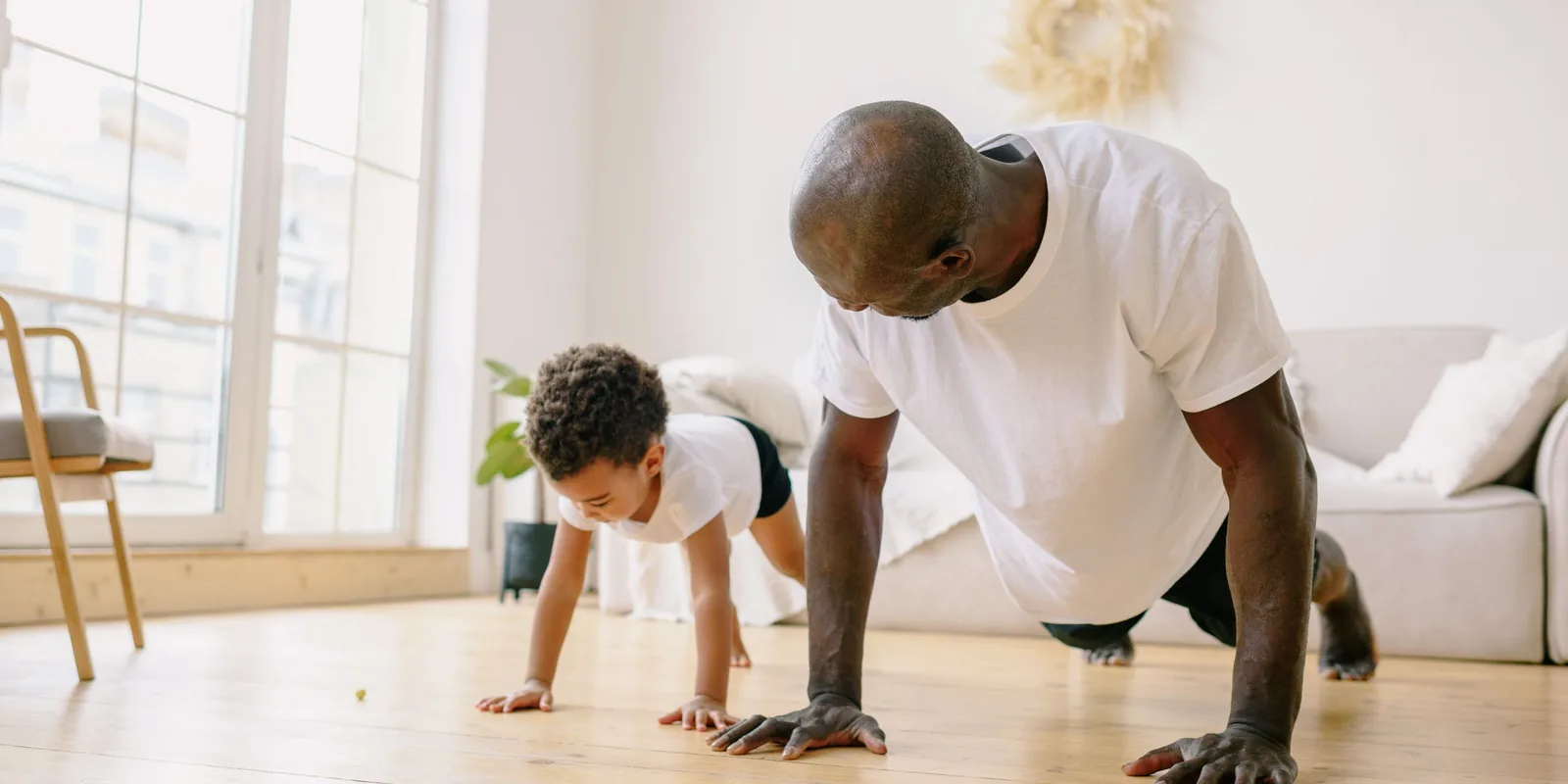
One 15-minute circuit for ages 3 to 8, with an easier and harder version of every move. Exercise for kids at home, no kit and no screen.
This is exercise for kids at home that takes 15 minutes, suits ages 3 to 8, and needs no kit and no screen: seven steps, run in the living room with a wall and two sofa cushions. Every step has an easier version for 3- and 4-year-olds and a harder one for 6- to 8-year-olds, so siblings can do it side by side.
It's built for the fifteen minutes while tea is cooking. Your child has sat at school, in the car and at the table for homework, and is now using the sofa as a trampoline. By the time the pasta's done, so are they.
What does exercise for kids at home look like?
Exercise for kids at home is any activity that gets a child moving indoors, and for 3 to 8 year-olds it works best as short games strung together, not a workout copied from an adult. A kids' workout at home without equipment uses the floor, a wall and whatever cushions you already have.
So this circuit is a set of games with names a child can shout: traffic lights, stepping stones, fast feet. Two of the steps use a mat, because that's where the yoga poses sit. A rug or a clear patch of carpet works just as well.
When should kids exercise at home?
Any time they've been sitting for a while. For children aged 5 to 18, the NHS suggests spreading activity through the day and breaking up long periods of not moving. For under-5s, the NHS says they shouldn't be inactive for long periods, except when they're asleep.
Before tea is our suggestion, not a guideline. It's a gap that easily turns into screen time, and fifteen minutes is about as long as the kitchen needs you anyway.
How do you do the 15-minute circuit?
What you need: a clear patch of floor, a wall, two sofa cushions (or folded towels for the harder stepping stones) and, for steps 5 and 7, a mat or rug.
Do step 1 once, steps 2 to 6 twice through, and step 7 once. Five-year-olds can pick whichever line suits them.
1. Traffic lights (2 minutes)
You call the colours: green means jog on the spot, amber means walk on the spot, red means freeze. Expect the freeze to wobble and the giggles to win.
Easier, 3 to 4: slow the changes down, and let them call one colour. Harder, 6 to 8: speed up, and add "purple, touch the floor".
2. Star jumps (1 minute, twice)
Jump the feet apart with the arms up, then back together. Most children's arms and legs won't agree at first, which is fine.
Easier, 3 to 4: jump apart and together, arms optional. Harder, 6 to 8: full star jumps in sets of ten, with a breather between.
3. Cushion stepping stones (1 minute, twice)
Lay two or three sofa cushions on the carpet and cross from one to the next and back without touching the "river". Someone will fall in, and that's the best bit.
Easier, 3 to 4: step across holding your hand. Harder, 6 to 8: swap the cushions for folded towels, then two-footed jumps from towel to towel, and a hop on one leg.
4. Push the wall (1 minute, twice)
Hands flat on the wall, feet stepped back, and push as if you're trying to move the house next door. Then let go and shake out the arms. Expect a lot of noise about how heavy the house is.
Easier, 3 to 4: push and count to five, three times. Harder, 6 to 8: push for a count of ten, rest, four times, and walk the feet further back to make it harder.
5. Chair and frog, on the mat (1 minute, twice)
Chair: sit back as if onto an invisible chair, arms reaching up, and hold for five. Frog: squat down low, then spring up and land softly back in the squat. Wobbly chairs and very loud frogs are normal.
Easier, 3 to 4: hold chair for three, and keep the frog springs small. Harder, 6 to 8: hold chair for ten, then five big frog springs.
6. Fast feet (1 minute, twice)
Run on the spot as fast as you can for 20 seconds, rest for 10, then go again. Your child will want to race you, and win.
Easier, 3 to 4: ten seconds of fast feet is plenty. Harder, 6 to 8: use the NHS talk test. If they can still talk but not sing, they're working at a moderate level.
7. Tree, rag doll and mouse, on the mat (3 minutes)
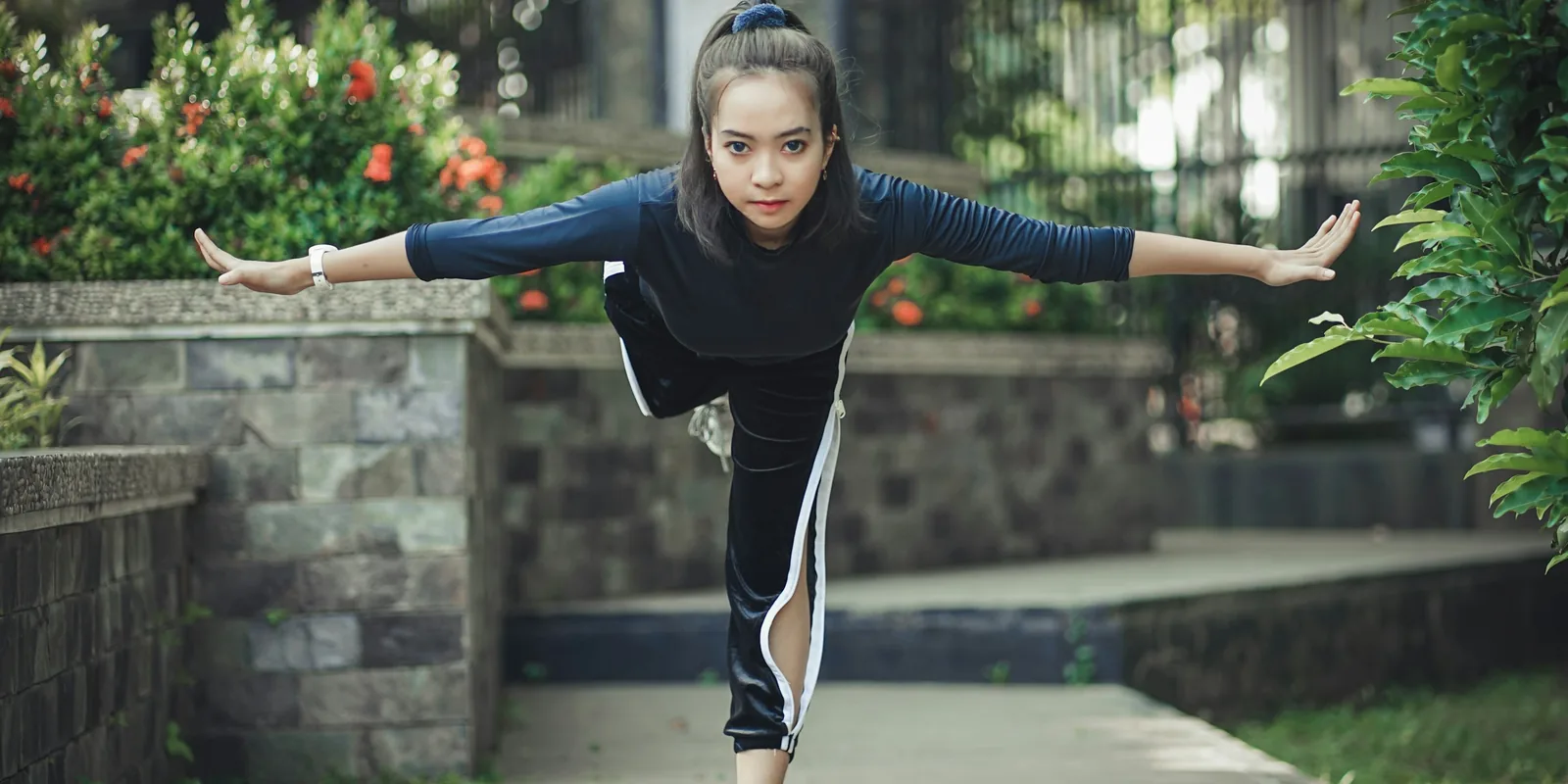
Tree (14): stand tall, palms together, and rest the sole of one foot on the other leg, five breaths each side. Rag doll: fold forward with soft knees and let the arms hang. Mouse (1): kneel, sit back on the heels, stretch the arms forward and breathe slowly. Expect a wobble in tree, and a sigh in mouse.
Easier, 3 to 4: hold the wall or your hand in tree, foot low on the calf. Harder, 6 to 8: foot higher up the leg, eyes fixed on one spot.
That's 2 minutes, plus five steps of 1 minute done twice, plus 3 minutes: 15 in all.
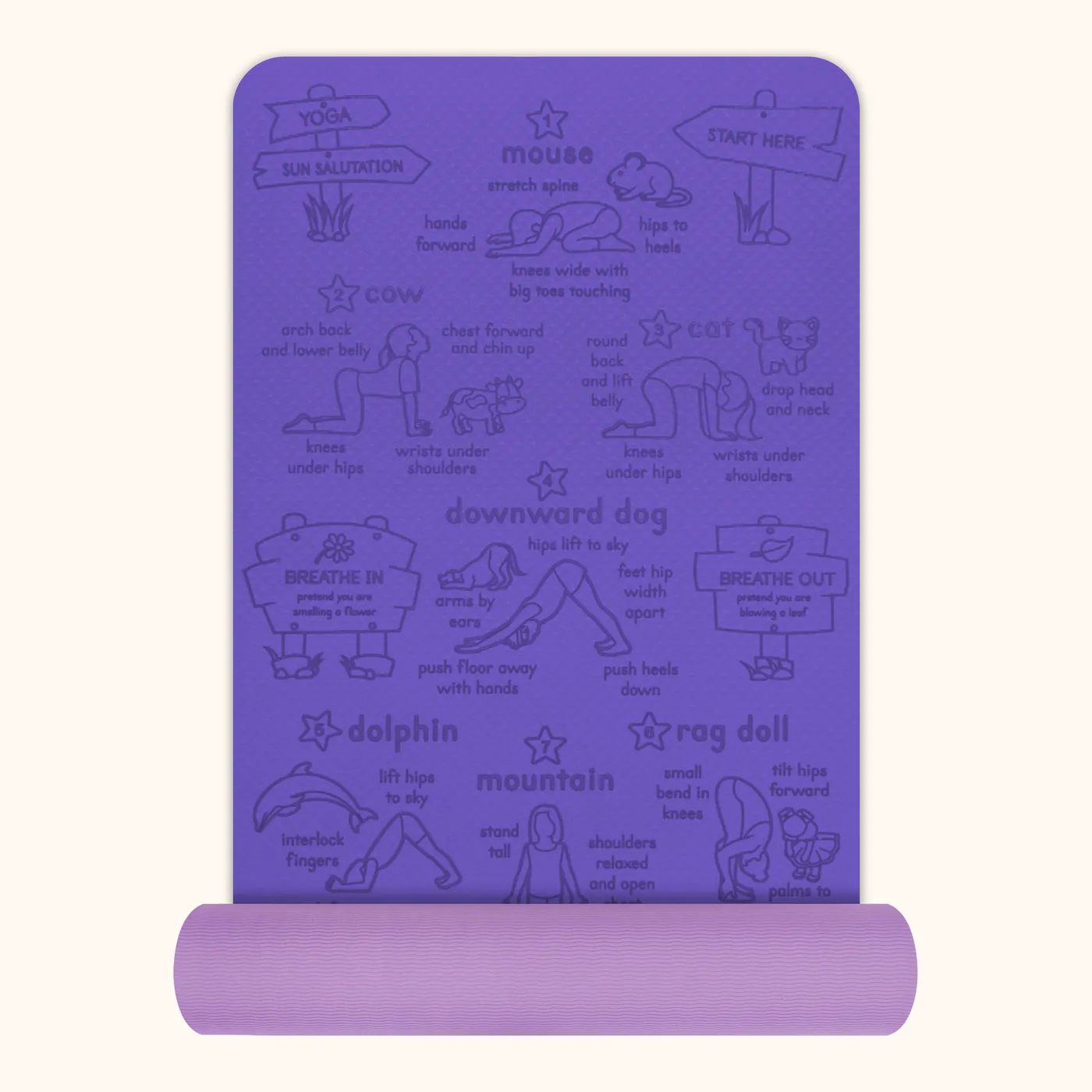
Chair, frog, tree, rag doll and mouse are all among the 15 numbered poses laser-engraved into our Sun Salutation mat, so a child can find them without a grown-up demonstrating. If your child takes to the poses, here's how to start kids' yoga at home.
What are some good 10-minute exercises for kids?
Cut the circuit down: traffic lights for 2 minutes, steps 2 to 6 once through for 5 minutes, then tree, rag doll and mouse for 3. That's 10 minutes and still ends on stillness. After PE or the park, our cool-down exercises for kids do the same job.
On a busy day, two minutes of star jumps still gets them off the sofa. Short is better than skipped.
Does 15 minutes at home count towards their 60 minutes?
Some of it does. For a three- or four-year-old, all 15 minutes count towards the 180 minutes a day the NHS recommends, because the NHS says all movement counts for under-5s.
For a child of five or over, only the energetic part counts towards the 60-minute daily average. The star jumps, stepping stones, frog springs and fast feet make up 8 of the 15 minutes, and they count if they leave your child too puffed to sing. Holding the poses usually won't. What the poses add is variety: the UK Chief Medical Officers ask children aged 5 to 18 for "a variety of types and intensities of physical activity across the week to develop movement skills, muscular fitness and bone strength". The NHS lists jumping among the activities that strengthen muscles and bones.
For the full picture, see how much exercise kids need.
What if the circuit turns into chaos?
Let it, for a bit. Fun exercises for kids at home are supposed to look a little silly, and chaos usually means they're moving.
If they won't start, make them the caller. A child who refuses to do star jumps will often happily shout "red" at you and watch you freeze mid-jog. Our yoga games for kids work on the same idea.
Put music on and use a song as the timer for each step, so it's the song that says stop, not you. Do the moves badly yourself. If one round is all you get, stop there and call it a win.
Siblings of different ages can race on the same steps using their own lines. If they need more space to burn off, a sofa-cushion obstacle course in the hallway is the next step up.
Keeping the circuit going when the evenings get dark
Give it the same slot most days, and keep the mat rolled by the sofa rather than in a cupboard, so starting takes ten seconds. If you miss a week, restart with one round, not the full circuit.
From late October the park is often dark by tea time, and that's when a routine that already lives indoors earns its keep. For calmer ideas on a wet weekend, there are our rainy day activities.
If you'd like a mat with the poses on it, pick a colour for them: £34.99, with free UK delivery, and 10 per cent off two or more if there's a sibling.
Frequently asked questions
Can a 5 year old work out?
Yes, if it's play rather than an adult workout. The NHS says children should do exercise that suits their age, ability and experience, and start anything new slowly, building up bit by bit. At five, that means play like jumping, running and simple shapes. Weights aren't needed: the NHS mentions them only for young people trained and supervised by a qualified adult.
Do kids need any equipment to exercise at home?
No. Exercise for kids at home without equipment works perfectly well: a clear patch of floor, a wall to push against and a couple of sofa cushions cover everything in this circuit. A mat or rug helps for the floor poses because it stops feet sliding, but a carpet will do.
How long should a child exercise a day?
The NHS asks for at least 180 minutes of activity a day for children aged 1 to 4, spread through the day, with at least 60 of them energetic for 3- and 4-year-olds. From age 5, it's an average of at least 60 minutes a day of moderate to vigorous activity across the week. Fifteen minutes at home is one part of that.
Is it safe to do a workout in the living room?
It is if you set the room up first. Clear a patch of floor away from table corners, keep cushions on the carpet rather than on hard floors where they slide, and do it barefoot rather than in socks. Nobody climbs on or jumps off furniture. If your child has a health condition, the NHS says to get medical advice first.