guides
The Daily Mile: What It Is and Why Schools Do It
Find out what the daily mile means at school, how long it takes, what research shows and how to try a relaxed family version at the weekend.
What is The Daily Mile challenge?
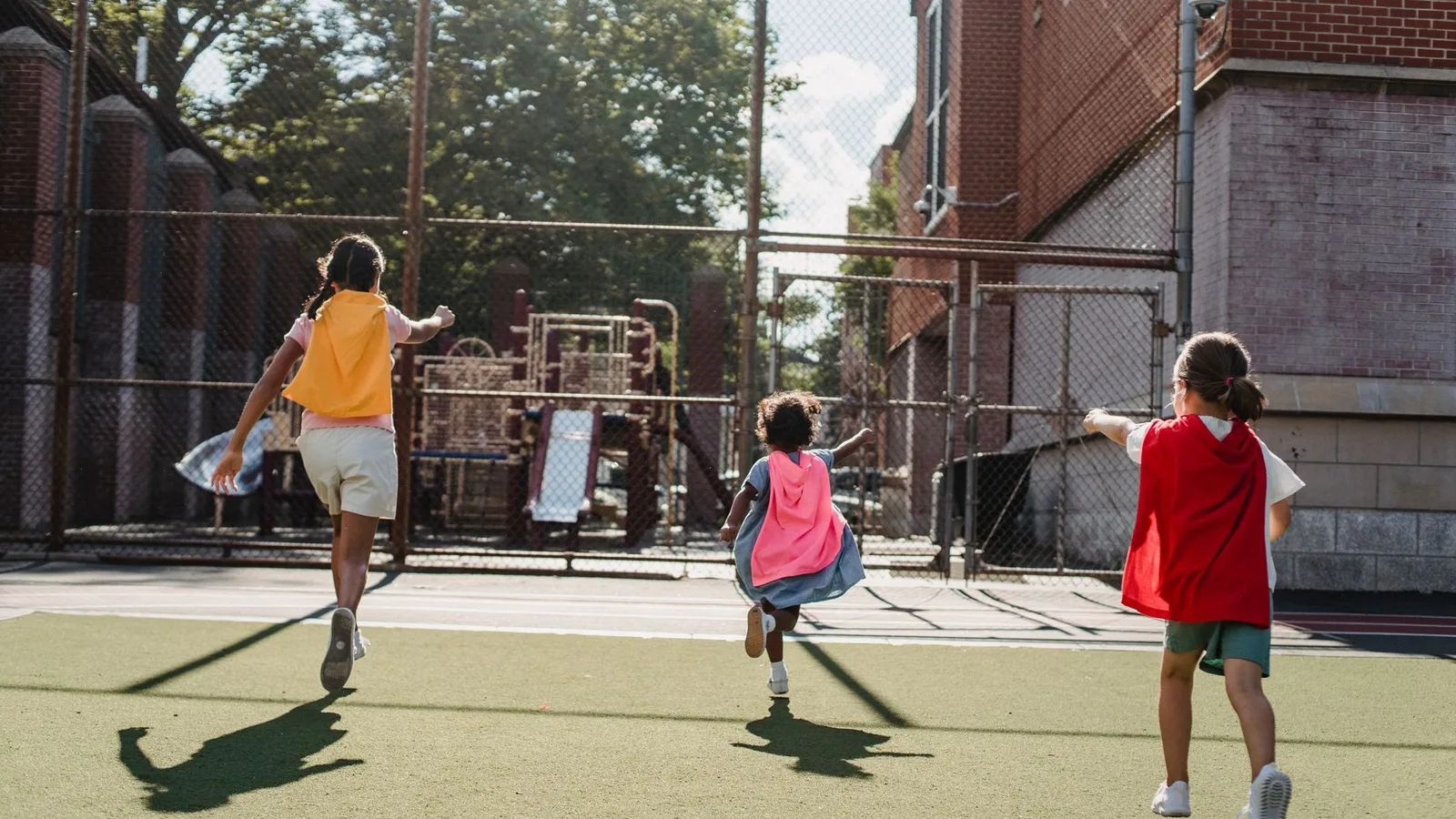
The Daily Mile is a short outdoor activity break where children run, jog, walk or wheel at their own pace for 15 minutes. The organiser describes it as a free, non-competitive activity for primary schools and nurseries. This guide explains the timing, research, school arrangements and a way to try it at the weekend.
On this page: timing, joining in, research, physical education (PE), small playgrounds, a weekend plan and quick answers.
Despite the word “challenge”, there isn't a race to win. The school version takes place during class time, with children moving outdoors together. Running and jogging are encouraged, but the getting-started guidance also includes walking and wheeling.
If your child mentions doing it, ask what their class actually does: where they go, who they move with and whether they enjoy it. That tells you more about their experience than asking who came first.
How long does The Daily Mile take?
The Daily Mile takes 15 minutes, and completing a measured mile isn't the requirement. The official FAQs explain that distance is secondary to participation. A child who covers less ground hasn't failed, and there's no need to keep them going until a distance counter reaches a mile.
The organiser's starting instructions let teachers choose when to go out and encourage children to set their own pace, ideally running or jogging for much of the session without pressure.
For example, imagine children moving around the same playground loop. Some might jog steadily; others might alternate walking and running. They can share the activity without covering identical distances.
At home, use time as a loose framework rather than measuring out a mile first. You don't need a step target either. Our guide to children's daily steps explains how step counts fit alongside activity guidance.
Is The Daily Mile inclusive?
The Daily Mile is designed to include children through different ways of moving, rather than requiring everyone to run identically. The organiser's inclusion guidance allows walking, wheeling and supported movement, with flexible periods of participation. What matters is how those choices work for your child at school.
Before assuming that a reluctant child dislikes exercise, ask them to describe the session. Is the difficulty the route, the pace, the company or not knowing when they'll finish? These are questions to explore together, not conclusions about their behaviour.
You could ask the teacher:
- Can my child choose how to move?
- What happens if they need to pause?
- Who can they speak to during the session?
The organiser also says adaptations should preserve children's dignity and avoid exclusion. A child shouldn't have to explain personal needs to classmates to take part differently.
For more ways to offer movement without turning it into a negotiation, see encouraging children to be active.
Is The Daily Mile effective?
The evidence suggests potential benefits for fitness and activity, but results are mixed and better learning isn't guaranteed. A 2023 systematic review, which brought together 13 studies, found encouraging results for physical activity and fitness. It also called for stronger research and longer follow-up.
A study published on 3 January 2026 examined 1,004 pupils across 40 Greater London primary schools, with children recruited in Year 1, aged 5 to 6. It found no statistically significant differences in activity during school hours, mental health or educational performance between participating and comparison schools.
That doesn't establish that the programme can never help. The study was observational, children had early exposure to the programme, and researchers didn't measure how consistently each school delivered it. Those limits matter when interpreting the findings.
For parents and governors, the practical question is what the school is actually offering. Ask whether sessions happen regularly, whether children can participate comfortably and whether the activity adds to their day. Those checks are more useful than expecting a guaranteed change in marks or mood.
Can we do The Daily Mile as part of PE?
The Daily Mile should add to PE and play, rather than replace them. The organiser's FAQs make that distinction. It provides a movement opportunity, but a short session alone doesn't cover the general activity recommendations for children aged 3 to 8.
The NHS guidance puts it in perspective:
- 3 to 4, General NHS activity guidance: At least 180 minutes of varied activity across the day, including at least 60 minutes at moderate to vigorous intensity.
- 5 to 8, General NHS activity guidance: The guidance for ages 5 to 18 is an average of at least 60 minutes of moderate or vigorous activity a day across the week, alongside varied activities.
These figures come from the NHS pages for under-5s and children aged 5 to 18.
The NHS separately advises disabled children aged 5 to 18 to aim for 20 minutes of activity daily, using shorter sessions if needed, plus strength and balance work on three days each week at a manageable level of challenge.
The NHS describes moderate activity as making you breathe faster and feel warmer. That means time outdoors isn't automatically time at that intensity. Keep room for other movement too. Our guide to how much exercise children need explains the wider picture.
How do we take part in a small playground?
Children can repeat a short route, so a school doesn't need a mile-long track. The official small-playground answer specifically allows repeated laps. For parents and governors, the useful discussion is how the available space works for the children using it.
Ask the school to talk through the route and supervision, following the organiser's guidance on supported outdoor participation. Then ask practical questions:
- Where does the group start and finish?
- How are children moving at different speeds accommodated?
- What happens when the usual space isn't available?
- How can children suggest a change?
A weekend version you can try together
Borrow the idea for a family outing: a short spell outdoors with nobody keeping score. Here's a suggested plan, not a training programme. The organiser recommends a safe outdoor space and movement at each child's pace.
- Choose a familiar park loop or garden route and agree where you'll finish.
- Move together, letting your child choose between walking and jogging.
- Use 15 minutes as the usual framework, with a shorter outing if that's what suits them.
- Afterwards, ask which part they'd like to do again.
Stay with your child and follow the organiser's supervision principles. You don't need a watch on their wrist or a lap chart on the fridge.
If they'd enjoy choosing some familiar poses afterwards, allow an optional two minutes at home. For that separate activity, explore our Sun Salutation mat: it has 15 numbered poses laser-engraved into the surface. Buying equipment isn't part of the outdoor plan.
When joining in needs a conversation
If your child regularly dreads the session, speak to their teacher about what happens during it and what could change. Bring your child's description, rather than a guess about why they're reluctant.
If you're worried that a health problem affects their participation, speak to your GP or health visitor. The NHS advises getting medical advice about exercise when a child has a health condition, and choosing activity suited to their age, ability and experience.
Frequently asked questions
When did The Daily Mile start?
The Daily Mile began in February 2012 at St Ninians Primary School in Stirling, Scotland, where Elaine Wyllie was headteacher. The University of Stirling records its beginnings. It started with a school looking for a simple way to give pupils more regular movement during the day.
Do children need PE kit for The Daily Mile?
No special PE kit or equipment is required by The Daily Mile programme. The organiser says children can take part without changing. Check your school's footwear and clothing arrangements before buying anything extra, especially if you've received a note asking children to bring trainers.
Does The Daily Mile have to happen every day?
The organiser currently recommends taking part at least three times a week. Ask your school how often your child's class actually goes out, rather than assuming the name describes its timetable. At home, you can borrow the idea for a weekend outing without starting a daily challenge.
Can children do The Daily Mile in wet weather?
Yes, when conditions are suitable. The organiser describes it as an activity for most weather, and schools should follow their own safety procedures. Ask what happens when the route is unsuitable and what clothing children need, rather than assuming every rainy day means cancellation.
Sources
- The Daily Mile: About the programme
- The Daily Mile: Getting started
- The Daily Mile: FAQs
- The Daily Mile: Inclusion and accessibility
- PLOS ONE: Systematic review of The Daily Mile
- BMJ Open Sport & Exercise Medicine: Greater London study
- NHS: Physical activity guidelines for children under 5
- NHS: Physical activity guidelines for children and young people
- University of Stirling: The Daily Mile
- The Daily Mile: Programme overview
- The Daily Mile: Practical arrangements