practice
15 Cooperative Games for Kids Where Nobody Is Out
Try 15 cooperative games for children aged 3 to 8, with shared goals, simple equipment and ways to play together at home, nursery or school.
What makes a game cooperative?
Cooperative games give children a shared challenge: keep a ball moving, carry a toy together or finish a group pattern. Everyone works towards the same goal, and nobody is knocked out for a mistake. These 15 games use movement and everyday objects, with options for a child and grown-up, siblings, small groups and classes.
The Department for Education's guidance for early years providers in England describes how supported interaction helps children learn to cooperate and resolve disagreements. Here, that means giving children a shared job, with an adult ready to help when the plan goes wrong.
Which game fits your group today?
Choose a game for the number of people joining in: pairs need little space, while circles need room for everyone to move. These are suggestions for ages 3 to 8, with challenges you can adjust together. Allow roughly 2 to 5 minutes per game, and repeat favourites.
Clear the playing area and check there's room to move, following Scouts' guidance for active games. Keep small parts away from under-3s. Use a light ball for keepy-uppy: the Child Accident Prevention Trust warns that balloons and broken pieces can block a child's airway.
What can two players do together?
Start with a pair if you're playing with your child or setting up something for siblings. Take turns choosing and leading. The NHS suggests ball games and shared block building as ways to practise taking turns; the games below add a shared finish.
1. Mirror moves
Make a matching pair of moving mirrors. Face each other and say, "Let's move so slowly that we look the same." Take turns leading a wave, a shoulder shrug and a gentle sway, then link them together.
The shared challenge is matching the whole sequence. If you lose each other, pause and reconnect. You can play sitting down, too.
2. Towel delivery
Carry a soft toy to its destination together. Put it in the middle of a hand towel and hold opposite ends. Say, "Let's walk our passenger to that basket without tipping it off."
Agree when to start, stop and lower the towel. If the toy falls, pick it up where it landed and continue. Both players are responsible for the same delivery.
3. Roll to the gate
Send a soft ball backwards and forwards through a shared goal. Set two cushions apart as gateposts and sit on opposite sides. Say, "Can we roll it through the gate five times between us?"
Count successful rolls together; a miss doesn't wipe out the total. Widen the gate or move closer if needed. The sender and receiver are on the same side.
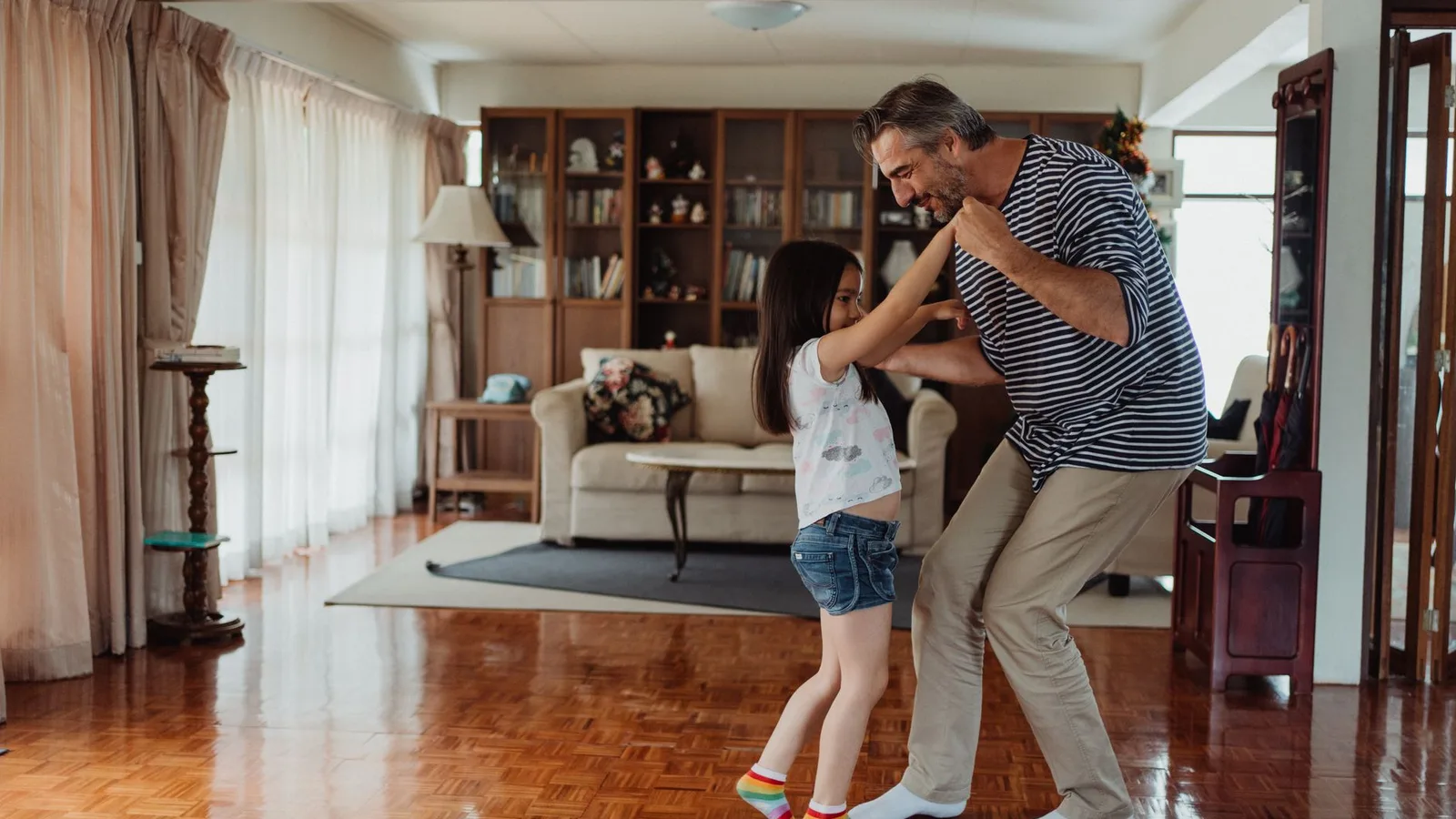
4. Make a shared dance
Create a dance that belongs to both players. Each person chooses two movements, such as clapping, marching or waving. Say, "Let's put your moves and my moves together."
Practise the four-move sequence, then do it to a song you both choose. You finish when you've included everyone's ideas. Nobody judges the dancing, and either player can suggest a seated movement.
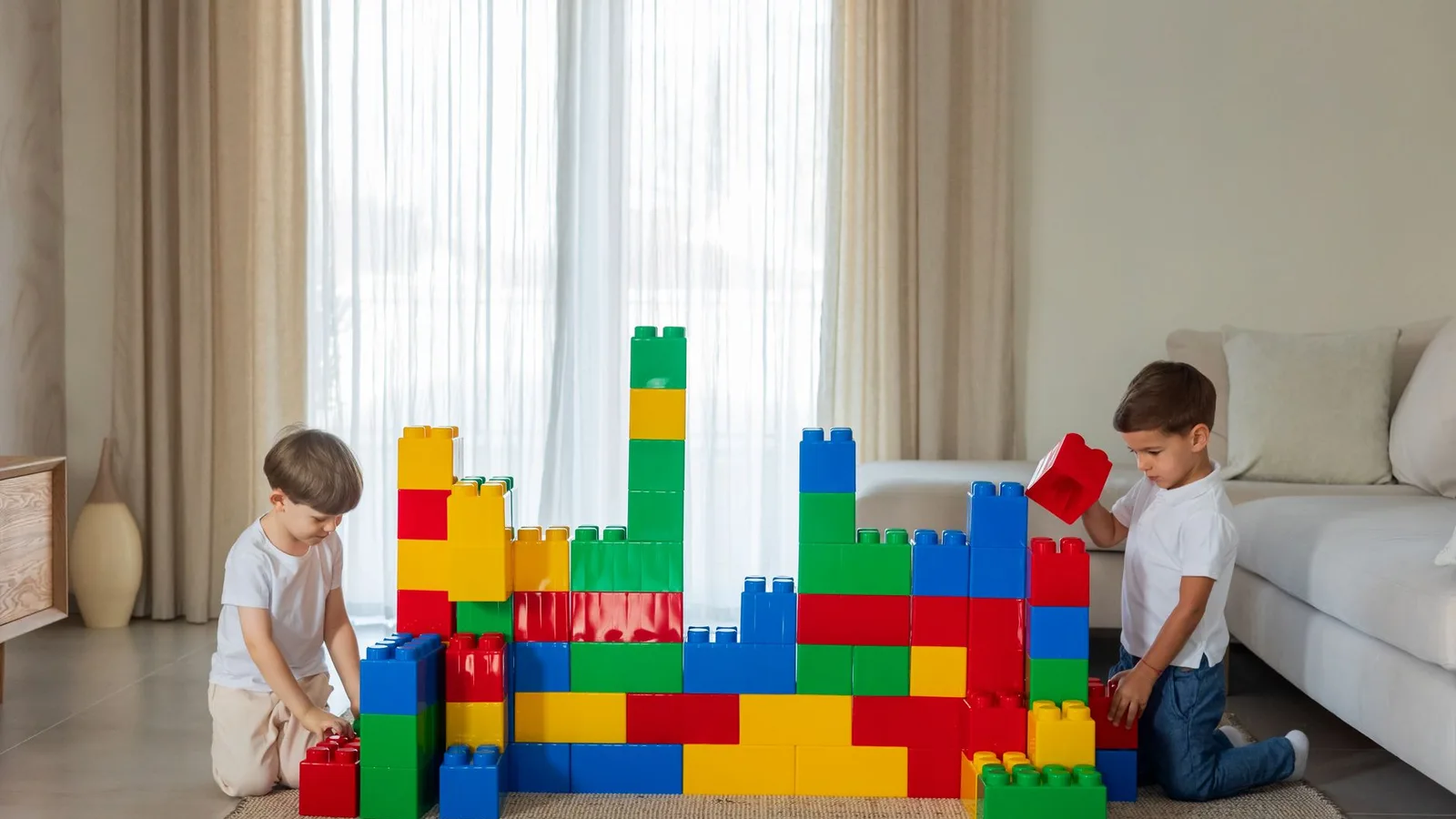
5. Build the same tower
Build one tower from six large blocks, taking turns to add a piece. Say, "We're building this together. Where shall the next block go?"
Keep the blocks on the floor within reach of both players. If it falls, decide together whether to use a wider base or build two smaller towers. The shared job is choosing a structure, building it and rebuilding it.
What can a small group work towards?
Try these with 3 to 6 players, whether that's siblings and a grown-up or a few friends. Give everyone a job and describe what finishing looks like before starting. For more games played in a ring, there are circle time ideas for nursery and school.
6. Keep the ball up
Work together to keep a lightweight beach ball off the ground. Stand in a loose circle and say, "Let's manage five taps between us." Call the next person's name before sending it towards them.
If it lands, everyone stays in and you start another attempt. Add a bounce between taps if you want. Count the group's touches, without keeping individual scores.
7. Toy rescue chain
Move soft toys from one basket to another using a human delivery line. Space yourselves close enough to pass comfortably, with a basket at each end. Say, "Every passenger needs to travel through everyone's hands."
Pass each toy along, then swap places in the line. Your shared finish is an empty starting basket. Play seated if that suits the group.
8. Same-side skittles
Knock down six empty cardboard tubes as a team. Line them up and roll a soft ball towards them. Say, "Let's clear the whole set together."
Take turns bowling, returning the ball and checking which tubes remain standing. Leave fallen tubes down until you've cleared them all. There's no limit on attempts, and helping someone line up their roll counts as part of playing.
9. Make a giant shape
Turn the group into the outline of a circle, triangle or letter. Start with a circle and say, "Where could we each stand to make our shape?" Everyone chooses a place, leaving space between bodies.
An adult can describe where a gap needs filling. Try a different shape once everybody is included. You can talk, point and change places until the group agrees it's finished.
10. Tell a pose story
Build a story from familiar yoga poses or simple body shapes. Say, "Let's make a mountain, a flower and a sleeping animal." Let each player suggest a shape, then try the whole story together, each in their own space.
The goal is to include everyone's idea, with no matching depth or balance required. Ordinary standing or seated shapes count just as much as named poses.
Which games work with a class or bigger group?
Try circles of 6 to 12 players, splitting a class into smaller groups where space or equipment calls for it. Each circle has its own shared task, with no race between groups. For the cloth activities, choose a sheet or parachute everyone can reach without crowding.
11. Lift the parachute together
Hold the edges of a play parachute or sheet and make it rise and fall together. Say, "Ready, lift, and lower." Start with small movements, keeping everyone around the outside.
Try making a still pond, gentle ripples and a larger wave, then return to stillness. The shared challenge is changing together when the caller asks. Swap callers so the same child doesn't direct every round.
12. Guide the ball across the sea
Put a soft ball on your parachute or sheet. Name someone and say, "Let's steer it towards you." Everyone adjusts their edge to send the ball across, following the Scouts' cooperative parachute game.
Choose another destination once it arrives. If the ball falls, replace it and continue. Your group finishes when everyone has received it, rather than when someone makes a mistake.
13. Send a wave round
Pass a movement all the way round a circle. The first player raises and lowers their hands, then the next starts as they finish. Say, "Let's send our wave back to where it began."
Keep going until it reaches the starting player. If the wave gets lost, restart from that spot. Try a small finger wave or a larger arm movement, seated or standing.
14. Become a walking picture puzzle
An adult cuts a large drawing into one strip per player. Give everyone a strip and say, "Let's stand in order to put our picture back together." Hold the strips facing the same way and help each other find neighbouring pieces.
This adapts the Scouts' body puzzle. Everyone contributes a piece, and the group can talk and rearrange itself until the picture is complete.
15. Invent a giant machine
Each player becomes a moving part of an imaginary machine. Someone starts with a repeated hand movement; neighbours add their own movements until everyone is involved. Say, "What could our machine be making?"
Try a pretend sock sorter or cloud maker. A caller switches the whole machine on and off. Your shared challenge is including every moving part and stopping together, with everyone in their own space.
How could you turn these into a short session?
Choose a short sequence with a clear finish, and include time to change games. You can repeat a favourite without raising the target after every success. Ask whether everyone wants another go before moving on, and shorten or extend these suggested timings to suit your group.
- Two children, 10 minutes: try mirror moves for 2 minutes, towel delivery for 3 and a shared dance for 3. Leave the remaining 2 minutes for choosing music and swapping activities. Let each child choose a movement for the final dance.
- A nursery or class group, 12 minutes: allow 3 minutes for the parachute lift, 4 for steering the ball and 3 for sending a wave round. Keep 2 minutes for setting up and changing games. Our parachute game ideas offer other shared challenges.
For the pose-story game, browse the Yogi-Me mats: each has 15 numbered poses laser-engraved into the surface. Choose familiar poses together and use them as your story prompts.
What if one child takes over or won't join?
Offer a choice of joining, watching or helping with a practical job. Someone can choose the next destination or hold the basket without performing in front of the group. If a child takes over, give each player a turn to suggest the next move before restarting.
If blame starts, pause the game and change the task. Try, "The ball keeps getting away. Shall we move closer?"
Praise the action you noticed: "You waited until everyone was ready." For repeated arguments beyond the game, see our guide to handling sibling disagreements.
For today, an unfinished game is fine. Nobody owes the group a performance.
Frequently asked questions
What are cooperative games for children?
Cooperative games give everyone the same goal, rather than making children compete against each other. The group might try to keep a ball moving, move a toy together or create a shared dance. In the games here, a mistake means another attempt, and nobody has to sit out.
What cooperative games can two children play?
Try mirror moves, towel delivery, roll to the gate or a shared dance. Give each child a job the other needs, such as holding one end of the towel or adding the next movement. Swap those jobs so both children get to choose and follow.
Which cooperative games can you try with a three-year-old?
Start with roll to the gate, mirror moves or passing a soft toy around a small circle. Join in yourself and demonstrate the action instead of explaining several rules at once. Choose a single shared task, such as getting the ball between the cushions, then let your child decide whether to repeat it.
How do you stop cooperative games becoming competitive?
Take away the race and give everyone the same finish line: all the toys delivered, or a move from every player included in the dance. If blame starts, pause and change something practical, such as moving closer together. Swap who chooses first, and describe the helpful action you noticed.