guides
How to Encourage Kids to Exercise Without a Fight
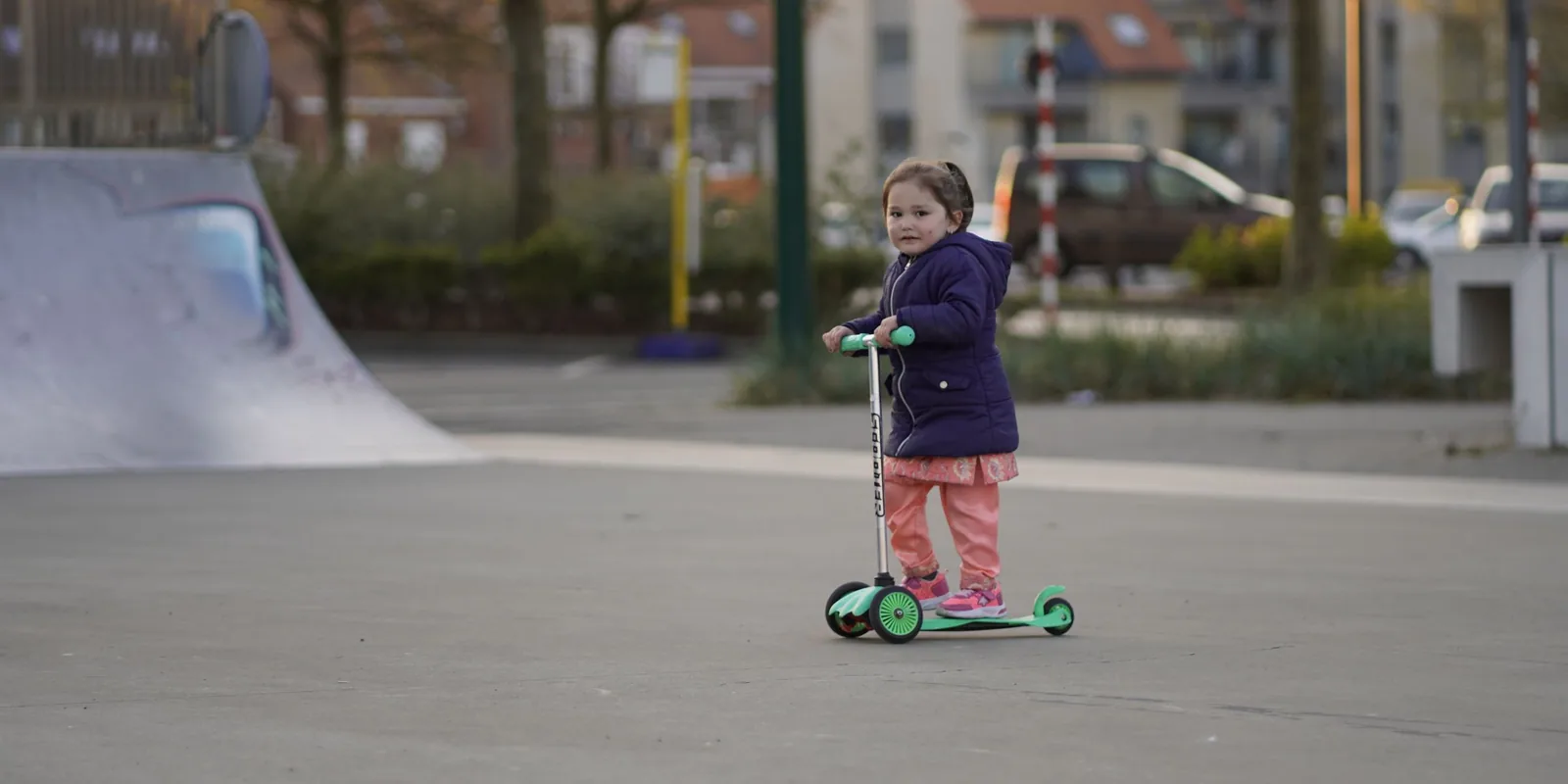
Kids move most when it's play, their choice and done with you. How to encourage kids to exercise, even the child who hates sport, all winter.
Stop calling it exercise. Children aged 3 to 8 move most when it feels like play, when they get a say in it, and when someone they like is joining in. The UK Chief Medical Officers say there is no single way for a child to be active, and that the focus should be on activities they enjoy.
That's the short answer to how to encourage kids to exercise. The rest of this page is the how: what the guidance actually asks for, what to try with a child who says no, and why a child who "hates exercise" can still run round a playground for an hour.
What does the UK guidance actually ask for?
An hour a day on average from age 5, and it's more flexible than it sounds. The UK Chief Medical Officers ask children aged 1 to 4 for at least 180 minutes of activity a day, with at least 60 of them energetic for 3- and 4-year-olds. From age 5, they ask for "an average of at least 60 minutes per day across the week" of moderate to vigorous activity. There's more on what counts in our guide to how much exercise kids actually need.
Moderate to vigorous activity is anything that makes a child breathe faster and feel warmer. The NHS's test: they can still talk, but not sing.
Two lines from the UK Chief Medical Officers' guidelines matter more to a parent in a standoff than the numbers do:
- There is "no single way in which children and young people should be active", and "the focus should be on identifying activities that they find enjoyable and on creating opportunities to be active."
- "For children and young people who are inactive, any increase in physical activity or any reduction in sedentary time is likely to provide health benefits and should be encouraged."
Sedentary time is time spent sitting or lying down while awake. Put the two lines together with "across the week", and a reluctant child doesn't need a daily battle. A flat Tuesday can be made up on Saturday.
What can you do if your child refuses to exercise?
Change the offer, not the volume. Three moves work better than asking again:
- Play, not exercise. For toddlers, the NHS says active play, such as a climbing frame, chasing games and ball games, "is the best way for this age group to get moving". Older children respond to the same thing. "Race you to the gate" gets a different answer from "let's go for a walk".
- Two choices, not a yes or no. "Scooter or walk?" "Garden or park?" A child who's been given a say has less to push against.
- Do it with them. The American Academy of Pediatrics says children who regularly see their parents enjoying physical activity "are more likely to do so themselves", and suggests simply playing together. Our yoga you can do together as a family is one way in that needs no garden.
Here's an illustrative after-school moment. Your six-year-old is on the sofa and says no to the park. Instead of asking again, you put a song on and start a silly dance in the kitchen. Two minutes later they're telling you you're doing it wrong, and showing you how. Nobody used the word exercise.
Why does a child who "hates exercise" run round the playground for an hour?
Because they haven't gone off moving. They've gone off a format. If you've typed "my child hates sport", look at what the sport involves: being watched, being picked for a side, losing in front of people, and rules they can't keep up with yet. Take those away and the same child is often happily chasing friends at break.
The Chief Medical Officers' evidence review points the same way. It found that trying different types of activity is linked to children feeling more competent, and that feeling competent is linked to being more active. It's an association, not a promise, but it suggests a route: let a reluctant child get good at something small, on their own terms, before anyone asks them to join a team.
That might be a scooter trick in the back garden, a handstand against the wall, or holding a balance for longer than last week. It's private, it's theirs, and nobody's keeping score. Team sport can come later, or not at all. The NHS's list of activities for children includes swimming, skipping, dancing, cycling and skateboarding, and none of them needs a team.
How do you motivate kids to exercise without nagging?
Match the hook to their age, and praise what they did rather than how they look. Leave weight and appearance out of it entirely.
- Ages 3 to 4: copying. Be the animal they have to copy: stomp like an elephant, hop like a frog, freeze like a statue. Most would rather join in with you than be told.
- Ages 5 to 6: games with simple rules. Musical statues, follow the leader, "can you get to the tree and back before I count to ten?" Our yoga games that feel like play work well here.
- Ages 7 to 8: choice and a personal best. Let them plan the route to the park, pick the activity for Saturday, or try to beat their own time, not their brother's.
How do you keep kids active in winter?
Go out anyway, and use the walk home. The clocks go back an hour on the last Sunday in October, according to GOV.UK, and from then until spring the afternoons are often dark by tea time. The NHS asks for under-5s' activity to be spread through the day, with outdoor play included, so a coat and wellies are worth more than a perfect forecast.
On a school day, the walk home is usually the easiest daylight you'll get. Take the long way, kick through leaves, and save the screen for after.
How do you get kids active indoors?
Clear one patch of floor, put music on, and let them lead. A race to tidy up, a dance in the kitchen, hide and seek, or a sofa-cushion course all count as play. For a ready-made plan, try our 15-minute circuit for the living room.
For the child who won't move while anyone's watching, a mat with the poses on it gives them something to do by themselves. Our Sun Salutation mat has 15 numbered poses laser-engraved into it, from mouse at 1 to dancer at 15, so a child can start at number 1 and carry on alone, with nobody keeping score and nothing to switch on. You can have a look at the poses, and if yoga is new to you both, here's how to start yoga with your child.
Be honest about what it is. For a 3- or 4-year-old, a pose session counts towards the NHS's 180 minutes, because light activity counts for under-5s. For a child of five or over, holding a pose rarely leaves them breathless, so it's a way in and a break from sitting, not their hour. Tree and dancer are both held on one leg, which adds some of the variety the Chief Medical Officers ask for. If that sounds like your child, it's a mat they can lead themselves: £34.99, with free UK delivery, and full length so you can join in.
When is it more than reluctance?
Sometimes a no has a reason behind it. Speak to someone if any of these apply:
- A health condition. The NHS says children should get medical advice about exercising if they have a health condition. Ask your GP what suits your child.
- Pain. The American Academy of Pediatrics says activity shouldn't hurt. If it keeps hurting, slow down and talk to your GP.
- Other children. If your child avoids PE or clubs because of how they're treated, GOV.UK says to report bullying to the school in the first place.
- A disability. The NHS has a separate guideline for disabled children aged 5 to 18, starting from 20 minutes a day, and their healthcare team can help you pitch it.
If you're worried about how your child moves or keeps up with others, your GP, your health visitor for under-5s, or the school nurse is the right first call.
Frequently asked questions
How do I get my child to exercise more?
Start smaller than you think. The UK Chief Medical Officers say that for an inactive child, any increase in activity or any cut in sitting time is likely to bring health benefits. So add one thing they already like, such as a scooter to school or a dance before tea, and build from there rather than setting an hour on day one.
Is it OK if my child doesn't like team sports?
Yes. The UK Chief Medical Officers say there is no single way for a child to be active, and the focus should be on activities they enjoy. The NHS's own list includes plenty without a team: swimming, skipping, dancing, cycling, skateboarding and rollerblading. Plenty of children who dislike being picked for a side love moving on their own terms.
How do you keep a 3 or 4 year old active indoors?
Make it play. For under-5s, the NHS says activity of any intensity should be encouraged, including light activity, and that all movement counts, so a living room is plenty. Chasing round the sofa, dancing, crawling through a cushion tunnel and copying animal shapes all help. Add energetic bursts too: for 3- and 4-year-olds, the NHS asks for at least an hour of those a day.
Should exercise ever hurt a child?
No. The American Academy of Pediatrics says exercise and physical activity should not hurt, and if it becomes painful your child should slow down or try something less vigorous. Breathing faster and feeling warmer is normal, and it's how the NHS describes moderate activity. Pain that keeps coming back, or any activity with a health condition, is worth a word with your GP.
Sources
- UK Chief Medical Officers' physical activity guidelines, Department of Health and Social Care (first published 7 September 2019)
- NHS - Physical activity guidelines for children and young people, last reviewed 23 October 2024
- NHS - Physical activity guidelines for children (under 5 years)
- American Academy of Pediatrics (HealthyChildren.org) - Encouraging your child to be physically active
- GOV.UK - Bullying at school: reporting bullying
- GOV.UK - When do the clocks change?