practice
How to Do a Cartwheel: A Step-by-Step Guide for Kids
Learn how to do a cartwheel with clear hand-and-foot cues, beginner drills, a 15-minute practice plan and advice on mats and coaching.
How do the hands and feet fit together?
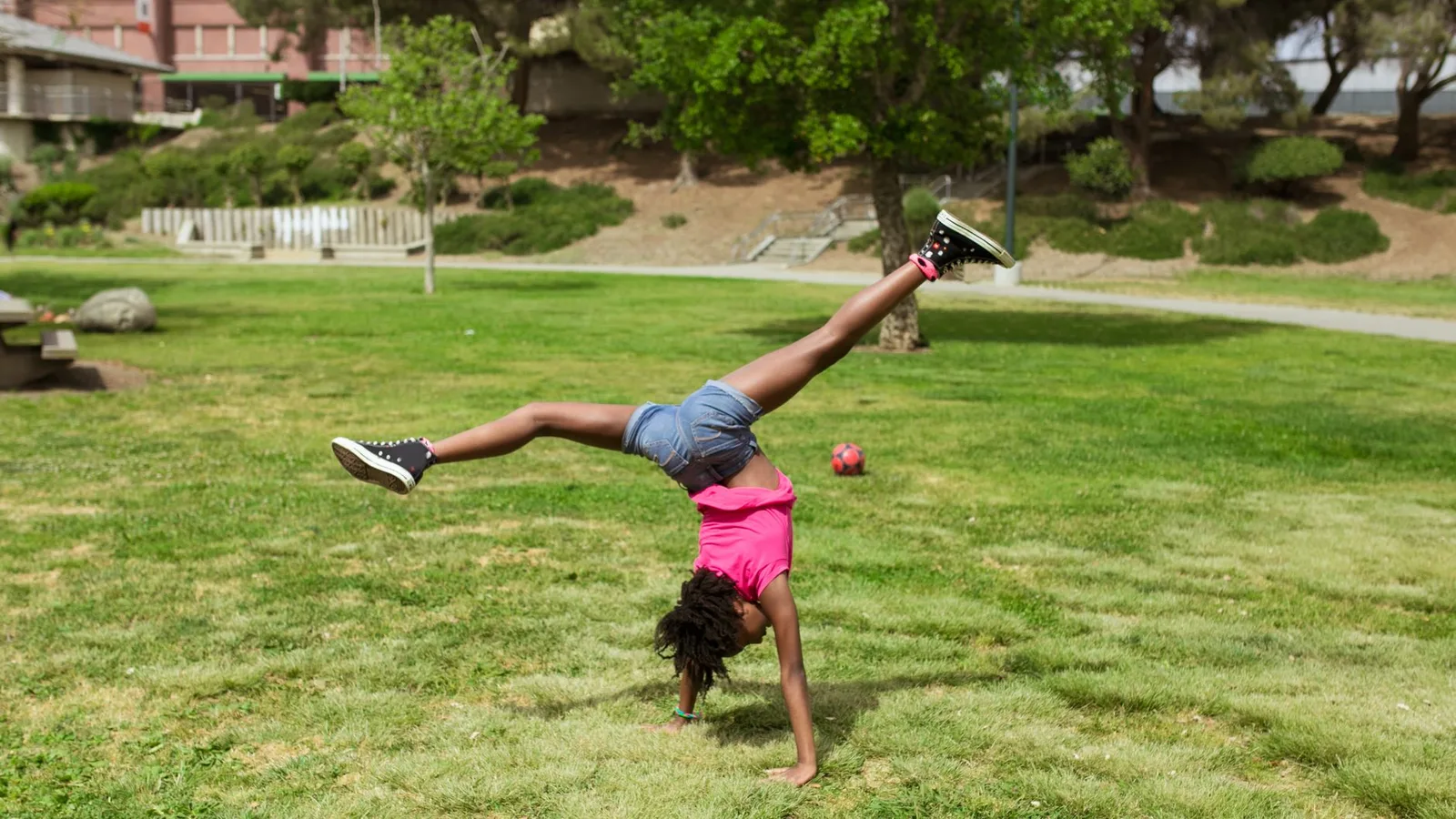
To do a cartwheel, start standing with your arms raised, then lean sideways and put your hands down one after the other. Your legs pass over your body and your feet land in turn. The rhythm is hand, hand, foot, foot, with straight arms supporting you through the middle. Gymnastics technique guidance
If your child comes home from school asking to learn, start with that rhythm. This guide uses a sideways cartwheel, finishing facing the same way you started, rather than adding a turn.
Where should your child practise their first cartwheel?
Choose a time when you can stay and watch, with proper gymnastics matting and clear space. Check the mat lies flat and remove nearby obstacles. The Association for Physical Education's safety guidance covers suitable equipment, space and footing. For garden practice, ask a coach about the surface; grass isn't automatically suitable.
For the full movement, get coaching if your child needs lifting or catching. Physical support is a skill to learn, so don't improvise it. Our guide to gym mats and yoga mats explains their different uses.
Stop if exercise hurts. If you're worried about pain or how your child moves, speak to your GP or health visitor.
What can you practise in 15 minutes?
Use these seven stages as a practice plan, with pauses included in each time slot. Staying with the early drills is fine. Oide's gymnastics teaching guidance says specific skills should follow proficiency in the introductory exercises, so the clock never decides when your child moves on.
1. Get moving for 6 minutes
Say, "Let's march, lift our knees and roll our shoulders," using easy marching, heel digs, knee lifts and shoulder rolls from the NHS general warm-up, which takes at least 6 minutes. Let your child choose the order; this opening is movement time, not a test of remembering instructions.
2. Find a comfortable side for 1 minute
Say, "Feet apart, arms beside your ears, bend towards the side you want to travel." Try the standing position each way before choosing a direction; Oide's preparation drills explore both sides. Your child might keep changing their mind, so let them choose without making it a left-versus-right quiz.
3. Rehearse the contact order for 1 minute
Say, "Hand, hand, foot, foot," while pointing to an imaginary line on the mat. For travel to the left, point out left hand, right hand, right foot, left foot; reverse it for the right. Stay upright for this rehearsal, so there's only the order to think about.
4. Try a low sideways hop for 2 minutes
Say, "Hands flat on the mat, knees tucked, little hop to the side." Begin crouched and keep the movement small: Oide starts cartwheel preparation with sideways hops. Feet landing together belong to this preparation stage. There's no need to turn it into the full upside-down movement yet.
5. Put the cartwheel together for 2 minutes
When the preparation is controlled, ask a coach to demonstrate the sideways cartwheel sequence. Start with arms beside your ears and step into a side lunge in your direction of travel. Place your hands down in turn, fingers pointing opposite to the way your chest faced at the start. Keep arms straight and legs apart. The leg furthest from your direction of travel kicks over first and lands first, close to the hands. Bring the other foot down, then stand with arms raised, facing the same way you started.
6. Repeat with one cue for 2 minutes
Choose the stage your child can manage and repeat that, using just one cue. If there's a long pause between hands, say, "Both arms start up, then hand-hand." The teaching notes identify a delayed second hand as a common difficulty. You don't need to comment on every limb.
7. Finish quietly for 1 minute
Say, "Walk with me, then stand still." Use the final minute for an easy stroll and a quiet finish, arms resting by your sides. Let your child tell you which bit they'd like to try again another day, then leave the practice there, even if the finished cartwheel hasn't arrived.
Does that mean a cartwheel in one afternoon?
No. The plan adds up to 15 minutes, including the warm-up and finish; it's a way to organise practice, not a learning deadline. You can spend the practice slots on the same early drill. Don't hurry through the stages to reach a full cartwheel before the time is up.
If today's interest ends after the warm-up, choose something from our home movement ideas instead.
What if the feet won't go over?
Go back to the last movement your child could control. Oide's cartwheel cards specifically advise returning to preliminary activities when twisting appears. The useful question is which part to practise next, rather than how to persuade them to kick harder.
- Feet barely leave the floor: keep the small sideways hop as the task.
- Hands get muddled: return to the spoken sequence while standing.
- They twist out of the movement: return to preparation and ask their coach for a demonstration.
- They don't want to continue: finish without bargaining for another attempt.
Keep your feedback concrete: "You remembered which hand came first." If they'd rather try a different movement, our balance activities offer another starting point.
What about a wall handstand or a forward roll?
Treat these as separate skills to learn with a coach. Oide's wall handstand preparation includes placing hands on a mat and moving a foot up the wall and back down, before progressing to both feet. Ask for a demonstration of coming down as well as going up.
For a forward roll, often called a roly poly, the primary gymnastics teaching points are hands flat, head tucked and a rounded roll onto the shoulders and upper back. Keep the head off the mat. Have a coach teach that shape before trying to join skills together.
How do you make another go feel inviting?
Leave the decision open: "Shall we try the hand order again?" Start the next session with the warm-up and the drill they remember. There's no need to keep a score or compare their cartwheel with a friend's, or count missed sessions.
If they want to go further, British Gymnastics' parent hub helps you find a club. Take a specific question: "Which drill should we practise between sessions?"
For a calmer yoga session on another day, you can choose a Sun Salutation mat with 15 numbered poses laser-engraved into the surface and a thickness of 6 mm. It is a yoga mat, not cartwheel matting.
Frequently asked questions
Which hand goes down first in a cartwheel?
Going left, put your left hand down first, then your right hand, right foot and left foot. Reverse this when travelling right. Point out the places while your child stands and says the order together, before trying the full movement.
At what age should a child be able to do a cartwheel?
Don't set a birthday deadline. British Gymnastics describes children progressing at their own pace, and teaching guidance puts readiness for the movement first. Ask a coach which preparation suits your child. Being interested in cartwheels is a reason to explore gymnastics, not a requirement to achieve the full skill.
How long does it take to learn a cartwheel?
There's no learning deadline to promise. The 15 minutes in this guide is a suggested practice session, not a claim that your child will master a cartwheel in that time. Keep returning to a manageable drill and let their coach decide when they're ready to progress.
Can you use a yoga mat for cartwheels?
Don't assume a yoga mat is suitable. For cartwheels, choose gymnastics matting suited to the skill. Ask your child's coach about the equipment before buying.
Sources
- Independent Gymnastics: Technique Toolbox
- NRG Gymnastics: cartwheel teaching progressions
- Oide: gymnastics skill teaching cards
- Oide: Gymnastics for All resource handbook
- Association for Physical Education: Safety in Gymnastics
- NHS: How to warm up before exercising
- NHS Healthier Together: When should I worry about my child's movements?
- Scoilnet: Primary Gymnastics key movements
- British Gymnastics: Parent Hub
- Guyana Ministry of Education: physical education curriculum, cartwheel technique