practice
Yoga for Kids: A Beginner's Guide for Parents
Yoga for kids without the guesswork: what's safe by age, the real benefits, and how to start at home with no kit or experience.
Yoga for kids is short, playful movement built from animal poses, simple balances and a few slow breaths. You can start at home from around age two or three with no kit and no experience: clear a small space, copy two or three animal shapes together for a few minutes, and finish lying still. Keep it gentle, never push a stretch, and stop while it is still fun.
Your child has energy to burn, a wobbly attention span and, if they are anything like most kids, a strong pull towards a screen. You have heard yoga might help, but you are not a yoga person, and the idea of teaching it at home feels a bit daunting.
Good news: children's yoga is not about perfect poses or long, silent sessions. For little ones it is mostly playful movement, animal shapes and a few calm breaths.
This guide walks you through what is safe, what the real benefits are, and exactly how to start at home with no equipment and no experience.
What is yoga for kids, and how is it different from adult yoga?
Yoga for kids is playful, movement-based activity that borrows yoga poses, breathing and stillness, then wraps them in stories, animals and games. Unlike adult classes, it is short, imaginative and non-competitive. The aim is to move, giggle and settle, not to hold difficult postures or achieve anything.
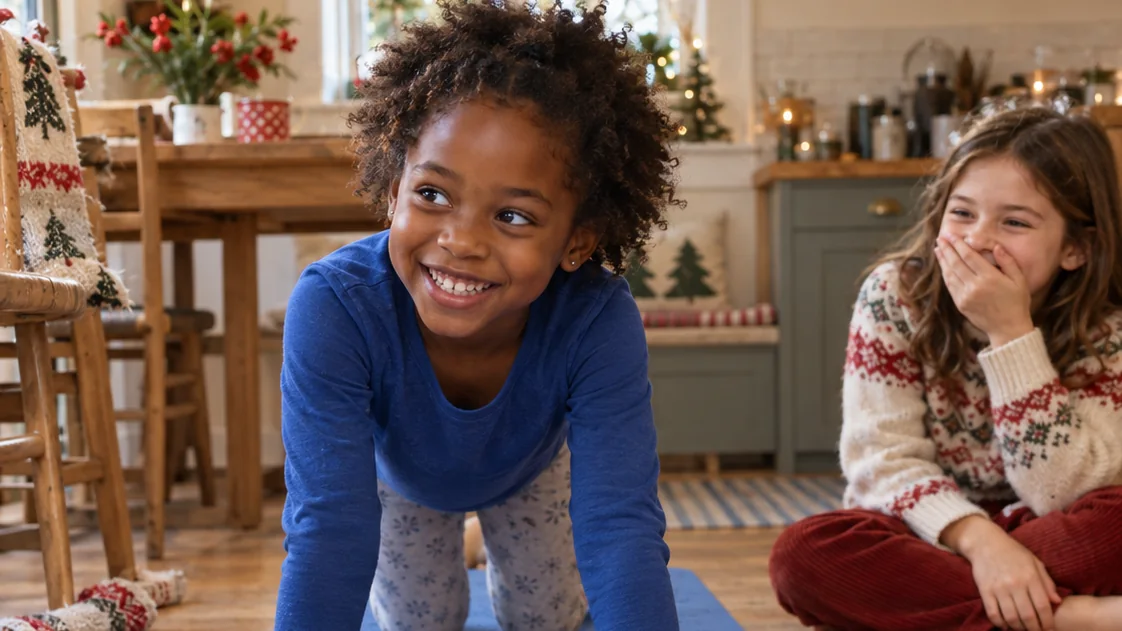
Think of it as guided play with a calming edge. One minute your child is a hissing snake on their belly, the next they are a wobbly tree trying not to topple over.
Sessions are brief, often just five to ten minutes for younger children, and there is no right or wrong. Falling over is part of the fun.
Why "play, not performance" matters
The moment yoga feels like a test, most children switch off. Keep it light. Praise effort and silliness rather than neat shapes, and follow your child's lead when they want to invent their own animal.
If you want a gentle starting point, our roundup of five simple animal yoga poses for kids is built for exactly this kind of playful first session.
Is yoga safe for young children?
Yoga is generally very safe for healthy children when it stays gentle, playful and age-appropriate. Young bodies are naturally flexible, so there is no need to push into deep stretches. Let your child move within their comfortable range, avoid forcing any pose, and stop if anything hurts. If your child has a health condition, check with your GP first.
Children are not small adults, and they should never be pulled or pressed into a shape. The rule is simple: your child moves themselves, you never move them.
Skip anything that loads the head or neck, such as headstands, for young children at home. Stick to standing, sitting and lying poses where a wobble just means a soft landing on the mat.
A little grippy space helps too. A non-slip mat gives small hands and feet something stable to push against, which makes balancing poses safer and less frustrating.
What is normal at each age?
It helps to know what most children can already do. Young children build balance, coordination and core strength gradually through play, so what a child can manage, such as balancing on one foot, jumping or coordinating both sides of the body, shifts steadily with age. You can read the UK government's early years guide to physical development to set fair expectations.
A three-year-old who cannot balance like a five-year-old is not behind. They are three. Our yoga poses for preschoolers are chosen with that in mind.
What does yoga do for a young child?
Yoga gives children gentle movement that builds strength, balance and coordination, plus quiet time to calm down and wind down. It counts towards daily activity targets set by the NHS, offers a screen-free way to be active, and can become a soothing part of the bedtime routine. It is movement and calm in one.
Let us break that down, because the benefits fall into two useful buckets: the physical and the calming.
It counts as real physical activity
This is the part parents often underestimate. The NHS says children and young people aged 5 to 18 should average at least 60 minutes of moderate activity a day, spread across the week, and that 60 minutes can be broken into shorter bursts.
For under-fives it is even more. The NHS recommends toddlers and pre-schoolers get at least 180 minutes of activity a day, spread throughout the day, and not sit still for long stretches while awake.
Yoga-style movement, stretching, balancing and climbing all count towards those totals. A short session before school or after nursery is a genuine contribution, not a token gesture.
The UK Chief Medical Officers back this up, adding that children should also do muscle and bone strengthening activity across the week. Holding a squishy frog squat or a steady tree pose gently works exactly those muscles.
It is calm, screen-free time
The other half is the quiet. Slow breathing and stillness give children a way to settle, which is handy before bed or after a busy, over-stimulating day.
The World Health Organization recommends that 3 and 4 year olds have no more than one hour of sedentary screen time a day, and less is better, alongside plenty of active play and 10 to 13 hours of good sleep. Swapping some screen time for a bit of gentle movement fits that advice neatly.
On sleep, The Sleep Charity suggests turning screens off about an hour before bedtime to protect children's rest. A few calming poses make a lovely screen-free wind-down in that final hour.
If screens are a daily battle in your house, you are far from alone. Ofcom's research on children's media habits documents heavy screen use among children as young as three, which is exactly why a deliberate, active alternative is worth having. For more on this, see our guide to how much screen time is right for kids.
We have also written more on the wider benefits of yoga for children if you want to go deeper.
How much yoga should a child do, by age?
Match the session to the age. Toddlers manage a few minutes, primary-age children a bit longer, and pre-teens can handle a proper short routine. Keep little ones' sessions playful and brief, and let older children build slowly. There is no daily quota for yoga specifically, so a few gentle minutes on most days is plenty.
The table below is a rough guide, not a rulebook. On any given day your child might do more or less, and that is completely fine.
- Toddlers (1 to 2), Session length: 2 to 5 minutes; What works best: Copying simple animal shapes, wobbling, giggling; What to expect: Very short attention, lots of movement, no stillness
- Pre-schoolers (3 to 4), Session length: 5 to 10 minutes; What works best: Story-led poses, animal sounds, one calm breath; What to expect: Short bursts, easily distracted, loves being silly
- Primary (5 to 8), Session length: 10 to 15 minutes; What works best: Pose sequences, balancing games, simple breathing; What to expect: Can follow a short routine, enjoys a challenge
- Pre-teens (9 to 12), Session length: 15 to 25 minutes; What works best: Longer flows, holding poses, proper relaxation; What to expect: Can focus, may want it to feel more grown-up
For all ages, frequent and short beats rare and long. A few minutes on most days builds the habit far better than one big weekend session.
How do I teach my child yoga at home?
You do not need training, kit or a spare room. Clear a small space, pick two or three animal poses, and copy them together for a few minutes. Use stories and sounds to keep it fun, breathe slowly at the end, and stop while they still want more. Your job is playmate and guide, not instructor.
Here is a simple way in.
Start with a story
Children respond to imagination, not instruction. Instead of "we are doing cat-cow", try "let's be a grumpy cat, now a happy cow". String a few animals into a little jungle or ocean adventure and the poses come along for the ride.
Our list of easy yoga poses for kids gives you a ready-made set of beginner-friendly shapes to build a story around.
Keep the first sessions tiny
Aim for three or four poses and two or three minutes. End before your child gets bored, so they leave wanting to do it again tomorrow. A short, happy session is a win. A long, whiny one teaches them yoga is a chore.
Make the space safe and inviting
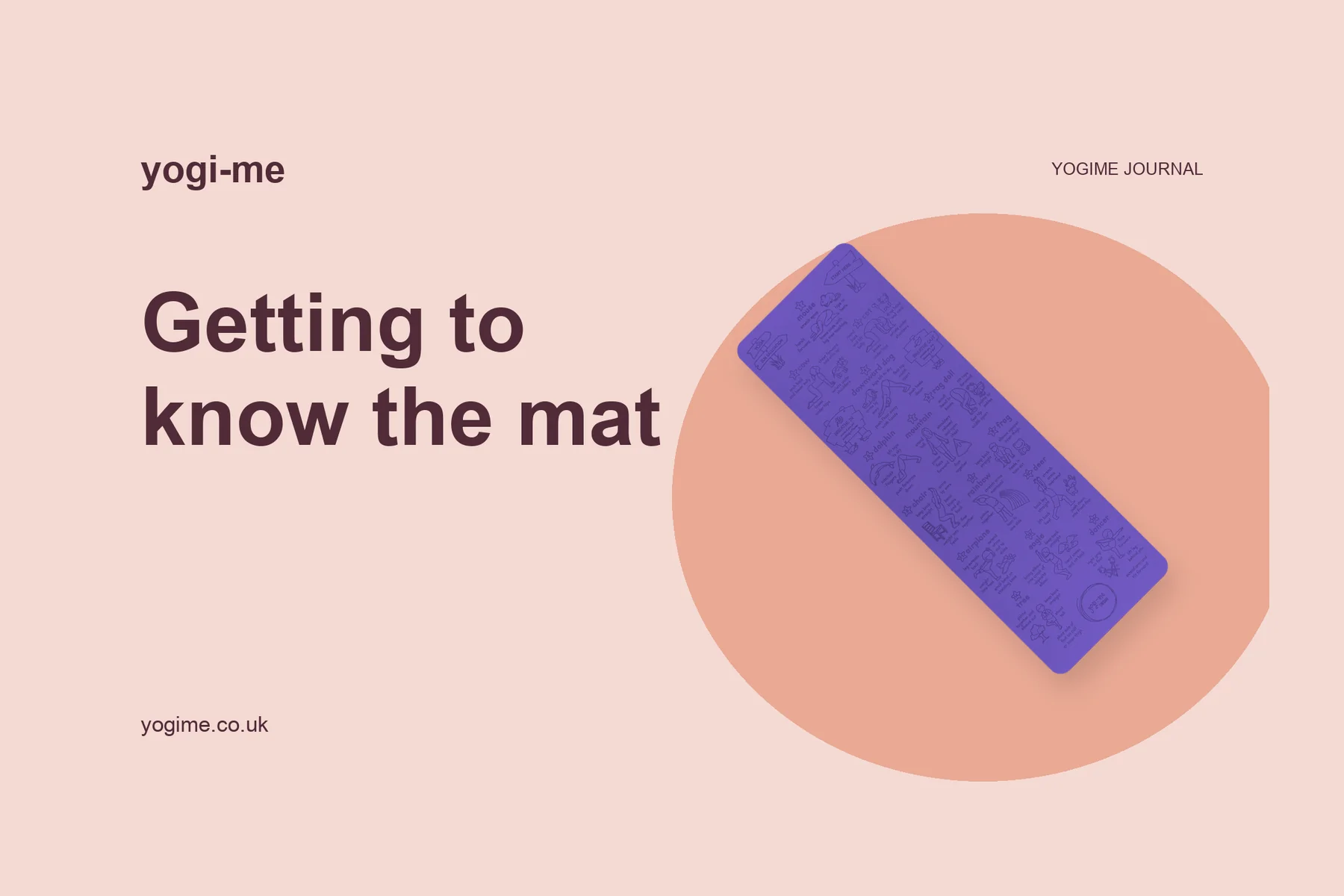
You need a flat, non-slip surface and a bit of room to stretch out. A dedicated mat helps children know that "this is our yoga spot", which builds the routine. A mat with poses marked onto the surface means your child can follow along without you calling out a single instruction.
Turning yoga into a dependable little ritual is much easier when it has its own spot and its own time. Our guide to screen-free habits that stick has more on making it last.
Finish with a calm breath
Round off with a slow moment. Lie down like a starfish, take three big breaths, and notice the tummy rise and fall. This tiny bit of stillness is where a lot of the calming benefit lives, and it makes yoga a natural fit before bed.
Do I need any equipment to start?
No, you can start with nothing but a bit of floor space. Bare feet on a firm, non-slip surface is enough for the first few sessions. As yoga becomes a regular thing, a proper mat helps with grip, comfort and marking out a clear space, and mats with poses marked into them make it easier for children to follow along.
If you do buy a mat, look at what it is made from and ask the seller if the listing does not say. Ours are a non-toxic, PVC-free TPE, and our guide to non-toxic, PVC-free yoga mats explains what those words mean.
A mat sized for a child also makes a difference. Adult mats are long and can feel unwieldy for small bodies, whereas a kid-sized mat gives them their own manageable patch.
Frequently asked questions
At what age can children start yoga?
Children can begin enjoying simple yoga-style movement from toddlerhood, around 2 to 3 years, as long as it is playful and gentle. At this age it looks like copying animal shapes and wobbling about, not holding formal poses. Keep sessions to a few minutes and follow your child's lead.
Is yoga good for hyperactive or restless children?
Gentle movement and slow breathing can give restless children a calm, structured way to use their energy and settle down, which many parents find helpful. That said, yoga is not a medical treatment. If you are worried about your child's activity levels or focus, speak to your GP or health visitor.
How long should a kids' yoga session last?
Keep it short and match it to their age. Toddlers manage two to five minutes, pre-schoolers five to ten, and primary-age children around ten to fifteen. Pre-teens can handle twenty minutes or more. Always finish before boredom sets in, so your child looks forward to next time.
Can yoga help my child sleep better?
Calm, slow yoga can make a soothing wind-down before bed, and The Sleep Charity recommends switching screens off about an hour before bedtime. A few gentle poses and some quiet breathing in that screen-free hour can help signal to your child that it is time to settle.
Do I need to know yoga myself to teach my child?
Not at all. You are guiding play, not running a class. Copy a few simple animal poses together, use stories and silly sounds, and breathe slowly at the end. Mats with poses marked into them make it even easier, because your child can follow the numbered poses while you join in.
Ready to roll out the mat?
Starting is the hardest part, and it gets so much easier when your child has their own space to do it. Our screen-free kids' yoga mats have 15 numbered poses marked into a non-toxic, PVC-free TPE surface, so your little one can follow along and you can simply join in. Pick a few poses, put on your best grumpy-cat face, and give your child a calm, screen-free few minutes today.
Sources
- NHS: Physical activity guidelines for children and young people
- NHS: Physical activity guidelines for children (under 5 years)
- GOV.UK: Physical activity for children and young people, 5 to 18 years
- WHO: To grow up healthy, children need to sit less and play more
- WHO: Guidelines on physical activity, sedentary behaviour and sleep for children under 5 years of age
- The Sleep Charity: Relaxation tips for children
- GOV.UK: Help for early years providers, physical development
- Ofcom: Children and parents, media use and attitudes report 2025