community
Rainy Day Activities for Kids That Beat Boredom
Rainy day activities for kids, sorted by age and energy. Screen-free ideas to burn energy indoors, calm the chaos and wind down for bed.
The best rainy day activities for kids alternate burning energy with winding down: a cushion obstacle course, animal races or dance freeze, then a jigsaw, baking, reading or a few minutes of yoga and slow breathing. Plan the day in short bursts of 15 to 20 minutes, keep the active games for the morning, and save the calm ones for the run-up to bed.
It is chucking it down, the garden is out, and by 10am the kids are bouncing off the walls. You know the tablet would buy you twenty minutes of quiet, but you would rather not default to it again.
Good news: you do not need a craft cupboard or a Pinterest board to save the day. Most of the best rainy-day activities use things already in your house.
This is a quick, do-it-now list, sorted by age and by energy level, so you can match the activity to the child (and the mood) in front of you.
What are the best rainy day activities for kids?
The best rainy day activities burn energy first, then wind it down. Alternate boisterous games (indoor obstacle courses, animal races, dancing) with calmer ones (crafts, jigsaws, reading, yoga). This rhythm keeps children moving, avoids meltdowns and means a tablet becomes a small top-up rather than the whole day.
Think of your rainy day in short bursts, not one long stretch. A 15-minute energy-burner, then a 20-minute calm activity, then a snack, then repeat. Little ones especially cannot sit still for long, and they are not meant to.
The NHS suggests that children aged 5 to 18 get an average of at least 60 minutes of moderate to vigorous activity a day and break up long periods of sitting still. A wet Saturday is exactly when that becomes tricky, so building movement into your indoor plan matters.
How do I get kids to burn energy indoors?
To burn energy indoors, turn your home into a soft gym. Set up a cushion obstacle course, hold animal races (bear crawls, bunny hops, crab walks), play musical statues, or blow up a balloon and keep it off the floor. Short, silly and physical is the goal, not tidy.
Energy-burners that need almost no setup
- Obstacle course: sofa cushions to jump over, a chair to crawl under, a line of tape to balance along.
- Animal races: crawl like a bear, hop like a frog, waddle like a penguin from one end of the hall to the other.
- Balloon keepy-uppy: one balloon, one rule, do not let it touch the floor.
- Dance freeze: put a song on, pause it at random, everyone freezes.
- Indoor bowling: empty plastic bottles and a soft ball.
For under-5s, keep the bursts frequent. The NHS recommends toddlers and pre-schoolers be active for at least 180 minutes (three hours) spread across the day and not sit still for long stretches. That sounds like a lot until you realise a wiggly toddler racking it up in five-minute bursts all day gets there easily. For a wet spring, our spring activities for nursery and Reception age have more for this age group.
What are calm rainy day activities to wind kids down?
Calm activities reset an overexcited house. Try jigsaws, colouring, building with blocks, baking, reading together, or a few minutes of gentle yoga and breathing. These quiet, hands-on tasks settle the nervous system, suit tired or fractious children, and make a lovely bridge into a nap or bedtime.
Quiet does not mean screens. A box of quiet time activities, kept back for wet afternoons, helps with that. In fact the calmer end of the day is the best time to stay off them.
The NHS advises a calm wind-down and avoiding screens before bed, because the light from phones and tablets can interfere with a child's sleep. So save the jigsaws, colouring and story time for the pre-bedtime slot, and keep the tablet out of the bedroom.
Yoga sits beautifully here. A few animal poses and some slow "storm to stillness" breathing (breathe in like a growing cloud, out like the rain) can take a child from wired to sleepy in ten minutes. Our guide to yoga games for kids has plenty of playful ideas you can do on the carpet, and partner yoga poses for two work well when a grown-up joins in.
Rainy day activities by age and energy
Here is a quick grab-and-go table. Find your child's age, pick high energy or low energy, and go.
- Toddlers (1 to 2), Energy-burners: Cushion crawling, balloon chase, kitchen "band" with pots and spoons; Calm wind-down: Board books, stacking cups, simple posting toys
- Pre-schoolers (3 to 4), Energy-burners: Animal races, dance freeze, indoor treasure hunt; Calm wind-down: Playdough, colouring, animal yoga poses, jigsaws
- Younger primary (5 to 8), Energy-burners: Obstacle course, indoor bowling, hallway skittles; Calm wind-down: Baking, Lego builds, reading, partner yoga and breathing
- Older kids (8 to 11), Energy-burners: Living-room workout, sock basketball, charades; Calm wind-down: Board games, journaling, drawing, longer yoga flow
For a deeper bank of ideas that never involve a screen, our roundup of screen-free activities for 3 to 8s is a handy bookmark for the next downpour.
How do I structure a whole rainy day at home?
Structure the day as a loose plan with screen-free chunks, not a minute-by-minute timetable. Build the day around meals, active play and quiet play, and let screens fill the gaps rather than lead. A simple morning-active, afternoon-calm rhythm keeps everyone sane without you having to entertain constantly.
NHS advice for families suggests agreeing screen-free times together, such as mealtimes, avoiding screens before bedtime and keeping devices out of bedrooms overnight. A rainy day is a perfect time to try that structure. If the rain lasts all week, our half term activities at home plan a whole week this way. If a friend is coming round, our play date ideas fill an afternoon.
YoungMinds makes a similar point: balance screen time with offline rest, movement and connection, and agree tech-free times or zones as a household. In plain terms, plan the fun first and slot the tablet in around it.
None of this means screens are the enemy. Ofcom's research found that a third of parents of 3 to 12-year-olds find their child's screen time hard to control, so if that sounds familiar, you are in good company. A bit of telly on a wet afternoon is fine. It just works best as one part of the day, not all of it.
Frequently asked questions
What can I do with a toddler on a rainy day?
Keep it short, physical and low-mess. Cushion crawling, chasing a balloon, a pots-and-pans "band", or posting toys into a box will all delight a toddler. Swap activities every few minutes, as little ones are not built to sit still and thrive on frequent changes.
Are rainy day activities a good replacement for screen time?
Yes, as the main event. Active and hands-on play supports movement, sleep and mood in ways passive screen time does not. The WHO's guidelines for under-5s suggest no more than one hour a day of sedentary screen time for ages 2 to 4. Real-world play helps fill the rest happily.
How do I calm my kids down after too much running around?
Shift to a slow, quiet activity with your hands or breath. Colouring, a jigsaw, a story or a few minutes of animal yoga and slow breathing all lower the temperature. Do this before nap or bed, and keep screens out of the wind-down so the calm has a chance to land.
What rainy day activities cost nothing?
Almost all of the best ones. Obstacle courses from cushions, balloon games, den-building with blankets, drawing, charades and yoga on the carpet cost nothing and use what you already own. You rarely need to buy anything to beat boredom indoors.
Bring calm to your next rainy day
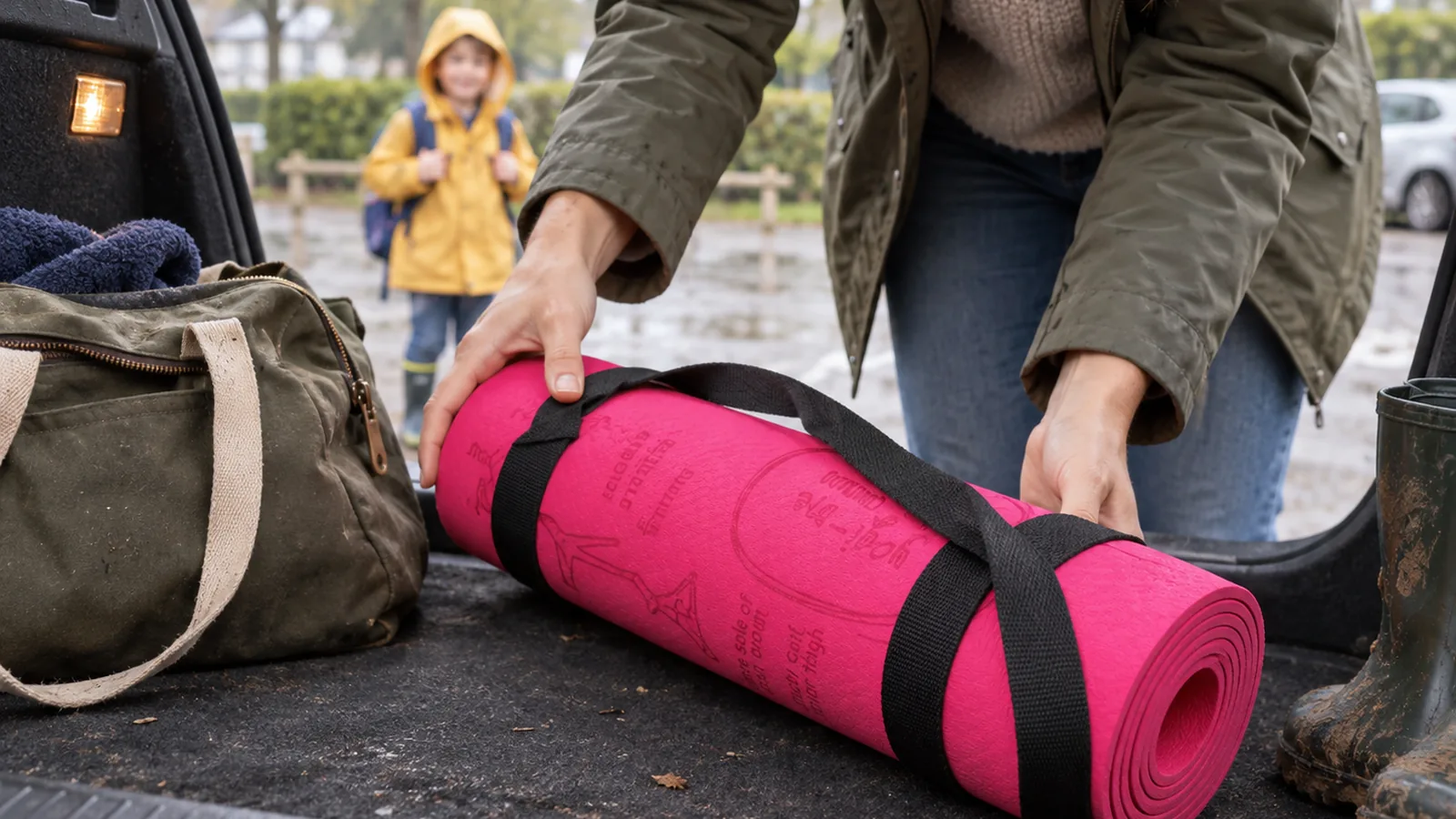
When the rain sets in, a little movement goes a long way. Our Yogi-Me yoga mat gives your child their own spot to land, blast off and stretch through 15 numbered poses, no screen required, and turns the next downpour into playtime.
Sources
- NHS: Physical activity guidelines for children and young people (5 to 18)
- NHS: Physical activity guidelines for children (under 5 years)
- WHO: Guidelines on physical activity, sedentary behaviour and sleep for children under 5 years of age
- NHS (Bedfordshire and Luton children's health): Screen time
- YoungMinds: Social media and screen use, advice for parents
- Ofcom: Children and parents: media use and attitudes report
- NHS: Sleep and young children