guides
Is TV Before School Bad for Kids? An Honest Answer
No UK rule bans TV before school. What the guidance says about breakfast TV and the daily hour, and five screen-free minutes to put in its place.
No UK guidance says children shouldn't watch TV before school. What it does say lands on breakfast: keep mealtimes free of screens, and for 2 to 5-year-olds, which covers Reception, try to keep screen time to 1 hour a day, less if possible. So a cartoon while the shoes go on isn't something any UK body has told you to stop.
Is it okay for children to watch TV before school?
Yes, as far as UK guidance goes. No UK health or education body gives advice about mornings or school days specifically. The guidance that exists is about total screen time for under-5s, screens at mealtimes, and screens in the background, and two of those can land on a school morning.
For under-5s. The government's Best Start in Life guidance for England says to avoid screen time for under-2s other than shared activities with family, and for 2 to 5-year-olds to try to keep it to 1 hour a day, less if possible. It says to keep mealtimes and bedrooms free from screens, to try not to have screens on in the background during meals, family time or play, to choose slow-paced content, and to watch together where you can. That covers most of Reception: gov.uk says most children start Reception full time in the September after their fourth birthday.
For 5 to 8-year-olds. There's no UK time limit. The UK Chief Medical Officers' advice for parents says screen-free meal times are a good idea, and that everyone should take a break after a couple of hours sitting or lying down using a screen.
Is watching TV harmful? The Chief Medical Officers found that research has seen associations between screen use and some harms, but does not present evidence that screens cause them. They still advise a precautionary approach. Their review looked at mental health and wellbeing, so it doesn't settle questions about attention or learning either way.
What does that look like on a school morning?
On a real school morning, the guidance touches two things: breakfast in front of the TV, and the TV left on in the background while everyone gets ready. A programme watched once your child is dressed, away from the table, isn't something UK guidance speaks to at all.
Take an illustrative example. Say your four-year-old in Reception watches 30 minutes before school. Under the Best Start in Life guidance, that's half of her day's hour gone by 8.15, which leaves 30 minutes for the rest of the day.
If you've read the Mumsnet threads on TV before school, you'll know parents split three ways: never on school days, only once they're ready, or yes, and still out of the door on time. All three fit UK guidance, as long as breakfast itself stays screen-free.
So the honest answer to "is it bad?" depends less on the TV than on where breakfast is eaten and how much screen time the rest of the day holds.
What is the TV actually doing for you at 7.45?
Morning TV is rarely about the programme. It keeps a child still, in one room, while you make the packed lunch, find the reading folder or get a younger sibling dressed. That's why "just turn it off" tends to last until Wednesday. Whatever replaces it has to do the same job.
That job has three parts. Your child can do it on their own, in one place, and it ends when you say. A swap that needs you, wanders round the house or can't be stopped at 8.10 won't survive a busy morning.
Two more things follow from that:
- If the TV is the reward for being ready, the reward has to move somewhere, not vanish. Five minutes of something they choose, once their shoes are on, keeps the deal.
- A no-TV rule saves a switch-off argument only if it's the same every school day. The NHS's advice on behaviour is that once you've decided to do something, continue to do it, because children need consistency.
If you're changing things, decide at a calm moment rather than at 7.40, tell your child the night before, and start on a Monday. Weekends can be different. That's a choice, not a slip.
What can kids do instead of TV before school?
Anything your child can do alone, in one spot, that stops when you say. For a no TV before school morning, the Best Start in Life guidance suggests swapping mealtime screens for background music, conversation, table games, colouring or I Spy. Here are six options:
- An audiobook or music while they eat breakfast.
- A book on the sofa once they're dressed.
- Drawing or colouring at the table.
- Lego or a puzzle that can be left half done for tomorrow.
- A job of their own, like feeding the cat or filling the water bottles.
- Five minutes on a mat.
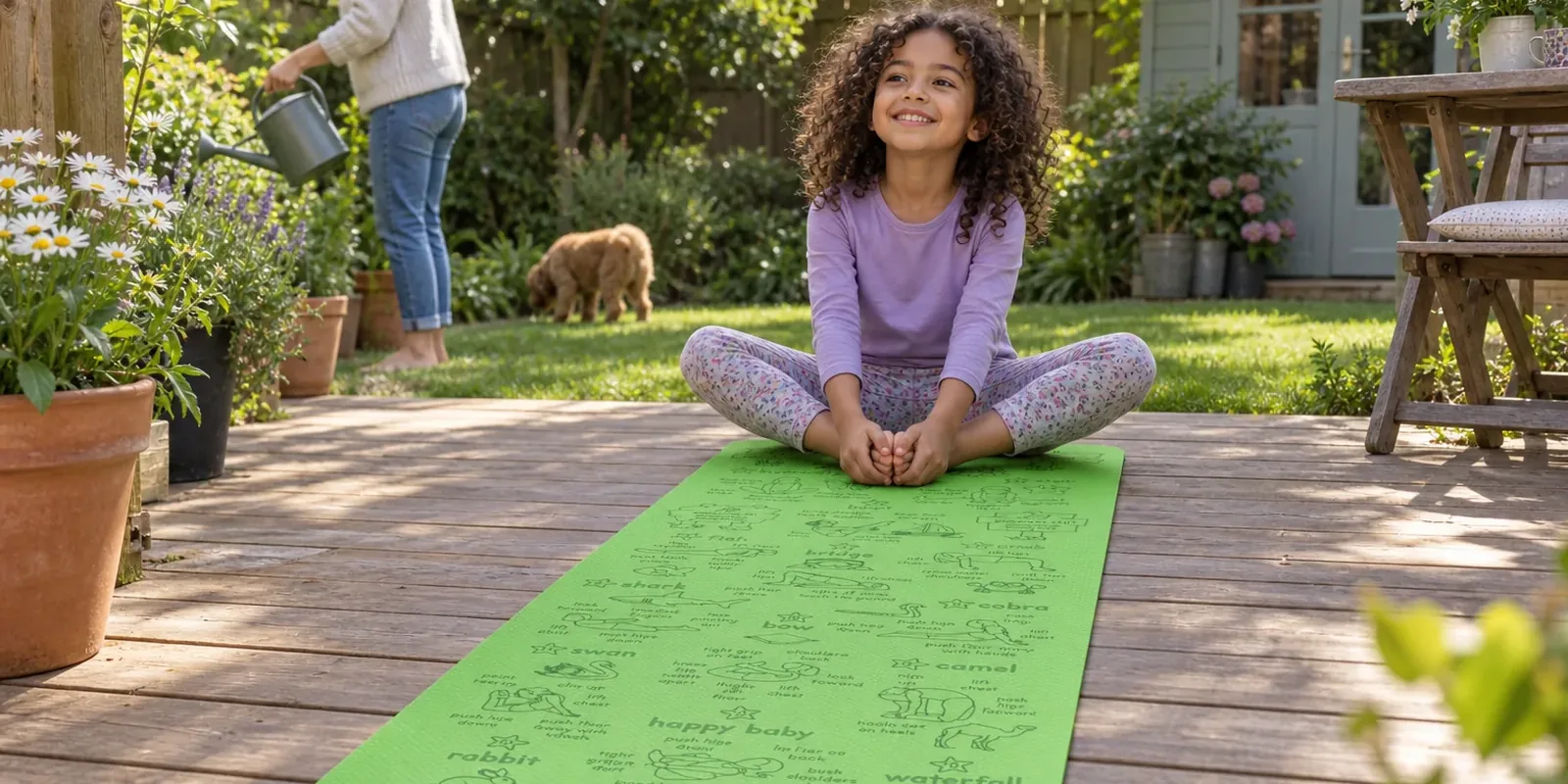
That last one, as an idea to adapt. Minute one: mouse, then cow and cat on hands and knees. Minute two: downward dog. Minute three: mountain, standing tall. Minute four: rainbow, reaching side to side. Minute five: any pose your child picks. That's 1 + 1 + 1 + 1 + 1 = 5 minutes. Do it once they're dressed and before shoes, the same slot some families give the TV once everyone's ready.
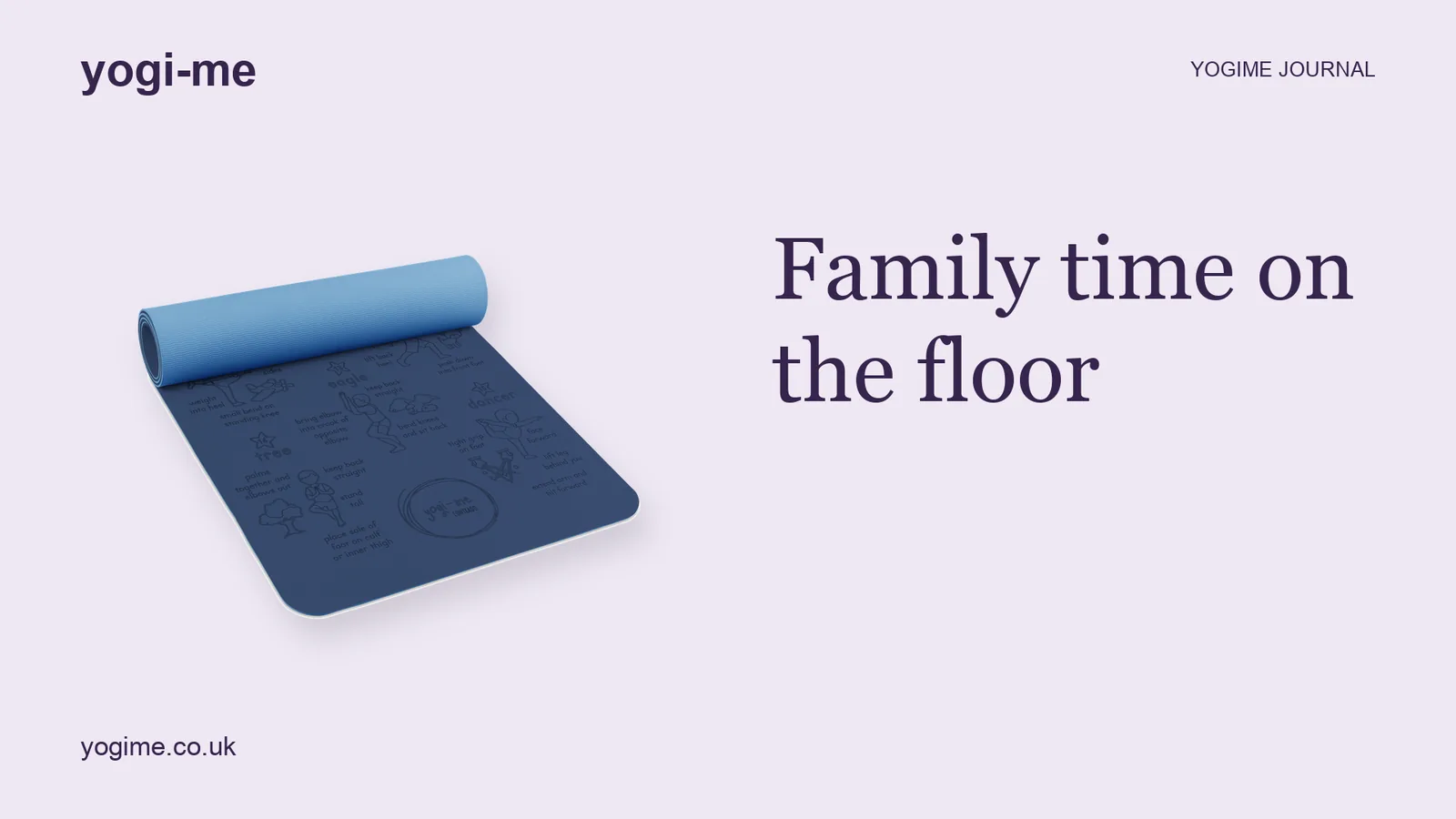
This part is ours. The poses on our Sun Salutation mat are drawn and numbered, so your child can start at mouse and work along without you while you find the PE kit. For a longer sequence, try our five-to-ten-minute morning yoga routine.
If it suits your child, mats with the poses already on them are £34.99, with free UK delivery and 30-day returns. If a grandparent does breakfast and the school run some days, the mat weighs 800 g and rolls up on its carry strap, so the same five minutes can happen at their house.
To be clear about what five minutes is: the NHS says 3 and 4-year-olds should be active for at least 180 minutes a day, spread through the day, and children aged 5 to 18 should average at least 60 minutes of moderate or vigorous activity a day across the week. Five minutes is a small part of that, not a fix. It's simply something to do that isn't a screen.
For the bigger picture, see screen time recommendations by age and our ideas on cutting back screen time without a battle.
If switching the TV off is a battle every morning
If switching the TV off brings distress that's getting worse rather than easier, talk to your health visitor (for under-5s) or your GP. The NHS also points parents to Family Lives' free helpline on 0808 800 2222.
If you're worried about your child's speech or language, the NHS says to talk to your GP or health visitor, who can refer your child to speech and language therapy if needed. For a child at school, the class teacher is a good first conversation. Our guide to the signs of too much screen time covers what to look out for.
Frequently asked questions
Is TV before school bad for kids?
No UK guidance says so. UK advice focuses on keeping mealtimes screen-free and, for 2 to 5-year-olds, keeping total screen time to 1 hour a day, less if possible. A programme once your child is dressed, away from the breakfast table, isn't something any UK body advises against. The practical question is what else fills that slot.
Is it OK to have the TV on during breakfast?
UK guidance suggests not. For under-5s, Best Start in Life says to keep mealtimes free from screens and not to have them on in the background during meals. The UK Chief Medical Officers say screen-free meal times are a good idea for all children. Music, conversation or I Spy are the swaps the guidance suggests.
Does educational TV in the morning still count?
Yes. Best Start in Life's advice for under-5s is about total screen time, so an educational programme counts towards the hour like any other. It also suggests choosing slow-paced content made for young children, and watching together where you can, talking about what's on screen.
How long before bed should a child stop watching TV?
Best Start in Life suggests avoiding screens for the hour before bed for under-5s, and the NHS's sleep tips for under-5s say no tablets, phones or laptops in the 30 to 60 minutes before bed. Our guide to screen time and sleep covers evenings in more detail.
Sources
- Best Start in Life (Department for Education) - Screen time guidance for under 5s
- UK Chief Medical Officers - Commentary on screen time and social media: map of reviews
- GOV.UK - School admissions: school starting age
- NHS - Physical activity guidelines for children (under 5 years)
- NHS - Physical activity guidelines for children and young people
- NHS - Dealing with child behaviour problems
- NHS - Help your baby learn to talk
- NHS - Sleep and young children