guides
Playground Games: 15 Classics Grandparents Played
Playground games with the rules written down: 15 British classics, from tig and hopscotch to Queenie and conkers, with players, space and age for each.
The playground games British children have passed down for generations need almost nothing: tig, British bulldog, hopscotch, skipping, elastics, ring games, clapping rhymes, Queenie, two-ball, marbles, fivestones and conkers. Below are fifteen of them with the rules written out, plus how many players, how much space and the youngest age each one suits.
If you're a grandparent, you know half of these by heart and have forgotten the rest. Teach them on a Saturday and your grandchild can take them into school on Monday.
What makes a game a playground classic?
A traditional playground game is one that children teach each other, with no adult in charge and no kit beyond chalk, a rope, a ball or something from a pocket. The rules travel by word of mouth, so they change from town to town. Tig is tag in one school, it in another and tiggy in a third, and the rhymes shift a word or two every generation.
So there's no single correct version below, only the ones most of us recognise. If your grandchild's school plays it differently, their rules win.
The kit for all fifteen
A stick of chalk, a long rope (an old washing line works), three metres of sewing elastic tied in a loop, a soft ball, a bag of marbles, five small pebbles and, in autumn, conkers and string. That's the lot. Each game gives the players, the space and the youngest age it usually suits. Start with the one you remember best.
The 15 classic playground games, with the rules
1. Tig
One player is "it" and chases the others. Touch someone and they become it. The only firm rule is "no tig-backs": the new chaser can't touch the person who just caught them. For off-ground tig, you're safe while both feet are off the ground, for a count of five.
Players: 3 or more. Space: half a playground. Age: from 4.
2. British bulldog
One or two bulldogs stand in the middle. Everyone else lines up at one end. The bulldogs shout "British bulldog, one, two, three", and the runners race to the far end. Anyone tagged becomes a bulldog. The last runner left uncaught wins. If you remember a version where runners were lifted off the ground, teach the tag one instead.
Players: 8 or more. Space: a full playground or a big lawn. Age: from 7.
3. Hopscotch
Chalk a grid of ten numbered squares, some single and some side by side. Throw a pebble into square 1. Hop up the grid, one foot on singles and two on doubles, skipping the pebble's square. Turn at the top, hop back and pick up the pebble on the way. Next turn, aim for 2. Miss the square or tread on a line and your go ends.
Players: 1 to 4. Space: a patch of pavement. Age: from 5.
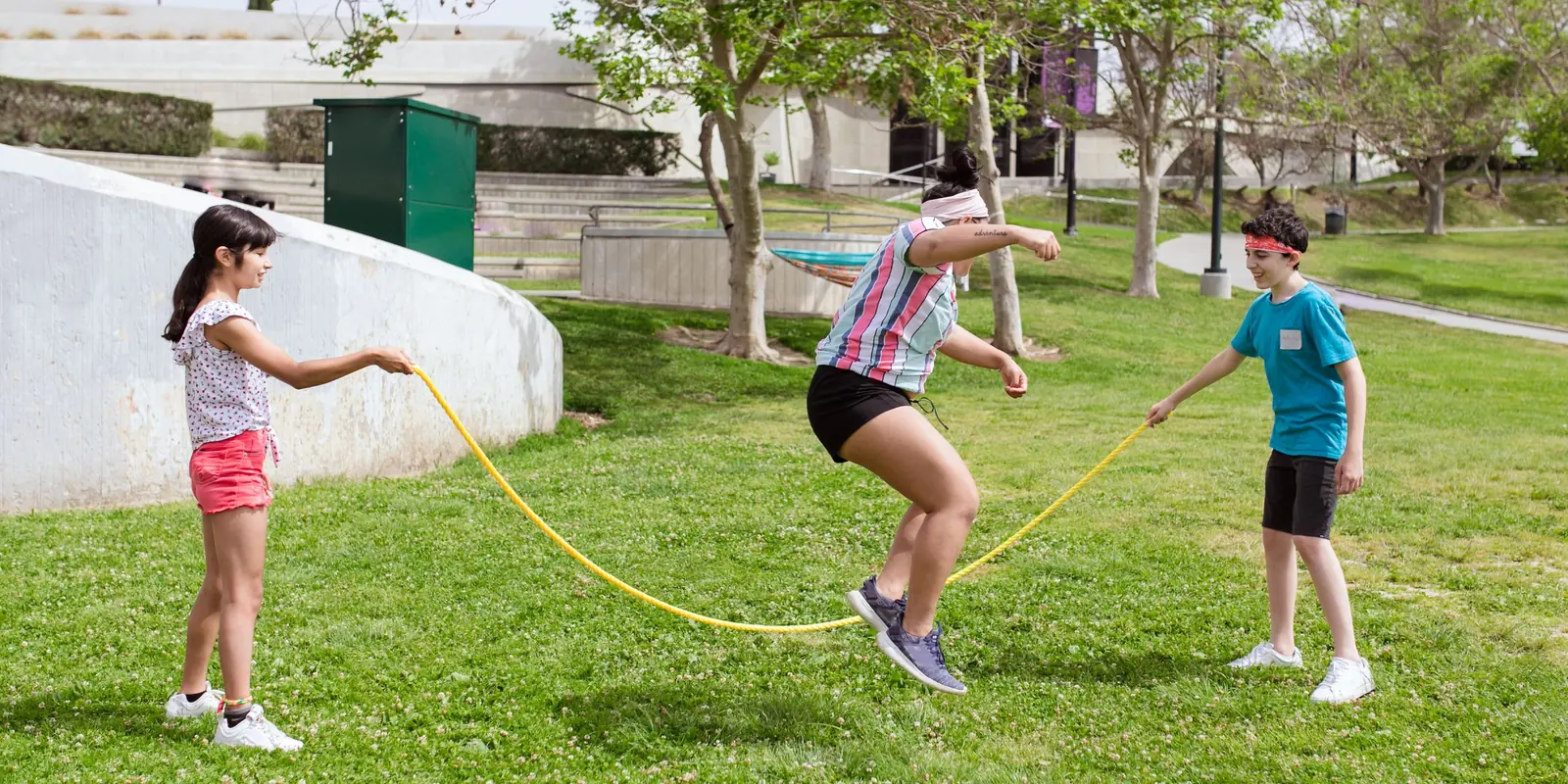
4. Long-rope skipping
Two players turn a long rope and the others take turns jumping in. Chant "Teddy bear, teddy bear, turn around. Teddy bear, teddy bear, touch the ground", and the skipper does each action without stopping. Too young to jump in? Play snake: lay the rope on the ground, wiggle it, and they jump over.
Players: 3 or more. Space: a few metres of clear ground. Age: snake from 3, jumping in from 5.
5. Elastics
Two players stand inside a loop of elastic, stretched round their ankles. The jumper hops through a pattern: in, out, on both strands, then off. One common rhyme is "England, Ireland, Scotland, Wales, inside, outside, inside, on." Get through it and the elastic moves up to knees, then thighs. Tangle your feet and you swap with a holder.
Players: 3. Space: a small patch. Age: from 6.
6. The farmer's in his den
Everyone holds hands in a ring round one child, the farmer, and walks round singing "The farmer's in his den, the farmer's in his den, ee-i-adio, the farmer's in his den." The farmer picks a wife, the wife picks a child, the child picks a nurse and the nurse picks a dog, each one joining the middle. Last verse: "We all pat the dog". Gently.
Players: 8 or more. Space: room for a ring. Age: from 3.
7. Oranges and lemons
Two children make an arch with their hands and secretly agree which of them is Oranges and which is Lemons. Everyone files under, singing. On "here comes a chopper to chop off your head", the arch drops on someone, who whispers their choice and lines up behind that side. When everyone's caught, finish with a tug of war.
Players: 8 or more. Space: a line's length. Age: from 4.
8. In and out the dusty bluebells
Everyone stands in a ring holding hands up high to make arches. One child weaves in and out of them while everyone sings. On "tippy-tappy, tippy-tappy on my shoulder", they tap the child in front of them, who joins on behind, and the line keeps weaving. It ends when the whole ring is one long snake.
Players: 6 or more. Space: room for a ring. Age: from 3.
9. A sailor went to sea
A clapping game for two. Facing each other, clap your own hands, then both your partner's hands, and keep that rhythm through "A sailor went to sea, sea, sea, to see what he could see, see, see." On every "sea", salute. Later verses swap the word: "chop, chop, chop" with a hand chop, "knee, knee, knee" with a knee tap. Speed up each round.
Players: 2. Space: anywhere you can stand. Age: from 5.
10. Queenie
One child, Queenie, stands with their back to the others and throws a ball over their head. Someone picks it up and everyone hides their hands behind their backs, chanting "Queenie, Queenie, who's got the ball? Are they short or are they tall? Are they hairy or are they bald? You don't know because you haven't seen it at all." Queenie turns and guesses. Guess wrong and the ball-holder becomes Queenie.
Players: 5 or more. Space: a few metres. Age: from 5.
11. Two-ball against a wall
Throw a ball against a wall and catch it, then work up through tricks as you chant: plainsie (just catch), clapsie (clap before you catch), round the world (circle your hand round the ball), backsie (clap behind your back). Drop it and you start again. Master it with one ball, then add a second.
Players: 1 or more. Space: a wall with no windows. Age: one ball from 6, two balls from 8.
12. Piggy in the middle
Two players throw a ball to each other over the head of the third, the piggy. If the piggy catches it, whoever threw it becomes the new piggy. A soft ball saves the windows.
Players: 3. Space: a few metres. Age: from 5.
13. Marbles
Chalk a circle and put two marbles each in the middle. Kneel at the edge and flick your shooter with your thumb to knock marbles out of the ring. Anything you knock out, you keep until the end. Agree first whether you're playing "for keeps" or "for fair"; for fair, everyone gets theirs back, which saves tears. The NHS warns that small objects such as marbles are just the right size to cause choking, and that children aged 1 to 5 in particular put things in their mouths, so keep marbles, and the pebbles for fivestones, well away from younger brothers and sisters.
Players: 2 to 4. Space: a smooth patch of ground. Age: from 6.
14. Fivestones
Also called jacks or knucklebones. Scatter five small stones. Throw one up, pick one off the ground and catch the falling one in the same hand. Do that until all four are picked up, then try twos, threes and finally all four at once. Fumble a catch and your turn ends.
Players: 1 to 4. Space: a step or a doorstep. Age: from 6.
15. Conkers
An autumn game for September and October. An adult makes a hole through a conker with a skewer and threads it on a string with a knot at the end. Players take turns: one holds their conker still at arm's length, the other swings to hit it. The conker that smashes another becomes a "oner", then a "twoer", and so on.
Players: 2. Space: room to swing. Age: from 7, with an adult making the holes.
Two grandparent playtimes, ready to run
Play a slow round yourself first, then hand over. A rule is easier to copy than to follow from a list.
- One grandchild, one afternoon (about 30 minutes): hopscotch on the path (10 minutes), two-ball against the garage wall (10 minutes), then a sailor went to sea on the bench while you get your breath back (10 minutes).
- Cousins at your house (about 30 minutes): tig to burn off the car journey (10 minutes), oranges and lemons with you as half the arch (10 minutes), then Queenie to finish, sitting down if you need to (10 minutes).
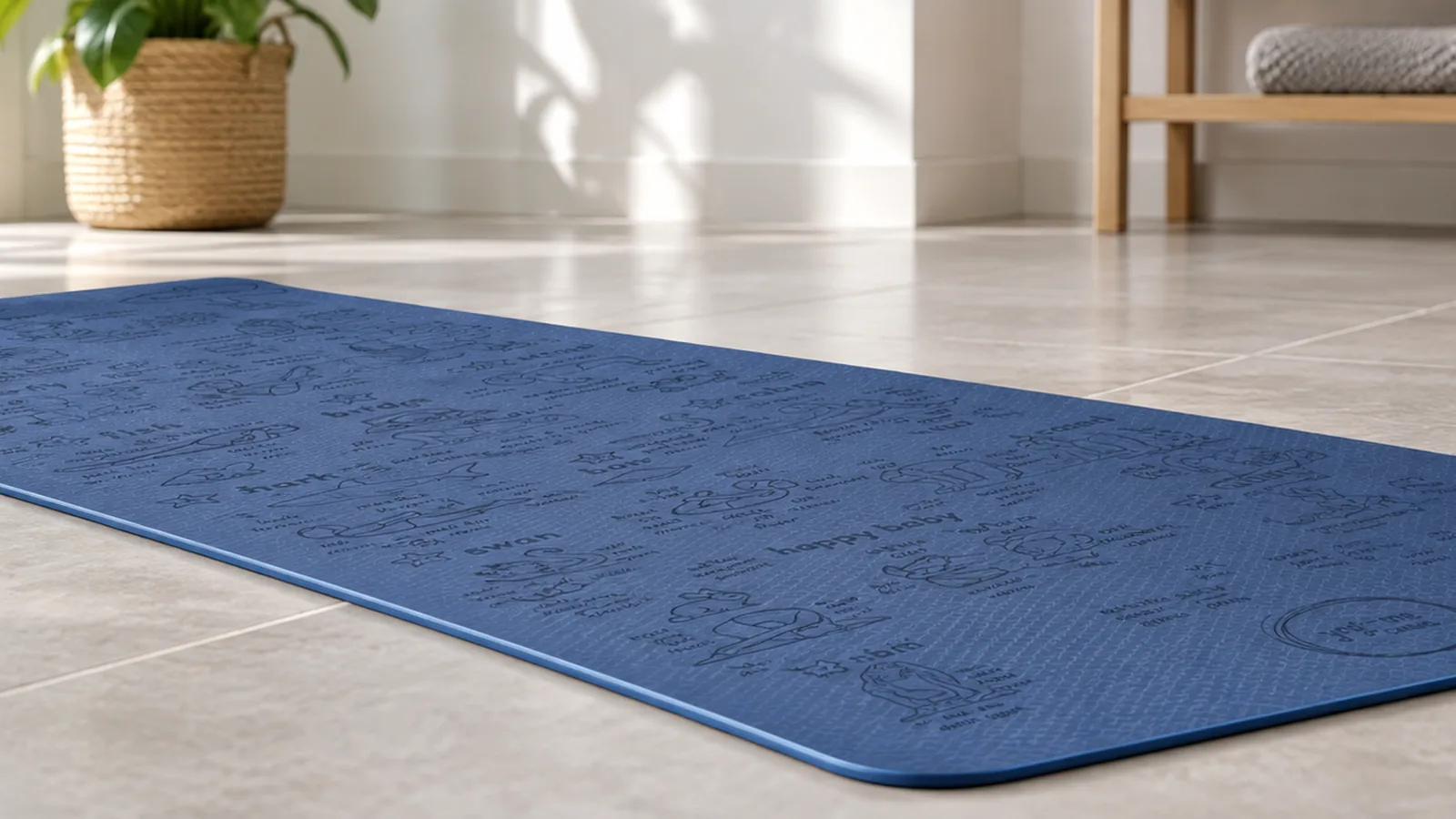
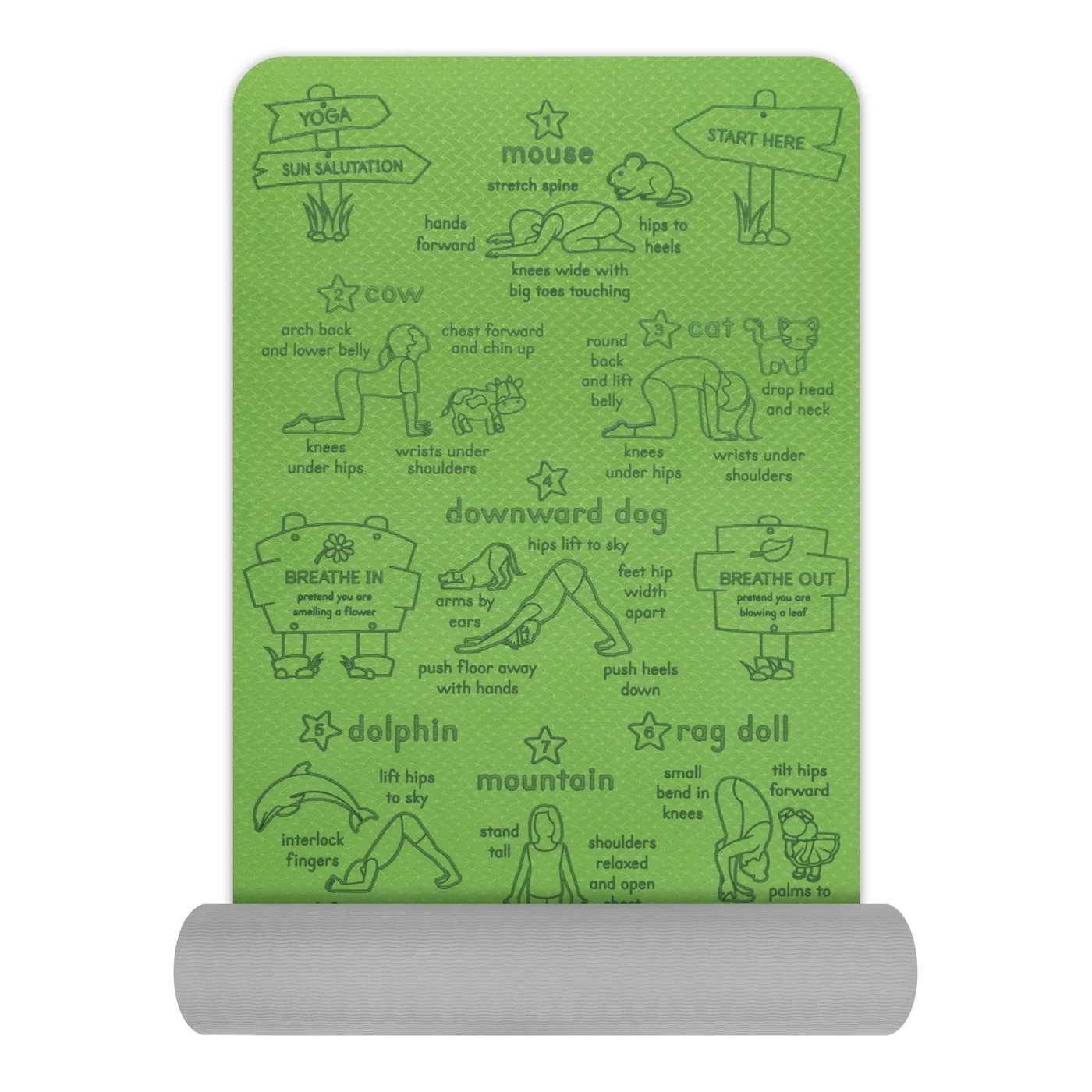
When the weather turns, take the same idea indoors. A kids' yoga mat, with its fifteen poses numbered and laser-engraved, gives a grandchild something to do on your front-room floor, and it rolls up behind the sofa between visits. Our things to do with grandchildren page has more ideas that suit your energy rather than theirs.
Why do the old games still matter?
They're exercise that nobody calls exercise. Playtime counts towards the NHS target for 5 to 18-year-olds, which is to "aim for an average of at least 60 minutes of moderate or vigorous intensity physical activity a day across the week". Among its examples it lists "playground activities, including jumping, running and catching", and skipping.
They also practise the things school asks for. In the national curriculum for PE, KS1 pupils should "participate in team games, developing simple tactics for attacking and defending", which is British bulldog in a sentence. For Reception, the gross motor goal in the EYFS statutory framework reads: "Move energetically, such as running, jumping, dancing, hopping, skipping and climbing." Hopscotch and long-rope skipping cover half of that list between them.
These are games children run themselves at break. For games an adult runs at the start of a lesson, see our PE warm-up games; for a listening game, our Simon says ideas; and for everything else, our screen-free activities hub.
What if your grandchild says nobody plays that any more?
They may be right about their school. Every school sets its own rules about chasing games, balls and conkers, so check before you send marbles in. Then ask them to teach you what they do play. Most children love being the expert, and half their games turn out to be yours with new words.
If a game falls flat, drop it. A game that needs persuading isn't a playground game.
Frequently asked questions
What playground games need no equipment at all?
Tig, British bulldog, the farmer's in his den, oranges and lemons, in and out the dusty bluebells and a sailor went to sea need nothing but children. Hopscotch needs a stick of chalk and a pebble, which most playgrounds can find. Everything else on this list needs one cheap thing: a rope, a loop of elastic, a soft ball, a bag of marbles, five pebbles or a conker on a string.
Which playground games suit a 4 year old?
Start with the ring games, the farmer's in his den and in and out the dusty bluebells, because the song tells a four-year-old what to do next. Simple tig works too if the chaser walks. Oranges and lemons suits a group of four-year-olds with an adult holding one side of the arch. Leave hopscotch, elastics and fivestones until about 5 or 6.
How do you call a truce in tig?
Children have always had a word for it, and the word depends on where you grew up: barley, pax, keys, fainites and crosses are a few of them, usually said with crossed fingers held up. Agree the word before the game starts, and agree one safe place too, such as the bench, so nobody argues about it mid-chase.
Can you play playground games with only two children?
Yes. Hopscotch, two-ball against a wall, fivestones, marbles, conkers and a sailor went to sea all work with two, and several work with one. With two grandchildren, you make the third player: you can turn the rope, hold the elastic or be piggy in the middle, and nobody minds if you're slow.