guides
PE Warm Up Games for KS1 and EYFS: 10 That Need No Equipment
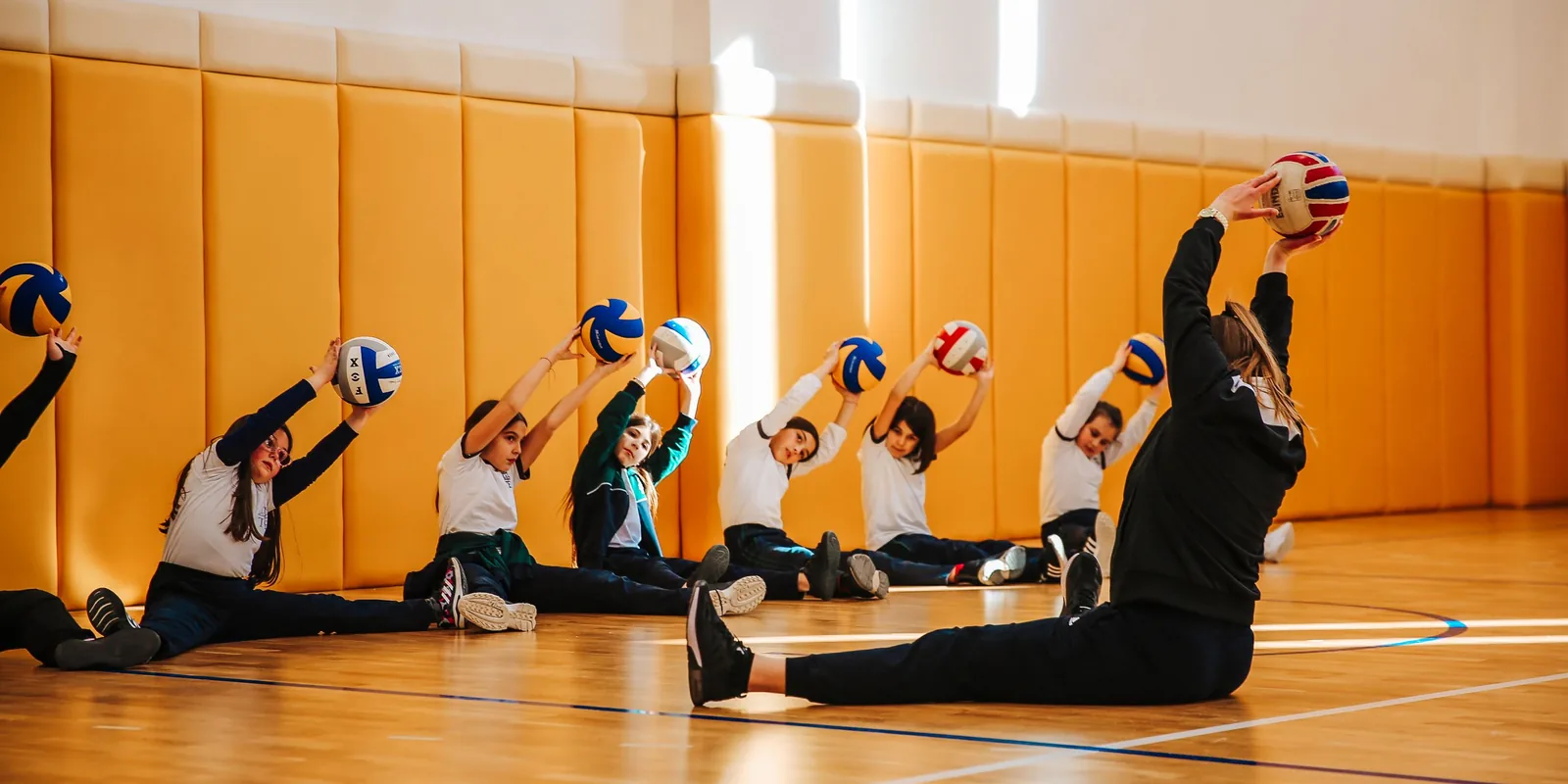
PE warm up games for KS1 and EYFS: ten games that need no equipment, with ages, timings and three ready-made five-minute warm-ups.
The best PE warm up games for KS1 and EYFS need nothing but a floor and a voice. Traffic lights, the bean game, captain's coming, corners and shapes take a minute or two each, with no kit at all. Below are ten, each with a starting age, a time and a small-space version, then three five-minute warm-ups whose timings add up.
Picture it: the class is changed, the hall is yours for thirty minutes, and the cones are in a cupboard you don't have the key to. That's the moment this list is for. Parents running a party or a garden game can borrow every one.
What is a PE warm-up for?
PE warm up games are short, active games played in the first few minutes of a PE lesson to raise heart rates, get children moving in the space and get them listening before the main activity starts. Warm up games for kids work best when they feel like play, not exercises.
You'll often read that a warm-up prevents injury. The evidence is narrower than that. A 2018 trial in the journal Sports Medicine followed 3,895 young footballers in under-9, under-11 and under-13 teams for one season. Teams that swapped their usual warm-up for a structured programme of seven exercises, about 15 to 20 minutes long, had an injury rate 48 per cent lower than teams that warmed up as usual. Nobody has run that study on a two-minute game at the start of a Reception PE lesson, so we won't promise it.
What a warm-up does for a five-year-old is plainer: it gets the whole class moving, breathing harder and listening, so the lesson starts with everyone in it.
How long should a PE warm-up be?
There's no official figure for children. The NHS guidance for 5 to 18 year olds describes moderate activity as something that will "raise your heart rate, and make you breathe faster and feel warmer", but it doesn't set a warm-up length, and the national curriculum for PE doesn't mention warm-ups at all. Our suggestion: five minutes is plenty for Reception and KS1, made of two or three games.
Every game below gives three things: the youngest age it suits, how long it takes, and a small-space version for wet play or a classroom. You can start anywhere. Simon says is a warm-up favourite too; it has its own page of Simon says ideas, so it isn't repeated here.
The 10 PE warm up games, no equipment needed
1. Traffic lights
Green means run, amber means walk, red means freeze. Say: "Green... amber... red." Once they've got it, add PE colours: blue means hop, purple means change direction. It works because every child knows the colours before they know the rules.
Age: from 3. Time: 2 minutes. Small space: march on the spot for green, tiptoe for amber, freeze for red.
2. The bean game
Call a bean and everyone makes the move. Runner bean: run. Jumping bean: jump. Broad bean: arms and legs wide. String bean: tall and thin. Jelly bean: wobble. Frozen bean: freeze. Children enjoy inventing new beans, so let one of them call a round.
Age: from 3. Time: 2 minutes. Small space: every bean works on the spot, beside the desk.
3. What's the time, Mr Wolf?
One child is the wolf at the far end of the hall, back to the class. Everyone calls "What's the time, Mr Wolf?" The wolf answers "Three o'clock", and the class takes three steps forward. When the wolf says "Dinner time", the class runs back to the start line before being caught. Familiar, so nobody needs the rules explained twice.
Age: from 3. Time: 3 minutes. Small space: save it for the hall.
4. Number dash
This one is ours. Chalk the numbers 1 to 5 around the playground, call a number, and everyone runs to it and makes a shape. It's at its best on our mats, where the poses are already numbered: children jog beside their mat, step on when you call, find the number and hold that pose for three breaths. Start with 1 and 3: mouse and cat on Sun Salutation, flower and star on Freedom Flow. Step on, never jump on. For a mat each, see how schools order them.
Age: from 4. Time: 3 minutes. Small space: on the carpet, half the class at a time.
5. Captain's coming
Name the four walls: bow, stern, port and starboard. Call a wall and everyone runs to it. Add actions: "Scrub the decks" (scrub the floor), "Climb the rigging" (climb on the spot), "Captain's coming" (stand tall and salute). The salute tends to be the favourite bit.
Age: from 4. Time: 2 minutes. Small space: drop the walls and keep the actions on the spot.
6. Corners
Give each corner a name: a colour, or an animal. Call a corner and a way to travel there: "Hop to red," "Tiptoe to tigers," "Side-step to blue." Changing the way they travel is what makes it a warm-up rather than a race, and nobody is out.
Age: from 4. Time: 2 minutes. Small space: use the four sides of the carpet.
7. Groups of
Everyone moves around the space. Call "Groups of three" and children make groups as fast as they can, then move off again. Anyone left over helps you call the next number, so there's no forfeit. Finish on the group size your lesson needs, and the warm-up has done your organising too.
Age: from 5. Time: 2 minutes. Small space: not in a classroom.
8. Stuck in the mud
Pick one or two taggers. Anyone tagged stands still with arms and legs wide until a free player high-fives them. Swap taggers often so nobody chases for long. It's the most running on this list.
Age: from 5. Time: 2 minutes. Small space: save it for the hall.
9. Shadows
Children stand in pairs, one behind the other. The leader travels round the hall and keeps changing how they move: skipping, giant steps, tiny steps. The shadow copies. Blow the whistle and they swap. Watching one person closely is a calmer kind of listening.
Age: from 5. Time: 1 minute. Small space: shadows on the spot.
10. Shapes
Children travel round the space. Call "Stop, tall," and everyone makes a tall shape. Then wide, small, twisted, curled. It's the calm one to finish on: the class ends still, quiet and ready for whatever comes next.
Age: from 3. Time: 1 minute. Small space: works as it is.
Which EYFS PE games work as a warm-up?
For Nursery and Reception, the best EYFS PE games are the simplest: traffic lights, the bean game, Mr Wolf and shapes, then captain's coming and corners from four. The early learning goal for gross motor skills, in the EYFS statutory framework, expects children to "Move energetically, such as running, jumping, dancing, hopping, skipping and climbing."
The framework also says that "by creating games and providing opportunities for play both indoors and outdoors, adults can support children to develop their core strength, stability, balance, spatial awareness, co-ordination and agility". For a Reception class, that means short instructions, one new rule at a time, and the adult playing too. More ideas for this age are in our gross motor skills activities.
Five-minute warm-ups for Reception, KS1 and wet play
Each one ends on a calmer game, so the class arrives at the main activity listening.
- Reception: traffic lights (2 minutes), the bean game (2 minutes), shapes (1 minute). Five minutes.
- KS1: these PE warm up games for KS1 start fast and finish quiet. Groups of (2 minutes), stuck in the mud (2 minutes), shadows (1 minute). Five minutes.
- Wet play or a booked hall: Number dash on the mats (3 minutes), the bean game on the spot (2 minutes). Five minutes. For a longer session on the mats, try our yoga in the classroom routine.
Number dash works at home too, with a mat of their own for home. Each mat has 15 numbered poses laser-engraved into the surface, costs £34.99 with free UK delivery, and there's 10 per cent off two or more, which helps, because a garden game of Number dash needs two players.
What about the child who hates being caught?
Every class has one. Make them a caller instead: the child who calls the colours in traffic lights or the numbers in Number dash is still part of the game, without being chased. Play the games with no "out" (corners, shapes, the bean game) more often than the ones with one.
For the child who won't join in while being watched, a job helps more than encouragement. The child who is always last into a group is covered: in our version of groups of, being left over means helping call the next number. If a class goes wild, shorten the rounds and finish on shapes, and save calmer ideas, such as these cool-down exercises for kids, for the end of the lesson. Summer term? The same no-kit games make good practice for sports day games.
Frequently asked questions
Do you need equipment for PE warm-ups?
No. All ten of these PE warm up games run on a floor and a voice: no cones, beanbags, hoops or bibs. Number dash needs only chalked numbers, though it's at its best on numbered mats, where each number is already a pose. A whistle helps in a big hall, but your voice will do.
Is a warm-up part of the PE curriculum?
The national curriculum for PE in England doesn't mention warm-ups. At KS1 it asks that pupils are taught to "master basic movements including running, jumping, throwing and catching, as well as developing balance, agility and co-ordination", and most of these games practise exactly those. Whether and how to warm up is the teacher's call.
What's the difference between a warm-up and a cool-down?
A warm-up gets children moving, breathing harder and listening at the start of a lesson. A cool-down does the opposite at the end: slower movement and stillness, so the class leaves calm. Shapes, the last game here, sits between the two. A few minutes of slow stretching and stillness makes a simple cool-down for Reception and KS1.
Can you do a PE warm-up in the classroom?
Yes. Traffic lights, the bean game, captain's coming and shapes all have on-the-spot versions that work beside a desk, and Number dash works on the carpet with half the class at a time. Push the chairs in, make sure nobody is near a table corner, and keep every game to walking pace indoors.
Sources
- Department for Education: Early years foundation stage (EYFS) statutory framework
- Department for Education: National curriculum in England, PE programmes of study
- NHS: Physical activity guidelines for children and young people
- Rössler R, Junge A, Bizzini M, et al. A multinational cluster randomised controlled trial to assess the efficacy of "11+ Kids": a warm-up programme to prevent injuries in children's football. Sports Medicine, 2018