guides
9 Patience Activities for Kids, From Ten Seconds to a Week
Nine patience activities for kids aged 3 to 8, sorted by how long the wait lasts, from a five-breath balance to cress on the windowsill.
Think of patience activities for kids as a ladder. Start with a wait your child can already manage, a few seconds, and stretch it a little at a time. Below are nine for children aged 3 to 8 on three rungs: waits of a few breaths, waits that last a whole game, and waits of about a week. Nothing needs printing.
What is patience for a young child?
For a young child, patience is being able to wait for something they want, a turn, a treat or an answer, without grabbing, shouting or giving up. It's part of what nurseries call self-regulation. The Department for Education's Development Matters guidance lists being able to "be patient for what they want" alongside regulating strong feelings and bouncing back.
It isn't the same as being quiet or sitting still. A child hopping from foot to foot while they wait for their go is being patient. That's worth saying to them.
What age do kids learn patience?
There's no single age. Development Matters, the Department for Education's guidance for nurseries and Reception classes, shows it building in steps from toddlerhood to the end of Reception, with plenty of adult help along the way.
- Under threes "begin to show 'effortful control', for example, waiting for a turn and resisting the strong impulse to grab what they want or push their way to the front".
- Around the age of 3, its checkpoint asks whether a child "can sometimes manage to share or take turns with others, with adult guidance". Sometimes, with help, is the bar.
- By the end of Reception, the EYFS statutory framework sets an early learning goal: children at the expected level will "set and work towards simple goals, being able to wait for what they want and control their immediate impulses when appropriate".
Reception is the year most children turn five: they start it, says gov.uk, "in September after their fourth birthday". So that goal describes the expected level for a five-year-old, not something every child manages on the dot.
How do you teach a child patience?
Teach a child patience by making the wait short, visible and part of a game, then stretching it one rung at a time. Name the feeling, show them how you wait, and notice when they manage it. Each of the teaching patience activities below gives the wait a clear start and end your child can see.
- Name it. Development Matters gives the words: "I can see it's hard to wait, just a minute and then it's your turn to go down the slide."
- Show it. Wait out loud yourself: "The kettle's taking ages. I'm going to take a big breath." Development Matters suggests adults "model ways that you calm yourself down, such as stopping and taking a few deep breaths".
- Notice it. For Reception, it suggests staff "celebrate, praise and reward children as they develop patience, turn-taking and self-control". At home, "You waited for your go" is enough.
- Keep your word. If you said five minutes, make it five.
Where to start on the patience ladder, by age
These patience building activities for kids are sorted by how long the wait lasts. Start on the rung your child can manage today and move up when it gets easy.
- Patience activities for preschoolers start on the first rung. Three-year-olds need waits of seconds, with you alongside.
- Four-year-olds can manage the minutes rung in a group, and the days rung with help.
- Five and over can run a minutes game themselves and keep track of a longer wait.
- Six to eight can add clock patience, the card game.
9 patience activities for kids, from seconds to a week
Seconds: the wait is a few breaths long (from age 3)
1. My turn, your turn
Roll a ball between you and say whose go it is every time: "My turn." "Your turn." Development Matters suggests modelling just these phrases: "Can I have a turn?" or "My turn next." Once it's easy, add a third player, a grandparent or a teddy, so each wait gets longer. It's one of the simplest turn-taking games for 3 year olds.
2. The slow-motion race
Everyone lines up and crosses the room as slowly as they can, without ever stopping. The last one over the line wins, and anyone who stops starts again. Say: "Ready, steady, slow." The waiting is the winning, which children find very funny. For more games with yoga poses, we have a list. Good from age 3.
3. Hold it for five breaths
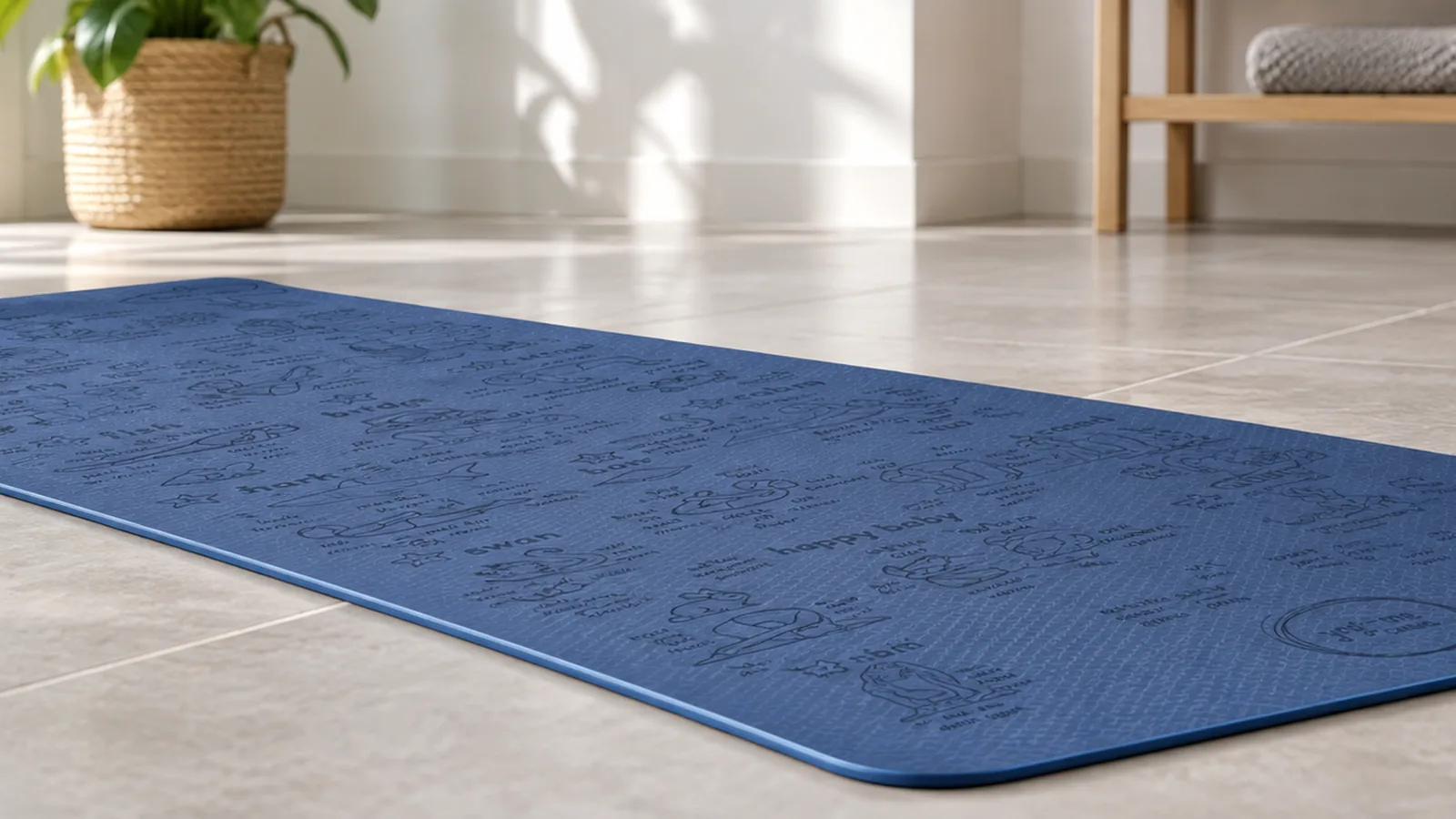
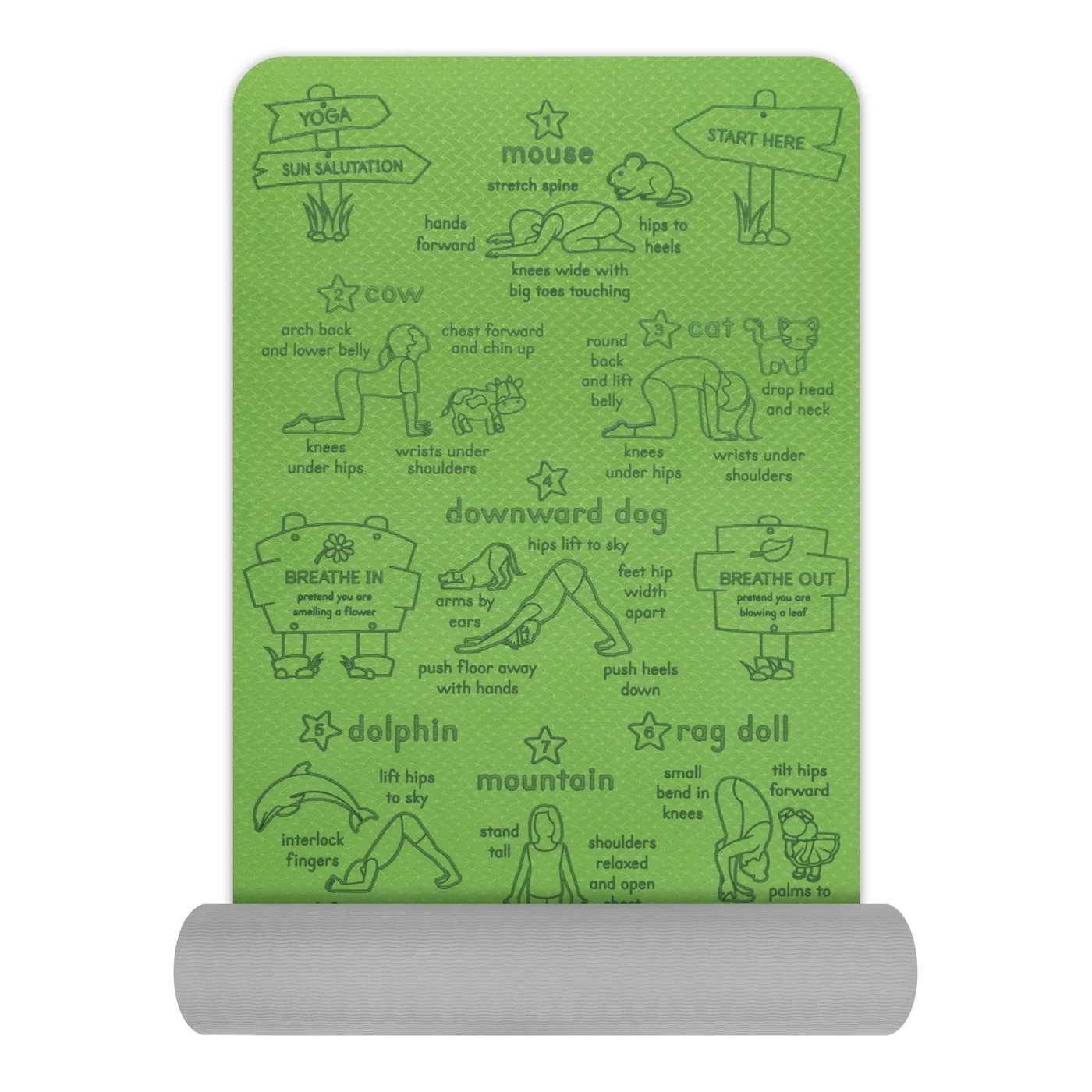
This one is ours. Stand on one foot in tree pose and count five slow breaths out loud together, then swap legs. Under-fives can stand tall like a mountain and count three. On our Sun Salutation design the fifteen poses are numbered, so getting all the way to fifteen is a longer wait of its own. New to poses? Try kids' yoga at home.
Minutes: the wait is a whole game (from age 4)
4. What's the time, Mr Wolf?
One player is the wolf, back turned. Everyone calls "What's the time, Mr Wolf?" and takes as many steps as the time called. "Dinner time" means run home before you're caught. The patience is in taking only the steps you're given. It needs three or more, and a garden or hallway. A grandparent makes a very good wolf.
5. Pass the parcel, on an ordinary day
Wrap something small, a satsuma, a sticker or a note that says "you choose tea", in five layers of newspaper. Music on, pass it round; music off, unwrap one layer. With one child, pass it between the two of you. No party needed. The wait for the middle is the whole point. Good from age 4.
6. Clock patience
Patience is also a card game, and clock patience suits ages 6 to 8. Deal a full pack into thirteen face-down piles of four: twelve in a circle like a clock face, one in the middle. Turn over the middle card and put it face up by the pile at its number (ace is 1, jack 11, queen 12, kings go to the middle), then turn the top card of that pile and carry on. You win if every card is face up before the fourth king appears.
Days: the wait is about a week (from age 4, with help)
7. Cress on the windowsill
Sprinkle cress seeds on damp kitchen roll or cotton wool in a saucer, or in an eggshell with a face drawn on. Water a little each day and tick off the days on a calendar. It's usually ready to snip in about a week. Ask: "How tall do you think it'll be tomorrow?" Then check. Good from age 4, with a grown-up.
8. A paper chain countdown
Make a paper chain with one link for every night until something your child is waiting for: a visit, a birthday, the end of half term. Seven links for a week. Tear one off at bedtime. For Christmas, start on 1 December with 24 links, and the last one comes off on Christmas Eve. Good from age 4.
9. A letter to Grandma or Grandad
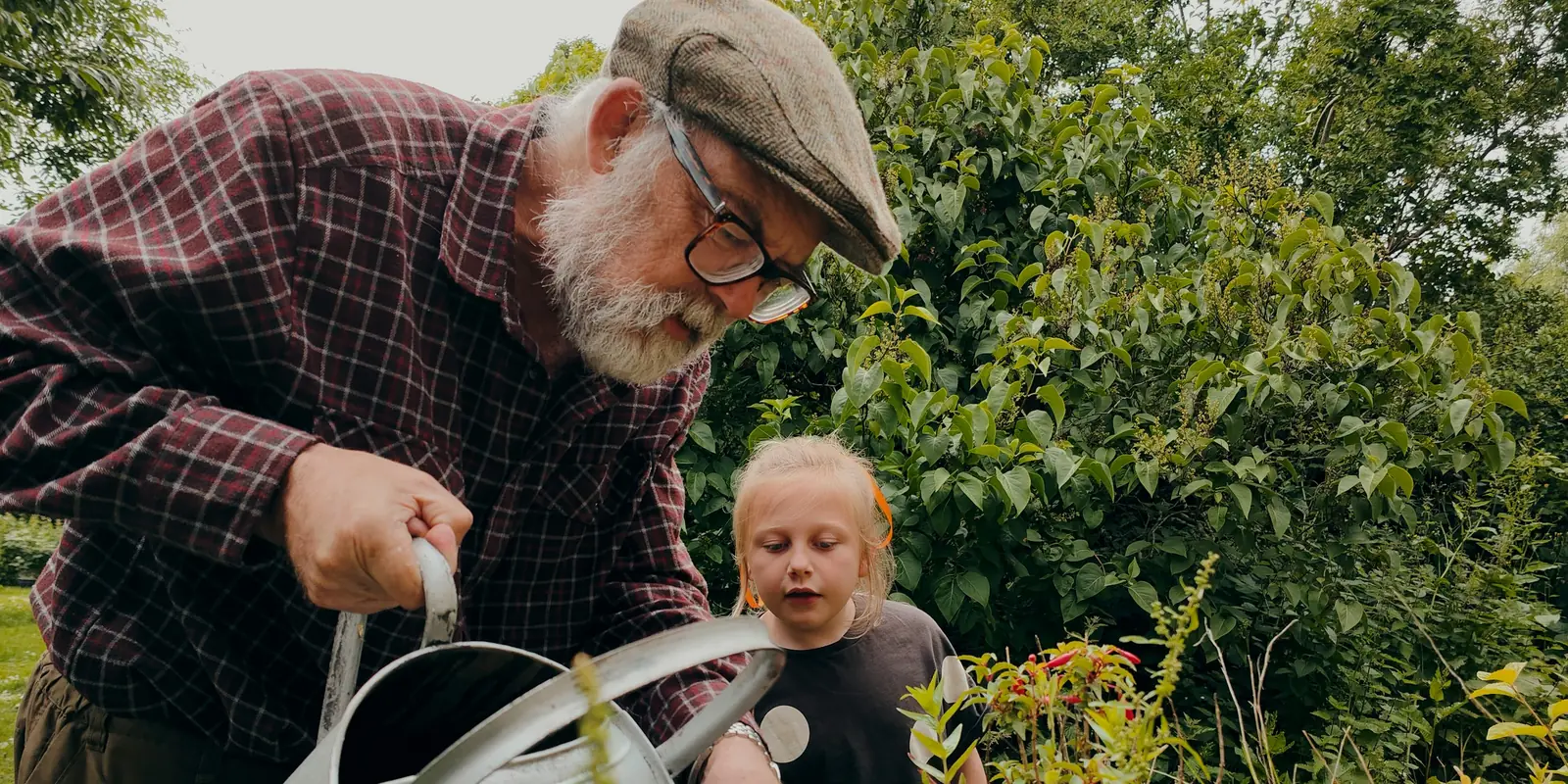
Draw a picture or write a few lines, address the envelope together and post it. Then wait for the reply, checking the doormat each morning. If you're the grandparent reading this, write back, and let them wait for it. Real post takes longer than a message, which is exactly why it works here. Good from age 4.
Pairing a short wait with a long one
These activities to practise patience for kids work well in pairs, one short wait and one long one:
- A wet Saturday: start the cress in the morning (7), then play pass the parcel (5) after lunch, and check the saucer at bedtime.
- After school: two rounds of my turn, your turn (1), then five breaths in tree (3) before tea.
If listening is the harder skill in your house, our listening games use the same short, playful waits, such as waiting for "go".
If the five-breath hold is the one they ask for again, the fifteen poses are engraved into our kids' yoga mats and numbered, so there's nothing to set up and no screen to follow. Each is £34.99 with free UK delivery. One mat between two children is a turn-taking game in itself, and if that's one game too many, there's 10 per cent off two or more.
The wait for Christmas is the longest of a child's year. A present they can practise on through January, when the paper chain is long gone, is a good answer to it. Here's our children's Christmas gift guide. And if you're the grandparent, the mats are full length, so you can stand in tree next to them and count the breaths together.
What if your child can't wait yet?
At three, "sometimes, with help" is the guidance's own bar, so a child who can't wait yet isn't behind. Go back down a rung and make the wait shorter.
Check the basics first. The NHS page on temper tantrums says a child may have a tantrum "because they're tired or hungry, in which case the solution could be simple". A hungry child at half past five isn't going to wait for anything.
If a wait tips over into a tantrum, the NHS suggests finding a distraction straight away, waiting for it to stop, and naming the feeling: "I know you're feeling angry about..." Staying calm yourself helps, and there's more on staying calm alongside your child. If you're seriously concerned about your child's behaviour, the NHS says to talk to your health visitor or GP.
Frequently asked questions
How do you teach a 4 or 5 year old patience?
Use the minutes rung: a game with a wait built in, such as What's the time, Mr Wolf? or pass the parcel. At five, let them run the game, because being the wolf or the one with the music is its own lesson in waiting. Add one days-long wait, such as cress or a paper chain, and count it down together.
Can you give me 10 examples of patience?
Ten everyday waits in a young child's life: a turn on the slide, tea cooling down, a seed sprouting, a birthday coming, a queue at the shop, a brother or sister finishing a sentence, a jigsaw coming together, the bus arriving, their go in a game, and a letter in the post. Each is a chance to practise.
What games can you play while you wait in a queue?
Waiting games for kids that need nothing to carry: I spy, counting the red cars, twenty questions, or "guess how many minutes until we're at the front". Make your guesses, then check the clock when you get there. Tell your child about the wait before it starts, so they know it's coming.
Is patience a card game?
Yes. In Britain, patience is the name for the card games Americans call solitaire. Clock patience suits ages 6 to 8 because it's pure luck and needs no strategy: the only skill is finishing. It's a good one for a child to play alone on a rainy afternoon.