guides
Yoga Mat Thickness Explained: What's Right for Children
Yoga mat thickness for children, explained: why 4 to 6mm suits most kids aged 3 to 8, when thicker helps, and why grip and density matter just as much.
Yoga mat thickness for children works best between about 4mm and 6mm: enough padding for small knees and spines in kneeling and lying poses, and firm enough to stay steady in balances. Thin mats of 1 to 3mm feel hard on knees, and very thick, squashy mats of 8mm and over wobble. Density and grip matter as much as the number on the label.
Your child wants to try yoga, and you have hit the first hurdle before a single pose: how thick should the mat actually be? The numbers on the label (1mm, 4mm, 6mm) mean very little until you know what they feel like under small knees.
Thickness is not a case of "more is better". It is a trade-off between cushioning and stability, and children need both.
Here is how to pick the right thickness for your child, and the few other things that matter just as much.
How thick should a yoga mat be for a child?
For most children, a yoga mat of around 4mm to 6mm is the sweet spot. It gives enough padding to protect small knees and spines during kneeling and seated poses, while staying stable enough for balancing, as long as the material is dense rather than spongy. Very thin (1mm to 3mm) feels hard; very thick and soft (8mm and over) wobbles.
Think of 4mm to 6mm as the sensible all-rounder for ages 3 to 8. It is firm underfoot when your child stands in tree pose, and soft enough when they kneel or lie down. If you are unsure where to start, this is it.
Why does mat thickness matter for kids' yoga?
Thickness matters because children's yoga is active floor movement, not sitting still. Kids kneel, balance, jump and roll, so the mat is a base for the whole body. Too thin and hard poses hurt; too thick and your child sinks in and loses their balance.
The NHS suggests children and young people aged 5 to 18 aim for an average of at least 60 minutes of moderate to vigorous activity a day, including movement that strengthens muscles and bones. Younger children need even more floor-based play. A comfortable mat makes that daily movement more likely to happen.
The right thickness quietly removes reasons to stop. No sore knees, no slipping, no wobbling off balance.
Is a thicker yoga mat better for children?
Not beyond a point. A very thick, soft mat (8mm or more, like many exercise mats) adds cushioning but reduces stability, and stability is exactly what young children need when they are learning to balance. On a very soft mat, standing poses feel unsteady and your child gets less feedback from the floor, so they wobble and slip more.
Extra thickness has its place. If your child does a lot of kneeling work, or you have hard flooring, a slightly thicker mat can help. If your floor is carpeted, our guide to yoga on a carpeted floor is worth a read. For general kids' yoga, though, a stable surface beats a plush one, which is also the main difference between a padded gym mat and a yoga mat.
Here is how the common thicknesses compare.
- 1mm to 3mm (thin), Feel: Firm, close to the floor; Best for: Travel; Watch out for: Uncomfortable for kneeling and seated poses
- 4mm to 6mm (standard), Feel: Balanced padding and stability; Best for: Everyday kids' yoga, ages 3 to 8, hard floors at the 6mm end; Watch out for: A soft, spongy material, which wobbles at any thickness
- 8mm and over (thick), Feel: Soft and cushioned; Best for: Extra knee support, exercise and tumbling; Watch out for: Wobbly in balancing poses, less floor feedback
What thickness suits different ages?
Younger children need more cushioning; older ones cope with slightly firmer mats. Toddlers and pre-schoolers spend a lot of time on the floor, so lean towards the thicker end, around 5mm to 6mm. Children aged 5 to 11 do well anywhere in the 4mm to 6mm range. Pre-teens can happily use a firmer 4mm mat.
The NHS notes that toddlers and pre-schoolers should each be active for at least 180 minutes a day. That is a lot of floor time, which is why comfort counts most for the youngest.
Whatever the age, pair thickness with the right dimensions. A mat that fits your child's height matters as much as how deep it is, so it is worth reading our guide to yoga mat size for children alongside this.
What else matters as much as thickness?
Materials, grip, size and weight matter as much as thickness, sometimes more. Prioritise a non-toxic, PVC-free mat with a genuine non-slip surface, sized to your child and light enough for them to carry. A safe, grippy mat in the 4mm to 6mm range beats a thick, squashy one that fails on any of these.
Safe, non-toxic materials
Your child will sit, lie and put their hands near their face on the mat, so materials come first. Look for a non-toxic, PVC-free material such as TPE, natural rubber or cork, and a listing that names it.
In the UK, toys are covered by the Toys (Safety) Regulations 2011, which set rules on the chemicals they may contain. Our guide to non-toxic, PVC-free yoga mats explains what to look for and what to ask.
Grip, size and weight
A good non-slip surface stops slips mid-pose. A child-sized mat is easier to manage than a heavy adult one. And a light mat your child can roll up and carry themselves builds a lovely bit of independence.
For a full walk-through of every factor, see our guide to choosing your child's first yoga mat.
Frequently asked questions
Is 4mm or 6mm better for a child?
Either can work well. A 4mm mat feels firmer and closer to the floor, which some children like for balancing; a 6mm mat adds cushioning for knees and spines, which helps on hard floors and for younger children. The material matters as much: a dense, grippy mat stays steady, a spongy one wobbles.
Can my child use an adult yoga mat?
They can, but it is not ideal. Adult mats are often heavier, so they are harder for a small child to position, roll and carry. A lighter mat encourages independence, and our guide to yoga mat size explains why weight matters as much as length.
Does a thicker mat prevent injuries?
Not on its own. Sensible cushioning helps protect knees during kneeling poses, but grip and stability prevent the slips and wobbles that actually cause bumps. A very thick, soft mat can make balancing poses riskier, not safer, so aim for padding that stays firm underfoot.
What thickness is best for travel?
A thinner mat (around 3mm) rolls up smaller and lighter for trips and holidays. For everyday use at home, come back to the 4mm to 6mm range for proper comfort. If your child will carry it themselves, check the weight as well as the thickness.
Our mat, for reference
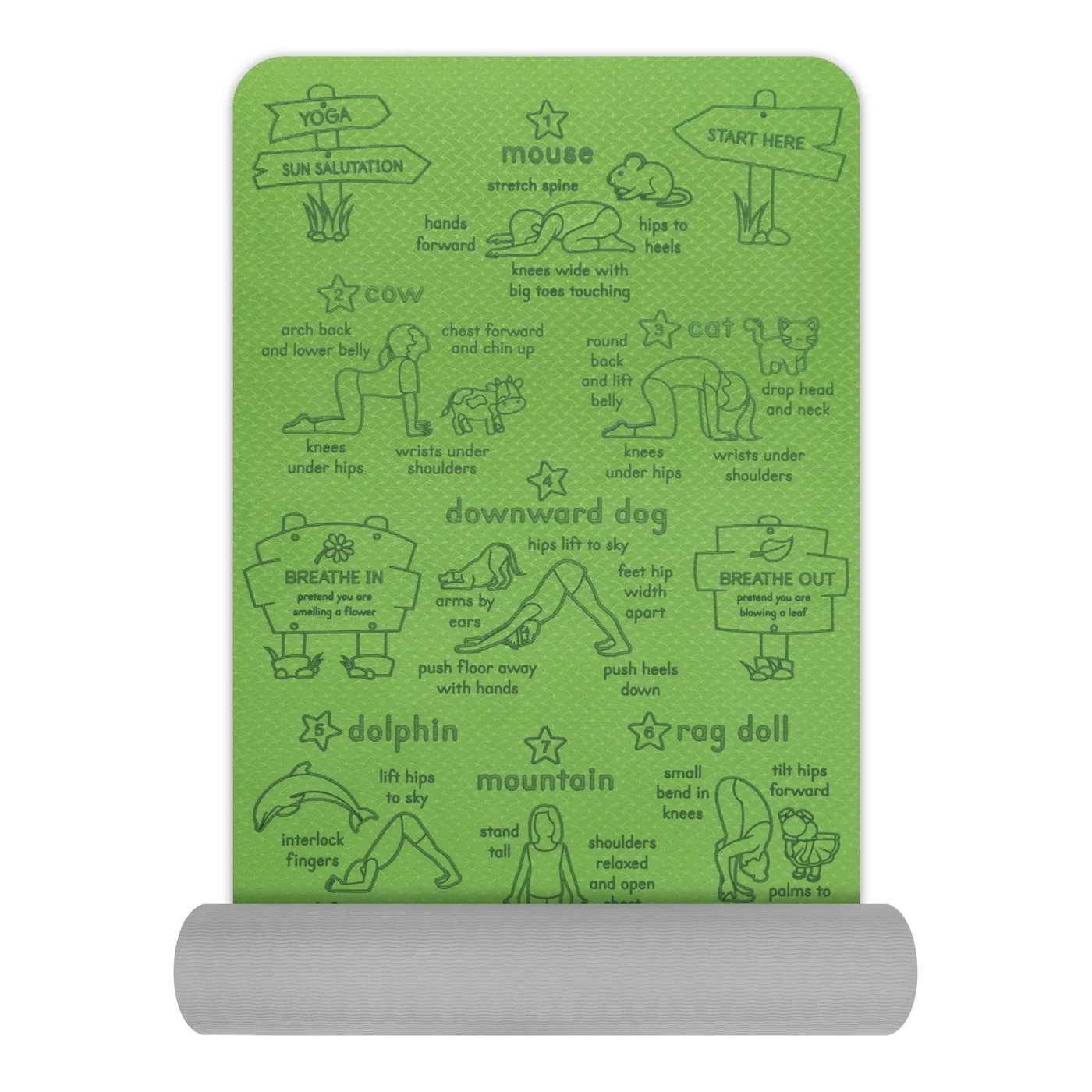
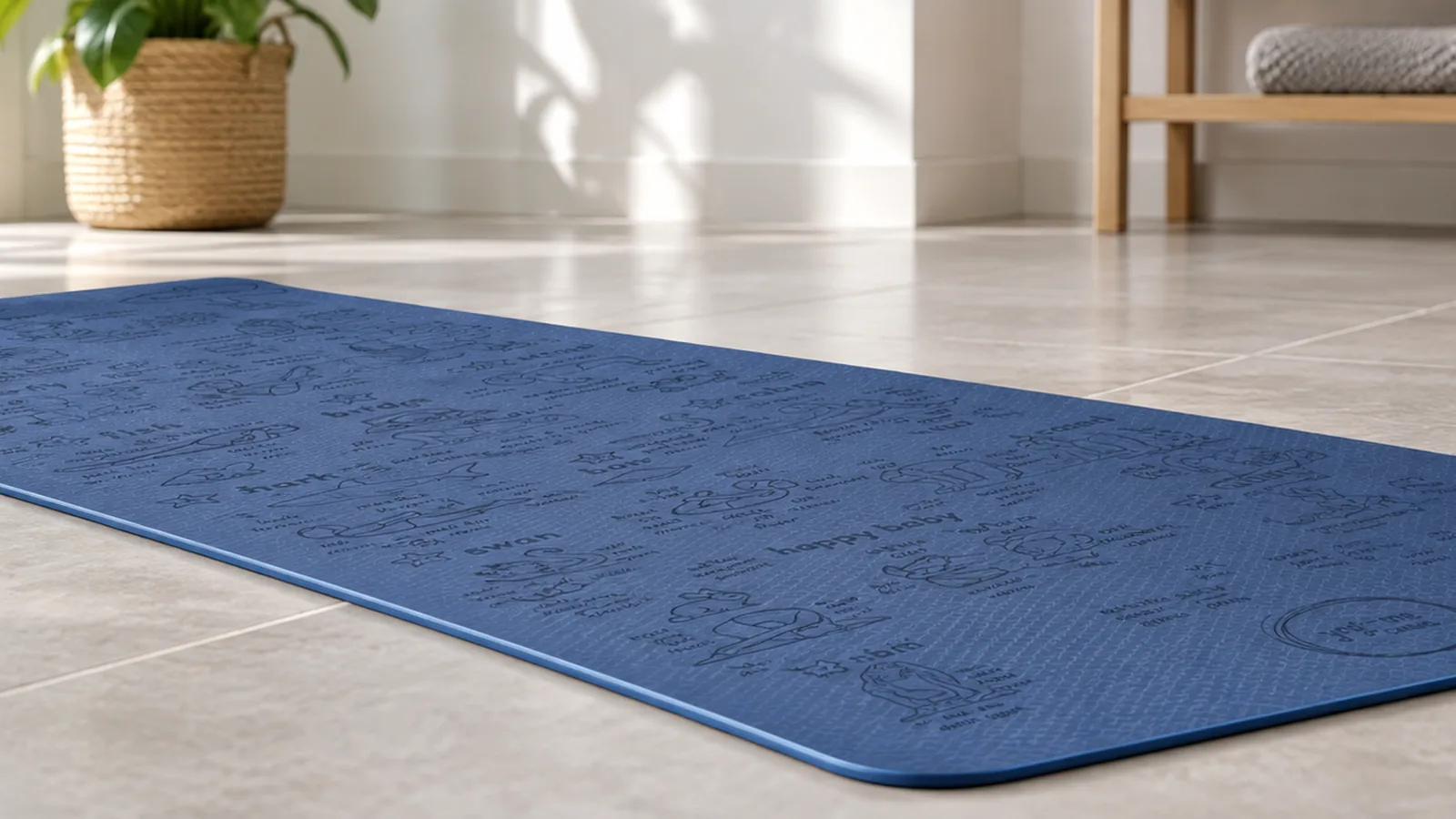
Ready to get your little one moving? Our Yogi-Me children's yoga mat is 6mm thick, made from non-toxic, PVC-free TPE, weighs 800g and has 15 numbered poses marked into it. Screen-free, floor-based, and genuinely fun.