
practice
Tag Games: 15 Versions of Tig for Kids
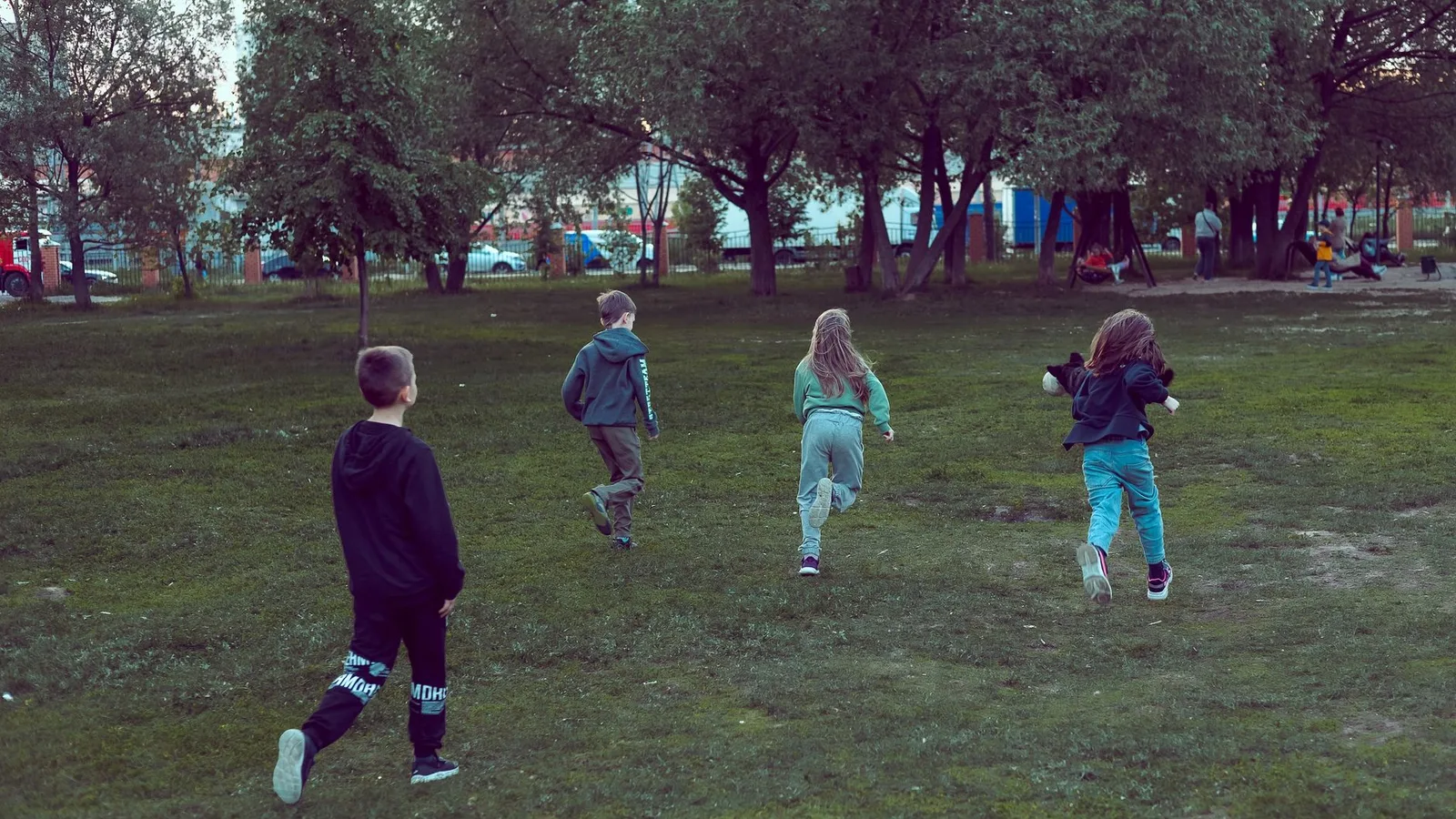
15 tag games for kids, from tig and stuck in the mud to touch-only British bulldog, with clear rules, space guides and ways to keep everyone playing.
Which tag game should you start with?
Start with classic tig for a small group, stuck in the mud for children who enjoy rescuing each other, or touch-only British bulldog when you've got a broad, open space. These 15 tag games include walking and no-touch options, plus rules that bring children straight back into play instead of leaving them out.
What do you need before the chasing starts?
Choose a game that fits the space you've actually got, then explain what happens when someone is caught. Start with walking tig and a grown-up demonstrating for younger children; add rescue rules once everyone understands the chase.
You need people and clear boundaries; chalk or existing playground markings help with some games. For other familiar choices, try our classic playground games.
Agree that a tag is a gentle upper-arm touch, with no pushing, grabbing or tackling. The Scouts advise gentle tagging below shoulder height. Check for slippery ground and obstacles, set boundaries away from roads and walls, practise a stop signal and have a grown-up supervise, following their active-game guidance.
Which of these 15 tag games fits your group?
Pick walking tag for a slower start, shadow tag for no touching, rescue games for helping each other, and crossing games when you've got a wide space. Player numbers and short rounds below are suggested starting points. The adaptations keep the rules manageable without making every game about the fastest runner.
1. Classic tig
2 or more; open garden or playground.
One player is 'it': "Chase someone, touch their upper arm gently, then tell them they're it." The tagged player becomes the chaser immediately. Agree no instant tag-back, giving the previous chaser a count of 3 to move away. These traditional tig rules give you a starting point without teams or equipment.
2. Walking tag
2 or more; clear, level patch.
Play ordinary tig, but everyone walks, including the grown-ups. Say: "Keep walking even when someone's nearly caught you." If someone starts running, pause and restart together. The Scouts suggest walking as an adaptation to chasing games. Try this first when your group wants a slower pace, then let them decide whether to change it.
3. Shadow tag
2 or more; sunny, open ground.
The chaser tags a shadow by stepping onto it, then names the new chaser. Say: "Catch my shadow, not my shoes." Choose ground where the shadows are easy to see, with room between players. Play Scotland includes shadow tag in its play pack. It's an option when children want chasing without touching each other.
4. Line tag
3 or more; an empty marked court.
Everyone walks along the painted lines, with a single chaser. Say: "Stay on the lines and change direction at a junction." A tag passes the chasing job to the caught player; don't jump between lines. If two runners meet head on, both stop and turn back. This adapts Youth Sport Trust's line game, replacing its waiting rule with an immediate swap. Choosing a route becomes part of the game.
5. Home-base tag
4 or more; open garden with a marked base.
Add a chalk circle where players can't be tagged. Say: "You can stay home for a count of 3, then choose a way out." The chaser must move away from the entrance. Tig can include a den and countdown; this version gives runners a brief pause without letting anyone spend the whole round at home.
6. Stuck in the mud
4 or more; open playground or lawn.
In this stuck in the mud game, a tagged player freezes standing up. Say: "Stay still until a friend taps your hand to free you." Use a single rescuer, an option in the Scouts' rules, rather than crawling between legs. The tagger moves on after catching someone, leaving room for a rescue. Swap taggers each round.
7. Banana tag
4 or more; open playground or lawn.
When tagged, become a banana with hands together overhead. Say: "Wait for a friend to pretend to peel you." The rescuer mimes peeling; the banana lowers their own arms and rejoins. This changes the rescue in Scottish Rugby's banana tig so nobody pulls another child's arms. Keep the banana acting; skip any elimination.
8. Disco tag
4 or more; open playground or lawn.
Caught players dance on the spot until a teammate copies their move, as in Scottish Rugby's disco tig. Say: "Make up a little dance. When someone copies it, you're free." Try shoulder wiggles or marching feet. Agree that rescuers can't be tagged while copying. The dancers choose the moves, so each rescue can look different.
9. Everybody's it
4 or more; broad, open lawn.
Everyone can tag everyone else. Say: "If you're tagged, walk to the edge, count to 3, then come back." Give returning players room to rejoin. This is a quick-return twist on Scottish Rugby's chaos tig, without remembering who caught whom. Nobody has to wait for a rescuer or sit out until the game ends.
10. Chain tag
6 or more; broad, open playing area.
Start with a pair holding hands; anyone they tag joins them. At 4, split into 2 pairs, following Scottish Rugby's chain tig adaptation. Say: "Walk together and let go if someone stops." Keep the whole game at walking pace, with tags from the free hands at the ends. Reset after a minute with new starting partners.
11. British bulldog, touch-only
6 or more; wide field with clear end zones.
Runners cross from one end to the other past a tagger in the middle. Caught players join the middle for the next crossing. Use the British Council's touch-tag pattern for ages 11 to 18: a gentle tag counts, never a tackle or hold. Say: "Wait for 'go', then cross." Reset after 3 crossings or when everyone is caught.
12. Colour-crossing tag
4 or more; broad space between marked ends.
A caller names a colour: anyone wearing it walks across untouched, then everyone else crosses on "go" and can be tagged. The first person caught calls the next colour; if nobody is caught, keep the caller. This adapts the Farmer Farmer crossing game. Say: "Show your colour, then cross." Everyone joins in again from the opposite end.
13. What's the time, Mr Wolf?
3 or more; open space with a home line.
Choose a wolf to stand with their back to the others, who line up at the home line some distance away. Players ask the wolf the time, then take that many steps towards the wolf: 3 o'clock means 3 steps. At "Dinnertime", the wolf turns and chases them home; the first tagged player becomes the wolf. Play Scotland describes these rules. Say: "Stop after your steps and wait for the next answer." Let children choose a friendly wolf voice.
14. Rock, paper, scissors tag
2 or more in pairs; clear lanes with end lines.
Partners play rock, paper, scissors midway between their home lines. Rock beats scissors, scissors beat paper, paper beats rock; replay a draw. Say: "Winner chases, runner heads home." This adapts Girlguiding's chasing game using the gentle tag agreed at the start. After a tag or escape, reset. With several pairs, keep each chase in its own lane.
15. Duck, duck, goose
5 or more; space for a circle and outside route.
Everyone sits in a circle while a caller walks around saying "duck", then chooses a "goose" with a wave. The goose chases the caller around the outside towards the empty seat. Follow the Scouts' rules: if caught, the caller tries again; otherwise the goose takes over. Choose someone new each turn so everyone gets an invitation.
How can you keep the slowest runner involved?
Change the rules for everyone before singling anyone out. Try walking-only rounds, rotate the chaser by time rather than by who gets caught, and give rescued players a count of 3 to move away. Ask the group to count successful rescues instead of celebrating only the last runner left.
For a large group, begin with stuck in the mud or banana tag in smaller groups with their own areas and adult supervision. Add another tagger only if rescues are happening easily.
If a chaser can't catch anyone, offer a partner for the next round. If a runner keeps getting caught, offer a nearer home line in crossing games. Play Scotland recommends adapting games for different abilities and pairing players thoughtfully; ask the child what they'd like to change.
What if your child doesn't want to be chased?
Offer a different job, a different game or permission to watch. They could call the colours, announce the next round or demonstrate a banana rescue with you. Don't make joining in the price of staying with the group. The Scouts explicitly say not to force reluctant players.
Ask whether it's the touching, the running or being watched that they dislike. Shadow tag removes touch; walking tag changes the pace. They can also choose something completely different from our garden games without equipment.
For children aged 5 to 18, the NHS advises matching exercise to age, ability and experience. If you're worried a health problem is limiting activity, speak to your GP or health visitor.
How can you turn a few games into a short session?
Choose a familiar game first, a change of rules next and a slower finish. You don't need to get through the whole list. These suggested combinations leave room for explaining, swapping roles and stopping while children still want another go. Shorten any round whenever the group has had enough.
- For 4 players: try 2 minutes of walking tag, 3 minutes of classic tig and 3 minutes of home-base tag. Finish with 2 minutes walking together. That's 10 minutes of play, plus explanations.
- For a larger group: try 2 minutes of walking tag, then 3 minutes each of stuck in the mud and banana tag, swapping taggers every minute. Finish with 2 minutes of easy walking.
Once the chasing is finished, our cool-down ideas after active play offer a slower next activity.
For a pose-based finish, explore the Sun Salutation mat. Its standing sequence has 15 numbered poses laser-engraved into the surface, so you can choose a pose together without switching on a video.
Frequently asked questions
Is it called tag or tig?
Both are used: tag and tig are names for the same basic chasing game, also called 'it'. One player chases and gently tags another, who takes over. Before you start, agree whether there's a home base and whether immediate tag-backs are allowed. Those rules matter more than the name.
Is British bulldog banned in schools?
Some schools prohibit it. Overton CE Primary School's published behaviour policy, for example, explicitly excludes British bulldog. That tells you about that school's rule, not every school across the UK. Ask your own school whether a supervised, touch-only version is allowed, and respect its answer rather than simply renaming the game.
What are good tag games for 4 players?
Try classic tig, walking tag, home-base tag or stuck in the mud with a single tagger. In stuck in the mud, let any free player release someone with a gentle hand tap. Agree a short round, then swap the tagger so everyone gets a turn at chasing and escaping.
How much space do you need for tag?
Choose space to suit the speed and number of players: a clear patch for walking tag, or a broad open area for crossing games. Leave room beyond finish lines to slow down. If children have to squeeze between furniture or dodge other activities, move elsewhere or choose a different game.
Sources
- NHS: Physical activity guidelines for children and young people
- Scouts: Running active games safely
- Scouts: Play stuck in the mud
- ICH Scotland: Tig
- Play Scotland: Parents' play pack
- Scottish Rugby: Primary school teacher resource pack
- British Council: Traditional games, Touch Tag
- Play Scotland: Play Well Outdoors pack
- Girlguiding North West England: Love Rugby
- Scouts: Duck, duck, goose
- Overton CE Primary School: Behaviour policy