guides
Long Car Journey Activities for Kids: 15 Screen-Free Ideas
Long car journey activities for kids aged 3 to 8: 15 screen-free ideas sorted for car-sick children, plus when to stop and a five-minute stretch.
If anyone in the back seat gets car sick, the order of your long car journey activities for kids matters more than the games themselves. Start with games that need only ears, move on to things far away out of the window, and keep anything in their lap for children who are never sick. Then stop every two hours or so and give each break five minutes of moving.
Ears, eyes, hands: the order to play them in
These long car journey ideas for kids come in three groups of five: games for the ears only, games for eyes on things far away, and things for busy hands. Every one says the age it works from, and they're for children aged 3 to 8.
Before you set off, put a bag of quiet things within a grown-up's reach and download an audiobook.
15 long car journey activities for kids
Ears only (start here if anyone gets car sick)
1. An audiobook everyone can stand
Download it before you leave, because the signal drops on the motorway. Pick one the grown-ups will enjoy too, since you'll hear every word. A cliffhanger gets everyone back in the car after a stop. From 3.
2. The yes-no game
One player answers questions for a minute without saying yes or no. Everyone else fires questions to trip them up: "Is your name Sam?" "Do you like cheese?" Nodding counts as out. It's harder than it sounds, and the grown-ups get caught first. Best 6 to 8.
3. Rhyme tennis
One player says a word, the next says a word that rhymes, and it goes back and forth until somebody's stuck. Cat, hat, bat, splat. Made-up words are allowed for the youngest, which makes it funnier, not easier. Then the stuck player picks a new word. From 4.
4. Buzz
Count round the car, one number each. Any number with a 5 in it, or in the five times table, gets "buzz" instead. Say the number by mistake and you start again from one. Younger children can play with just the numbers ending in 5. Best 6 to 8.
5. Hum it back
One player hums a tune with their mouth closed and everyone else guesses it. Nursery rhymes for the youngest, theme tunes and Christmas songs for older ones. Whoever guesses first hums next. It needs no looking at all. From 3.
Eyes far away (things that stay put)
6. I spy, far away
The usual game, with one rule: only things you can see for more than a few seconds. A hill, a tower, a cloud, the road ahead. Use colours instead of letters for the youngest ("something green"). It keeps eyes up and out of the window, not down. From 3.
7. Field count
Each side of the car counts the sheep, cows and horses in the fields on their side. Anyone who passes a church on their side loses their count and starts again from nothing. Agree in advance whether donkeys count. Best 5 to 8, and for children who aren't car sick, because it means watching the side window.
8. Landmark hunt
Before you leave, choose five things to spot on the way: a wind turbine, a bridge over the road, a castle, a lighthouse, the sea. Whoever sees each one first claims it. Pick things you know are on the route, or the hunt ends in a sulk. From 4.
9. Cloud shapes
Find a cloud and say what it looks like: a dragon, a teapot, a sleeping dog. Then everyone has to see it too. Clouds move slowly enough to keep eyes far away, and there's no wrong answer, so a three-year-old plays as well as anybody. From 3.
10. Alphabet signs
Find the letters A to Z, in order, on the signs ahead: road signs, place names, the services. Not number plates, because those are on passing cars, and passing cars are what car-sick children shouldn't watch. Q and Z take a while. Best 6 to 8.
Busy hands (only for children who are never car sick)
11. A reusable sticker scene
A card scene with peel-off stickers that move around all the way there. It packs flat, it doesn't spill, and nothing ends up wedged down the side of the car seat. From 3.
12. Pipe cleaners
A handful of pipe cleaners in a pencil case. Twist them into animals, glasses, rings, or a crown for the driver to wear at the next stop. They're quiet, and they bend back into shape. Keep them for children past the age of chewing things. From 4.
13. One small thing an hour
Wrap a few small, cheap things: a new pencil, a mini notebook, a puzzle book. One comes out on the hour, every hour. It gives the journey a clock a child can feel, and "how long now?" becomes "is it time for the next one?". From 3.
14. A wipe-clean doodle board
Nothing to drop between the seats, nothing to sharpen, nothing to run out of. Draw, wipe, draw again. If they run dry, set a challenge: draw the driver with a moustache. From 3.
15. The quiet game, done properly
Whoever stays silent the longest chooses the next song. No whispering, no humming, and pulling faces is allowed. Save it for the last half hour, when everyone's tired. Best 6 to 8.
Which car activities are best for a child who gets car sick?
Start with the ears-only games, and keep the stops regular. The NHS advice on motion sickness is to look straight ahead at a fixed point such as the horizon, get fresh air through an open window, and not read, watch films or use electronic devices, or look at moving things like passing cars. It also suggests distracting children by talking, listening to music or singing songs.
Lap activities aren't on the NHS list, but looking down at a sticker scene is a lot like looking down at a book, so we'd keep the third group for children who are never sick. The NHS also suggests closing your eyes and breathing slowly, and our breathing exercises for kids give a child something to do with that. If it happens every journey, a pharmacist can help.
How often should you stop on a long car journey with kids?
At least every two hours, and more often with young children. The Highway Code's rule 91 recommends a break of at least 15 minutes after every two hours of driving. That rule is about the driver's tiredness, not the children, but it's a sensible minimum for everyone.
The NHS page for under-fives is plain about it: "Watching TV, travelling by car, bus or train, or being strapped into a buggy for long periods are not good for a child's health and development." For 5 to 18 year olds, it says to break up long periods of not moving with some activity.
So plan the stops before you leave and give each one a job: toilet, water, and five minutes of moving.
What can kids do at a service station stop?
The stop stretch. A stop stretch is five minutes of standing poses at a break, to get a child moving again after a long sit. Find grass or a quiet corner well away from parked and moving cars, hold hands across the car park, and never use the hard shoulder or an emergency area.
Then about a minute each:
- Reach for the sky. Stand tall, feet together, then stretch both arms up as high as they go.
- Lean like a tree in the wind. Arms up, palms together, bend gently to the left, and then to the right.
- Floppy forward. Bend forward, let your arms and head hang, and sway gently.
- Tree. Rest one foot on the other ankle, or on the calf but never on the knee, and put your hands together. Hold a grown-up's hand if you wobble.
- Eagle. Wrap one arm round the other and cross one leg over the other, then squeeze tight and stand tall.
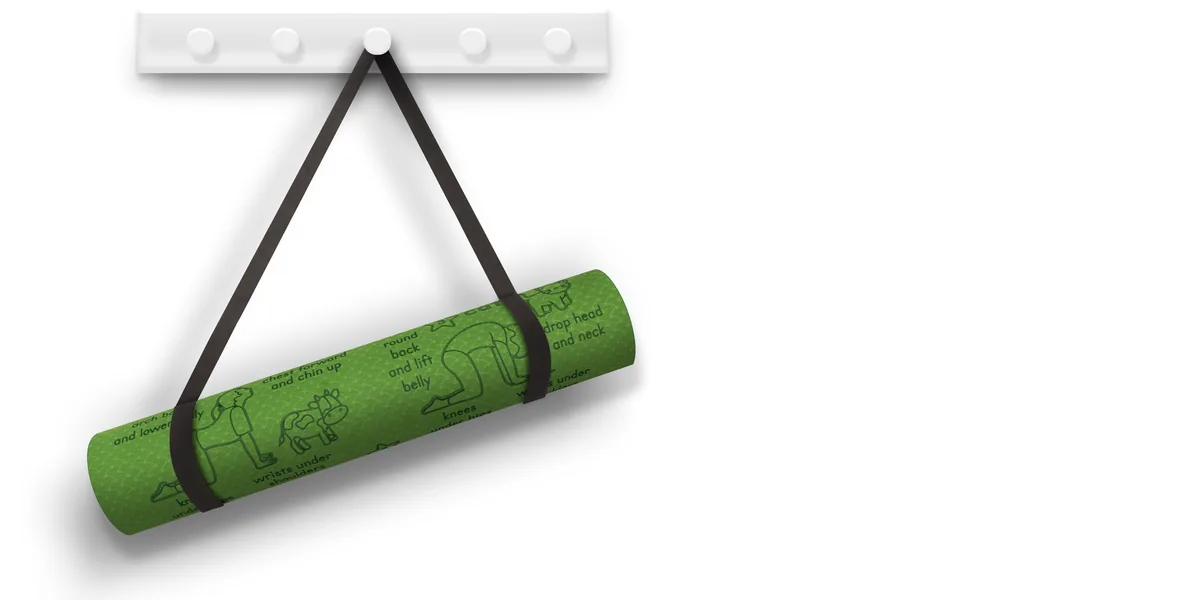
Tree and eagle are 14 and 13 on our Sun Salutation mat, so a child who's done them at home knows them by name and can lead that part. You don't need a mat at the services. If there's room, finish with a run to a tree and back. For more of these at home, see our guide to starting yoga with a child.
The coast and the Christmas drive
Car journey activities for kids go further when they're spread out. Two examples:
A two-hour run to the coast
An audiobook for the first 40 minutes, then cloud shapes and the landmark hunt, with the sea on the list. Stop halfway for the stop stretch even if nobody asks. For the rest of the holiday, there are more screen-free activities sorted by age.
The drive to family at Christmas
Field count works in winter too, and Christmas songs suit hum it back. If you're the grandparent at the end of the drive, a mat that lives at yours means the children arrive to something to do. A mat in the boot also makes a present that gets unrolled on Boxing Day, and our screen-free Christmas gifts have more like it.
When should the tablet come out on a long drive?
Late, if at all. Keep it for the last leg rather than the first, so the games get their turn. A tablet on a five-hour drive isn't a failure, but there's a practical reason to hold it back: the NHS lists watching films and using electronic devices among the things to avoid if you get motion sick.
An audiobook is the halfway house. For the bigger picture, our guide to screen time by age sets out the UK guidance.
Frequently asked questions
What is considered a long car journey?
There's no official definition. A useful marker is the Highway Code, which recommends a break of at least 15 minutes after every two hours of driving, so anything over two hours needs a planned stop. For a three-year-old, though, an hour already feels long, so plan around the youngest passenger rather than the map.
What should I pack for a long car journey with kids?
Water and plain snacks. Wipes, a few bags and a change of clothes for anyone who gets car sick. An audiobook downloaded before you leave, because the signal drops. A small bag of quiet things for their hands, kept within reach. And coats on top of the luggage, so the stops don't start with unpacking the boot.
How do you entertain a 3 year old on a long car journey?
In short bursts, and mostly with your voice. Sing, play hum it back with nursery rhymes, and do I spy with colours rather than letters. Cloud shapes and a sticker scene work well too. Expect about ten minutes per game, and plan to stop more often than you would for older children.
What can kids do in the car without electronics?
Most of this list: talking games, listening, looking out of the window and quiet things for their hands. Long car ride activities for kids that need nothing at all include the yes-no game, rhyme tennis and I spy far away. Add an audiobook and a few stops, and you may not need the tablet at all.
Poses that travel
If you'd like the stop-stretch poses to come with you, our kids' yoga mats weigh 800 g and have a shoulder carry strap, so they can come along to a holiday let or a grandparent's front room. Each has fifteen numbered poses and suits ages 3 to 8. Each costs £34.99 with no charge for UK delivery, and a pair or more gets 10 per cent off: one for each child in the back.