guides
Activities for 2 Year Olds: 25 Ideas at Home
25 activities for 2 year olds at home, grouped by what they're practising, and how an ordinary day adds up to the NHS's 180 active minutes.
The best activities for 2 year olds are short, physical and copied from you: climbing over cushions, carrying the shopping in, putting teddy to bed, singing action songs and knocking down towers of cups. The NHS asks for at least three hours of activity a day at this age, spread out, and gentle pottering counts, so lots of small things beat one big outing.
None of the 25 ideas below needs buying. They're grouped by what a two-year-old is practising, so if yours is climbing everything this week, start there.
What should a 2 year old be doing?
Mostly moving, talking and copying, in short bursts of their own choosing. The NHS guidelines for under-5s put toddlers aged 1 to 2 at a minimum of 180 minutes of physical activity every day, spread through the day and including time outdoors. Light activity counts: standing up, moving around, rolling and playing, as well as running and jumping.
The Department for Education's Development Matters, guidance that many nurseries use, gives a few markers. One of its checks around a second birthday is running well, kicking a ball and taking off with both feet together. It also notes that children this age usually stick to something they've picked themselves and resist being directed by an adult. And the NHS says children start putting simple sentences together at around age 2.
Those are markers, not a test. If something worries you, ask your health visitor.
What do you need for these activities?
Cushions, a cardboard box, plastic cups, a soft ball, a teddy, paper and crayons, and the socks from the washing basket. That's the whole kit.
Two safety habits cover most of it. First, small things. The NHS choking advice explains that mouthing things is normal from 1 to 5, and names marbles, beads and button batteries as the size that lodges in an airway, so sweep the floor for anything that small. Second, climbing. Development Matters suggests letting children climb by themselves and stop when they feel unsafe, rather than lifting them up, so they learn what they can manage. Stay close, and stay with them for anything involving water.
Big moves: climbing, kicking and jumping
1. Cushion mountain
Pile sofa cushions and pillows on the floor, away from furniture edges and windows, and let them climb up and roll off. Stay close but don't lift them on: working out how to get up is the whole point.
2. The bottom three stairs
With the stair gate shut above, practise going up and down the bottom three steps, holding the rail or your hand. Development Matters lists starting to use the stairs independently among the things under-threes are working on. Count each step out loud.
3. Hallway football
Roll a big, soft ball down the hallway and take turns kicking it back. Two-year-olds often stop the ball with their whole body before they kick it, which is fine. Add a goal: two shoes at the far end.
4. Jump the river
Lay a rolled-up towel on the floor as a river and jump over it with both feet together. When that's easy, unroll it a little to make the river wider, or add a second one. Landing on two feet is the skill.
5. Slow-motion chase
Chase them round the kitchen table in slow motion, then speed up, then freeze. Swap so they chase you. The NHS names chasing games as one of the best ways for this age group to get moving, and the freeze always gets a giggle.
Carrying, fetching and helping
6. Unpack the shopping
Hand them the light, unbreakable things from the bags, such as a loaf or a bag of pasta, and ask them to carry each one to the cupboard. Name each one as it goes. It's carrying practice and new words in the same minute.
7. Sock matching
Tip the clean socks onto the floor and find the pairs together. Two-year-olds won't match many, but they'll love carrying each pair to the basket. Talk about which is big, which is small and whose they are.
8. Pour your own drink
Give them a small plastic jug with a little water in it and a cup, at the table or in the bath. Development Matters lists pouring drinks among the things young children learn to do for themselves. Expect spills, and keep a cloth handy.
9. Wash the plastic plates
Put a washing-up bowl of warm water on a towel on the floor, with a sponge and the plastic plates. Stay with them the whole time and tip the water away afterwards. They'll wash the same plate eleven times.
10. Walk to the postbox
Let them walk the whole way to the postbox or the corner shop instead of riding in the buggy, and post a letter or buy one thing. It's slow, and that's fine: walking is on the NHS's own list of activity ideas for under-5s.
Copying and pretend play
11. Put teddy to bed
Development Matters lists pretend play such as putting the baby to sleep among the things children develop before three. Find a box for a bed and a tea towel for a blanket, then whisper so teddy doesn't wake up.
12. Drive to the shops
A laundry basket is a car and a paper plate is the steering wheel. Ask where they're driving, what they'll buy and who's coming along. Join in as a passenger when they invite you, and let them do the driving.
13. Dress teddy
Teddy needs a hat, a scarf and a sock on each foot. Let them choose the clothes and do the dressing while you describe it: "Arm in, now the other arm." It's practice for the coats, buttons and zips they're starting to manage.
14. Talk as you clean
Give them a cloth while you wipe the table, or a duster while you dust. The NHS suggests chatting about chores as you do them together, because children this age love to help. Name what you're doing: wiping, spraying, folding.
15. Do what I do
Clap twice, stamp twice, pat your head, then wait for them to copy. Then let them lead while you copy. Development Matters lists clapping and stamping to music among the big movements toddlers practise, so add a song once they've got it.
First words, songs and books
16. What's in the bag?
Put three familiar things in a cloth bag: a spoon, a sock and a toy car. Take turns pulling one out and naming it together, then hide them again. Add a new object once they know the first three.
17. Action songs
Choose songs with actions, such as "Wind the bobbin up", "Row, row, row your boat" or "Pat-a-cake". The NHS says doing the actions helps children remember the words. Sing the same few every day; repetition is exactly what they want.
18. Finger rhymes with numbers
Sing a counting rhyme on your fingers, such as "Two little dicky birds", where the fingers hide behind your back and come back again. Development Matters suggests finger rhymes like this for under-threes, and before long they'll be doing the hiding.
19. The same book again
Let them choose the book, even if it's the one you've read every night for a month. Development Matters notes that under-threes have favourite books and repeat phrases from familiar stories. Pause before a line they know and let them say it.
20. Sound hunt
On a walk, stop and listen: a bus, a dog, a bird, a door slamming. Make each sound back to each other and give it a name. It slows the walk down, it costs nothing, and every sound is another word.
Hands, stacking and making marks
21. Cup tower
Stack plastic cups into a tower, knock it down, build it again. Count them as they go up, even if the count goes 1, 2, 3, 5. Development Matters says skipped numbers are normal at this age and don't always need correcting.
22. Bottle skittles
Stand four empty plastic bottles in a row and roll a ball at them from a short distance. Count how many fall, then let them set them up again, which they'll enjoy just as much as knocking them over.
23. Tear and stick
Give them old magazines or wrapping paper to tear into strips, then stick the pieces onto a sheet with a glue stick. Tearing is hard work for small fingers, and Development Matters suggests offering different papers to tear and make marks on.
24. Floor-sized drawing
Tape a big sheet of paper, or the inside of a flattened box, to the floor and hand over chunky crayons. Lie down and draw alongside them. Big sweeping lines are what two-year-olds do best, so give them the room for it.
25. Post it
Make a slot in the lid of a shoebox and post things through it: playing cards, envelopes, old greetings cards. Open it, tip it out, start again. Stick to flat things bigger than their hand, and keep coins and buttons well away.
How do the 180 minutes add up?
Nobody needs to plan three hours of activities. The NHS says the 180 minutes can include light activity, should be spread through the day, and that all movement counts. Here's how an ordinary day at home might go, using ideas from the list:
- Before breakfast, 15 minutes: do what I do, then cushion mountain.
- Morning, 40 minutes: walk to the postbox and back, with a sound hunt on the way.
- Late morning, 20 minutes: unpack the shopping, then hallway football.
- After a nap, 30 minutes: the park or the garden, with a slow-motion chase.
- Before tea, 20 minutes: jump the river and a cup tower, then talk as you clean.
- Bath and bed, 15 minutes: pour your own drink in the bath, action songs, put teddy to bed.
That's 2 hours and 20 minutes, and it doesn't count the pottering in between, which the NHS treats as light activity too. On a wet day, swap the park for cushion mountain and bottle skittles.
How do you keep a 2 year old entertained without a screen?
Mostly by letting them lead. A carefully planned activity will often be abandoned for the box it came in, so follow what they pick up and join in when invited.
Keep only a handful of toys out and swap them every week or so, so the old ones feel new. Leave a cardboard box on the floor. And let them help with whatever you're doing, because to a two-year-old the jobs are the entertainment.
Some days they won't want any of it. Stop, and try again after a snack or a sleep. Two minutes of jumping the river is a perfectly good result at two.
For what the official advice says about screens at this age, see our guide to screen time for toddlers. The next steps up are activities for 3 year olds and our screen-free ideas for older children. If "do what I do" is a hit, yoga for toddlers has simple animal shapes to copy. Shopping for a second birthday? Our gifts for 2 year olds are chosen for the same stage.
Our yoga mats for children are made for ages 3 to 8, so they're one to remember when the third birthday comes round.
Frequently asked questions
Should a 2 year old know their ABC?
No, and nobody expects them to. In the Department for Education's Development Matters, literacy before three is about enjoying songs, rhymes and shared books and joining in with the words. Reading is taught later. At two, talking and listening matter far more than letters, and if their talking worries you, the NHS points you to your GP or health visitor.
What are good outdoor activities for 2 year olds?
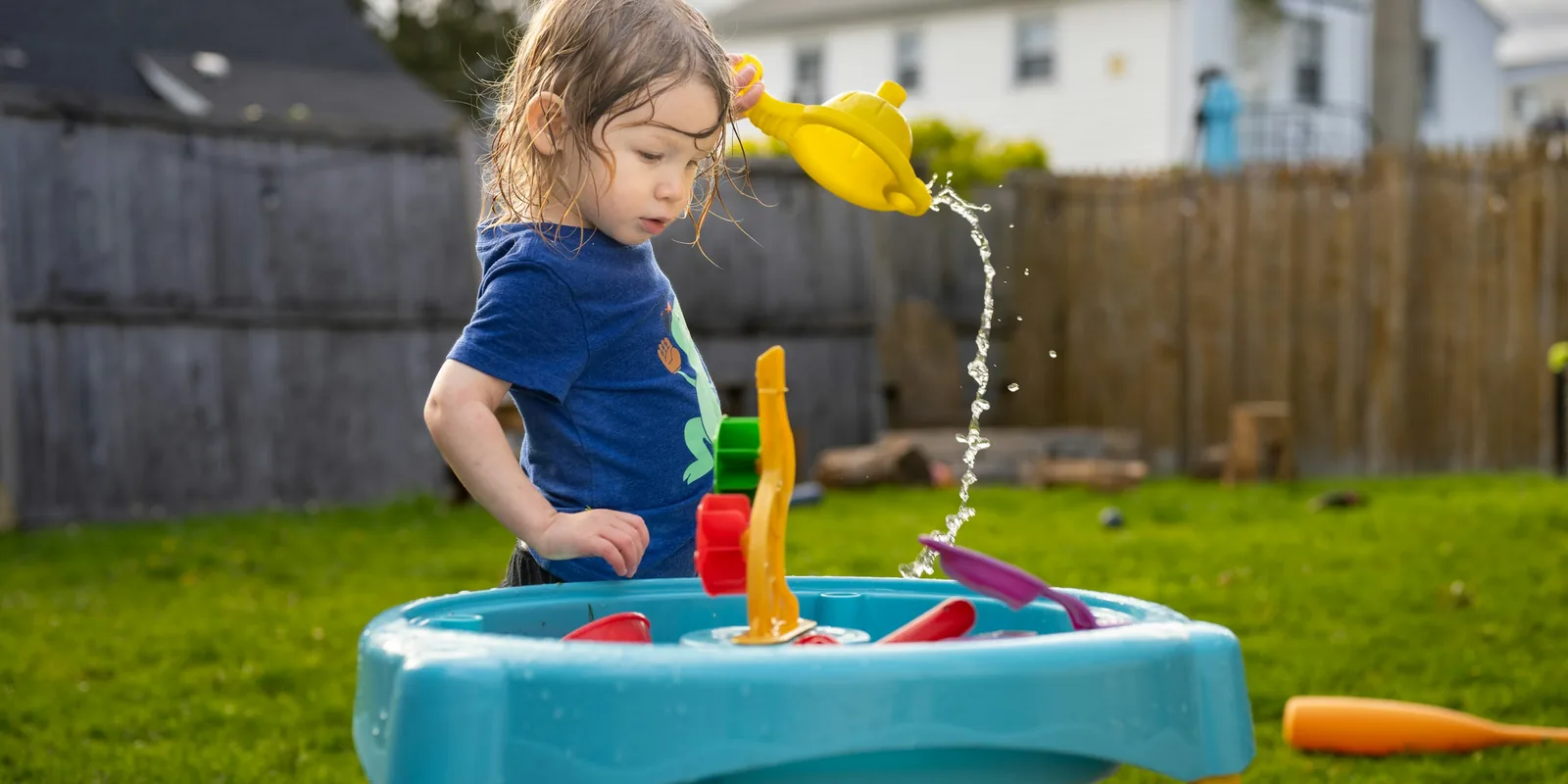
The NHS says active play is the best way for toddlers to get moving, and names climbing frames, playing in water, chasing games and ball games. Add the walk to the postbox and the sound hunt from this list, and a slow-motion chase works on grass too. Let them climb unaided, and stay within reach whenever there's water.
How long can a 2 year old play alone?
There's no official figure, and it changes from day to day. Development Matters says toddlers generally focus on an activity they've chosen themselves, and that young children play more confidently on their own when they know a familiar adult is nearby and available. So expect short stretches with you in sight, and expect them to come and find you.
When should you talk to the health visitor?
Whenever you're worried, at any age; there's no need to save it for a review. Your child should also be offered a health and development review when they're between 2 and 2-and-a-half, usually with a questionnaire to fill in first. It looks at how they move, talk, mix and behave, plus hearing and vision, and it's a good moment to raise anything.