guides
Screen-Free Children's Christmas Gifts: A UK Parent's Guide
Screen-free children's Christmas gifts for ages 3 to 8, sorted by type and age, with the 5 gift rule and the safety checks to make before you wrap.
The best screen-free children's Christmas gifts for ages 3 to 8 are things they move on, make with, read, take outside or use to wind down. Pick one main present your child will come back to in January, add a few small things, and check the age warning before you wrap anything.
This guide sorts the ideas by type and by age, with no brand names and nothing that needs charging. It's for parents, and just as much for grandparents, godparents, aunts and uncles who want to give the present that gets played with, not the one that ends up sitting gathering dust.
What counts as a screen-free gift?
Screen-free gifts for kids are presents a child plays with, makes, reads or moves with, without a screen, an app or a charging cable. They aren't anti-technology. They simply make the hours away from a screen easier to fill, and that is where the gap usually is.
UK government guidance on screen time for under-5s, set out in full on the Best Start in Life website, suggests children aged 2 to 5 have no more than one hour a day, and no screens at mealtimes or in the hour before bed. For under-2s it suggests avoiding screens except for shared activities that encourage bonding, interaction and conversation.
That leaves a lot of the day to fill. The NHS says children aged 3 to 4 should be physically active for at least 180 minutes a day, including at least 60 minutes of moderate-to-vigorous activity. For children aged 5 to 18, the NHS guidance is an average of at least 60 minutes of moderate or vigorous activity a day across the week.
A good present makes some of those minutes easy to start.
What is the 5 gift rule for Christmas?
The 5 gift rule is a parents' rule of thumb for keeping Christmas manageable: something they want, something they need, something to wear, something to read, and a fifth, usually something to do or something to share. It has no official source. It's a family tradition passed between parents, and versions vary.
There's also a four-gift version that stops at "something to read". Either way, the rule builds in a book and a thing to do, both screen-free by default, and it gives relatives a clear slot to fill rather than ten more boxes.
An illustrative example. Say your five-year-old has asked for one particular toy. Want: that toy. Need: new wellies. Wear: Christmas pyjamas. Read: a picture book about space. Do: a skipping rope, or a mat with poses to follow.
If the rule feels too strict, take the idea rather than the number: fewer presents, each with a job. Our guide to something you want, something you need goes through both versions by age.
What are the best screen-free Christmas gifts for kids?
The best screen-free Christmas gifts for kids fall into six types: something to move on, something to make, something to read, something for outdoors, something for calm, and something to do together. Choose by what your child already does when the screen goes off, not by a bestseller list, and you'll pick something that gets used.
1. Something to move on
Active gifts turn the living room into somewhere to burn off energy on a wet afternoon. Think a skipping rope, a set of stepping stones, a soft ball and a target, a balance board for older children, or a yoga mat with poses to follow. Choose gifts a child can start alone, without you clearing the furniture first.
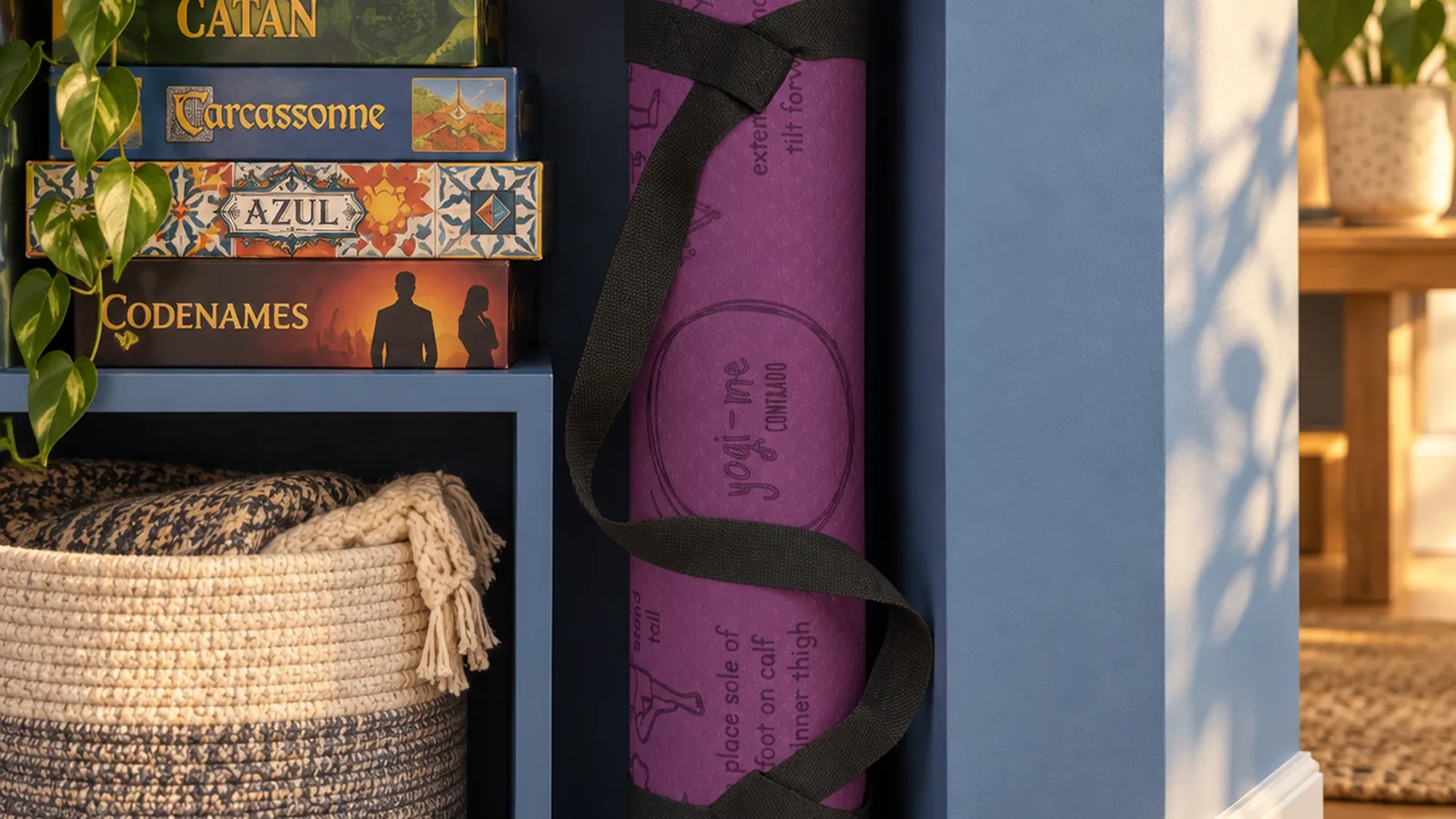
Our own entry here is the Yogi-Me mat: a full-length mat with fifteen poses marked in, numbered and laser-engraved, so a five-year-old can start at 1 and work through to 15 on their own, and an adult can join in. For the first session, our beginner's guide to kids' yoga is a good place to start.
2. Something to make
Creative gifts work best when they come with plenty to use up. Modelling dough, sticker books, scratch art, a paint set with thick brushes, a box of building bricks, or a junk-modelling kit of card, tape and child-safe scissors. For 7 and 8 year-olds, a simple weaving or sewing kit gives them a project to finish.
Consumables have a quiet advantage: once used up, they don't add to a full cupboard.
3. Something to read
A book is the easiest present to get right. Picture books suit 3 to 5 year-olds; first chapter books, joke books and comics suit 6 to 8 year-olds. The first two or three books in a series often beat a single title, because finishing one creates the want for the next.
Add a small torch for reading under the covers and the present has a bedtime use as well.
4. Something for outdoors
Winter is a good time to give outdoor gifts, because they're ready to use the moment the weather turns. Wellies and a puddle suit, a bug-hunting kit with a magnifier, a bird feeder to fill together, or seeds and child-sized garden tools for spring. A scooter or balance bike, with a helmet, is the bigger version.
5. Something for calm
Not every present needs to wear them out. Calm gifts give your child something quiet to do, which helps in the hour before bed, when the government's guidance suggests no screens for 2 to 5 year-olds. A jigsaw sized to their age, colouring books, a reading den or canopy, a set of breathing or yoga cards, or a mat for slow stretches.
These are the "mindfulness gifts" you'll see in shops. Most are simply quiet things to do.
6. Something to do together
Some of the best presents aren't things at all. Tickets for a pantomime, a voucher for a swimming session or a climbing wall, a planned day out with a grandparent, or a family board game. Write the plan on a card so there's still something to unwrap.
Which children's Christmas gifts suit which age?
Most Christmas gift ideas for kids stretch across a couple of years, so treat the age as a starting point, not a rule. Younger children do best with gifts they can start in seconds; older ones like a project or a challenge they can get better at. Always check the age warning on the box first.
- Age 3. Move: stepping stones, a soft ball. Make or read: chunky crayons, picture books. Calm: a large-piece jigsaw.
- Age 4. Move: a yoga mat with poses, balance games. Make or read: modelling dough, rhyming picture books. Calm: a colouring book, a reading den.
- Age 5. Move: a skipping rope, a numbered pose sequence. Make or read: sticker books, simple craft kits. Calm: breathing cards.
- Age 6. Move: a scooter, a target game. Make or read: building bricks, first chapter books. Calm: a bigger jigsaw.
- Age 7. Move: a balance board, a hopscotch mat. Make or read: model kits, joke books. Calm: a weaving kit.
- Age 8. Move: juggling balls, a flying disc. Make or read: a sewing kit, a book series. Calm: a board game for two.
For one age in more depth, start with our guide to Christmas gifts for 5 year olds. For the small things that fill a stocking, see our screen-free stocking fillers.
What do you get a child who has everything?
For a child who has everything, non-toy gifts usually work best: something that gets used up, something you do together, or one good present that replaces several small ones. Craft supplies, seeds, a book series, tickets for a day out and time with you all avoid adding to a toy cupboard that's already full.
If you're a grandparent, ask the parents first. A quick message about what's already on the list avoids duplicates, and agreeing one main present between relatives keeps the pile manageable. Our guide to gifts for grandchildren has more ideas built around time together.
How do you choose a present that gets used after Christmas?
Picture four days: Christmas afternoon, Boxing Day, a rainy Saturday in January and a spring morning. A present that has a use on all four is worth buying. One that only works on Christmas morning, or needs an adult to set it up every time, usually ends up in the cupboard.
A quick checklist before you buy:
- Can your child start it alone, without you setting it up?
- Does it work indoors on a wet day?
- Will it still fit them, or still challenge them, in a year's time?
- Can a brother, sister, parent or grandparent join in?
If you need ideas for the days in between, our list of screen-free activities for 3 to 8 year-olds pairs well with most of the gifts above.
What safety checks should you make before buying a toy?
Follow the age warning, watch for small parts with younger children, make sure any button batteries sit behind a screwed-down flap, keep magnets away from children, and buy from a seller with a good reputation. Those are the checks in the Office for Product Safety and Standards' Christmas toy advice of 15 November 2021.
The OPSS advice explains that age warnings are based on risks such as choking, and that magnets can look like toys. It also flags two things that are easy to miss: loose ribbons on toys and costumes can pose risks to young children, and a toy at a fraction of the usual price is likely to be counterfeit.
Toys sold in Great Britain should carry a UKCA or CE marking, according to the government's guidance on the Toys (Safety) Regulations 2011. Look for it on the toy or its packaging, especially when buying online.
Frequently asked questions
What are the top 10 Christmas presents for kids?
There's no official top 10, and retailers' lists change every year. A more useful top 10 is by type: a skipping rope, stepping stones, a yoga mat with poses, a craft kit, building bricks, a book series, wellies and a bug kit, a jigsaw, a family board game, and tickets for a day out. All ten work without a screen.
What is the best Christmas gift for a child?
The best gift is the one a child comes back to after Boxing Day. For most 3 to 8 year-olds, that means something active, creative or shared, matched to what they already enjoy, rather than the most expensive thing on the list. One good present they use beats several they don't.
How many presents should a child get at Christmas?
There's no right number and no official guidance. Some families use a rule of thumb such as the 5 gift rule (want, need, wear, read, do) to keep it manageable. If relatives are buying too, agreeing who gets what in advance avoids duplicates and a pile of presents to find homes for.
Is a yoga mat a good Christmas present for a 5 year old?
It can be, if your child likes to move and copy. A mat with numbered poses gives a five-year-old something to follow without a screen or an adult leading, and a full-length mat means a parent or grandparent can join in. If your child would rather sit and make things, a craft kit may suit them better.
A present that comes out again in January
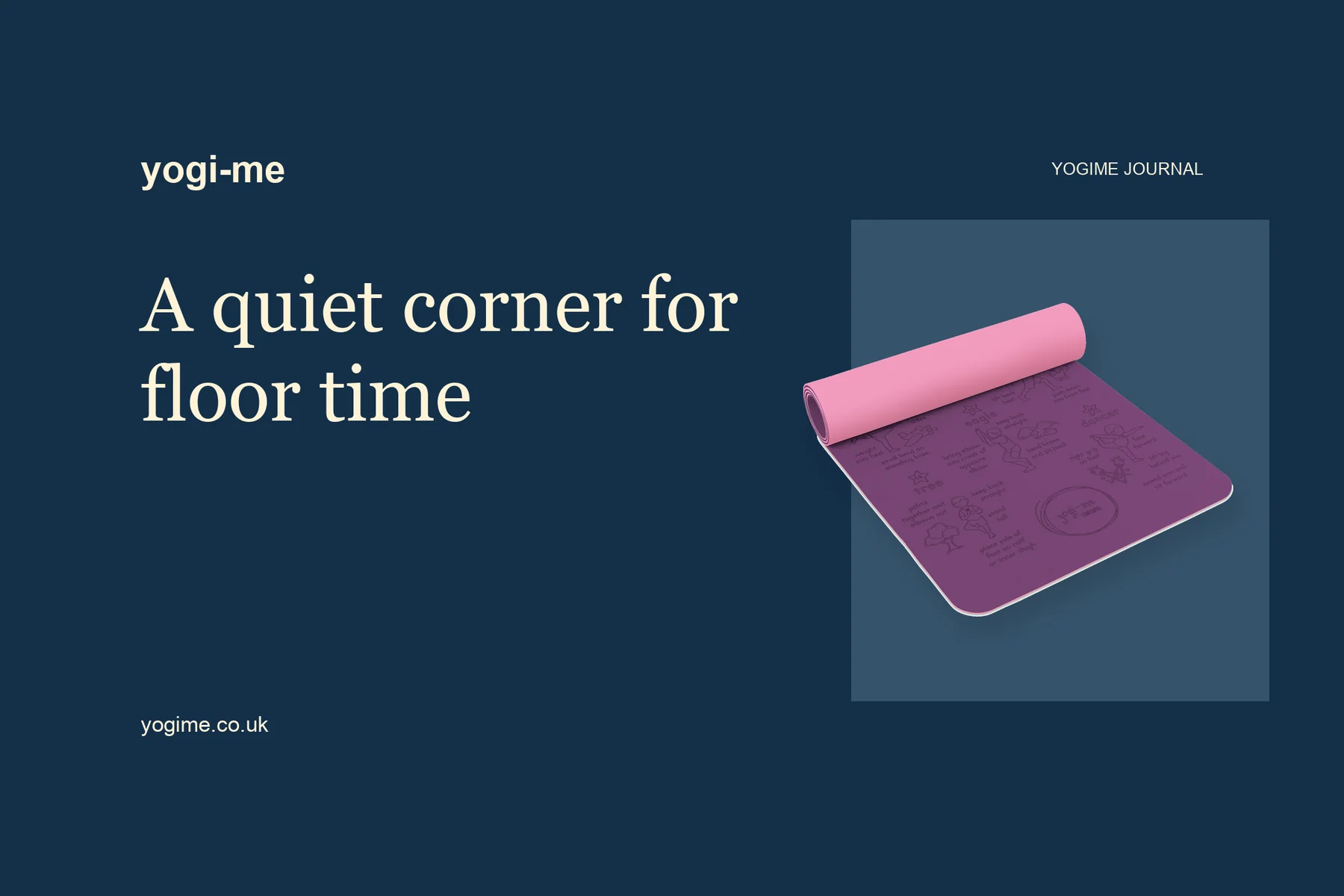
If you're looking for the "something to do" present, a Yogi-Me mat has 15 numbered poses laser-engraved into the surface. Sun Salutation is a standing sequence for children who want to move; Freedom Flow is floor-based, for children who need to settle. Same size, material and price, seven colours each. There's nothing to set up and no screen to follow, so it works on Christmas afternoon and again on a wet Saturday in January.
It's designed for ages 3 to 8. Three- and four-year-olds copy the poses with a little help; older children lead their own sessions. Under three, we'd wait.
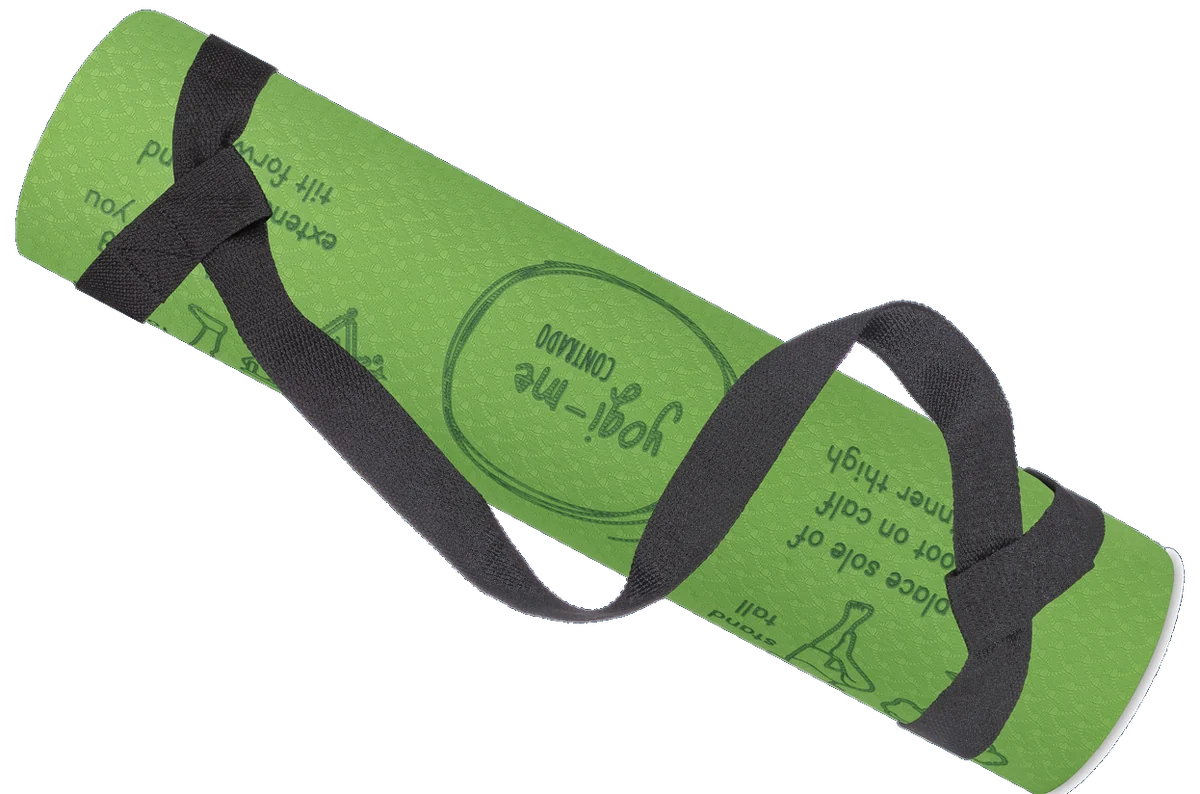
At 183 x 61 cm it's full length on purpose, so there's room to stretch out at three and still at eight, and a grown-up can join in. Buying as a grandparent? Roll it out at your house and have a go too. The trade-off is that a shorter mat is easier for a three-year-old to carry alone; ours weighs 800 g and rolls up with a carry strap.
It's non-toxic, PVC-free TPE, according to our supplier's specification, with 6 mm of cushioning. Wipe it with a damp cloth and a little mild soap, let it dry flat, and use it on a dry, flat floor.
Buying for brothers, sisters or cousins? Two or more mats are 10 per cent off. As one verified buyer, Becks, a yoga teacher, put it: "I just made the mistake of buying one, instead of two."
Each mat is £34.99 with free UK delivery and 30-day returns, and anything bought from 1 November can be returned up to 31 January, so a present that isn't right on the day can still go back. Pick standing or floor, then choose a colour for under the tree.
Sources
- GOV.UK (Department for Education and Department of Health and Social Care) - New screen time guidance for parents of under-5s
- Best Start in Life (GOV.UK) - Screen time guidance for under 5s
- NHS - Physical activity guidelines for children (under 5 years)
- NHS - Physical activity guidelines for children and young people (5 to 18 years), reviewed 23 October 2024
- GOV.UK (Office for Product Safety and Standards) - Buy toys safely this Christmas, 15 November 2021
- GOV.UK (Office for Product Safety and Standards) - Toys (Safety) Regulations 2011: Great Britain