guides
Children's Gym Mat or Yoga Mat? How to Choose the Right One
Children's gym mat or yoga mat? The one-question test that decides it, how gym, exercise and yoga mats differ, and when a folding gym mat is the right buy.
If your child's feet are going to leave the floor, buy a gym mat. If they're going to stay on it, buy a yoga mat. Cartwheels, forward rolls, handstands and jumps need a children's gym mat: several centimetres of firm foam made to soften a landing. Stretching, balancing and holding poses need a yoga mat: a few millimetres thick, made to stay steady under hands and feet.
Buying the wrong one usually means buying twice. This guide is for parents and grandparents choosing for a child of roughly 3 to 8. We make a yoga mat ourselves, so we'll also say plainly when it's the wrong choice.
The short version
Choose by what your child will do on the mat, not by the word in the listing title. Gym mats are for landing, yoga mats are for poses, and an exercise mat sits between the two: soft enough for lying on, too thin to land on.
- Feet leave the floor (cartwheels, rolls, handstands, jumps): a folding gym mat, on a clear floor.
- Feet stay on the floor (poses, stretches, balances, breathing games): a yoga mat.
- Lying and kneeling only (sit-ups, floor games, stories): an exercise mat or a yoga mat, whichever suits the space.
The wider checklist on materials, size and thickness is in our guide to choosing a mat for your child.
What is the difference between a children's gym mat and a yoga mat?
A children's gym mat is a thick, firm foam mat, usually several centimetres deep and often folding into panels, made to cushion falls and landings. A yoga mat is a thin, flexible mat, a few millimetres thick, made to give a steady surface for poses where a child's hands and feet stay down.
Two more names turn up in the same searches:
- A crash mat is a much deeper, softer landing mat for jumps and drops.
- An exercise mat, sometimes sold as a children's exercise mat or a fitness mat, is a soft foam mat, often a centimetre or more thick, for floor exercises such as sit-ups and stretches.
What will your child actually do on it?
Start with the activity, because it decides everything else. A child practising forward rolls, cartwheels or handstands needs a landing surface. A child copying animal poses, stretching or doing a calm-down routine needs a steady surface that stays put. Plenty of children want both, and then they need both.
The NHS lists gymnastics among the activities that strengthen muscles and bones for children aged 5 to 18, alongside jumping, football and martial arts. It also says children should do exercise suited to their age, ability and experience, and start any new exercise slowly. For younger children, the NHS says pre-schoolers aged 3 to 4 should be active for at least 180 minutes a day, including at least 60 minutes of moderate-to-vigorous activity.
The national curriculum names gymnastics too. England's national curriculum asks Key Stage 2 pupils to develop flexibility, strength, technique, control and balance, giving athletics and gymnastics as examples.
How thick does a children's mat need to be?
Thickness follows the activity. A mat for landings needs several centimetres of firm foam, which is why folding gym mats look chunky. A mat for poses needs only a few millimetres, enough to take the edge off a hard floor for knees and elbows while keeping your child's feet in touch with the ground.
A yoga mat, ours included, isn't deep enough to land a cartwheel on. Ours is 6 mm, made for kneeling, lying and standing poses.
On a listing, find the thickness in the specification. A "gym mat" only a centimetre or so thick is an exercise mat under another name. For how thickness feels at different ages, see our guide to yoga mat thickness for kids.
Where will the mat live?
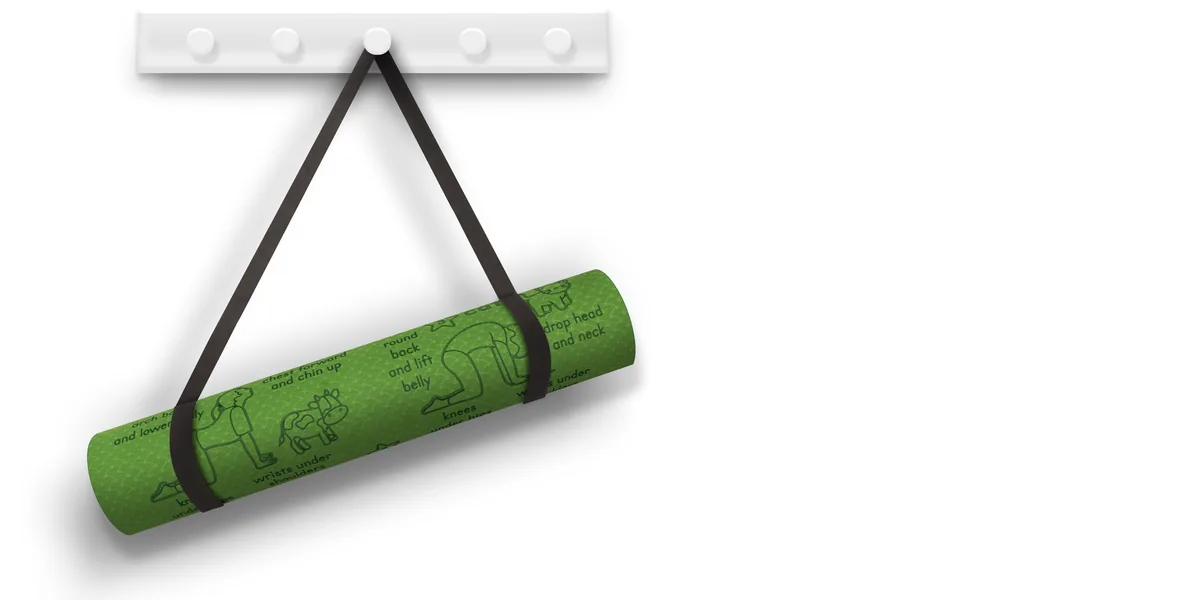
A folding gym mat is light for its size but bulky, folding into a block that needs a corner, a cupboard floor or the space under a bed. A yoga mat rolls up small enough for a shelf, a car boot or a child to carry by themselves.
A mat sized for a three-year-old can be outgrown. Our guide to mat length by age and height covers that, and what a child can carry on their own.
How do gym, exercise and yoga mats compare?
A folding gym mat is built for landings, an exercise mat for lying down and a yoga mat for poses. The gym mat is the thickest and bulkiest, the exercise mat the softest, and the yoga mat the thinnest and the easiest to store.
- Folding gym mat. For rolls, cartwheels and landings. Several centimetres of firm foam. Folds into a bulky block. Not for balance work or small rooms.
- Exercise mat. For sit-ups, stretches and lying down. A centimetre or more of soft foam. Rolls up, but thick. Not for landings.
- Yogi-Me yoga mat. For poses, balances and floor play. 6 mm thick, 183 x 61 cm and 800 g, rolling up with a carry strap. Not for tumbling.
The gym and exercise mat descriptions are general observations, not any one product.
What can I use instead of a gymnastics mat?
For tumbling, there isn't a good household swap. Cushions slide apart, a duvet bunches up, and a yoga mat is far too thin to land on. If your child is practising rolls and cartwheels, the honest answer is a proper folding gym mat on a clear floor, or a class with landing mats and a coach.
Stretching, poses and floor games are easier: a carpet, a rug or a yoga mat will do.
Which is better for a gym mat, PVC or rubber?
For a folding gym mat, you'll usually see PVC-covered foam, because the cover wipes clean and takes repeated landings. Rubber tends to be heavier and turns up more as gym flooring than as a children's tumbling mat. These are general observations about what's on sale, not a rule. Yoga mats are a different story: PVC, TPE and natural rubber are all common.
Ours is made from non-toxic, PVC-free TPE, per our supplier's specification. TPE, short for thermoplastic elastomer, is a soft, rubbery plastic used in many modern yoga mats.
What do people get wrong when choosing a children's mat?
One mistake to avoid is buying by the name on the listing. A "kids exercise mat" might be a thin yoga mat or a squashy foam pad, and a "gym mat for kids" might be a fitness mat too thin to cushion anything. Read the thickness first, then the photos, then the title.
Two more to avoid:
- A thick folding mat for yoga. Balances wobble, and it ends up living in the hallway.
- A mat with nothing to do on it. A blank mat for a five-year-old who doesn't know what to try sits gathering dust. If yoga is new to you both, our beginner's guide to kids' yoga is the place to start.
Our mat, and the job it was made for
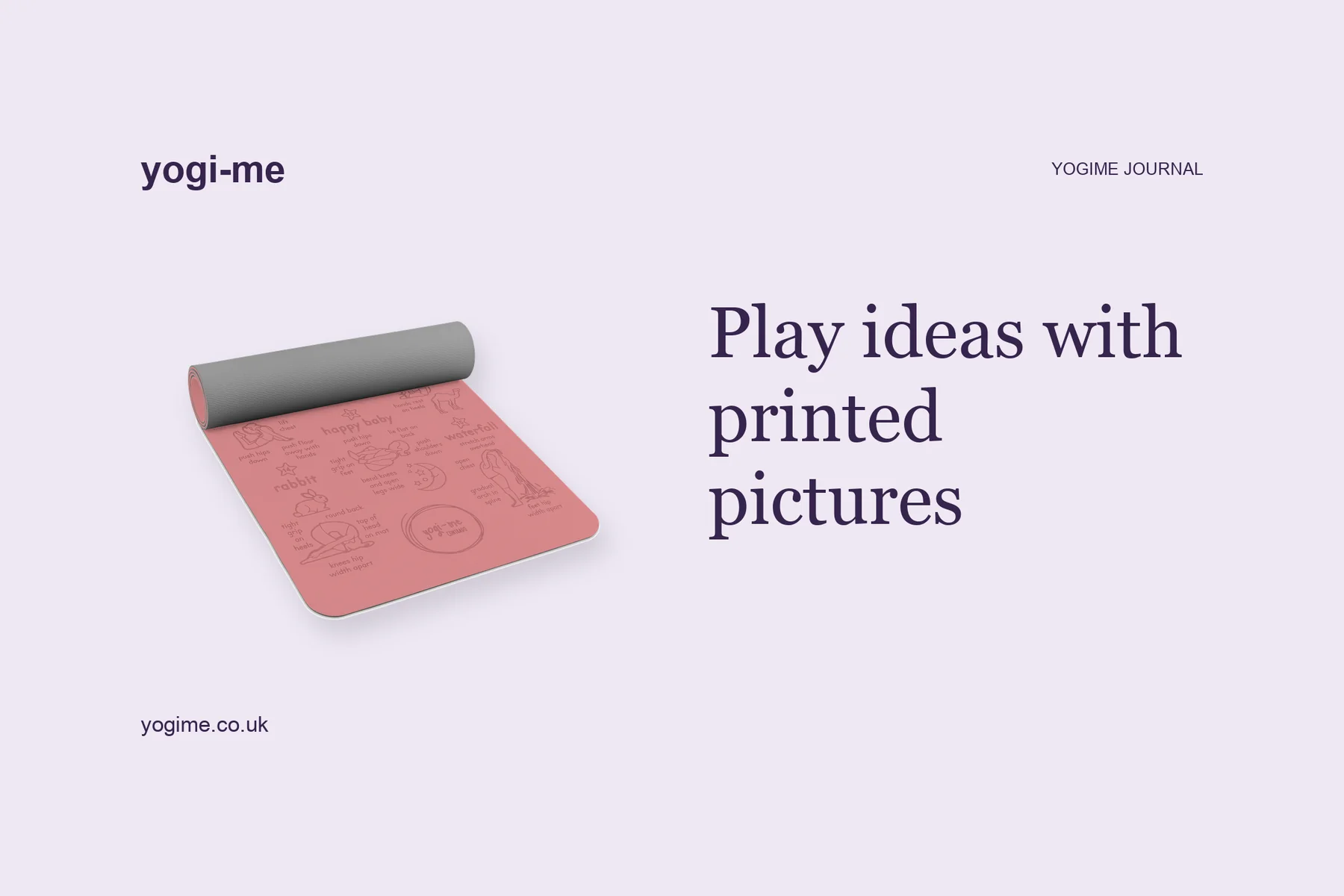
We make one kind of mat: a full-length mat for feet-down play, 183 x 61 cm, 6 mm thick and 800 g, with 15 numbered poses laser-engraved into the surface for ages 3 to 8. The numbers do the work: a five-year-old can start at 1 and go through to 15 on their own, with no screen to follow.
Many children's mats are around 150 x 55 cm. We went full length on purpose, so there's room to stretch out at three and still at eight, and a grown-up can join in. It rolls up with a carry strap, but if a three-year-old will carry it to nursery alone every day, a shorter mat is easier for them.
There are two designs at the same price. If your child is the one asking for a gym mat because they want to move, Sun Salutation is the standing sequence, running from mouse to dancer. Freedom Flow is a calmer floor sequence, mostly done sitting or lying down, for winding down or for children still finding their balance. Both come in seven colours, and you can compare the designs side by side.
Use it on a dry, flat floor. To clean it, wipe with a damp cloth and a little mild soap, then let it dry flat.
Buying as a grandparent? It's full length, so you can do the poses alongside them. As a Christmas or birthday present, it works on a rainy January Saturday as well as on Christmas Day, because there's nothing to set up. There are more presents that keep them moving in our gift guide.
When ours is not the right one
Our mat is the wrong buy if your child mainly wants to tumble. At 6 mm, it won't cushion a cartwheel, a handstand coming down or a jump off the sofa. For that, a folding gym mat or a class with landing mats is the right call. Three other cases:
- Under 3. The poses are pitched at ages 3 to 8, so we'd wait. Three- and four-year-olds copy the animal poses with a little help.
- A plain mat. If your child, or you, would rather have a blank surface with no poses on it, ours isn't that.
- School PE. Mats for gymnastics lessons in a school hall need to be PE gym mats. Ours suits calmer sessions and movement breaks instead.
Frequently asked questions
What is the best gym mat for kids?
The best gym mat for a child is the one that matches what they'll do on it. For cartwheels, rolls and handstands, that's a folding foam gym mat with a wipe-clean cover. For yoga, stretching and balance, a yoga mat is the better buy.
Can my child do yoga on a gym mat?
They can, but a thick folding gym mat tends to give more underfoot than a yoga mat, so one-leg balances such as tree pose feel wobblier. Kneeling and lying poses are fine on it. If yoga is the main use, a yoga mat suits it better.
Where can I find gym mats for schools?
Specialist sports and PE equipment suppliers sell folding and landing mats for schools. If a school or nursery wants yoga mats instead, for calm sessions or movement breaks, our schools and nurseries page explains how we supply them. For gymnastics lessons in the hall, stick with proper PE landing mats.
Is a yoga mat thick enough for cartwheels?
No. A yoga mat is a few millimetres thick, made for kneeling, lying and standing poses, and ours is 6 mm. Cartwheels, handstands and forward rolls need a folding gym mat with several centimetres of firm foam to soften a landing. If your child does both, a gym mat for tumbling and a yoga mat for poses is the honest answer.
Ready for the feet-on-the-floor kind?
If the mat is for poses and balances rather than landings, roll ours out and let them start at pose 1. It's £34.99 with free UK delivery and 30-day returns, and 10 per cent off two or more if a brother, sister or cousin will want a turn. Pick a design and colour from our kids' yoga mats.