guides
Children's Yoga Classes, a Video, or a Mat at Home?
Children's yoga classes, videos or a mat at home, compared on time, cost, screens and supervision, with the questions to ask before you book a class.
If there's a good children's yoga class near you at a time you can keep, start there. A class gives your child a teacher and a group. A video suits a try-out on a screen you're already allowing. A mat at home suits short, frequent sessions with no booking and no screen, and it's the easiest to keep going between classes.
We sell mats, and that's still the honest answer. The rest of this page lays the three side by side, starting with the thing that decides most families: how much of the week each one takes.
Which one, in four lines
- Choose a class if your child likes being in a group, there's one within reach, and the weekly slot fits your week.
- Choose a video if you want to see whether your child takes to yoga at all before paying for a term.
- Choose a mat at home if your week has no room for one more drop-off, or your child would rather move without an audience.
- Choose a class and a mat if your child loves the class and asks to do it between sessions.
What counts as a class, a video and yoga at home?
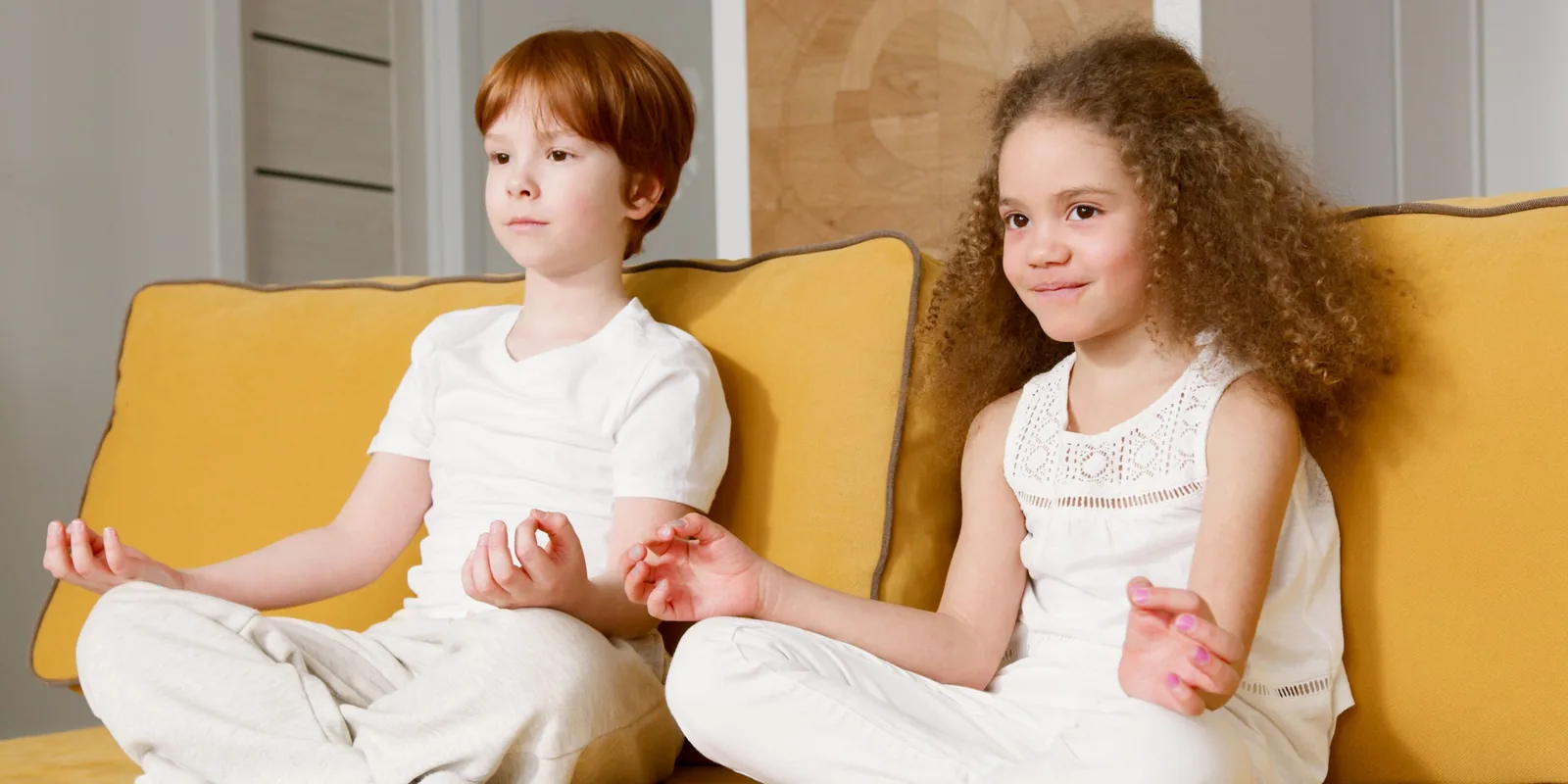
A children's yoga class is a session led in person by a teacher, for a group of children, usually in a hall, studio, school or community centre. Some are for children alone; some are parent-and-child.
A video is a recorded or streamed session your child follows on a television, tablet or laptop, with you in the room.
Yoga at home is you and your child doing poses together without a screen: from a book, a card, a list like our beginner's guide to yoga for kids, or a mat with the poses on it.
How much of your week does each one take?
This is often what decides it.
A class is a fixed slot: the session itself, getting there and back, and getting a child out of the door in time. Some run in term-time blocks, which is a commitment to the same afternoon for weeks. If that afternoon also has swimming, a sibling's football and a work call, the class becomes the thing that slips.
A video takes as long as the video. It needs no travel, but it needs the screen set up, the right thing found and the sofa pushed back.
Yoga at home can take two minutes. It doesn't need a slot, which is its strength and its weakness: nothing makes it happen except you, or a mat left out on the floor.
What to look for: be honest about which afternoon is genuinely free. A class you go to every week beats a better one you miss half the time.
How much is a kids' yoga class?
Prices vary too much by area, venue and format for any figure here to be useful, so check locally. What's worth asking before you book:
- Is there a trial session, or can you pay for one class before committing?
- Is it pay-as-you-go, or paid by the term? If by the term, what happens to missed weeks?
- Is the price per child, and is there a sibling rate?
- Do you need to bring a mat, or are they provided?
Videos range from free to subscription. Yoga at home costs nothing with a towel on the carpet; a mat is a one-off cost if you want one.
What to look for: compare the cost per session you'll actually attend, not the headline price.
Where does the screen come in?
A class and yoga at home involve no screen. A video does, and for young children that time counts towards their screen day.
For 2 to 5-year-olds, the government's screen time guidance for under-5s on Best Start in Life is: "Try to keep it to 1 hour a day. Less if possible." For under-2s, it advises avoiding screen time other than shared activities with family, such as video calls or looking through digital photo albums together. It also says young children shouldn't use screens on their own, and suggests watching and talking about it together.
So a twenty-minute yoga video for a four-year-old isn't a problem in itself. It's a third of the guidance's hour, and it's better done side by side than as something to keep them busy. For the guidance age by age, see how much screen time kids should have.
What to look for: if you'd rather the yoga didn't use up screen time, a video works best as the try-out, not the routine.
Who is watching your child?
In a class, a teacher you've probably only just met. At home, you. Both matter.
The Department for Education's guidance for parents on after-school clubs and activities says there is no single legal framework governing how children's clubs and activities operate, and that their staff and volunteers are not typically inspected by any regulator. So it suggests parents check for themselves. Its checklist includes asking whether staff have DBS checks, whether they're qualified to the appropriate level, whether there's a safeguarding lead and a first-aider, and, if appropriate, whether the provider is affiliated to a governing body. It also suggests meeting the provider before the first session, and says a well-run provider will welcome questions.
For yoga, the British Wheel of Yoga describes itself as the National Governing Body for Yoga in England and Wales, and its website points to classes led by BWY teachers. Ask any teacher, whoever trained them, what training they've had in teaching children.
At home, the supervision is yours. Stay in the room, let your child decide how far each stretch goes, and never press or pull them further. Our page on whether yoga is safe for kids lists the poses to leave out.
How do the three compare side by side?
- Time each week, Video: A fixed slot, plus travel; Mat at home: The length of the video
- Cost, Video: Varies by area: check locally; Mat at home: Free to subscription
- Screen use, Video: None; Mat at home: Counts as screen time
- Who's watching, Video: A teacher. Ask about checks and training; Mat at home: You, in the room
- Other children, Video: A group; Mat at home: Usually siblings only
- Correction on poses, Video: From the teacher; Mat at home: None
- Booking, Video: Usually needed; Mat at home: None
When doing both makes sense
The less obvious answer is often the right one: a class and a mat at home, not one or the other.
A weekly class is one session. The NHS says pre-schoolers should spend at least 180 minutes a day doing a variety of physical activities, and that children aged 5 to 18 should average at least 60 minutes of moderate or vigorous activity a day across the week. A class is a good part of that, not all of it.
A child who comes home wanting to show you the tree pose is likely to keep going. A few minutes at home between classes, doing the poses they learned, is how a Saturday class becomes a habit. And if the class stops at the end of term, the habit doesn't have to.
The reverse works as well. A child who's done a few weeks of yoga at home often walks into a first class knowing half the shapes, which makes the room less daunting.
Who to ask before starting
If your child has a health condition, or an injury that's still healing, ask your GP before starting a class or a routine at home. The NHS activity guidelines for 5 to 18-year-olds tell families to get medical advice about exercising when a child has a health condition. Tell the class teacher too, before the first session, and ask how they'd adapt it. If your child is under 5 and you're unsure what they're ready for, your health visitor is a good person to ask.
Frequently asked questions
What is a good age for kids to start yoga?
There's no official starting age. At home, a three-year-old can copy a few animal shapes for a couple of minutes, which is the age our mats are designed from. Classes set their own age bands, so ask the teacher who the session is written for, and whether a younger sibling can come along to watch first.
Which type of yoga is best for kids?
The style on the timetable matters less than whether the session was planned for children. Ask the teacher what a typical session looks like. For under-8s, you'd hope to hear short, playful and plenty of moving, rather than long, still holds. Avoid putting a young child in a class written for adults.
Can a child do yoga at home without a class?
Yes. Gentle, play-based yoga needs no training to start: a few animal poses, a slow breath and a minute lying still. Keep it short, let your child find each shape at their own pace without being pushed, and skip headstands and anything else that loads the neck. A class adds a teacher and a group, not permission.
Are kids' yoga videos OK for under-5s?
They can be for 2 to 5-year-olds, counted as screen time, because that's what they are. Best Start in Life, the government's early years site, says "Try to keep it to 1 hour a day. Less if possible." For under-2s it advises avoiding screens other than shared family activities, such as video calls or looking at digital photo albums together, so skip the video. Sit and do it with them rather than leaving them to it.
Is a weekly class enough exercise?
Not on its own. According to the NHS, pre-schoolers need at least 180 minutes of activity a day, and 5 to 18-year-olds should average at least 60 minutes of moderate or vigorous activity a day across the week. A class is one good session in that week, alongside play, walking and everything else.
If home is where it happens
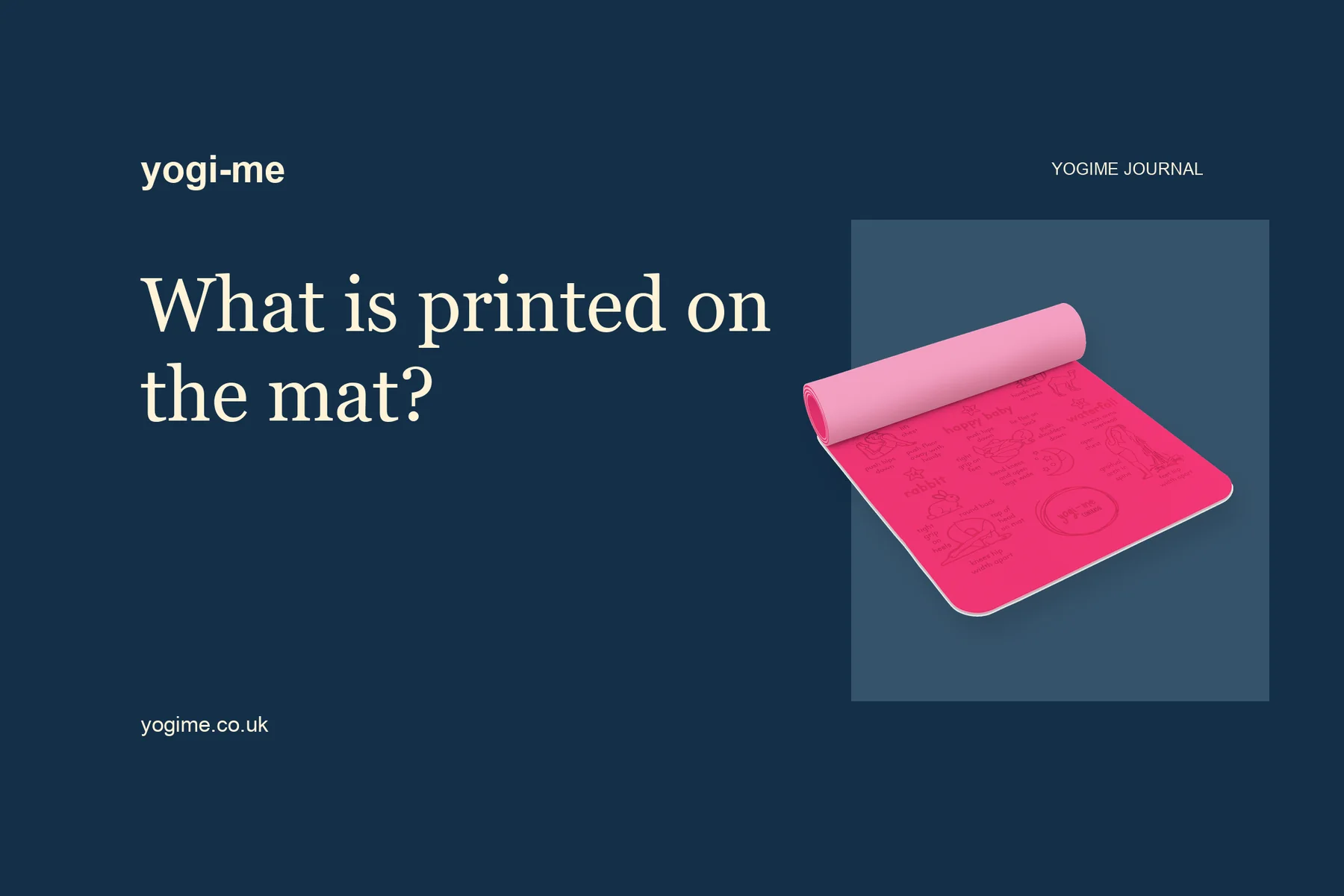
If the class doesn't fit your week, or you want something for the days in between, a mat with the poses on it does part of a teacher's job: it shows your child what comes next. Each of ours carries 15 laser-engraved, numbered poses, in one of two designs, Sun Salutation and Freedom Flow. Our guide to choosing between the two designs helps you pick, or see all our yoga mats for kids. A full length of 183 x 61 cm means you can use one too, which is half the point at home. For a session plan to follow on them, try our 30-minute kids yoga lesson plan.
Sources
- Best Start in Life (UK government) - Baby and toddler screen time guidance
- Department for Education - Using after-school clubs, tuition and community activities: guidance for parents and carers
- British Wheel of Yoga - About us
- NHS - Physical activity guidelines for children (under 5 years)
- NHS - Physical activity guidelines for children and young people