guides
How to Set Up a Calming Corner at Home
How to set up a calming corner at home for ages 3 to 8: where it goes, what to put in it, and how to keep it a calm place, never a punishment.
A calming corner is a small, quiet spot where a child aged 3 to 8 goes to settle a big feeling, with you close by. It is never a punishment. To set one up, pick a corner away from the telly, lay down something soft, add a few calming things and a feelings chart, then practise together while everyone is calm.
What is a calming corner?
A calming corner, also called a calm down corner or a calm corner, is a small, comfortable space where a child goes to settle a big feeling, with a grown-up close by or alongside. It's a place to calm down, not a place to be sent.
That is what makes it different from time out, which removes a child from you as a consequence. NHS Best Start in Life acknowledges that some people suggest time out so toddlers learn to calm down alone, but its own advice is to help them manage the feeling with you.
It calls its approach regulate, relate and reason: soothe your child and name the feeling, comfort them so they know you're still there, and talk about what happened only once they're calm. The corner gives the first two a home.
Do calming corners work?
A calming corner works best as a place to practise what the NHS already recommends, not as a fix on its own. The NHS has no page on calming corners as such, but its advice for upset and anxious children (name the feeling, breathe slowly, use a worry box, keep a routine) fits neatly into one small space. Three things make the difference:
- You go too, at first. NHS Best Start in Life, writing about toddlers, says the more you support them with big feelings now, the more they'll be able to manage them by themselves later.
- It's never a punishment. If it's where they're sent in trouble, expect them to avoid it when upset.
- It's practised when calm. Learn the breathing on a quiet Sunday, then use it on a loud Tuesday.
What do you put in a calm down corner?
Put a soft floor, a cushion, a soft toy, a feelings chart, a breathing card and one or two quiet activities in a calm down corner. Leave out screens, noisy toys and treats. The best calming corner ideas are cheap and already in the house, and five or six things are plenty. Use this as your checklist:
- Soft floor: a rug, a folded blanket or a mat with a calmer floor sequence marked in, which gives your child something to do once the breathing is done. One that rolls away keeps the room usable.
- Cushion or beanbag: something to lean into. One is enough.
- Soft toy: something to hold and squeeze. Let your child choose it.
- Feelings chart: four faces, happy, sad, angry and worried. NHS Best Start in Life suggests naming feelings to help toddlers learn the words, and a chart lets them point instead.
- Breathing card: one breath, in for a count of three and out for three. The NHS suggests practising three deep, slow breaths like this with an anxious child.
- Picture book or colouring pad: something quiet for hands and eyes.
- Worry box (optional): an NHS idea. Your child draws or writes a worry and posts it, and you sort through it together later. YoungMinds says keep it away from their bedroom and don't open it just before bedtime.
Leave out screens, anything that beeps, and sweets. The NHS advice on temper tantrums says bribing a child with sweets or treats doesn't help, and a corner stocked with them soon becomes a reward for kicking off.
How do you set up a calming corner, step by step?
Set up a calm corner at home in four steps: choose a quiet spot together, lay the floor and stock it, practise while everyone is calm, then visit a little every day. It takes an afternoon, and the practice matters more than the kit.
1. Choose a quiet spot together
Somewhere quiet but within earshot: a corner of the living room, the end of a landing, a nook in a bedroom, away from the telly and the toy box. For under-5s, near where you usually are beats upstairs, because you'll be going too at first. Offer two or three places and let your child pick.
2. Lay the floor and stock it
Roll out the mat or rug along one wall, add the cushion and put out the things from the checklist. Expect the cushion to be bounced on first.
3. Practise on a good day, and end on stillness
Visit together when nobody is upset. Point at a face, take three slow breaths, then lie still for a moment. It will feel a bit silly, and by the time your child needs the corner, it's familiar.
4. Make it a daily habit
Three breaths there after school or before bed keeps the corner familiar, and the NHS notes that children of all ages find routines reassuring. Change one thing every few weeks. Our breathing exercises for kids give you a new breath to try each week, mindfulness for kids has short games that fit the corner, and if the stretching catches on, our guide to kids' yoga at home shows where to start.
What if your child won't use their calm corner?
If your child won't use the corner, don't send them there. Sit in it yourself, take three slow breaths out loud, and invite them to join. If they still refuse, help them calm down wherever they are and try again another day.
- They refuse mid-meltdown. Don't drag them. The NHS says losing your temper or shouting back won't end a tantrum, so concentrate on staying calm. As they settle, offer a cuddle so they know you're still there, the relate step from NHS Best Start in Life.
- Your seven-year-old says it's babyish. Let them rename it. "Base camp" sounds a lot less like nursery.
- It worked for a week, then nobody went near it. Swap one thing and go in with them.
If big feelings are frequent, severe or getting worse, a corner isn't the answer on its own. The NHS advises getting help if a child's anxiety is severe, persists and interferes with everyday life, and a GP is a good place to start. Our guide on how to calm an anxious child covers the signs.
Frequently asked questions
How long should a child stay in a calm down corner?
There's no recommended time, because the corner isn't a sentence to serve. Your child stays until they feel ready, which might be three breaths or a whole book. Skip the timer, which turns it back into time out, and talk about what happened once they're calm.
Can you have a calming corner in a classroom?
Yes. The NHS notes that most schools offer quiet or safe spaces for anxious pupils. A classroom corner needs the same short list as one at home: a soft floor, a feelings chart, a breathing card and a few quiet things. It stays a place to calm down, never a place to be sent.
What is a calming corner for adults?
The same idea for grown-ups: a quiet spot to breathe and settle before reacting. NHS Best Start in Life suggests parents take some deep breaths to stay calm when a toddler is upset, and using the corner yourself shows your child what it's for.
What age is a calming corner for?
This guide is written for children aged 3 to 8, and the corner changes as they grow. A three-year-old will need you in the corner with them every time. A seven-year-old may go on their own and call you when they're ready. NHS Best Start in Life's advice for toddlers is to help them manage big feelings with you, so start there.
Give the corner a floor to stretch on
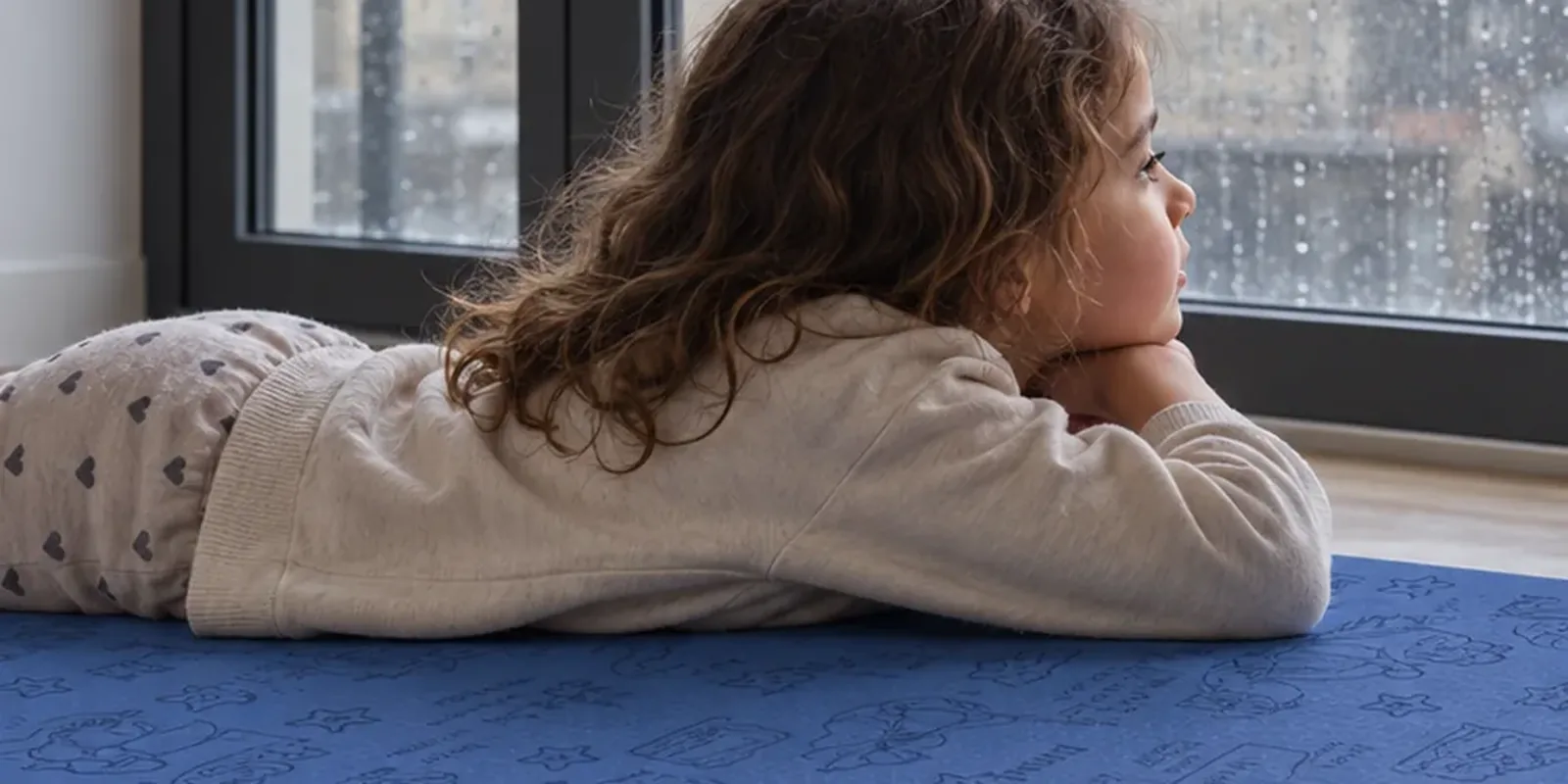
A rug or a folded blanket does the job, and you don't need to buy anything to start. If you'd like the floor to give your child something to do once the breathing is done, that's what the Yogi-Me Freedom Flow mat is for. It has 15 numbered poses laser-engraved into the surface, most of them on the floor, from flower to waterfall. After three slow breaths, your child looks down, finds number 1 and works along the numbers on their own, with no screen to follow.
It's made for ages 3 to 8. Younger children copy the poses with a little help, and older children lead their own sessions. At 183 x 61 cm it's full length, which is a lot of mat for a corner, so lay it along one wall and roll it up on its carry strap when you need the floor back. The length is on purpose: there's room to lie flat at three and still at eight, and room for you to sit beside them. It's 6 mm thick and made from non-toxic, PVC-free TPE, according to our supplier's specification. A corner gets sat on, cried on and bounced on, and the mat wipes clean with a damp cloth and a little mild soap, then dries flat.
If it's going under the tree and you're worried it will end up gathering dust, a mat that lives in the corner is harder to forget than one rolled up in a cupboard. It's there for three breaths after school, a rainy January Saturday, and Christmas afternoon itself, when everyone is overtired. Buying as a grandparent? A corner works just as well at your house, and two or more mats are 10 per cent off, so there can be one in each. Freedom Flow comes in seven colours, and you can see them next to our standing design, Sun Salutation, among our full-length yoga mats for children. Our Christmas guide has more presents that keep them moving.
Start their corner from the floor up with the Freedom Flow floor-pose mat. It's £34.99 with free UK delivery and 30-day returns.