guides
How to Calm an Anxious Child: Gentle Techniques That Help
How to calm an anxious child tonight: slow breathing, finger tracing and a worry box, plus the everyday habits that help and when to see your GP.
To calm an anxious child in the moment, start with the body: sit close and take three slow breaths together, or trace up and down each finger as you breathe. Then name the worry out loud and stay beside them while it rises and passes. Over time, steady routines, enough sleep and daily movement make worries smaller. If anxiety is severe or lasting, see your GP.
Your child is lying rigid at bedtime, tummy in knots, telling you they "just feel worried" and can't say why. Or they freeze at the school gate, or melt down before a party they were excited about an hour ago.
When your child is anxious, you want something that works tonight, not a lecture. The good news is that most of the tools are simple, calm and screen-free, and you already have everything you need.
It also helps to know this: some worry is a normal part of growing up. The trick is knowing how to steady your child in the moment, and how to build the everyday habits that make anxious feelings smaller over time.
What does anxiety look like in a young child?
Anxiety in young children often shows up in the body and behaviour rather than words. Look for tummy aches, headaches, trouble sleeping, clinginess, tearfulness, big reactions to small changes, or avoiding things they used to enjoy. Some worry is a normal stage of development, not a problem to fix.
The NHS notes that separation anxiety (becoming clingy and crying when apart from a parent) is very common from around six months to three years, and that many worries are a normal part of growing up.
Older children worry too, often about school, friendships, or scary news. That does not mean something is wrong. It means they need help learning to handle a big feeling. If it all spills out the minute they get home, read about after-school restraint collapse.
The aim is not to remove every worry. It is to show your child that worry rises, peaks and passes, and that you will stay beside them while it does.
How do you calm an anxious child in the moment?
Start with the body, then the words. When a child is anxious, their breathing goes fast and shallow, so slowing the breath is the quickest way in. The NHS suggests taking three deep, slow breaths together, breathing in for a count of three and out for three. Do it with them, not at them. Your own calm is part of the technique, which is what co-regulation means.
Here are five gentle, screen-free techniques you can use tonight.
1. Three slow breaths together
Sit close, put a hand on your own tummy, and breathe in for three and out for three. Ask your child to copy you. Slow, steady out-breaths tell the body it is safe. Our guide to calming breathing exercises for kids has more ways to make this playful.
2. Finger-tracing breathing
YoungMinds recommends finger-tracing breathing: your child spreads one hand, then uses the other finger to trace slowly up each finger while breathing in, and down while breathing out. It gives busy hands a job and turns breathing into something to look at, which many young children find easier.
3. Five-senses grounding
When worry pulls a child into their head, bring them back to the room. YoungMinds suggests naming things you can see, hear, touch, smell and taste. Try "tell me five things you can see, four you can hear, three you can touch". It gently interrupts the spiral.
4. Ride the wave
YoungMinds describes anxiety as a wave your child can "ride or surf" with your support. Instead of fighting the feeling, you sit with it together and remind them it will rise, peak and then get smaller. This teaches that feelings pass without them having to do anything drastic.
5. Talk it through
Simply naming a worry out loud reduces its weight. YoungMinds notes that talking worries through helps lighten the load. Stay calm and curious, resist the urge to fix it instantly, and let your child feel heard first.
Can movement and yoga help an anxious child?
Gentle movement genuinely helps children feel better, though it is not a cure for anxiety. Official UK guidance says children aged five to eighteen should average at least 60 minutes of moderate to vigorous activity a day, and lists benefits including feeling good, more confidence, and better concentration. For the confidence side on its own, see our guide to building a child's confidence.
Physical play burns off the restless energy that comes with anxiety, and it gives children a sense of what a calm, steady body feels like. That contrast is powerful when they are learning to spot and settle worry.
Yoga sits nicely here because it pairs slow movement with slow breathing. Holding an animal pose, wobbling, giggling and steadying again is a low-pressure way to practise the same calming skills you use in a wobbly moment.
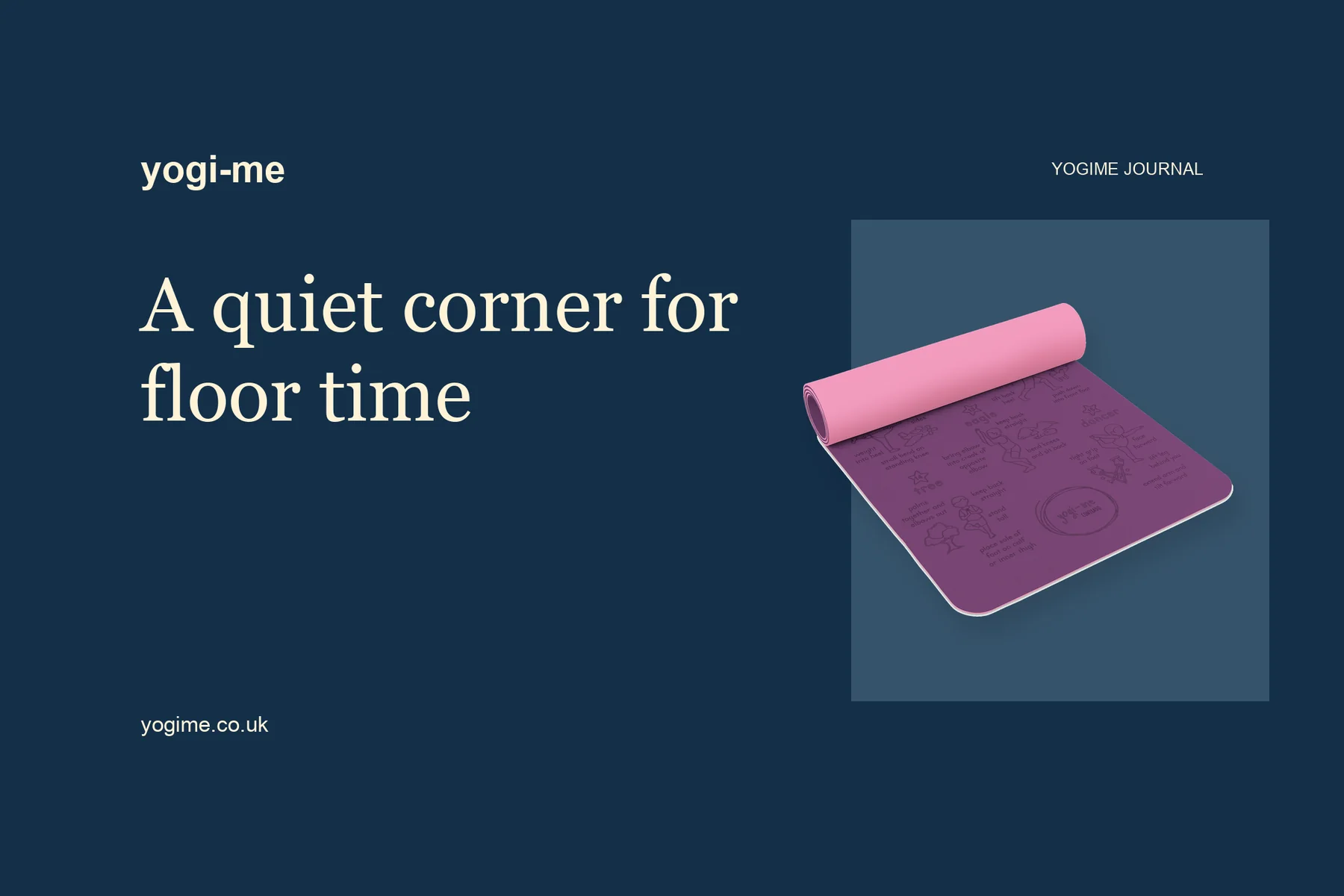
A screen-free kids' yoga mat with 15 numbered poses marked into it makes this easy: your child can flow from one pose to the next without a screen, and the breathing techniques above become part of the fun rather than a chore. For quieter days, our introduction to mindfulness for kids offers gentle stillness games too.
What everyday habits help an anxious child feel safe?
Predictability is the foundation. Anxious children settle best when the day is calm and familiar, so keep routines steady, protect sleep, and build in daily movement. The NHS advises keeping to regular daily routines because children of all ages find them reassuring.
Sleep matters enormously, because anxious children often struggle to settle and tiredness makes worry worse. Use the sleep guide below, from The Sleep Charity, to check your child is getting roughly the right amount.
- Routine, What helps: Keep daily rhythms familiar and predictable; Source guidance: NHS: children find regular routines reassuring
- Sleep (ages 3 to 6), What helps: Around 10 to 12 hours a night; Source guidance: The Sleep Charity
- Sleep (ages 7 to 12), What helps: Around 10 to 11 hours a night; Source guidance: The Sleep Charity
- Daily activity, What helps: Average at least 60 minutes of moderate to vigorous play; Source guidance: UK physical activity guidelines
- Talking, What helps: Regular, unhurried chats about feelings; Source guidance: YoungMinds
Sleep needs vary between children, so treat these as a guide, not a target to police.
What tools can you keep for the long term?
Two simple tools help worries feel manageable day to day: a worry box and a calm corner. Both give an anxious child somewhere to put big feelings and a reliable way to soothe, so they are not relying on you being there every single time.
Make a worry box
YoungMinds recommends making a worry box. Decorate a small box together, then when a worry pops up your child writes or draws it and posts it in. Later, at a calm time, you open the box and sort through the worries together. It contains the worry and shows your child they do not have to carry it alone.
Set up a calm corner
Create a small, cosy spot with a cushion, a soft toy and maybe their yoga mat. Our guide to setting up a calming corner at home walks through it. When feelings run high, your child can go there to breathe, trace their fingers or ride the wave. For younger children, the NHS notes that gentle distraction can help too.
When should you see a GP about your child's anxiety?
Most childhood worry passes with reassurance and routine, but sometimes it needs more support. The NHS advises contacting your GP if your child's anxiety is severe, persists, and interferes with everyday life. Your GP may refer them for assessment with local children and young people's mental health services (CYPMHS, sometimes called CAMHS).
You do not have to work it out alone. YoungMinds runs a Parents Helpline that can talk you through what to do next.
Trust your instincts. If something feels off, asking for help early is always sensible.
Frequently asked questions
Is it normal for my child to be anxious?
Yes, often. The NHS explains that many worries are a normal part of growing up, and that separation anxiety is very common between about six months and three years. It becomes a concern when anxiety is severe, persistent, and interferes with daily life.
What is the fastest way to calm my child down?
Slow their breathing. The NHS suggests three deep breaths together, in for three and out for three. YoungMinds' finger-tracing breath works well for younger children because it gives their hands something to do while they slow down. Do it alongside them, quietly, rather than asking them to calm down.
Does exercise really help with anxiety?
Movement helps children feel better, though it is not a treatment for anxiety. UK guidance recommends at least 60 minutes of activity a day and lists benefits including feeling good, more confidence, better concentration and improved sleep, all of which support a calmer, more settled child.
How much sleep does my anxious child need?
The Sleep Charity says children aged 3 to 6 need about 10 to 12 hours a night and children aged 7 to 12 need about 10 to 11 hours. Needs vary between children, but protecting sleep really does help, because tiredness tends to make worry worse.
When should I speak to a professional?
Contact your GP if your child's anxiety is severe, keeps going, and gets in the way of everyday life. The GP may refer them to local children and young people's mental health services. For support in the meantime, the YoungMinds Parents Helpline can talk you through next steps.
A gentle next step
Calming an anxious child is really about small, repeatable moments: a few slow breaths, a steady routine, and a bit of screen-free play that lets their body feel safe again. If you would like a simple way to build that in, our kids' yoga mats turn breathing and gentle movement into something your child actually looks forward to, no screen required.
Sources
- NHS: Anxiety in children (advice for parents)
- NHS: Anxiety disorders in children
- YoungMinds: Supporting a child with anxiety
- YoungMinds: How to make a worry box, a guide for parents
- GOV.UK: Physical activity for children and young people (5 to 18 years)
- NHS: Physical activity guidelines for children and young people
- The Sleep Charity: How much sleep does my child need?