guides
Snow Day Activities for Kids: 12 Ideas, Indoors and Out
Twelve snow day activities for kids aged 3 to 8, hour by hour from the 7am school call, with UK cold-weather advice and plenty to do inside.
When school shuts for snow, the day goes best if you alternate: outside while the snow is fresh, in when hands get cold, out again, then a quiet end. Here are 12 snow day activities for kids aged 3 to 8, in the order the day usually runs, with what the NHS and UKHSA say about the cold.
A snow day is a day school closes because of snow or ice, often with only a few hours' notice. Most of what follows needs nothing you don't already have.
How does a snow day usually run?
Follow the clock or ignore it. The list follows the clock, from the first hour to teatime, but any item can move. All suit ages 3 to 8, and the three-year-old versions are noted where they differ.
Short spells outside with warm-ups in between are easier on everyone than one long freeze. A snow day also makes moving easy: the NHS says children aged 3 to 4 should spend at least 180 minutes a day on a variety of physical activities, including outdoor play, and children aged 5 to 18 should average at least 60 minutes of moderate or vigorous activity a day across the week. For days without snow, there are more screen-free ideas for ages 3 to 8.
What can kids do in the first hour of a snow day?
The first hour is for breakfast, a plan and getting dressed properly, because the snow will still be there in twenty minutes. Look out of the window, warm up, and put the layers on in the right order, so the first trip outside lasts longer than five minutes.
1. The window weather report
Before boots go on, stand at the window and report: how deep is it, whose tracks are already there, what's the one thing you'll find outside? Younger children can point; older ones can write it down. It buys you time to finish your tea.
2. A five-minute snow warm-up on the mat
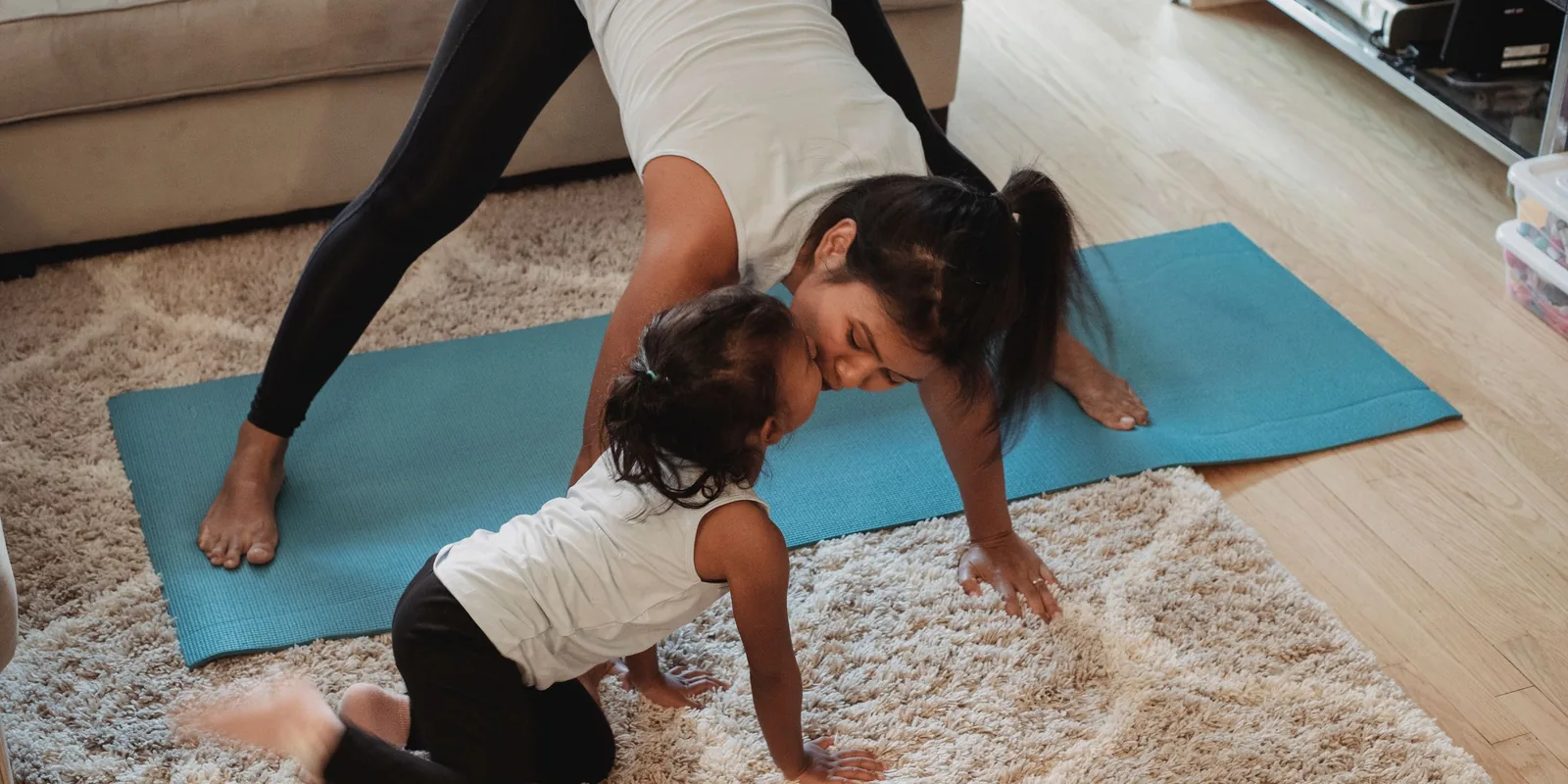
Three breaths in each pose, each with a snow name: cow and cat are the snow-plough, downward dog the snowy hill, chair the sledge, frog the deep bits, deer a reindeer, eagle wrapped in a scarf. The poses are on our Sun Salutation design; the snow names are a game on top. The NHS says moderate activity makes you breathe faster and feel warmer.
3. The kit-up race
Put the layers on in order and time it: vest, jumper, waterproofs, hat, gloves, wellies. Over-fives can race; threes get help. For cold weather, the NHS suggests several loose layers with a waterproof outer layer, a hat, gloves or mittens, and thick socks and boots. Put a spare pair of gloves by the door.
What are the best snowy day activities for kids outside?
The best snowy day activities for kids outside are the ones that keep them moving: following tracks, making shapes in the snow, and sledging on a safe slope. Go out while the snow is fresh, and come back in as soon as gloves are wet or someone is shivering.
4. Track detectives
Look for bird and fox prints first, then make your own: walking backwards, hopping, in a wiggly line, on tiptoes. Take turns to make a set of tracks while everyone else looks away, then guess who made which. Good from age 3.
5. Snow angels and snow statues
Snow angels first, lying flat and sweeping arms and legs. Then a freeze game: when you shout, everyone holds a shape (a tree, an aeroplane, a frog) and then steps away to look at the print it left. The best shapes are the wobbly ones.
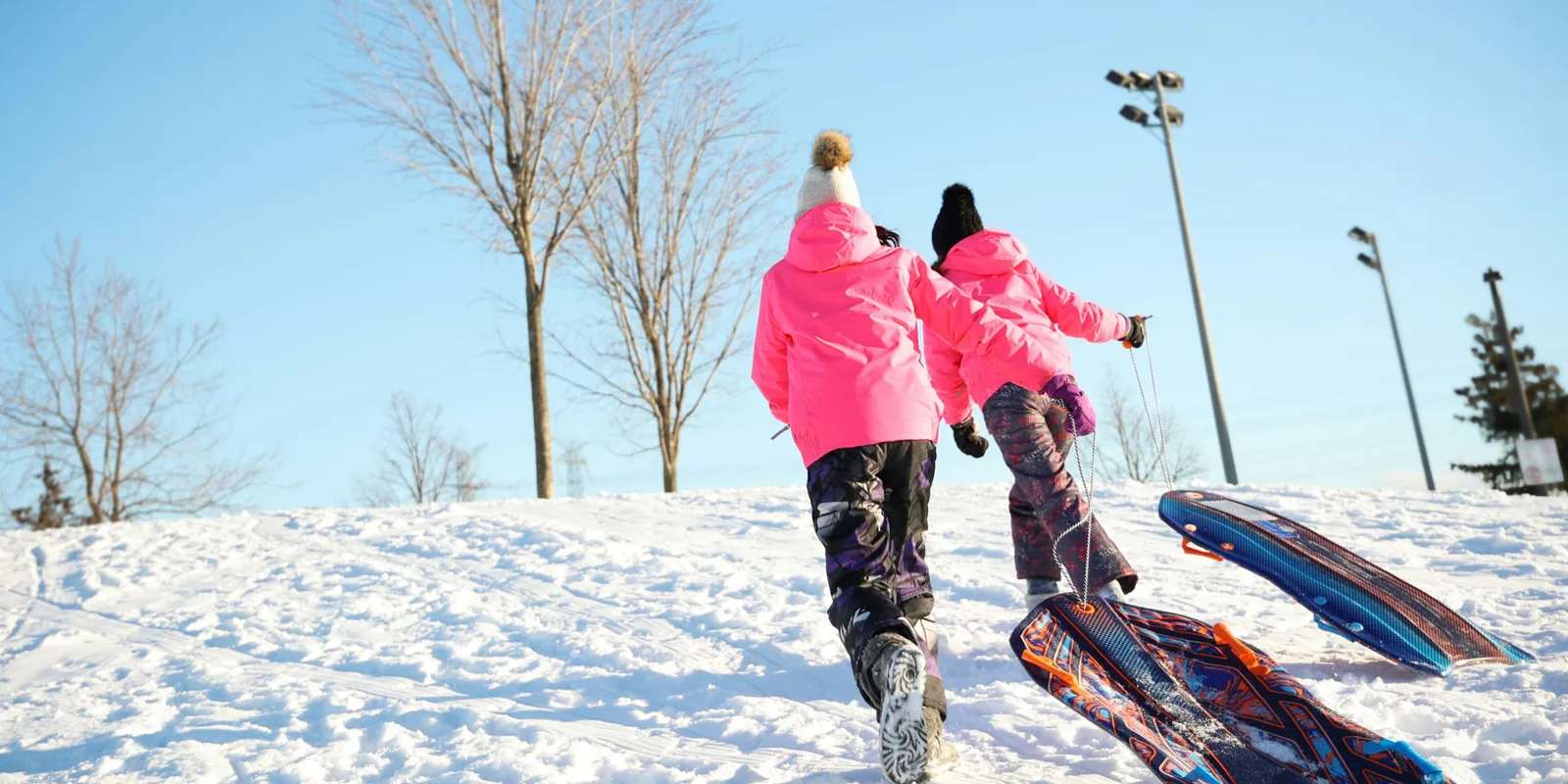
6. Sledging, sitting up
One at a time, sitting up and facing forward, on a slope a grown-up has chosen: one that runs out well away from roads, trees, fences and water. Stay off frozen ponds and lakes completely: RoSPA warns that frozen water can look stronger than it really is. A grown-up at the bottom keeps the run clear for the next sledge.
What snow day activities can kids do inside?
When fingers are cold and gloves are soaked, these snow day activities for kids inside keep the day going while everything dries. One brings the snow indoors, one burns off the energy that's left, and one is a sit-down with a hot drink.
7. A tray of snow on the kitchen table
Fill a baking tray with snow and bring it in. Everyone guesses how long it will take to melt, then you check every ten minutes. Look at what's left in the water afterwards. Science for a seven-year-old, and sensory play for a three-year-old.
8. An indoor snowball fight
Rolled-up socks or scrunched paper make the snowballs, and the sofa is the fort. Set a two-minute timer, then count up who has the most snowballs on their side. Nobody gets cold, and the pairs of socks needed sorting anyway.
9. Defrost and draw
While gloves dry on the radiator, make hot chocolate and draw the morning: the tracks, the angels, the hill. At 3, one picture with you writing the words; at 7, a map of where everyone went. It keeps them still for twenty minutes.
What can you do at home in the afternoon of a snow day?
Afternoon snow day activities at home are about saving energy for one last trip out. Build something cosy, read together, and keep the final spell outdoors short, so you're inside again before the light goes and the slush starts to freeze.
10. A den and The Snowman
Blankets over the chairs, cushions on the floor and a torch inside. Raymond Briggs' The Snowman is a wordless picture book, so your child tells the story from the pictures. It works for a three-year-old who can't read and a seven-year-old who can.
11. One more trip out before dark
A short last look: what has melted, what has frozen, are the morning's tracks still there? Check on the snowman if you built one. Keep it to fifteen minutes or so, and come in before the light goes and paths turn icy.
How do you wind down after a snow day?
Winding down after a snow day means slowing everything down once everyone is warm, dry and fed. Close the curtains, swap the busy games for a short, quiet one, and keep the end of the day as calm and predictable as any other evening.
12. The melting snowman
On the same mat: stand tall as a snowman in mountain, melt forward slowly into rag doll, then become the puddle, curled up in mouse (pose 1). Three slow breaths in each. Then do it again, melting even more slowly. For more poses, try our beginner's guide to kids' yoga.
How do you plan a whole snow day?
Pick four or five items rather than all twelve, and keep the outdoor spells shorter for younger children. Three illustrative plans:
- Age 3 to 4: the window report, the warm-up, twenty minutes of snow angels, back in for the snow tray, the den, then the melting snowman. Spells outside stay short: UKHSA says children aged 5 and under are at greatest risk of harm from cold weather.
- Age 5 to 6: the warm-up, the kit-up race, track detectives, the indoor snowball fight, then the last trip out.
- Age 7 to 8: the warm-up, an hour of sledging with breaks, defrost and draw, the last trip out, then the melting snowman.
Nursery and Reception staff will find winter movement ideas for nursery for the days when it's too icy to go out at all.
The warm-up and the melting snowman both live on one mat. A Yogi-Me mat has 15 numbered poses laser-engraved into the surface, so a five-year-old can start at 1 and work along it on their own, with nothing to set up and no screen. It's designed for ages 3 to 8, and at 183 x 61 cm it's full length, so the grandparent who gets the 7am call can do the reindeer too. A snow day sends every child home at once, and two or more mats are 10 per cent off. Each is £34.99 with free UK delivery and 30-day returns. Have the warm-up ready for the next snow day with a kids' yoga mat, or see more presents that keep them moving.
What if your child doesn't want to go out in the snow?
Some children hate wet gloves and cold faces, and that's fine. The inside half of this list, the warm-up, the snow tray, the snowball fight, defrost and draw, the den and the melting snowman, makes a whole snow day on its own. Watching the snow from the window counts too.
Bring a bucket of snow in for them to touch on their own terms, and try the garden again later if they want to. For more ways to burn off energy without going out, see rainy day activities that burn off energy indoors.
Frequently asked questions
How cold is too cold for kids to play outside?
The NHS and UKHSA don't set a temperature. UKHSA says children aged 5 and under are at greatest risk of harm from cold weather, and the NHS says frostbite can happen when skin is exposed to 0C or below, most often on fingers, toes, nose and ears. Bring children in when gloves are wet, they're shivering, or skin is numb, pale or stinging.
How long should kids play in the snow?
There's no set time. Short spells outside, with warm-ups indoors in between, are easier to manage than one long stretch, especially for younger children. The NHS lists staying out in the cold too long and having wet clothes among the causes of hypothermia, and its signs include shivering, slurred speech, slow breathing, tiredness or confusion.
What are the signs of frostbite in children?
The NHS says that at first skin may be cold and firm, numb or stinging, and red or pale. Go indoors, take off wet gloves and warm the area gently, for example in warm, not hot, water. Don't rub it or use a radiator or hot water bottle. Call 999 or go to A&E for hard, frozen skin, swelling with loss of feeling, or blisters.
Can I take time off work if my child's school closes for snow?
Usually, yes, if you're an employee. Acas gives a child's school closing unexpectedly as an example of when time off for dependants applies. GOV.UK says it's a reasonable amount of time with no set amount, you should tell your employer as soon as possible, and your employer may pay you but doesn't have to. Check your contract.
Sources
- NHS - Physical activity guidelines for children (under 5 years)
- NHS - Physical activity guidelines for children and young people (5 to 18 years)
- NHS - Frostbite
- NHS - Hypothermia
- UKHSA (GOV.UK) - Supporting vulnerable people before and during cold weather: for teachers and educational professionals
- GOV.UK - Time off for family and dependants
- Acas - Time off for dependants
- RoSPA - Winter water safety tips