practice
Animal Walks for Kids: 12 Moves and Relay Races
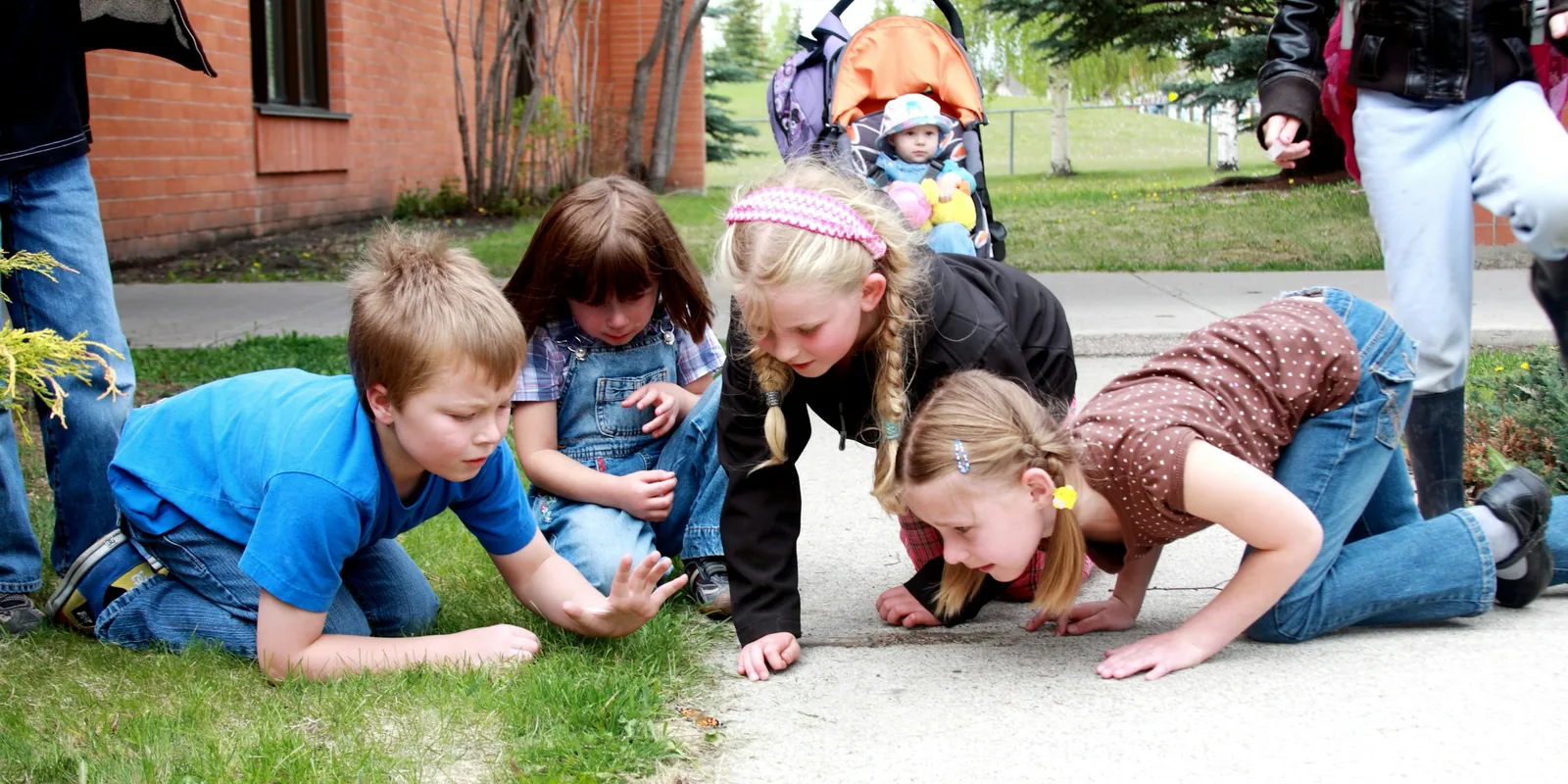
Animal walks for kids: 12 moves from bear walk to crab walk, with the body part each works, the age it suits and a relay version for PE or the garden.
Animal walks for kids are ways of crossing a room or a playground by moving like an animal: a bear on hands and feet, a crab tummy-up, a frog in big squatting leaps. They're whole-body exercise dressed up as a game. Below are 12, each with the part of the body it works, the age it suits and a race or relay version.
They aren't the same as animal yoga poses. A pose is a shape you hold still. A walk is a shape you travel in. The two work well together, and the end of this page shows how to join them up.
What you need before the first race
A clear strip of floor the length of a room or hallway, or a stretch of grass. Carpet, grass and mats are kindest on hands. Bare feet or trainers grip better than socks, which turn a frog jump on a wooden floor into a skid.
All 12 suit children from 3 to 8, and the harder ones say so. At three, keep the walks on hands short, three or four body lengths, with a stand-up shake between goes.
The 12 animal walks
1. Bear walk
On hands and feet, bottom high, knees off the floor. PE lessons often call it the bear crawl.
Say: "Bottom up to the sky, hands flat, and walk like a big heavy bear. Don't let your knees touch."
Works: shoulders, arms and tummy, because the hands take the weight. From: age 3, over a short distance.
Race it: Bear relay. Walk to a cone, stand up and roar, walk back and tag the next bear.
2. Crab walk
Sitting, hands behind you, then bottom lifted so the body makes a table.
Say: "Fingers point to your toes. Push your tummy up flat like a table, and scuttle sideways."
Works: arms, back and bottom. From: age 4. Three-year-olds can lift and lower without moving.
Race it: Crab carry. Balance a beanbag on each crab's tummy and cross the room without dropping it.
3. Frog jump
A low squat with hands on the floor, then a big spring forward, landing back in the squat.
Say: "Crouch down small, hands on your lily pad, and jump. Land soft like a frog, not a brick."
Works: thighs, calves and landing. From: age 3.
Race it: Lily pads. Scatter cushions or paper plates, and every frog has to land on each one on the way across.
4. Bunny hop
Feet together, small two-footed hops.
Say: "Ears up, feet glued together, and little hops. No big jumps, bunnies are quiet."
Works: calves and ankles, and taking off from two feet. From: age 3, the gentlest jumping walk on the list.
Race it: Carrot relay. Each bunny hops a toy carrot (or a sock) to the burrow and hops back to hand over.
5. Inchworm
From standing, hands go to the floor and walk out to a long body, then the feet tiptoe up to meet them.
Say: "Walk your hands away from your feet. Now tiptoe your feet in to catch your hands."
Works: backs of the legs, shoulders and tummy. From: age 5. Younger children can bend their knees as much as they like.
Race it: Fewest inches. Count how many inchworms it takes to cross the room, then try to beat your own number.
6. Penguin waddle
Legs straight, feet turned out, arms pressed to your sides with the hands flapping, tiny steps.
Say: "Arms stuck to your sides, stiff legs, tiny steps. Waddle, waddle."
Works: balance, as the weight rocks from foot to foot. From: age 3.
Race it: Egg carry. Penguins hold a soft ball between their knees and waddle it to the nest (best from age 5).
7. Elephant walk
Bend forward from the hips, hands clasped low to make a trunk, slow heavy steps with legs nearly straight.
Say: "Clasp your hands for a trunk and let it swing. Big, slow, heavy steps."
Works: a stretch down the backs of the legs, and a slow rhythm that brings the energy down. From: age 3.
Race it: Elephant parade. A follow-the-leader where the slowest, heaviest steps win, which is handy at the end.
8. Snake slither
Lying on the tummy, pulling forward with the forearms while the legs trail behind.
Say: "Tummy on the floor, arms out in front. Pull yourself along and keep your legs lazy. Hiss."
Works: shoulders, arms and tummy. From: age 3.
Race it: Under the bridge. Snakes slither under a row of chairs or a sheet held low by two grown-ups.
9. Duck walk
A deep crouch, then walking forward without standing up, elbows out as wings.
Say: "Squat right down, tuck your hands under your arms for wings, and waddle without standing up. Quack."
Works: thighs and ankles, and it tires legs fast. From: age 4, over short distances.
Race it: Ducklings. One mother duck leads and everyone behind copies every turn she makes.
10. Flamingo hop
Standing on one leg with the other tucked up, then hopping forward a few times before swapping.
Say: "One leg up like a flamingo. Now hop, hop, hop, and swap legs before you get tired."
Works: balance and ankle strength. In our animal yoga poses the flamingo stands still. This one travels. From: age 4, with plenty of wobbles.
Race it: Stepping stones. Hop to a cushion, land on two feet, swap legs, hop to the next.
11. Gorilla shuffle
Feet wide, knees bent, knuckles on the floor, shuffling sideways.
Say: "Feet wide, knees bent, knuckles down. Now shuffle sideways and keep looking forwards."
Works: legs and hips, and moving sideways, which most games forget. From: age 3.
Race it: Sideways relay. Gorillas face the same wall the whole way, so they travel there and back sideways.
12. Horse gallop
One foot leads and the other chases it, in a bouncy one-two rhythm.
Say: "This foot goes first, and that one chases it but never catches it. Clip clop."
Works: co-ordination and rhythm, and it gets children properly out of breath. From: age 3.
Race it: Walk, trot, gallop. A caller shouts the pace and the horses change speed on the word.
Three relays for a PE lesson, a party or the garden
The zoo relay (ages 4 to 8). Teams of three or four, a different animal for each leg: bear there, gallop back, then crab, frog and elephant. The last leg is always the elephant, which slows everyone down before whatever comes next.
Animal cards (ages 3 to 6). Draw the 12 animals on cards. Turn one over and everyone switches walk. Go fast, then strong, then slow, and the session settles itself.
The fair race (mixed ages). Same distance, different animals: crab for the eight-year-old, bear for the five-year-old, bunny hop for the three-year-old. It's still a race, and nobody wins just by being older.
Which animal walk for which job?
Pick by what you need from the next ten minutes.
- To burn energy, Try: Frog jump, horse gallop, bunny hop; Why: All jumping or bounding, so they get out of breath
- Strong arms and tummy, Try: Bear walk, crab walk, snake slither; Why: Hands and arms carry the body
- Balance, Try: Flamingo hop, penguin waddle, duck walk; Why: Weight sits over one foot, or low and wobbly
- To calm things down, Try: Elephant walk, inchworm; Why: Slow by design, and they end in a stretch
- Sideways moving, Try: Gorilla shuffle, crab walk; Why: Most running games only go forwards
Why do PE teachers use animal walks?
They cover most of the movement list in very little time. The DfE's early years guidance on gross motor skills asks practitioners to "think of crawling, walking, running, jumping, hopping, skipping, creeping and slithering, spinning, turning, twisting, pushing and pulling". Many of those are in the 12 above. Development Matters suggests adults "Model the vocabulary of movement" with 3 and 4-year-olds, and its two examples are "gallop" and "slither". Calling out animal names does exactly that.
By the end of Reception, the EYFS framework expects children to "Demonstrate strength, balance and coordination when playing" and to "Move energetically, such as running, jumping, dancing, hopping, skipping and climbing". In Key Stage 1, the PE national curriculum asks pupils to "master basic movements including running, jumping, throwing and catching, as well as developing balance, agility and co-ordination". Animal walks cover the running, jumping and balance with no equipment, which is why so many PE warm-up games borrow them.
At home they count towards daily activity: the NHS guidance for toddlers and pre-schoolers is "at least 180 minutes (3 hours)" a day, and for 5 to 18-year-olds it lists jumping among the ways to strengthen muscles and bones. Our explainer on how much exercise children need covers what counts.
Keeping it safe
Most of the risk is the room, not the move. Push furniture back, clear the floor and give each child their own lane, so nobody collides head-first while looking at the carpet.
The NHS advice for 5 to 18-year-olds is to do exercise "suitable for their age, ability and experience" and to "start any new exercise slowly and increase it bit by bit". So: short distances for the walks on hands, and the crab and inchworm once the easier ones feel comfortable. If wrists or knees hurt, swap to a standing animal.
A child with a health condition or disability that affects movement may need some walks changed, so check with your GP, health visitor or physiotherapist first.
When a child won't be an animal in front of everyone
Some children would rather not be watched while being a duck. For Reception classes, Development Matters says to let less confident children spend time "observing and listening, without feeling pressured to join in", and the same works in a living room.
Give them a job: the caller who picks the animals, or the judge of the slowest elephant. Most callers are doing the moves within a few rounds. A grown-up gorilla shuffle also takes most of the embarrassment out of the room. For a quieter start, our gross motor skills activities are grouped by age, and plenty work with one child and one grown-up.
End on the mat with a held pose
Development Matters suggests that Reception teachers "Encourage children to conclude movements in balance and stillness". So finish each walk by holding the animal's shape. After the bear walk, the cat (pose 3 on the Sun Salutation design). After the bunny hops, the rabbit (pose 14 on the Freedom Flow design). After the flamingo hop, the tree (pose 14 on Sun Salutation), standing still on one leg.
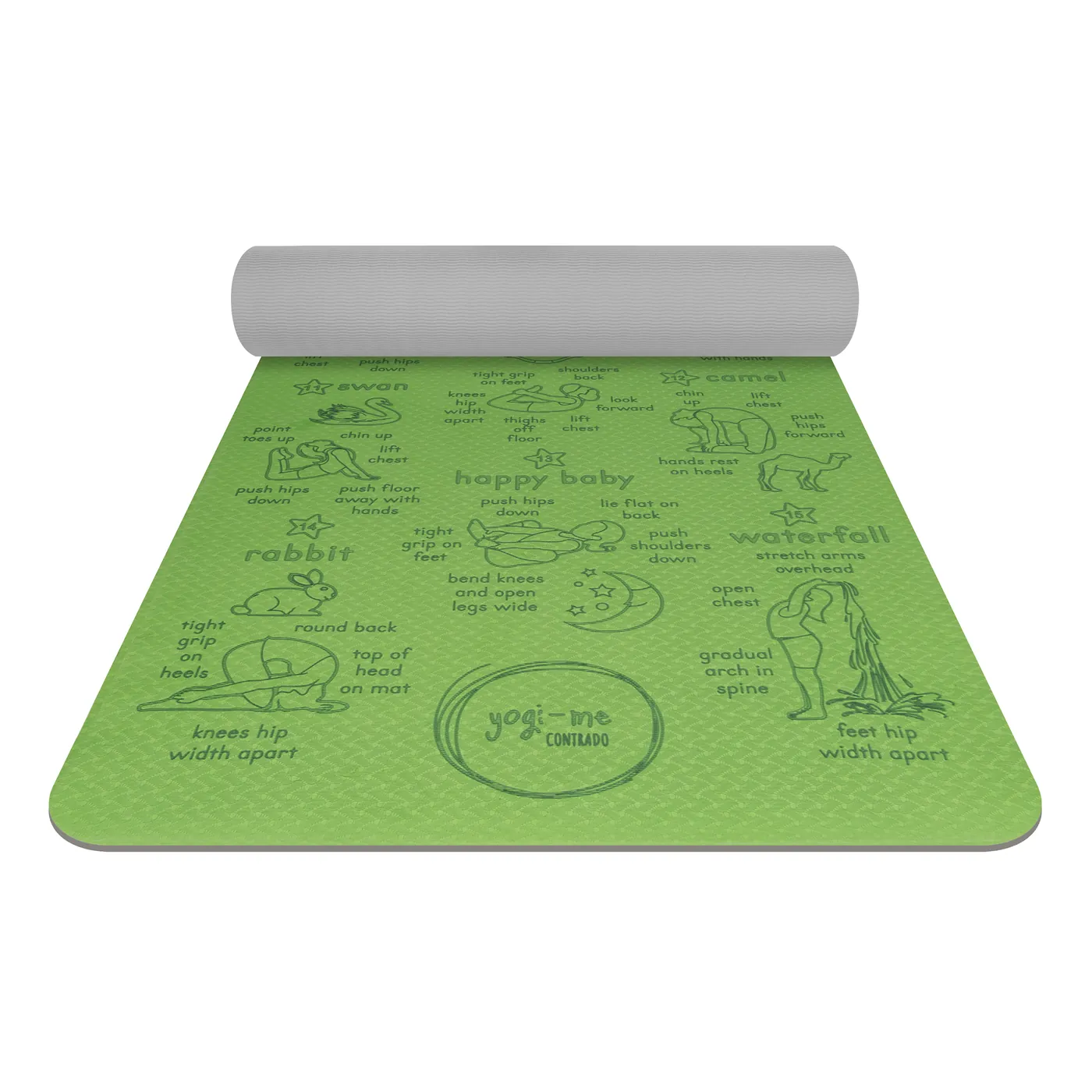
A children's yoga mat gives each child a spot to land on, with 15 numbered poses laser-engraved into the surface. For more held shapes, our five animal yoga poses take about five minutes and make a calm ending to a loud ten.
Frequently asked questions
What are some examples of animal walks?
The best known are the bear walk on hands and feet, the crab walk tummy-up, frog jumps, bunny hops and the snake slither on the tummy. Penguin waddles, elephant walks, duck walks, flamingo hops, gorilla shuffles, inchworms and horse gallops make up the rest of the twelve on this page. Each one moves the body a different way, so mixing them works the whole body.
Can you use animal walks as a PE warm-up?
Yes. Start with the gentler walks, such as the elephant, penguin and bunny hop, then build to the bear and the frog once bodies are warm. Keep it to about five minutes and finish with a gallop to raise heart rates. Save the crab walk and inchworm for the middle of the lesson, once everyone is properly warmed up.
Can a 2 year old do animal walks?
Plenty of two-year-olds will happily stomp like an elephant, waddle like a penguin and bunny hop with two feet, even if the hop barely leaves the floor. Leave the crab walk, inchworm and flamingo hop for later. Do it alongside them rather than calling instructions, because at two the copying is the whole game. Short bursts work best.
How many animal walks should you do in one go?
Four to six walks, each across the room and back, is about right at three or four, and takes around five minutes. Older children can manage all twelve as a circuit. Stop while they're still asking for one more animal, and finish on something slow, so the session ends calm rather than wild.
Sources
- Department for Education, Help for early years providers: Gross motor skills
- Department for Education: Development Matters
- Department for Education: Early years foundation stage (EYFS) statutory framework
- Department for Education: National curriculum in England, PE programmes of study
- NHS: Physical activity guidelines for children (under 5 years)
- NHS: Physical activity guidelines for children and young people