community
Children in Need Ideas: 20 for School and Home
20 Children in Need ideas for ages 3 to 8, sorted by effort, from spotty socks to sponsored yoga, with the 2026 date and how to pay in.
What can young children do for Children in Need?
Easy Children in Need ideas include wearing spotty socks, dressing in yellow, making a drawing gallery, holding a biscuit stall or trying a sponsored family dance or yoga session. For children aged 3 to 8, pick something they already enjoy and invite optional donations. These 20 ideas are sorted by preparation, so you can choose without planning a whole event.
When is Children in Need 2026?
BBC Children in Need's Appeal Night is Friday 13 November 2026, confirmed in the charity's 2026 announcement. Its Challenge Yourself 2026 campaign invites challenges inspired by the number 26. That could mean a shared class project, rather than a long task for each child. Check your school's chosen fundraising date before making plans.
How much preparation have you got time for?
Start with the effort you can manage, then let your child choose. These are suggestions for ages 3 to 8, with an adult organising donations. For a class, make contributions optional and include everyone in the activity. There's no need to buy a costume.
- Almost no preparation: ideas 1 to 6.
- Paper and pens: ideas 7 to 12.
- A little organising: ideas 13 to 20.
The charity's fundraising guidance requires written parental or guardian consent for under-16s. Leave collection boxes and the final cash count to adults. Keep coins and loose craft buttons away from younger siblings, especially under-3s, following the Child Accident Prevention Trust's choking advice.
What can you do with things you already have?
Choose these when the school message arrives and the washing basket is your costume cupboard. Agree the activity with the organiser first, then make an optional donation through the school or charity. For a family fundraiser, invite relatives to sponsor your chosen activity.
1. Wear spotty socks
Find a spotty pair and build the outfit around them. Say, "You choose the socks; the rest can be your usual clothes." Pair it with an optional donation. It's a small way to dress up without changing the whole morning.
2. Pick something yellow
Look for a yellow top, cardigan or pair of trousers already in the wardrobe. Say, "Let's see what yellow things we've got." Use the school's donation route, or make a family donation together. A single yellow item is enough for this idea.
3. Have a pyjama morning
If your school has agreed a pyjama day, choose a pair the night before. At home, invite relatives to sponsor a pyjama breakfast followed by a story. Say, "Breakfast club is open." The dress-up part needs no elaborate costume or accessories.
4. Wear a top inside out
Turn an ordinary T-shirt inside out for a deliberately muddled outfit. Say, "Can you spot what's different?" Ask a willing grown-up to join in and donate too. It's an alternative when you can't find anything yellow or spotty in the house.
5. Share a joke circle
Invite each child to tell a joke, with passing allowed. Say, "Tell us your joke, or choose someone to tell it for you." Ask listening adults for an optional donation. Keep the jokes about imaginary situations rather than people in the room.
6. Read to a teddy audience
Line up favourite soft toys and choose a picture book. Say, "Who's sitting in the front row?" A relative can sponsor the shared story, with you reading aloud if preferred. Children can turn pages, describe pictures or supply the animal noises.
What can you make with paper and pens?
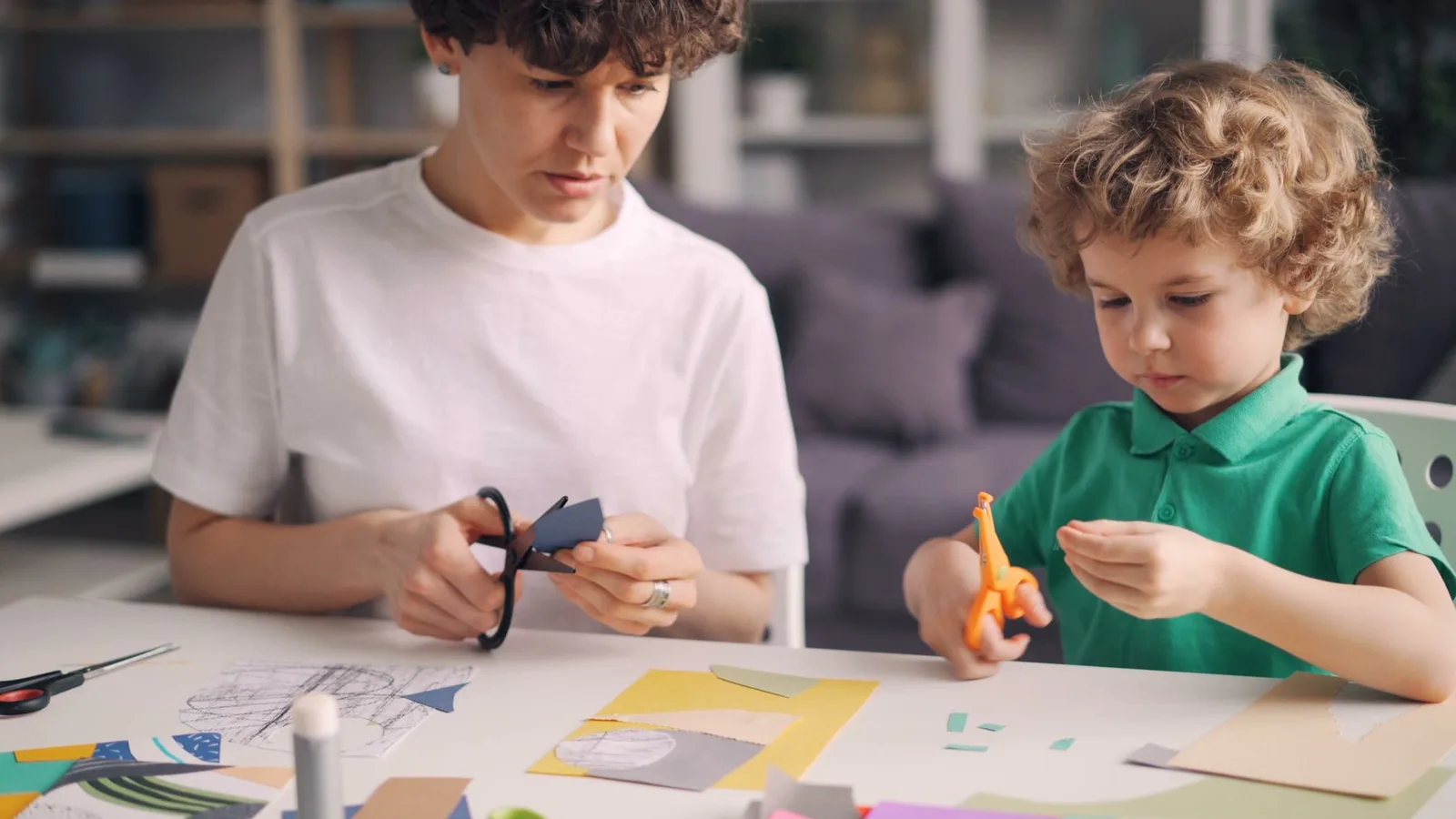
These Children in Need activities use drawings to create something people can enjoy or take home. Put out paper and colouring pencils, and choose a donation method before you start. Let children dictate any words they want an adult to write for them. For ready-made materials, the charity's primary school resources include printable colouring sheets and a downloadable fundraising pack.
7. Design a spotty outfit on paper
Draw the outline of a jumper and fill it with coloured spots. Say, "What would your fundraising jumper look like?" Display the designs together and invite adults to donate to the gallery. Nobody has to wear their design or buy a new top.
8. Make a spot hunt
Draw coloured circles on six sheets of paper and place them around a room. Say, "Find the red spot, then choose the next colour." Invite a donation for joining the hunt. Children can point to discoveries instead of collecting loose objects.
9. Build a kindness wall
Ask everyone to draw a kind action on paper, such as inviting someone to play. Say, "What could you do to help someone feel included?" Put the pictures together, with an optional adult donation alongside the display. Keep individual donation amounts private.
10. Make postcards to sell
Fold paper into cards or use spare card packaging. Say, "Draw something that would make someone smile." Invite family members to choose a card for a donation. Write the child's dictated message inside, or leave it blank for the recipient to use.
11. Guess the spots
Draw 26 spots on a large sheet of paper, then invite everyone to guess the total. Say, "Count them with your eyes first." Invite optional donations, with no entry fee or prize. Reveal the answer together after everyone has had a guess.
12. Create a family joke booklet
Ask relatives to contribute a favourite joke, then write them on folded pages. Say, "You can draw the funny bit." Offer copies to family for donations. Keep a copy for the children, so the finished booklet stays after the fundraising is done.
Which fundraisers need a little more planning?
Choose these if you can organise sponsors, a stall or a shared space beforehand. Agree a flat donation for taking part, with no penalty for stopping early. For younger children, walking, dancing and jumping feature in the NHS's activity ideas for under-5s.
13. Dance through two favourite songs
Let your child choose the songs and invite family sponsorship for a short dance session. Say, "You lead the first song; I'll lead the next." Offer standing or seated dancing. Finish when the songs end, without turning it into an endurance contest.
14. Try a sponsored ball bounce
Use a large ball and take turns bouncing it to a partner. Say, "Shall we count the catches together?" Ask sponsors for a flat contribution, rather than money per bounce. The child can choose whether to bounce, catch or keep the tally.
15. Hold a family yoga session
Choose familiar poses your child already enjoys, and take turns leading. Say, "Show me your favourite, then I'll choose." Ask relatives to sponsor the shared session, with no requirement to complete a sequence. Our family yoga ideas offer ways to join in together.
16. Take a sponsored local walk
Choose a familiar route together and ask relatives to sponsor the outing. Say, "Shall we look for yellow doors on the way?" Walk together and let your child help choose the destination. Use a flat donation, so distance doesn't decide the amount.
17. Run a spotty biscuit stall
Before children decorate or eat, ask parents or carers about allergies and check the biscuit and icing ingredients. Use clean surfaces and utensils, and keep foods containing a child's allergens separate. Decorate biscuits with icing dots and let children design the stall sign. Invite donations, with an adult serving. Follow school food rules and keep ingredient information available: the Food Standards Agency recommends retaining packaging and recording homemade ingredients. Say, "What shall our sign say?"
18. Organise a book swap
Ask families for books they're happy to pass on, then arrange them with covers showing. Say, "Which story would you like someone else to discover?" Invite optional donations from adults. Let children choose a book even if they haven't brought one.
19. Put on a tiny talent show
Invite each willing child to choose a song, joke, drawing demonstration or puppet scene. Say, "What would you like to show us?" Adults can donate to watch. Offer announcing or arranging the seats as alternatives, and leave filming out of the plan.
20. Host a family games session
Choose a familiar game, such as musical statues, and invite adults to donate to join in. Say, "Which game shall we teach everyone?" Pick from these indoor party games if you need another option. Give children a turn choosing the next game.
How could you combine ideas into a short session?
Choose one main activity and something small alongside it. You don't need to charge separately for each part: invite one optional contribution for the whole session. These example plans keep the preparation contained, whether you're fitting fundraising around school or gathering the family at home.
- A 15-minute family session: spend 5 minutes choosing a yellow outfit, 5 minutes sharing jokes and 5 minutes reading to a teddy audience. A grown-up handles the donation afterwards.
- A 20-minute classroom session: allow 10 minutes for spotty outfit drawings, 5 minutes to arrange the gallery and 5 minutes to look around. Invite donations through the school's usual collection route.
For a movement session, swap the jokes for dancing or familiar yoga poses. Tell sponsors that the donation celebrates joining in, whatever the child completes. Keep the same approach for siblings, without comparing their totals.
For a sponsored family yoga session, Yogi-Me's mats have 15 numbered poses laser-engraved into the surface, for ages 3 to 8. If a pose reference would help, browse the mats for your family session. Choose favourite poses; completing all 15 needn't be the challenge.
What if your child would rather watch than take part?
Offer a job away from the spotlight, such as choosing the music, arranging drawings or making a sign. They can watch, help briefly or leave the activity to someone else. Keep the donation separate from their performance, and don't promise sponsors a task your child hasn't agreed to.
If dressing up is the sticking point, use ordinary clothes and choose a different activity. If money is tight, let the organiser know privately and ask about joining without a donation. For something quieter, our kindness activities for home and school include ways to help without making a performance of it.
How do you pay the fundraising money in?
Use the charity's official collection and payment page, then choose "Pay in your fundraising". It also links to online sponsorship and explains how to pay collected cash in at a Post Office. Schools have their own payment routes. Don't send cash through the post.
Have an adult check the total, pay it in and keep the confirmation. Afterwards, tell your child what their activity raised and thank the people who joined in.
Frequently asked questions
What should my child wear for Children in Need?
Spotty clothes, something yellow or pyjamas are straightforward choices. Check the school or nursery message first, then use what you already own: a yellow jumper or spotty socks can do the job. If your child prefers their usual clothes, ask the organiser about joining in that way.
What are quick Children in Need fundraising ideas for school?
Try spotty socks, a joke-sharing circle or a classroom drawing gallery, with optional donations collected by an adult. Choose an activity that uses materials already in school and tell families how to donate beforehand. Give children a way to join in without bringing money, buying clothes or performing.
Can under-5s do a sponsored activity?
Yes. BBC Children in Need says you can fundraise at any age, with written parental or guardian consent for children under 16. For a young child, choose a familiar activity such as dancing or walking. An adult can organise sponsorship, and your child can stop whenever they want.
Who is Pudsey?
Pudsey is the yellow bear who represents BBC Children in Need, recognisable by his spotty bandana over one eye. For a young child, explain that people join in activities and give money to help other children across the UK. Drawing a yellow bear is a simple starting point for that conversation.
Sources
- BBC Children in Need: 2026 appeal announcement
- BBC Children in Need: fundraising questions and age requirements
- Child Accident Prevention Trust: preventing choking
- NHS: physical activity guidelines for children under 5
- Food Standards Agency: food at community and charity events
- BBC Children in Need: collecting and paying in fundraising
- BBC Children in Need: school payment routes
- BBC Children in Need: who Pudsey Bear is