sustainability
Non-Toxic, PVC-Free Yoga Mats: What to Look For
How to spot a genuinely non-toxic yoga mat: why PVC and phthalates are the ones to avoid, which materials to look for, and what to ask before you buy.
A non-toxic yoga mat is one that names its material and avoids PVC, the plastic most often softened with phthalates such as DEHP, which UK law restricts in toys and childcare articles. For a child's mat, look for TPE, natural rubber or cork, the words "PVC-free" stated plainly, and a seller who will tell you exactly what the mat is made of.
Your child spends yoga time with their face, hands and knees pressed right into the mat. So when you search for a "non-toxic yoga mat", you're really asking one thing: will this material harm my kid?
It's a fair question, and the answer isn't always on the label. Lots of children's mats are made from soft PVC, and "eco-friendly" gets printed on packaging with no rules behind it.
This guide keeps it simple. We'll cover what to avoid, what to look for, and the practical buying points that matter once safety is sorted.
Why does the material matter so much for children?
Young children use a mat differently to adults. They lie on it, roll across it, and often put their hands to their mouths mid-play. That close, hands-on contact is exactly why the material matters more for a child than for a grown-up.
It also matters because your child should be on the floor a lot. The NHS suggests toddlers and pre-schoolers get at least 180 minutes of physical activity spread through the day, and that children aged 5 to 18 aim for an average of 60 minutes of moderate activity daily.
A mat is where a lot of that floor-based movement happens, so it's worth getting the material right.
What should you avoid in a child's mat?
Avoid PVC (polyvinyl chloride) and the phthalate plasticisers used to soften it, such as DEHP, DBP and BBP. Also be wary of vague "eco" or "natural" claims with no named material behind them. If a mat doesn't tell you what it's made of, treat that as a reason to pause.
The phthalate concern isn't scaremongering, it's the law. In the UK, DEHP is restricted in toys and childcare articles above 0.1 per cent. GOV.UK's product safety team recalled one children's product found to contain more than 44 per cent DEHP as a serious chemical risk under the Toys (Safety) Regulations 2011.
You don't need to memorise the chemistry. You just need a mat that says clearly what it is and isn't.
What should you look for instead?
Look for named, safer materials and plain-English wording. Good signs include TPE (thermoplastic elastomer), natural rubber, cork or organic cotton, with "PVC-free" stated openly. The named material is what tells you most. If phthalates are your particular worry, ask the seller directly what the mat contains.
Here's a quick way to read a product page at a glance.
- Base material, Avoid: Soft PVC, unnamed "plastic"; Look for: TPE, natural rubber, cork, organic cotton
- Softeners, Avoid: Phthalates such as DEHP, DBP and BBP, used to soften PVC; Look for: A material that is not PVC in the first place
- Label wording, Avoid: Vague "eco" or "natural" with no detail; Look for: "PVC-free", named material, plain claims
- The seller, Avoid: No answer when you ask what it is made of; Look for: A clear answer, in writing, on the product page
At Yogi-Me our mats are made from non-toxic, PVC-free TPE, and you can read more about who we are and why on our about page.
What else makes a good mat for a young child?
Once safety is sorted, the practical stuff decides whether the mat actually gets used. A child's mat should be the right size for a small body, grippy enough to stop slips, light enough for little hands to carry and roll up, and quick to wipe clean after snacks and sticky fingers.
The right size and thickness
An adult mat swamps a three-year-old. A mat sized and weighted for a child gives them a clear space that feels like theirs, with enough cushioning for knees and elbows without being so thick they wobble. Our guide to yoga mat thickness goes into the numbers.
Grip and easy cleaning
Non-slip grip keeps poses safe on hard floors. A surface you can wipe down in seconds keeps the mat usable day after day, and our guide on how to clean a yoga mat covers the rest. For a fuller checklist, see our guide to choosing your child's first yoga mat.
Is a yoga mat really worth it, or is it just another thing to buy?
A good mat earns its place because it makes screen-free movement easy and inviting. It gives your child a dedicated spot for active floor play, which supports the daily activity targets set out in the UK Chief Medical Officers' guidelines.
It's also a gentle nudge away from screens. YoungMinds encourages families to balance screen time with offline rest, connection and movement, and to set tech-free times or zones at home. A mat in the corner of the room makes that swap a little easier.
The World Health Organization makes a similar case for under-5s, setting out how much time young children should spend active versus on screens.
Frequently asked questions
Is TPE safe for children?
TPE (thermoplastic elastomer) is a common PVC-free choice for children's mats, valued for being lightweight and grippy. Because it is not PVC, it avoids the material most often softened with phthalates. As with any product, look for a maker that states the material clearly on the product page.
What does "PVC-free" actually mean?
PVC-free means the mat isn't made from polyvinyl chloride, the plastic most often softened with phthalate plasticisers. Because DEHP and similar phthalates are restricted in UK children's products, choosing PVC-free is a simple way to step around the material those softeners are usually found in.
Are "eco-friendly" yoga mats always non-toxic?
Not necessarily. "Eco-friendly" isn't a regulated term, so it can appear on a page without telling you what the mat is made of. Judge a mat by its named material and clear "PVC-free" wording, not by a green-sounding label alone.
What thickness is best for a young child?
Enough to cushion knees and elbows on a hard floor, but not so thick that a small child feels unsteady. A mat that is light enough for your child to carry and roll themselves matters just as much, because it is the one they will actually use.
Ready to give your child a mat you can trust?
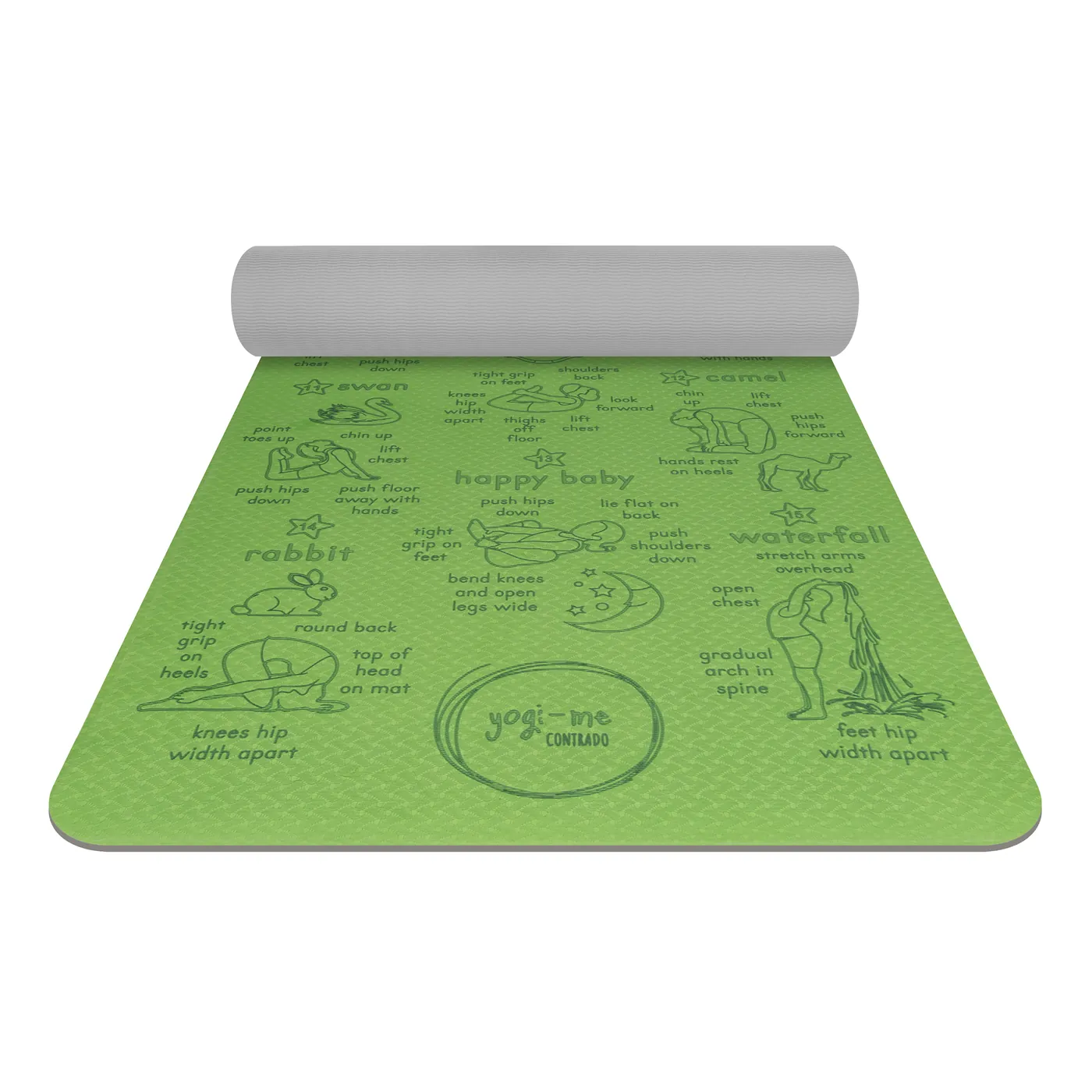
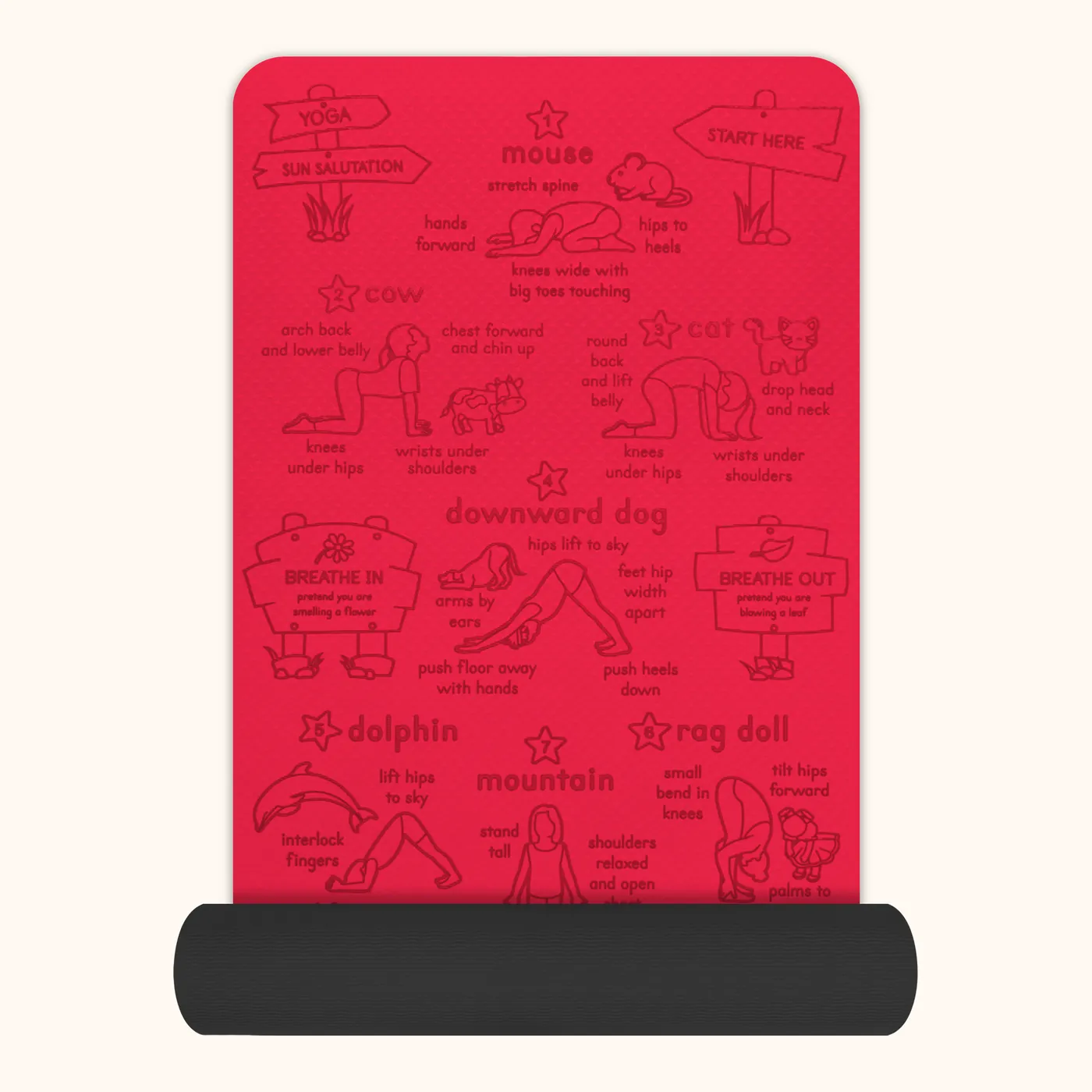
Every Yogi-Me mat is made from non-toxic, PVC-free TPE, weighs 800g, and has 15 numbered poses marked into it that turn floor time into an adventure. Have a browse in our shop and pick the one your child will want to roll out again and again.
Sources
- NHS: Physical activity guidelines for children and young people
- NHS: Physical activity guidelines for children under 5 years
- GOV.UK: UK Chief Medical Officers' physical activity guidelines
- World Health Organization: Guidelines on physical activity, sedentary behaviour and sleep for children under 5
- GOV.UK: Product safety report on a children's product containing DEHP
- YoungMinds: Social media and your child's mental health