guides
Activities for 6 Year Olds at Home: 15 Screen-Free Ideas
Activities for 6 year olds at home: 15 screen-free ideas built on what's new at six, from reading the clues to hopping, building and telling the story.
Six is when children start running their own games. Many can read a short clue, balance on one foot and tell a story in proper sentences, so these 15 activities for 6 year olds are built on exactly those three things. They're things to do with a 6 year old at home after school, on a wet Saturday or across half term, and none needs a screen.
What activities are good for a 6 year old?
Ones that use what they've just learned to do. Key Stage 1 is the first stage of England's national curriculum, and the government's key stage table puts Year 1 at ages 5 to 6 and Year 2 at ages 6 to 7. So a six-year-old is in one year or the other, reading, writing and counting further every term.
Their bodies are changing too. The American Academy of Pediatrics notes that at six, children can typically balance on one foot, hop and skip, and that most can tell stories using full sentences. If our activities for 5 year olds were about trying these things, this list is about doing them without you.
Keep some of it active. The NHS guideline for 5 to 18 year olds is an average of at least 60 minutes of moderate or vigorous activity a day across the week, and its examples include playground games with jumping, running and catching. The middle five ideas below are built for that.
15 activities for 6 year olds at home
They can read it themselves. Year 1 English asks children to read books aloud that fit the phonics they know, and Year 1 maths to read and write numbers from 1 to 20 in numerals and words.
1. A clue trail
Five clues on scraps of paper, each in short words they can sound out ("look in the bath"), each leading to the next. The last one finds a snack or a lost teddy. Then the best part: they write a trail for you, and watch you follow it. Six-year-olds love being the one who knows.
2. Story time for the teddies
They read their school reading book aloud to a row of toys on the sofa. The same book three days running is fine; rereading is exactly what Year 1 asks for. Sit within earshot, don't correct every word, and let the teddies ask a question or two at the end.
3. Post a letter
To a grandparent, a cousin or a friend who'd love some post. They say each sentence out loud first, then write it down, which is how Year 1 teaches writing. Add a drawing, address the envelope together and walk to the post box. Then the waiting for a reply begins.
4. Follow the numbers
They read a number, find that pose, hold it for a count of five, and work their way up. Then they write you a programme in words, "three, fourteen, fifteen", and you follow it: cat, tree, dancer. Our Sun Salutation is a mat with fifteen poses numbered 1 to 15. No mat? Draw five poses on numbered cards.
5. Sticky-note house
Give them a pad of sticky notes and a pen. They label everything they can spell, or nearly spell: door, bed, sink, sock. Spell it the way it sounds and don't correct it during the game. Then you go round reading the labels, and they check whether you got them right.
They move with more confidence. Key Stage 1 PE asks children to master basic movements including running, jumping, throwing and catching, and to develop balance, agility and co-ordination.
6. Stuck in the mud
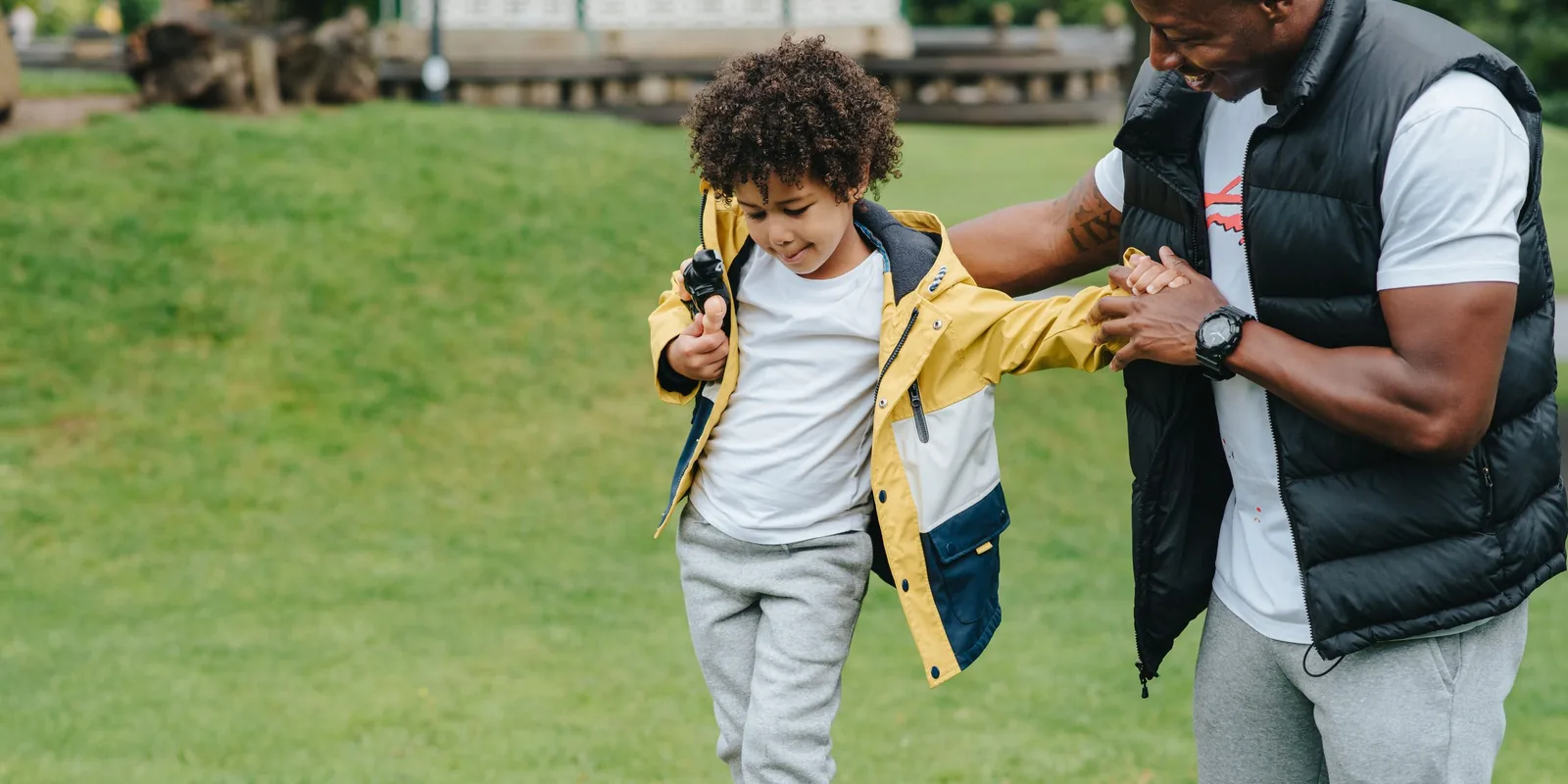
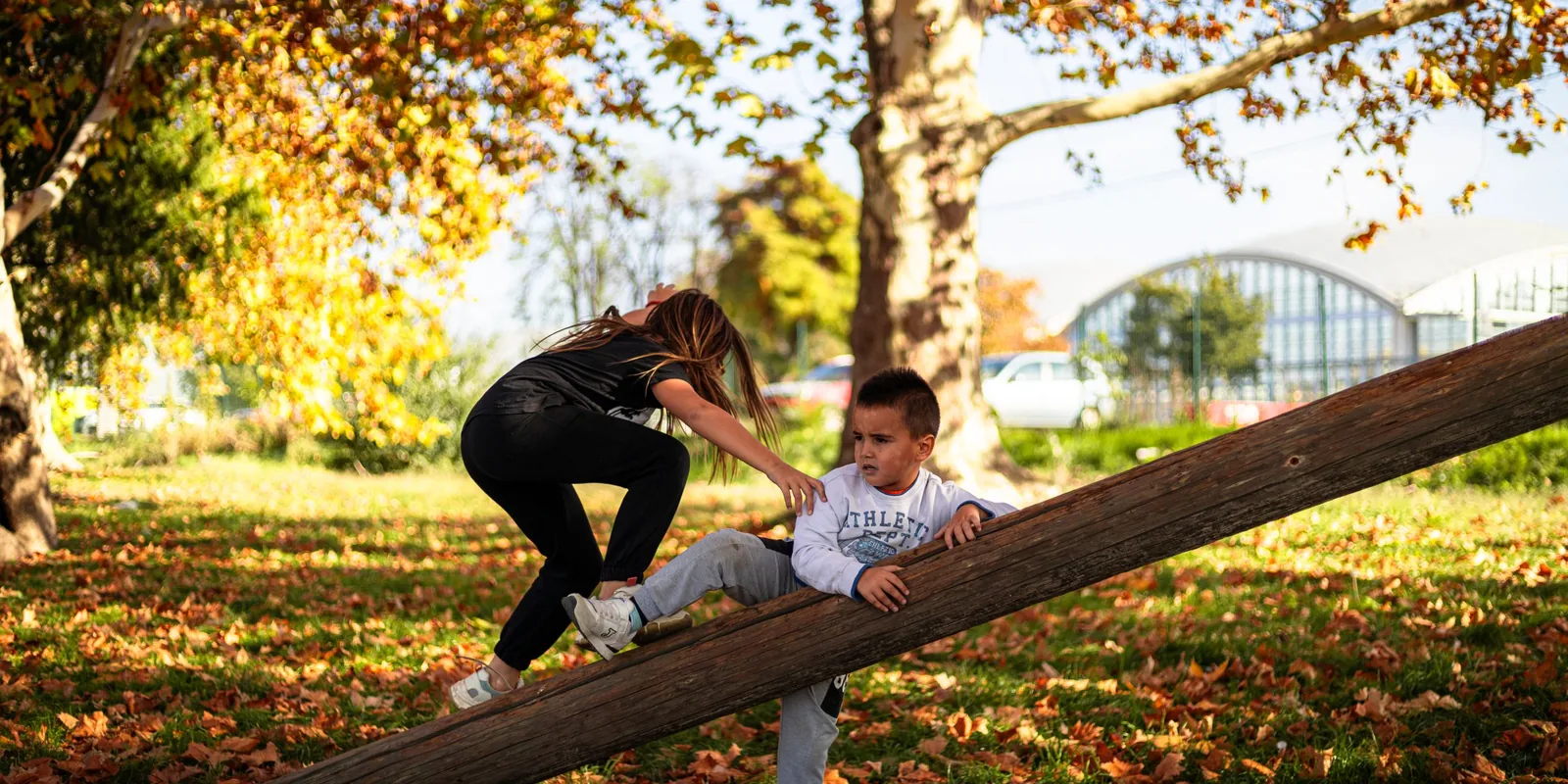
You need three or more: brothers, sisters, cousins, you. Whoever's "it" tags someone, and that player freezes with legs apart until a free player crawls through to rescue them. It's a playground game, so they'll already know it, and they'll take great pleasure in teaching you their school's rules. With a friend round, it works as one of our play date ideas too.
7. Hop the alphabet
Chalk letters on the patio, or letters on paper taped to the hall floor, spread out. Call a short word and they hop from letter to letter to spell it: c, a, t. Then dog, then their own name. Two feet for the vowels if hopping gets tiring. It's spelling with your legs.
8. The make 10 relay
Take the picture cards and tens out of a pack and lay the rest face down at the far end of the hall. They run, turn over two, and if the pair makes 10 they bring it back. If not, both go face down again. Year 1 maths covers number bonds within 20, so try making 20 with three cards next.
9. Invent a game
A soft ball, three shoes for markers and a kitchen timer. They make up three rules, write them down and teach you. Then you break a rule, on purpose, and they have to referee. Six-year-olds take rules very seriously, especially other people's, and inventing them is even better.
10. A four-move dance
They make up four moves, give each one a name ("the windmill", "the frozen robot"), and put them in an order to repeat to a favourite song. Key Stage 1 PE includes dances using simple movement patterns. Then they teach it to the whole family, and nobody's allowed to skip a move.
They can tell a story and build it. Key Stage 1 design and technology asks children to build structures, exploring how they can be made stronger, stiffer and more stable.
11. A comic book
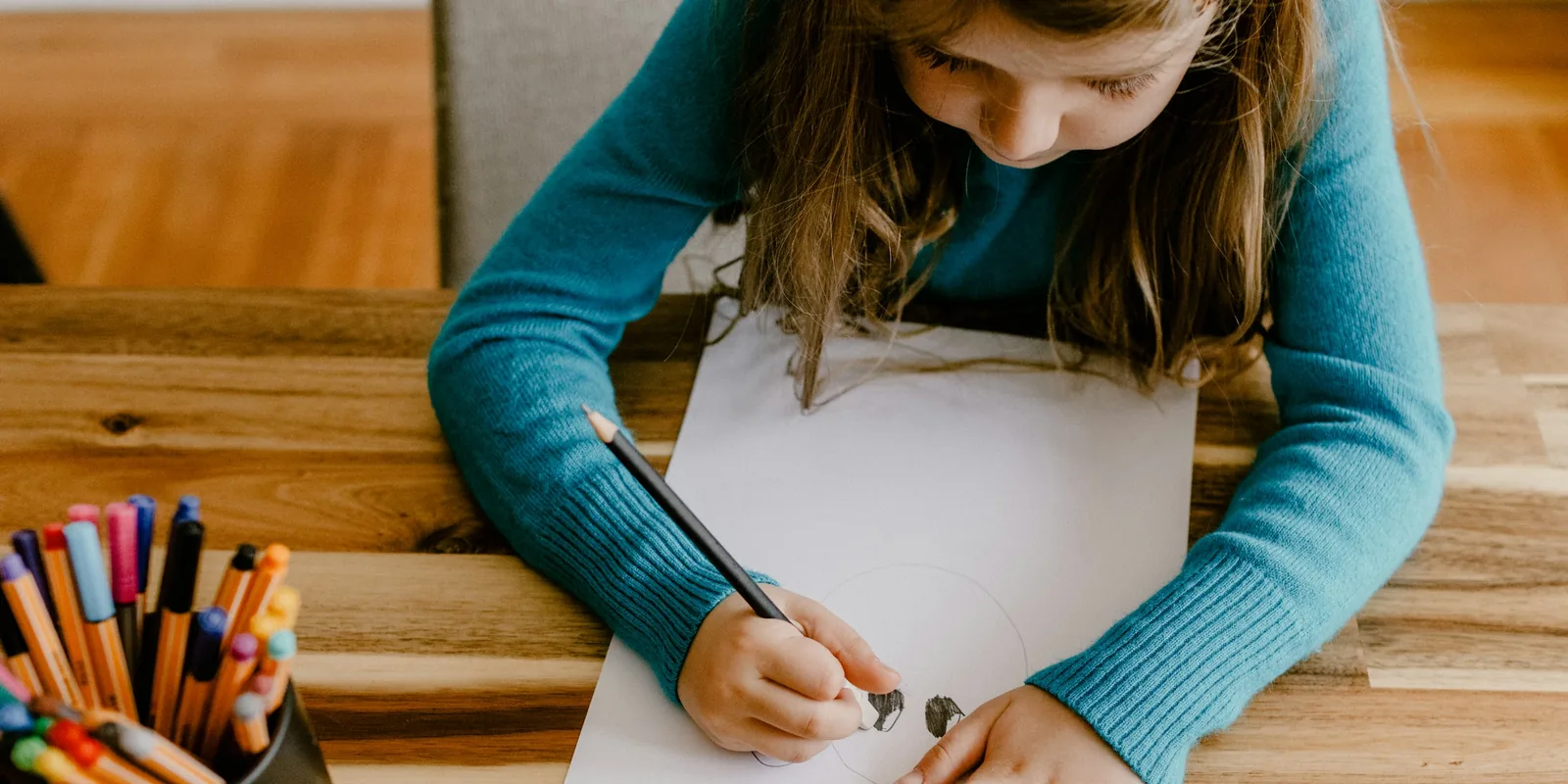
Fold two sheets of paper into a booklet and draw six boxes. One story, a hero, a problem, an ending. They draw over a weekend, with speech bubbles in their own spelling. It's the story-in-sentences skill with pictures to hold it up, and they'll want to read it to you.
12. A marble run up the door
Kitchen-roll tubes and masking tape on a cupboard door or the fridge. Test it with a marble or a dried pea, find where it falls out, fix the leak, and add a tube a day. A run that grows all week is far more satisfying than one that's finished in an afternoon. If there's a toddler in the house, keep the marbles out of reach.
13. The bridge test
A sheet of paper laid between two books makes a bridge. How many coins can it hold before it sags? Now fold the same paper into a zigzag and try again. They'll be amazed, and they'll want to test a straw bridge, a card bridge and a lolly-stick bridge next.
14. A bean in a jar
Line a clear jar with damp kitchen roll, push a broad bean between the paper and the glass, and stand it on the windowsill. They draw it every two days: root, then shoot, then leaves. Year 2 science asks children to watch how seeds grow into plants, so this suits the older sixes especially.
15. The Sunday show
Turn the comic book into a short play, or the four-move dance into a finale. Rehearse through the week and perform on Sunday afternoon, with tickets they've written and a programme on folded paper. Grandparents make an excellent audience, and a phone call counts if they live far away.
Three ways to string them together
After school, twenty minutes
The make 10 relay (7 minutes) to shake off the school day, follow the numbers (8) to slow down, then story time for the teddies (5) to finish sitting still. That's 20 minutes, moving first and quiet last.
A rainy Saturday
A clue trail after breakfast, the marble run after lunch, and hop the alphabet in the hallway when they need to burn off energy. Our rainy day activities for kids have more for the in-between hours.
A week of half term
Plant the bean on Monday and post the letter the same afternoon. Start the comic book midweek, rehearse the show from Wednesday, and perform it on Friday. Half-term dates vary by area, so check your school's.
Which ones can a six-year-old run on their own?
Several, once you've set them up. The clue trail, story time for the teddies, follow the numbers and the sticky-note house each fill about ten minutes without you, and the make 10 relay works alone once they know the rules. The rest work best with you nearby, a second player or a few days to finish, and every one uses things already in the house.
Sorted by how much of you they need:
- On their own, about ten minutes: the clue trail, story time for the teddies, follow the numbers, sticky-note house.
- With you, or a brother or sister: stuck in the mud, invent a game, post a letter, the bridge test.
- For burning off energy: hop the alphabet, the make 10 relay, a four-move dance.
- Over several days: the comic book, the marble run, the bean in a jar, the Sunday show.
If they say there's nothing to do, hand them a start rather than a menu: leave the first clue of a trail on their pillow, or put the sticky notes and a pen on the kitchen table and walk away. For more, there are screen-free activities for every age from 3 to 8, and a child who's nearly seven may be ready for our activities for 7 year olds.
Frequently asked questions
What should a 6 year old be able to do?
Think of it as what school is teaching rather than a checklist. In England, Year 1 teaches children to read books aloud using their phonics, count to 100 and use number bonds within 20. The American Academy of Pediatrics says many six-year-olds can balance on one foot, hop, skip and tell a story in full sentences. Children get there at different speeds, and their teacher is the best person to ask.
How long should a 6 year old play on their own?
There's no official guideline, from the NHS or anyone else. Start with ten minutes on something they can run themselves, such as the clue trail, follow the numbers or the make 10 relay, while you're in the next room. Let it grow from there. Some six-year-olds manage half an hour on a project; others want company after five minutes.
What are good educational activities for 6 year olds at home?
The ones that don't feel like homework. A clue trail is reading practice, the make 10 relay is number bonds, hop the alphabet is spelling, and the bridge test is the kind of building Key Stage 1 does in design and technology. None needs a worksheet, and every one in this list can be done with things already in the house.
Can a 6 year old read instructions on their own?
Short ones, if the words match the phonics they've been taught. In June of Year 1, children in England take the phonics screening check, reading 40 words aloud to a teacher. So keep written clues and rules to a few short words they can sound out, add a little picture, and stay close by for the odd word that trips them up.
Fifteen numbers a six-year-old can follow
For one activity they can start, run and finish on their own, the Yogi-Me range fits the bill: fifteen poses, each numbered and laser-engraved, on a full-length 183 x 61 cm mat for ages 3 to 8, with room to spare at eight. A mat is £34.99 with free delivery in the UK, and two or more save 10 per cent. If it's for a present, our guide to gifts for 6 year olds has more ideas.
Sources
- GOV.UK: The national curriculum, key stages
- GOV.UK: The national curriculum, key stage 1 and 2
- American Academy of Pediatrics (HealthyChildren.org): Your checkup checklist, 6 years old
- NHS: Physical activity guidelines for children and young people
- Department for Education: English programmes of study
- Department for Education: Mathematics programmes of study
- Department for Education: Physical education programmes of study
- Department for Education: Design and technology programmes of study
- Department for Education: Science programmes of study