guides
Activities for 5 Year Olds: 30 Ideas Sorted by Skill
30 activities for 5 year olds at home, sorted by the skill each one practises: balance, ball skills, counting, making and talking. No screen needed.
The best activities for 5 year olds practise something they're learning at school anyway: balancing, throwing and catching, counting, making things and talking. Below are 30 ideas, six for each of those five skills, and almost all of them use things you already have at home.
Pick the skill your child is keen on, or the one they're wobbly at, and start anywhere. These are fun activities for 5 year olds first and practice second. They work just as well for grandparents and childminders, and nothing needs a screen.
How do you choose activities for 5 year olds?
Choose by skill, not by age. A five-year-old in England is in Reception or Year 1, and the Department for Education's Development Matters guidance sets out what Reception children are learning: hopping and skipping, ball skills, counting beyond 10, using tools such as scissors, and retelling stories.
Every idea below practises one of those. Development Matters is non-statutory guidance for early years settings, not a test, so treat it as a menu.
What activities help a 5 year old with balance and movement?
Hopping, skipping, crawling and holding still are all skills a five-year-old is still polishing. Development Matters says Reception children are refining movements such as rolling, crawling, jumping, hopping, skipping and climbing, and building the strength, balance and coordination they'll later use in PE, dance and swimming.
1. Hopscotch
Hopscotch is a numbered grid of squares you hop and jump along. Chalk one on the pavement, or use masking tape on the hallway floor. Throw a sock into a square and hop over it.
2. The tightrope
Lay a skipping rope along the floor and walk it heel to toe, arms out like a tightrope walker. Then try it backwards, then on tiptoes. A low wall, holding your hand, is the advanced level.
3. Animal walks
Cross the room as a bear (hands and feet, bottom up), a crab (tummy up) and a frog (squat and jump). Then your child chooses the animal for you. Crawling, jumping and plenty of giggling.
4. Roll a pose
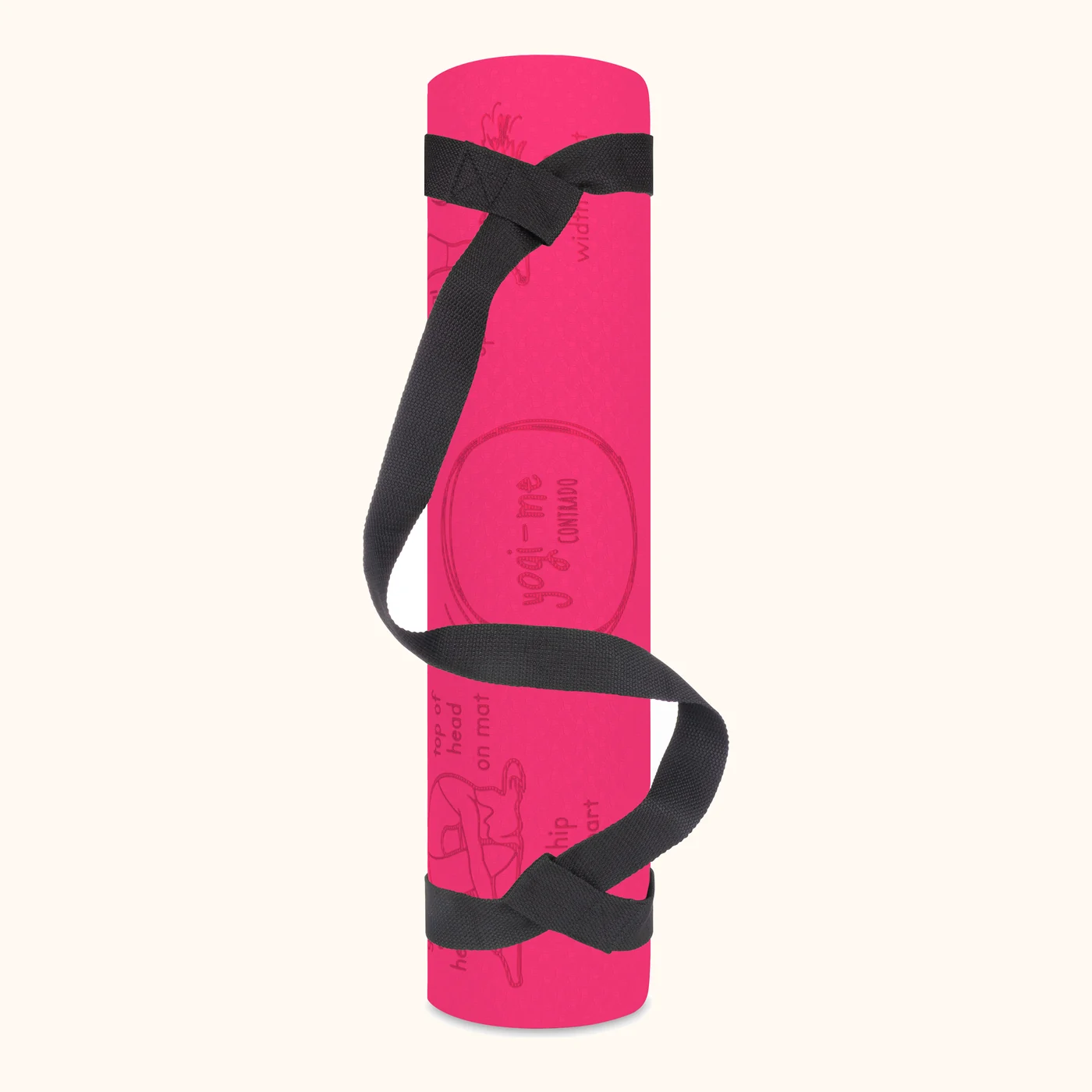
Give six poses a number each, roll a die and do the pose that comes up, holding still for a count of five. Development Matters suggests encouraging children to finish movements in balance and stillness. Our Sun Salutation design is a full-length mat with fifteen poses numbered on it, 1 to 15, so your child can roll, find that number on the mat and copy the pose with nothing to set up.
5. Skipping practice
Start without a rope, skipping along the hallway. Then wiggle a rope along the ground like a snake for them to jump over, before they try turning it. The NHS includes skipping in its examples of moderate activity for children aged 5 to 18.
6. Garden races
Race to the fence and back, then hop it, then run it backwards. Development Matters encourages getting children highly active and out of breath several times a day. Indoors, race to touch every door.
For more ideas like these, see our guide to gross motor skills activities.
What throwing and catching games suit a 5 year old?
Ball skills are part of Reception. Development Matters lists throwing, catching, kicking, passing, batting and aiming, and suggests starting with soft, slow balls made from socks or paper bags. That means you can practise indoors without breaking anything, then move on to a real ball outside.
7. Sock-ball basket
Roll pairs of socks into balls and throw them into a laundry basket. Take a step back after every three that go in. Development Matters suggests sock balls because they're softer and slower than real ones.
8. Five bean bags, one hoop
Put a hoop or a cushion on the floor and throw five bean bags at it. Then ask, "How many went in? How many didn't?" Development Matters gives this exact game, so it's counting practice too.
9. Balloon keepy-uppy
Keep a balloon off the floor using hands, then heads, then elbows, counting the taps out loud. Development Matters lists balloons among the balls to introduce, and a balloon falls slowly enough to chase. Stay close, and pick up any pieces straight away if one pops.
10. Paper-plate tennis
Tape a paper plate to a wooden spoon to make a bat, and pat a balloon back and forth between you. Development Matters suggests giving children things to bat and pat with, and plenty of time to practise.
11. Bottle skittles
Line up six empty plastic bottles at the end of the hallway and roll a ball at them. Count how many fall, then stand them back up. A little water in each stops them toppling too easily.
12. Pass it back
Kick a soft ball back and forth, then make a goal between two shoes and take turns shooting. Development Matters names kicking and passing among the ball skills Reception children are refining.
Looking for a present that feeds these skills? Our Christmas gifts for 5 year olds are sorted the same way, and there are more presents that keep them moving for ages 3 to 8.
What counting games can you play with a 5 year old?
Five-year-olds will count anything if you give them a reason. Development Matters says Reception children are learning to count beyond 10, spot small quantities without counting, compare numbers, and know the number bonds to 5 by heart. Number bonds are the pairs that make a number, such as 2 and 3 making 5.
13. Hide and seek, counting to 30
Your child counts while you hide, and you help them past 20. Development Matters suggests pausing at each ten, so 10, 20 and 30 stand out. Next round, you count and they hide.
14. Dot snap
Make cards where some show numerals and some show dots, then play snap or pairs, matching 4 with four dots. Development Matters suggests exactly this mix of numerals and dot patterns.
15. How many in the tent?
Put six toys into a box or a den, then bring three out. "How many are still in there?" Guess, then look. Development Matters gives this hiding game for learning how numbers split and join.
16. Fair shares
Give your child a bowl of cereal hoops and three cups, and ask for three in each. Then deal some yourself and make a deliberate mistake for them to put right. Development Matters suggests both.
17. Quick look
Lay out a few buttons, show them for two seconds, then cover them with a tea towel. "How many did you see?" Development Matters suggests quick reveal-and-hide games like this one.
18. Which holds more?
At bath time, give your child a jug, a cup and a yoghurt pot, and ask which holds the most. Guess first, then pour and see. Development Matters suggests this kind of prediction.
What can a 5 year old make and build at home?
Making things is how a five-year-old practises using tools and shapes. Development Matters says Reception children are learning to use scissors, paintbrushes, knives, forks and spoons competently and safely, to see that shapes can be made from other shapes, and to copy and create repeating patterns.
19. Copy my tower
Build a small tower from blocks or tins, and challenge your child to copy it exactly. Then raise the stakes: "I bet you can't add an arch." Development Matters suggests copying challenges with blocks, and that very line about the arch.
20. Shape pictures
Cut paper squares in half, corner to corner, and ask your child what they can build from the triangles: a house, a boat, a rocket. Development Matters suggests showing that two triangles make a square.
21. Shape printing
Dip the bottoms of cups, blocks and cotton reels in paint and print them onto paper. "What shape does the cup make?" Development Matters suggests printing to find flat shapes inside solid ones.
22. A den
Drape a sheet over two chairs, add cushions and a torch, and let your child decide where the door goes. Development Matters lists den-making materials, and suggests quiet time sitting or lying in a den.
23. Snack makers
Let your child spread butter on toast, or slice a banana into coins with a table knife, while you stay close. Development Matters lists knives, forks and spoons among the tools Reception children learn to use safely.
24. Pasta necklaces
Colour dry tube pasta with felt tips and thread it onto string in a pattern: red, red, blue, then repeat. Development Matters suggests patterns with rules, up to longer ones like red, blue, blue, green.
What talking and listening games work for a 5 year old?
Talking games need nothing at all, which makes them ideal for car journeys and waiting rooms. Development Matters says Reception children are learning to listen carefully, retell stories, describe what they see and hear outside, learn rhymes and songs, and talk about their family and about music.
25. You tell it
Pick a story your child knows well and ask them to tell it to you, turning the pages themselves. Development Matters says Reception children retell familiar stories, some word for word and some in their own words.
26. I Spy with sounds
Play I Spy with letter sounds rather than letter names: "something beginning with sss". Development Matters says Reception children are learning the sounds for letters, and Best Start in Life suggests I Spy with letters as a screen swap.
27. A wonder walk
On a walk, take turns describing one thing you can see, one you can hear and one you can feel. Development Matters says Reception children are learning to describe these, and to notice the seasons changing.
28. The old photo box
Get out old photographs and talk about who's in them and what was happening. Development Matters says Reception children are learning to talk about family and comment on pictures from the past. Grandparents are the experts here.
29. Learn a rhyme by heart
Choose a short poem or nursery rhyme and learn it together over a week, a line a day. Development Matters says Reception children are learning rhymes, poems and songs, and listening to how they sound.
30. Dance and tell
Put on a song and dance, then ask, "Which bit was loudest? How did that song make you feel?" Development Matters says Reception children are learning to move to music and talk about it.
Which skill does each activity practise?
Match the idea to what your child is working on. Almost all of them use things you already have at home. A few need a skipping rope, a die, chalk, bean bags or a balloon.
- Balance and movement (1 to 6): hopscotch, the tightrope, animal walks, roll a pose, skipping practice, garden races.
- Throwing and catching (7 to 12): sock-ball basket, bean bags and a hoop, balloon keepy-uppy, paper-plate tennis, bottle skittles, pass it back.
- Counting (13 to 18): hide and seek, dot snap, how many in the tent, fair shares, quick look, which holds more.
- Making and building (19 to 24): copy my tower, shape pictures, shape printing, a den, snack makers, pasta necklaces.
- Talking and listening (25 to 30): you tell it, I Spy with sounds, a wonder walk, the old photo box, learn a rhyme, dance and tell.
How do you entertain a 5 year old at home?
String two or three activities from different skills together, and alternate a busy one with a sitting-down one. That's enough to fill an afternoon at home. Three illustrative examples, using only the ideas above:
An illustrative after-school hour. Garden races while tea cooks, fair shares with cereal hoops at the table, then you tell it before the bath.
An illustrative rainy Saturday. Animal walks after breakfast, a den mid-morning with the old photo box inside it, then paper-plate tennis and bottle skittles after lunch.
An illustrative visit to Grandma's. A wonder walk to the shops, I Spy with sounds on the way back, then roll a pose on the living room floor.
With a four-year-old in the house too, our activities for 4 year olds are sorted by mood, and many work for both. For the whole age range, see our screen-free activities for 3 to 8 year-olds.
What to do when a 5 year old is bored?
Offer two choices from different sections rather than a long list, then start one yourself. Plenty of five-year-olds would rather join in than be organised. If they still aren't interested, leave the socks and the basket out for later.
Some children hate being watched while they try something new. Do it badly yourself first: a grown-up wobbling on the tightrope takes the pressure off.
If it's a screen they're after, that's normal. The government's Best Start in Life guidance for children aged 2 to 5 suggests trying to keep screen time to 1 hour a day, less if possible, so the aim is balance rather than a ban.
Frequently asked questions
Which activity is best for a 5 year old?
The one that practises a skill they're working on. Development Matters says Reception children are learning to hop, skip, throw and catch, count beyond 10, use tools such as scissors, and retell stories, so pick an activity that matches. If they're wobbly at one, start there, and keep it playful.
What do 5 year olds like playing with?
Things they can move, build and pretend with. Development Matters suggests giving Reception children den-making materials, soft balls, balloons, building blocks and things to bat with, most of which you already have at home as sheets, socks, tins and paper plates.
What are fun activities for 5 year olds that need no equipment?
The talking games need nothing at all. I Spy with sounds, retelling a favourite story and learning a rhyme by heart all work in a car or a waiting room, and a wonder walk needs only a walk. Animal walks and hide and seek need nothing but floor space.
How much exercise does a 5 year old need?
The NHS says children aged 5 to 18 should do an average of at least 60 minutes of moderate or vigorous activity a day across the week, and break up long spells of sitting. Garden races, skipping, animal walks and hopscotch from the list above all count towards it.
A mat for the moving ones
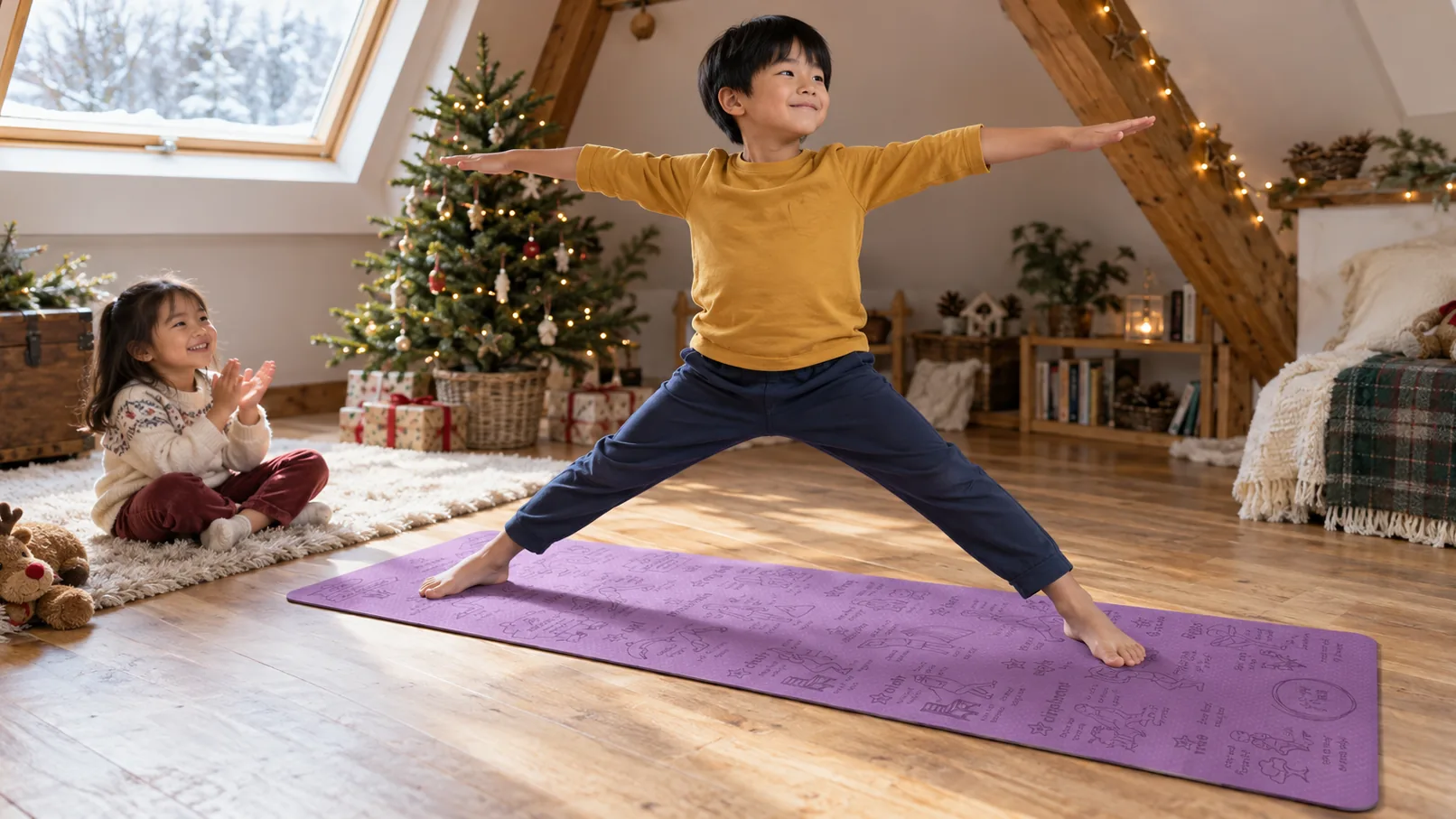
Roll a pose and animal walks work on any rug, but a mat gives a five-year-old a space of their own to hold still on. Our Sun Salutation design has 15 numbered poses laser-engraved into the surface, so a five-year-old can start at 1 and work through to 15 on their own, with nothing to set up and no screen to follow. So on a rainy January Saturday, using it is just a matter of rolling it out. If it becomes a favourite, our guide to kids' yoga at home shows where to go next.
It's designed for ages 3 to 8, so five is right in the middle. At 183 x 61 cm it's full length on purpose: there's room to stretch out at five and still at eight, and a grown-up can join in. Buying as a grandparent? That means you can have a go at the poses too, and it rolls up with a carry strap, so it can live at yours or travel between houses.
It's 6 mm thick and made from non-toxic, PVC-free TPE, according to our supplier's specification. Lay it on a dry, flat floor. To clean it, wipe with a damp cloth and a little mild soap, then let it dry flat.
Got a four-year-old in the house as well? Two or more mats are 10 per cent off. As Becks, a yoga teacher and verified buyer, put it: "I just made the mistake of buying one, instead of two."
Want a present that gets used after Boxing Day? Pick a colour from our kids' yoga mats and play roll a pose on Christmas afternoon. Sun Salutation comes in seven colours, and Freedom Flow, with floor poses, suits a child who'd rather settle than move. Every mat is £34.99 with free UK delivery and 30-day returns, and anything bought from 1 November can be returned up to 31 January.
Sources
- Department for Education: Development Matters, non-statutory curriculum guidance for the early years foundation stage (updated 4 September 2023)
- NHS: Physical activity guidelines for children and young people, 5 to 18 years (reviewed 23 October 2024)
- Best Start in Life: Screen time guidance for under 5s