guides
What Are Gross Motor Skills? Examples and Milestones by Age
Gross motor skills explained: everyday examples, how they differ from fine motor skills, and the milestones England's guidance describes from birth to 8.
Gross motor skills are the big, whole-body movements a child makes with their arms, legs and core: rolling, crawling, walking, running, jumping, climbing, balancing, kicking and catching. The Department for Education describes them simply as "the skills that children develop using their whole body". They build in a rough order, from tummy time to skipping, and every child gets there at their own pace.
You've probably met the phrase on a nursery report or in a health visitor's questions and wondered whether it's something to watch. This guide is the plain version: what counts, what England's guidance expects at each age from birth to 8, and when it's worth a word with someone.
What are gross motor skills?
Gross motor skills are movements that use the large muscles of the body to move, balance and handle big objects. They include crawling, walking, running, jumping, hopping, climbing, throwing and kicking. In England's early years framework, physical development has two early learning goals: one for these whole-body movements and one for fine motor skills.
The Department for Education's Development Matters guidance says adults can support children "to develop their core strength, stability, balance, spatial awareness, coordination and agility". Those six qualities are a useful checklist of what sits underneath every jump and climb.
The same guidance makes a bigger claim for them: "Gross motor skills provide the foundation for developing healthy bodies and social and emotional well-being." The Department for Education's advice to early years providers adds that children aged 1 to 4 should be physically active for at least three hours a day.
What are examples of gross motor skills?
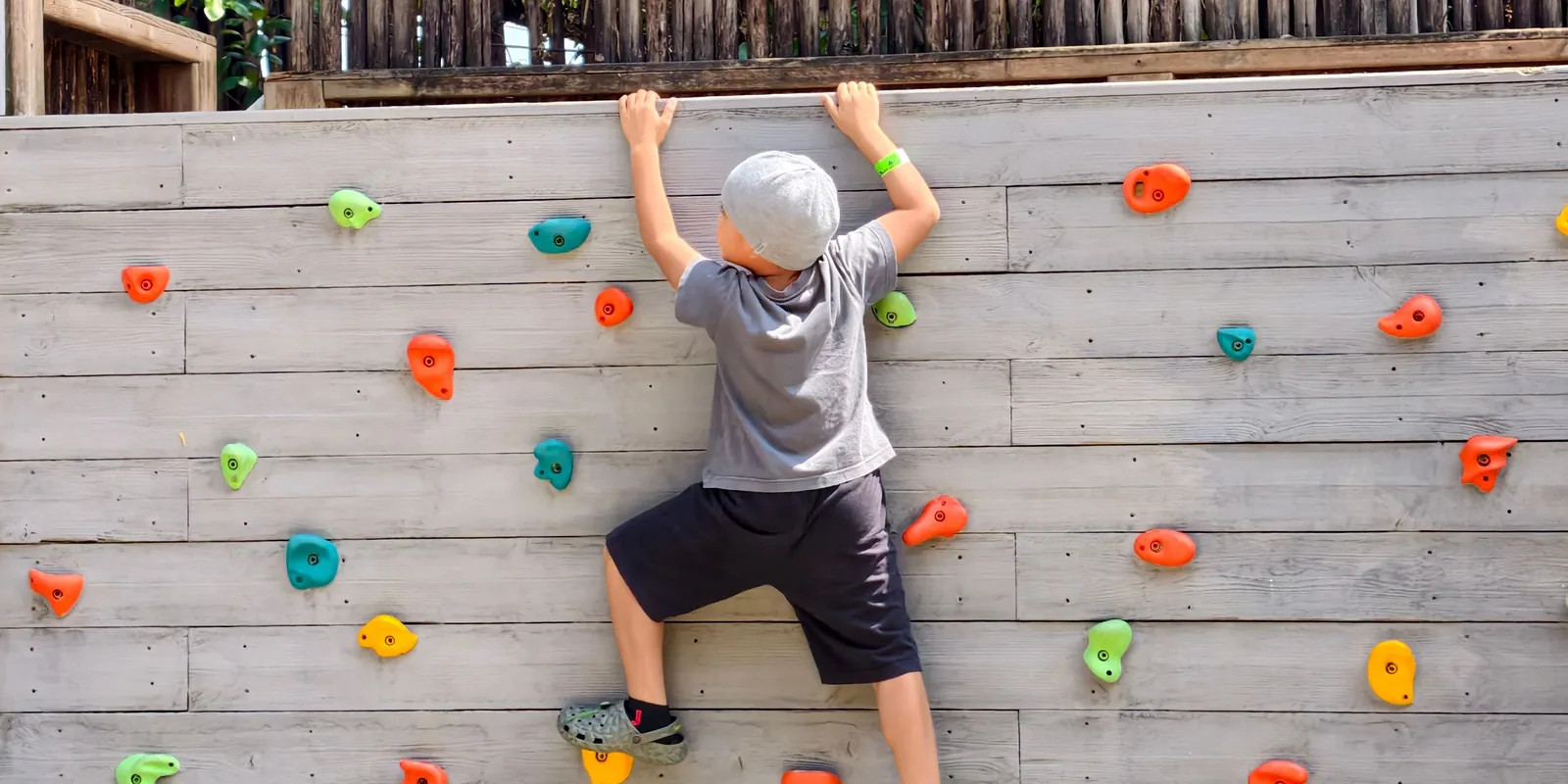
Everyday examples of gross motor skills are rolling over, sitting up, crawling, walking, running, jumping with both feet, climbing stairs, hopping, skipping, standing on one leg, riding a tricycle or scooter, and throwing, kicking or catching a ball. They fall into three loose groups: moving about, balancing, and controlling a ball.
- Moving about. Rolling, crawling, walking, running, jumping, hopping, skipping, galloping and climbing.
- Balancing and holding still. Sitting without support, standing on one leg, holding a pose in musical statues, walking along a low wall.
- Using a ball or a big object. Kicking, throwing, catching, pushing a pram, pulling a cart, carrying a big box.
Riding a scooter, trike or balance bike counts too. Development Matters lists riding scooters, trikes and bikes among the movement skills 3 and 4-year-olds are working on.
What are the 5 gross motor skills?
There's no official list of five, or seven, gross motor skills. Numbered lists online are someone's way of grouping them, not England's early years guidance. The nearest official answer is the early learning goal in England's early years framework, which names running, jumping, dancing, hopping, skipping and climbing, alongside strength, balance and coordination.
That goal sits in the government's statutory framework for the early years foundation stage. By the end of reception, children at the expected level will:
- negotiate space and obstacles safely, with consideration for themselves and others
- demonstrate strength, balance and coordination when playing
- move energetically, such as running, jumping, dancing, hopping, skipping and climbing
Development Matters gives a slightly longer list of "fundamental movement skills" for reception children to revise and refine: rolling, crawling, walking, jumping, running, hopping, skipping and climbing. That's eight, and the guidance offers them as examples, not a fixed set. If you need a number, it's the nearest thing to an official one.
What is the difference between fine and gross motor skills?
Gross motor skills use the big muscles of the whole body to move and balance, such as running, climbing and jumping. Fine motor skills use the small muscles of the hands and fingers for precise jobs, such as holding a pencil, using scissors and doing up a zip. Children develop both side by side.
- Muscles used. Gross: the large muscles of the arms, legs, back and tummy. Fine: the small muscles of the hands and fingers.
- Everyday examples. Gross: crawling, running, jumping, climbing, kicking a ball. Fine: picking up small things, using a spoon, doing up buttons and zips.
- By the end of reception. Gross: running, jumping, hopping, skipping and climbing with strength, balance and coordination. Fine: holding a pencil well, and using scissors, paint brushes and cutlery.
- Where they're practised. Gross: the floor, the park, the stairs, the garden. Fine: puzzles, arts and crafts, drawing, getting dressed.
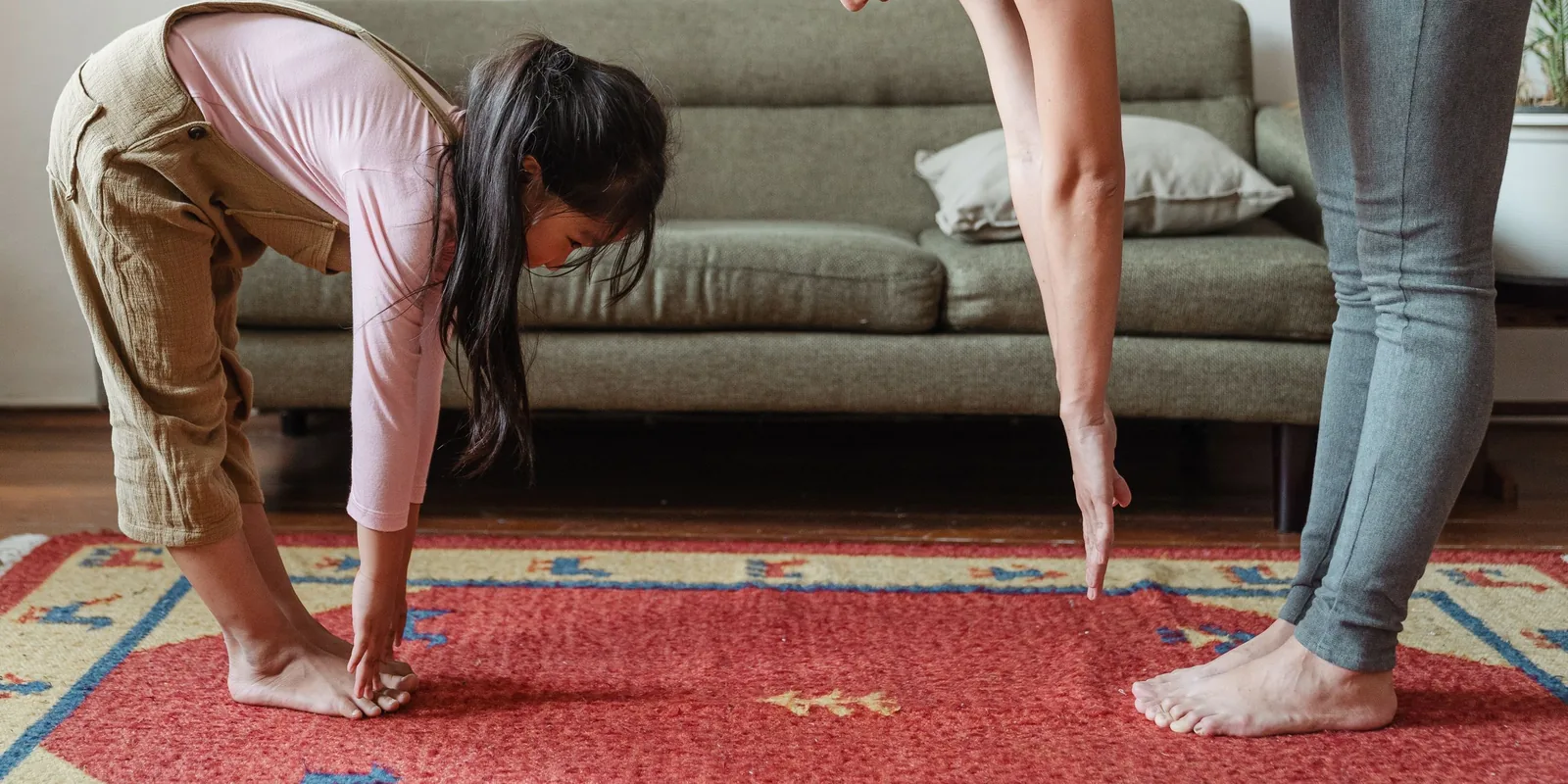
The two are more connected than the names suggest. Development Matters says reception children are learning to "use their core muscle strength to achieve a good posture when sitting at a table or sitting on the floor". Sitting steadily to draw relies on a strong middle.
It also asks early years staff to look out for children who find it hard to sit comfortably on chairs, because they may need help with their core muscles. Its suggestion is more movement, not more sitting: scooting on trikes without pedals and jumping on soft-play equipment.
What gross motor milestones should a child reach by age?
England's guidance gives a sequence, not a deadline. Babies lift their heads, roll, sit and crawl. Around their first birthday, the checkpoint is pulling up to stand. Around two, running well and kicking a ball. Around three, climbing confidently and pedalling a tricycle. At three and four, hopping, skipping and standing on one leg.
Those "around" ages come from the observation checkpoints in Development Matters. They're questions the Department for Education asks early years staff in England to notice, not tests a child passes or fails, and the guidance stresses that every child can make progress with the right support. Our guide to physical development in the EYFS explains how the framework fits together.
Age by age, this is what England's guidance describes:
- Babies. Lifting the head while lying on their front, pushing the chest up with straight arms, rolling front to back then back to front, sitting without support, starting to crawl.
- Around 12 months. Pulling up to stand from sitting, and sitting back down.
- Around 2. Running well, kicking a ball, jumping with both feet off the ground at the same time.
- Around 3. Climbing confidently, catching a large ball, pedalling a tricycle.
- Ages 3 and 4. Going up stairs using alternate feet, hopping, skipping, standing on one leg and holding a pose, riding scooters, trikes and bikes.
- End of reception, around 5. Moving energetically and safely with strength, balance and coordination: running, jumping, dancing, hopping, skipping, climbing.
- Ages 5 to 7, Years 1 and 2. No milestone chart. The PE curriculum asks schools to teach running, jumping, throwing and catching, with balance, agility and coordination.
- Ages 7 to 8, from Year 3. The PE curriculum moves on to using those skills in different ways and linking them into sequences of movement.
What gross motor skills should a 2 year old have?
Around their second birthday, Development Matters asks whether a toddler can run well, kick a ball and jump with both feet off the ground at the same time. Toddlers are also learning to walk, run, jump and climb, to start using the stairs independently, and to begin kicking, throwing and catching balls.
Expect plenty of wobbles. The NHS notes that children vary widely in their rate of development, so treat the checkpoints as things to notice, not a pass mark.
What gross motor skills should a 3 year old have?
Around their third birthday, Development Matters asks whether a child can climb confidently, catch a large ball and pedal a tricycle. Through ages 3 and 4, they're learning to go up stairs using alternate feet, to hop and skip, and to stand on one leg and hold a pose.
What about children aged 5 to 8?
From age 5, England's guidance stops listing movement milestones by age, and these skills become part of school PE. Development Matters frames reception as the bridge: building the strength, coordination, balance and agility children need for PE, dance, gymnastics, sport and swimming.
Once children start Year 1, there's no milestone chart with ages attached. What changes is the setting. England's national curriculum for PE says pupils in key stage 1 (Years 1 and 2) should be taught to "master basic movements including running, jumping, throwing and catching, as well as developing balance, agility and co-ordination". From Year 3, in key stage 2, they learn to use those skills in different ways and link them into sequences of movement.
Alongside school, the NHS says children aged 5 to 18 should average at least 60 minutes of moderate or vigorous activity a day across the week, and take part in a variety of activities "to develop movement skills, muscles and bones".
What do poor gross motor skills look like?
Movement difficulties can show up as a child finding playground movement much harder than others their age: hopping, jumping, running, catching or kicking a ball, or stairs. They may bump into things and fall over a lot. But the NHS says many children who seem clumsy have normal movement skills for their age.
The NHS describes these signs on its pages about developmental co-ordination disorder (DCD), also called dyspraxia, a condition affecting physical coordination. In young children, it says early milestones such as crawling and walking may be delayed.
Two points from the same pages are worth holding on to. Children vary widely in their rate of development. And because of that, a definite diagnosis of DCD doesn't usually happen until a child is 5 or older. So one late milestone isn't a diagnosis, and the people to ask about it are listed below.
How can you help a child's gross motor skills at home?
The best way to help a child's big movements is to give them time, space and reasons to move, every day. The NHS says toddlers and pre-schoolers need at least 180 minutes of activity a day, spread out, including outdoor play. Climbing, chasing games, dancing and ball games all count, and none of it needs special kit.
The NHS guidelines for under-5s set out what that looks like at each stage:
- Babies. At least 30 minutes of tummy time spread across the day while they're awake, plus reaching, grasping, pushing and pulling during floor play.
- Toddlers aged 1 to 2. At least 180 minutes a day of any intensity, from standing up and rolling to running and jumping.
- Pre-schoolers aged 3 to 4. At least 180 minutes a day, including at least 60 minutes of moderate to vigorous activity.
The NHS adds that children under 5 shouldn't be inactive for long periods, except when they're asleep, and names watching TV and long spells strapped into a buggy as examples.
Three cheap ideas that fit straight onto the milestone list:
- Musical statues. It's the example Development Matters itself gives for standing on one leg and holding a pose.
- A line of masking tape on the floor. Walk it forwards, backwards, then on tiptoes. Balance practice in a hallway.
- Stairs, on purpose. Up with alternate feet, holding the rail and your hand. A skill the guidance lists for 3 and 4-year-olds, practised on the way to bed.
For a fuller set of games, our guide to gross motor activities for kids goes age by age. If your child needs a quick reset between sitting-down jobs, movement breaks of 30 seconds to five minutes use the same big movements. And if a birthday or Christmas is coming up, our list of presents that keep them moving has ideas that aren't another screen.
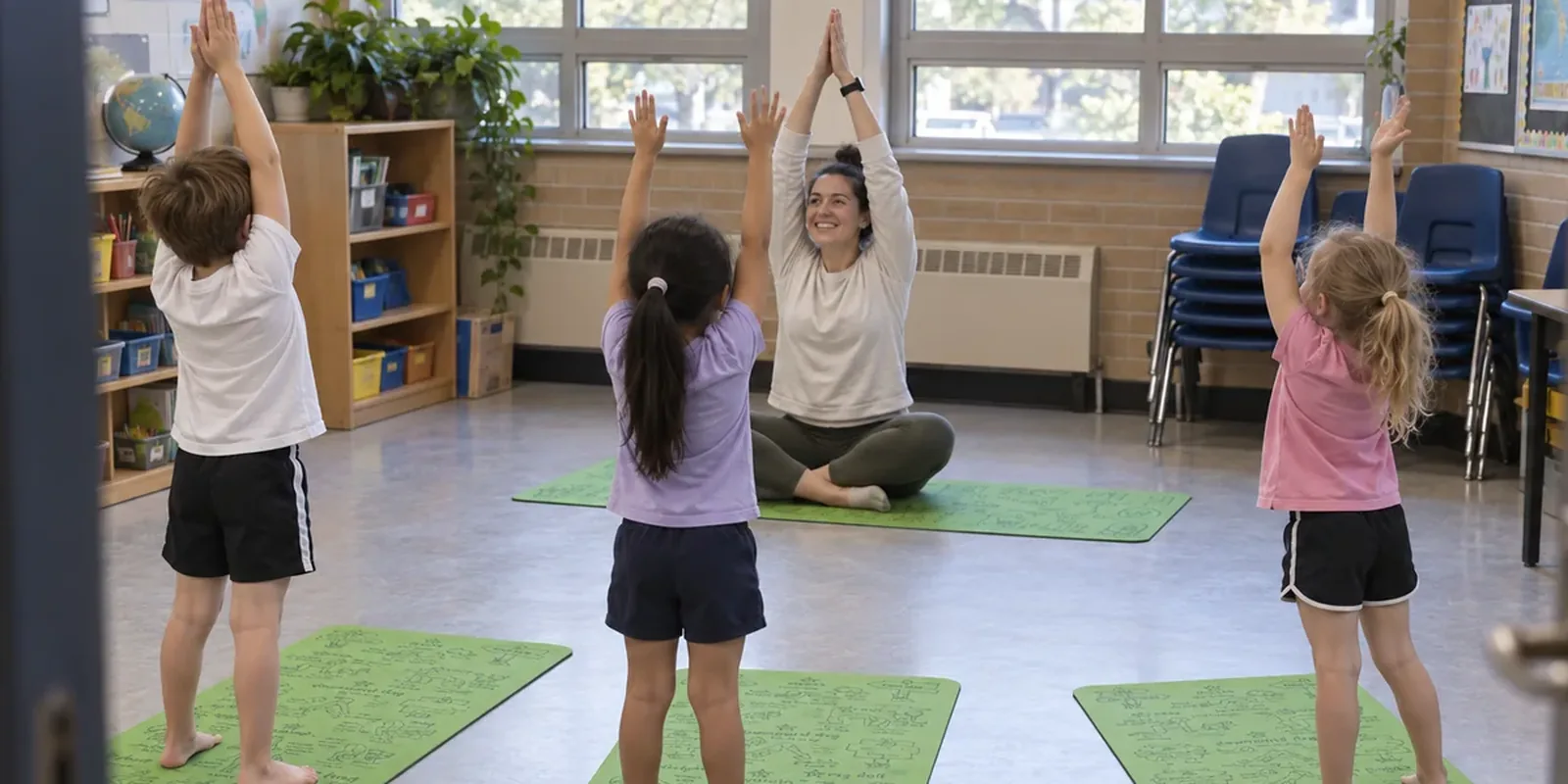
Simple yoga poses fit here too. Development Matters suggests encouraging reception children to "conclude movements in balance and stillness", and a held pose does exactly that. Our guide on how to start yoga with your child covers what's realistic at each age, and our core strength and balance activities guide has ten more games, from bear crawls to tree pose.
Where does a yoga mat fit in?
A yoga mat gives a child a marked-out space to practise balancing and holding a pose, two skills Development Matters lists for 3 and 4-year-olds. It's one option among many. A line of tape, a patch of lawn or the living room carpet will do much of the same job.
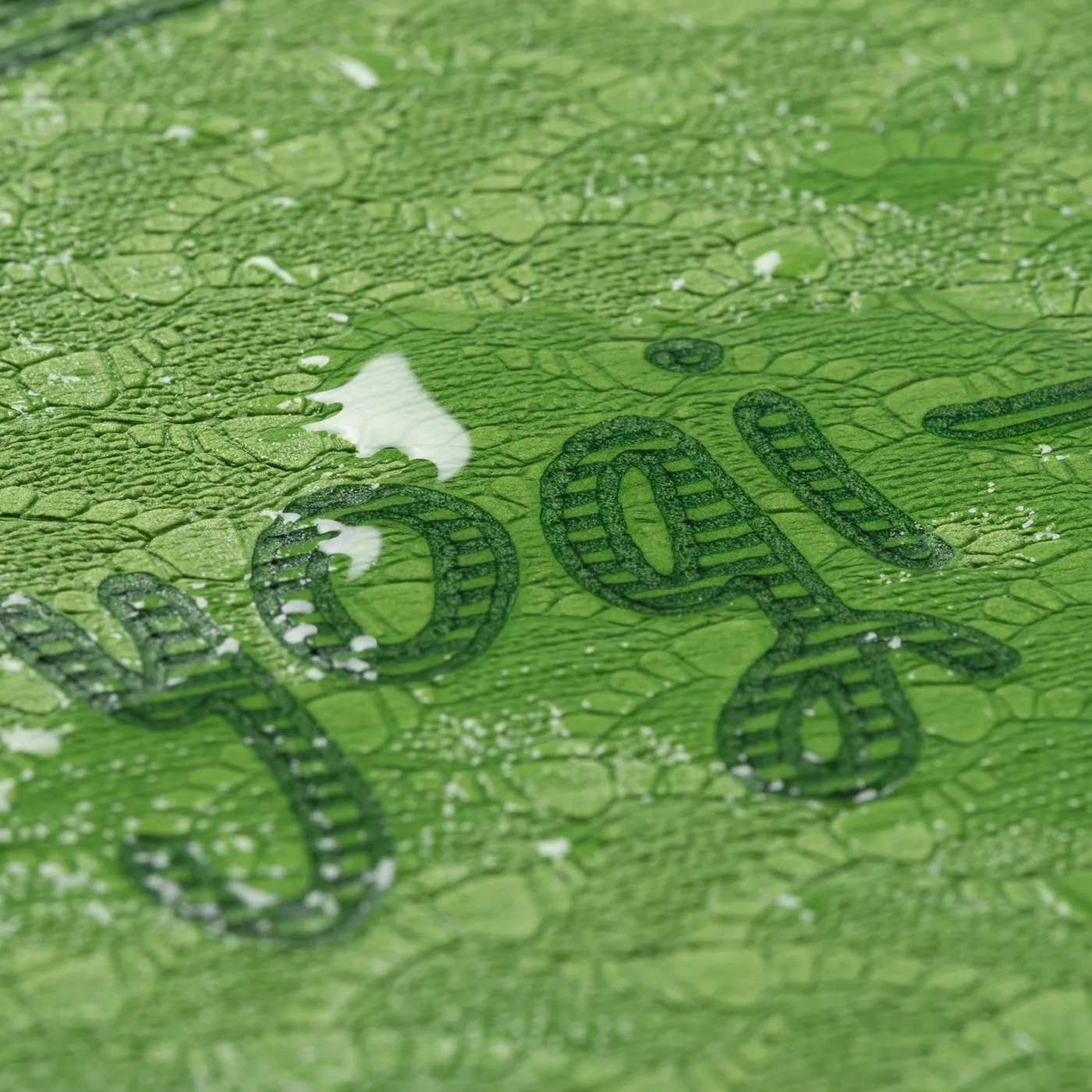
What our mat adds is a prompt. The Sun Salutation mat has 15 numbered poses laser-engraved into the surface, finishing with tree and dancer, two balances on one leg. The numbers mean a five-year-old can work from 1 to 15 on their own, with no screen to follow.
It's made for ages 3 to 8. Younger children copy the animal poses with a little help, older ones lead their own sessions, and under three we'd wait. At 183 x 61 cm it's full length, so a grown-up can join in, and it's non-toxic, PVC-free TPE, according to our supplier's specification.
It won't hurry a milestone, and nothing should promise to. It just makes the practice easier to start.
When is the way a child moves worth checking with a GP?
Speak to your health visitor or GP if you're worried about how your child moves, at any age. You don't need to wait for a check. The NHS review at 2 to 2 and a half years covers movement, but you can raise a concern at any point.
There's an earlier review at 9 to 12 months too. The NHS page on baby and toddler reviews says that if you have any concerns at other times, you can contact a health visitor or GP, or go to your local baby clinic. For school-age children, the NHS dyspraxia pages add a nurse, doctor or special educational needs co-ordinator (SENCO) at school as people to talk to.
Trust your sense of your own child. You know how they usually move better than any chart does.
Frequently asked questions
What are 5 examples of gross motor skills?
Running, jumping, climbing, kicking a ball and standing on one leg are five everyday examples. Others include crawling, hopping, skipping, throwing, catching and riding a tricycle. There's no official list of five; England's early learning goal names running, jumping, dancing, hopping, skipping and climbing.
What are the 7 motor skills?
There's no official list of seven. Numbered lists online are someone's own grouping. England's early years framework splits motor skills into two areas, gross and fine, and Development Matters gives eight fundamental movement skills as examples: rolling, crawling, walking, jumping, running, hopping, skipping and climbing.
What are 5 fine motor skills?
Five everyday fine motor skills are picking up small objects, using a spoon, holding a pencil, cutting with scissors and doing up buttons or zips. By the end of reception, England's early learning goal expects children to hold a pencil well and use small tools such as scissors, paint brushes and cutlery.
What are some examples of poor gross motor skills?
On its pages about developmental co-ordination disorder (dyspraxia), the NHS describes difficulty with hopping, jumping, running, catching or kicking a ball, and stairs, plus bumping into things and falling over a lot. It also says many children who seem clumsy have normal movement skills for their age.
A mat with the balances marked in
If you want a Christmas or birthday present that gets used after Boxing Day, this is fifteen numbered poses on a mat, finishing with the one-leg balances children work on at 3 and 4. Buying as a grandparent? It's full length, so you can try tree pose too.
Choose a colour for their first tree pose. Every mat is £34.99, with free UK delivery and 30-day returns.
Sources
- Department for Education, Help for early years providers - Gross motor skills
- Department for Education - Development Matters, updated 4 September 2023
- Department for Education - Early years foundation stage statutory framework
- Department for Education - National curriculum in England: physical education programmes of study, published 11 September 2013
- NHS - Physical activity guidelines for children (under 5 years)
- NHS - Physical activity guidelines for children and young people, reviewed 23 October 2024
- NHS - Baby and toddler health and development reviews, reviewed 30 November 2023
- NHS - Developmental co-ordination disorder (dyspraxia) in children, reviewed 8 March 2023
- NHS - Symptoms of developmental co-ordination disorder (dyspraxia) in children, reviewed 8 March 2023