guides
Co-Regulation: How Your Calm Helps Your Child Calm Down
What co-regulation is, how it differs from self-regulation, and simple ways to lend your child your calm when big feelings hit. NHS guidance, ages 3 to 8.
Co-regulation is when a calm, caring adult helps a child manage a feeling that's too big for them to handle alone, by staying close, soothing them and keeping their own voice and body steady. It's how young children learn to calm themselves later. Self-regulation is the skill. Co-regulation is how it gets taught.
The caveat: it doesn't mean staying perfectly serene, and it doesn't mean giving in. It means your child borrows your calm until they've built enough of their own. That takes years, and it's meant to.
What is co-regulation?
Co-regulation is the support a caring adult gives a child to manage their emotions, through comforting actions such as a cuddle, or by suggesting a way to calm down. Humber Teaching NHS Foundation Trust's co-regulation page calls it an important concept in child development, especially for children under five.
The trust's guide for parents adds that this support is important for children to learn to control their own emotions, and puts the parent's part in one line: "To support your child to be calm, you need to be calm."
The Department for Education describes the same idea without using the word. Its Development Matters guidance says babies and toddlers are learning to "find ways to calm themselves, through being calmed and comforted by their key person". At home, that key person is you.
Repetition is what turns it into a skill. A Resilience Project activity sheet hosted by Mentally Healthy Schools says repeated experiences of adults helping a child regulate their emotions "enable the child to begin to develop skills in regulating their own emotions".
Co-regulation vs self-regulation: what's the difference?
Co-regulation is calming down with help. Self-regulation is calming down on your own. Children move from one to the other gradually, not on a birthday. The Resilience Project sheet says that by primary school age children are typically beginning to regulate their own emotions, and that children who have had fewer chances to practise this with an adult will likely need help for longer.
Side by side:
- Who does the calming. With help: you and your child, together. On their own: your child, mostly alone.
- What it looks like. With help: a cuddle, a low and slow voice, breathing together. On their own: noticing a big feeling and choosing something that helps.
- When it leads. With help: especially under five, and in any big moment after that. On their own: beginning around primary school age and growing for years.
- Your part. Stay close and steady in the moment. Practise on calm days, then step back bit by bit.
The Humber guide breaks the journey into six stages, from "I am aware that I can be in different states" to "I can regulate myself more of the time". The same guide says that for most people, self-regulation isn't fully developed until their mid-twenties.
Development Matters says self-regulation includes regulating strong feelings, being patient for what they want and bouncing back when things get difficult. Your help is the scaffolding that gets a child there.
What do the NHS and the DfE advise on calming a child?
Put together, NHS and Department for Education guidance comes down to three things: stay calm yourself, soothe and name the feeling before you reason, and model the calming you want your child to learn. None of it asks you to be perfect. It asks you to go first.
NHS Best Start in Life. The page on toddlers' emotions explains that when toddlers are upset, "the emotional parts of their brain take over", so they find it hard to take in new information. It asks parents to try to be calm themselves, take some deep breaths and remember their toddler "isn't just being naughty". Then come the 3 Rs:
- Regulate: soothe your child, remind them they're OK and name the feeling.
- Relate: once they're a little calmer, comfort them so they know you're still there.
- Reason: when they're calm, talk about what happened and what's OK next time.
NHS advice on tantrums. The temper tantrums page says losing your temper or shouting back will not end a tantrum, and to concentrate on staying calm.
Development Matters. The DfE guidance suggests helping toddlers with tantrums "by being calm and reassuring". For 3 and 4 year-olds, it suggests you "model ways that you calm yourself down, such as stopping and taking a few deep breaths", because this can help children learn ways to calm themselves.
What does co-regulation feel like?
Co-regulation should feel slow and close. For your child, it's someone steady staying with them while the feeling passes, rather than someone trying to fix it. For you, it feels slower and quieter than your instincts want.
The Humber guide's practical advice: a low and slow voice, getting below your child's eye level, modelling deep breathing, and letting them lead on how close you get.
Here's an illustrative example of how the NHS's three steps play out with a four-year-old whose block tower gets knocked down by a sibling just before tea. They're on the floor, screaming.
- Regulate. Kneel so you're lower than them. Say it low and slow: "You're so cross. Your tower fell down." Take one big, slow breath out loud. No questions yet.
- Relate. When the screaming turns to sobbing, offer a cuddle, or just sit close if they don't want to be touched. "I'm here."
- Reason. Later, perhaps at bath time: "Your tower got knocked over and you were really angry. Next time, come and find me."
With a seven-year-old, you can keep the same shape with fewer words and more space. Sitting nearby and breathing slowly still counts.
Why do calm days matter for co-regulation?
Co-regulation isn't only for a crisis. The Humber guide's list of activities for under-fives is almost all ordinary shared time: building, cooking, music, stories and breathing games done together. Calm days are when children practise the skills they'll need in a storm, with you alongside.
The Resilience Project sheet advises that regulating activities are modelled by an adult alongside the child "until they have learnt the skills to 'self-regulate'". That step is easy to skip: it's tempting to offer a breathing trick in the middle of a meltdown without ever having tried it together when everyone was happy.
The Humber guide also notes that "children often copy what they see around them". So a slow breath you do together on a Saturday morning is one your child may recognise on a Monday evening.
What if you're not feeling calm yourself?
You won't always be calm, and nobody is. Take a few deep breaths first, as NHS Best Start in Life suggests. If you're at home, the NHS tantrum page says you can go into another room for a while, once your child can't hurt themselves.
Getting it wrong sometimes is part of family life. When you've both settled, you can say so out loud: "I got cross too, and I'm sorry I shouted. I took some deep breaths and now I feel calmer." That's the modelling Development Matters describes, just after the fact.
NHS Best Start in Life also says supporting a toddler can be hard work, particularly if you're tired or stressed, and points parents to its own mental health pages, Every Mind Matters and local Family Hubs. Looking after your own calm isn't a luxury. It's the raw material.
What is co-regulation in relationships?
It's the same exchange between any two people, at any age: one person's steady presence helps another settle. Humber NHS says that through co-regulation "we connect with others and create a shared sense of safety", and that supportive relationships help emotional growth throughout life. A friend's steady voice on a bad day is the grown-up version.
What co-regulation activities can you do together?
Co-regulation activities are calm things you do side by side, where you set the pace and your child borrows it. The Humber guide's list for under-fives includes breathing games, music and movement, cuddling over a story about feelings, building, cooking, nature walks and child-friendly yoga. The common thread is together, not instructed.
A short checklist to try on a calm day, all easy to adapt for ages 3 to 8:
- Bubble breaths. Blow bubbles together, slowly, one of the breathing ideas in the Humber guide.
- Breathing buddy. Humber also suggests a soft toy as a "breathing buddy". One way to do it: your child lies down with the toy on their tummy and watches it rise and fall.
- Three slow breaths. The NHS page on anxiety in children suggests taking three deep, slow breaths, in for a count of 3 and out for 3. Count out loud. Our guide to breathing exercises for kids has more breathing games, matched to your child's age.
- A story about feelings. Humber suggests stories that explore emotions, then talking about how the characters felt.
- Dance, then slow down. Put music on and move together, then finish with something still.
- Mirror stretches. One of you does a slow stretch, the other copies, then swap. Child-friendly yoga is on the Humber list, and our guide to kids' yoga at home covers how to start. The point is doing it together, not watching from the sofa.
If you want more ideas sorted by the moment you need them, our emotional regulation activities for kids split them into mid-meltdown, once calmer and good-day practice. For the bigger picture, start with our hub on mindfulness for kids.
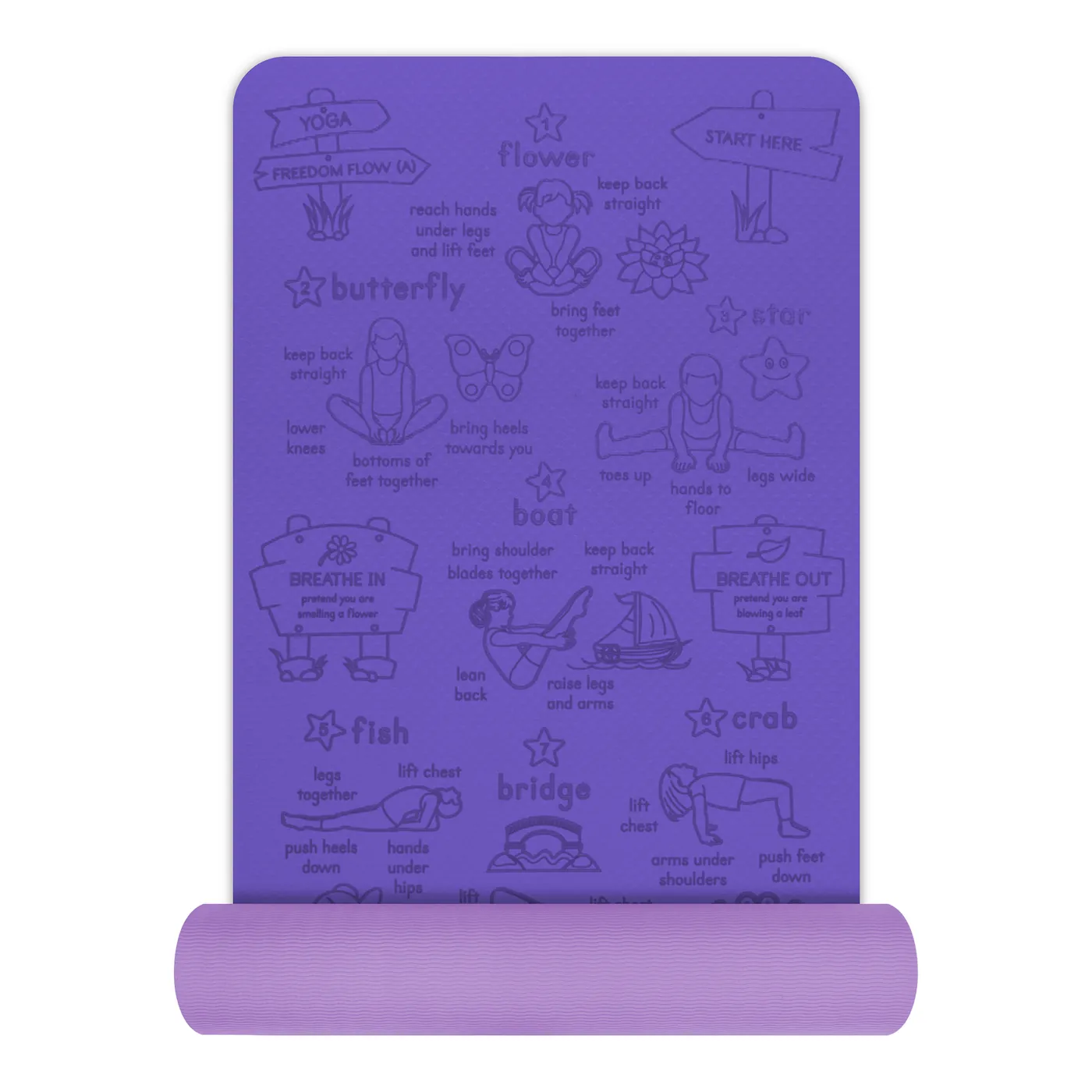
If the mirror stretches catch on, our Freedom Flow mat gives them a place to happen: 15 numbered poses laser-engraved into the surface, most of them on the floor, so you can start at 1 together and go at your child's pace. For poses you can do side by side, see family yoga for the whole family.
When does a child who can't settle need more help?
Every child has big feelings, and needing lots of help to settle is normal in the early years. The NHS says that if you're seriously concerned about your child's behaviour, talk to your health visitor or GP. For worry that is severe, persists and interferes with everyday life, the NHS suggests your GP as a good place to start.
If it's affecting school, the NHS anxiety page also suggests talking to the school.
Frequently asked questions
What is the meaning of co-regulation?
Co-regulation means a caring adult helping a child manage their emotions, with comfort such as a cuddle, a calm voice or a suggested way to settle. With lots of repetition, it's how a child learns to do it for themselves, which is called self-regulation.
Is co-regulation the same as giving in?
No. It's about the feeling, not the request. You can stay close and calm and still hold the line. The NHS advice on tantrums says that if you've said no, don't change your mind just to end the tantrum. Comfort the feeling, keep the answer, and talk about it once they're calm.
At what age do children stop needing co-regulation?
There's no cut-off. The Resilience Project sheet says children are typically beginning to regulate their own emotions by primary school age, and that children who have had fewer chances to practise this with an adult will likely need help for longer. Humber NHS notes that for most people, self-regulation isn't fully developed until their mid-twenties.
What are examples of co-regulation?
Taking a few deep breaths yourself before you respond, getting down to your child's level, naming the feeling in a calm voice, and offering a cuddle once they'll accept one. NHS Best Start in Life sums it up as regulate, relate, reason: soothe first, comfort next, and talk about what happened only when your child is calm again.
A mat for breathing together
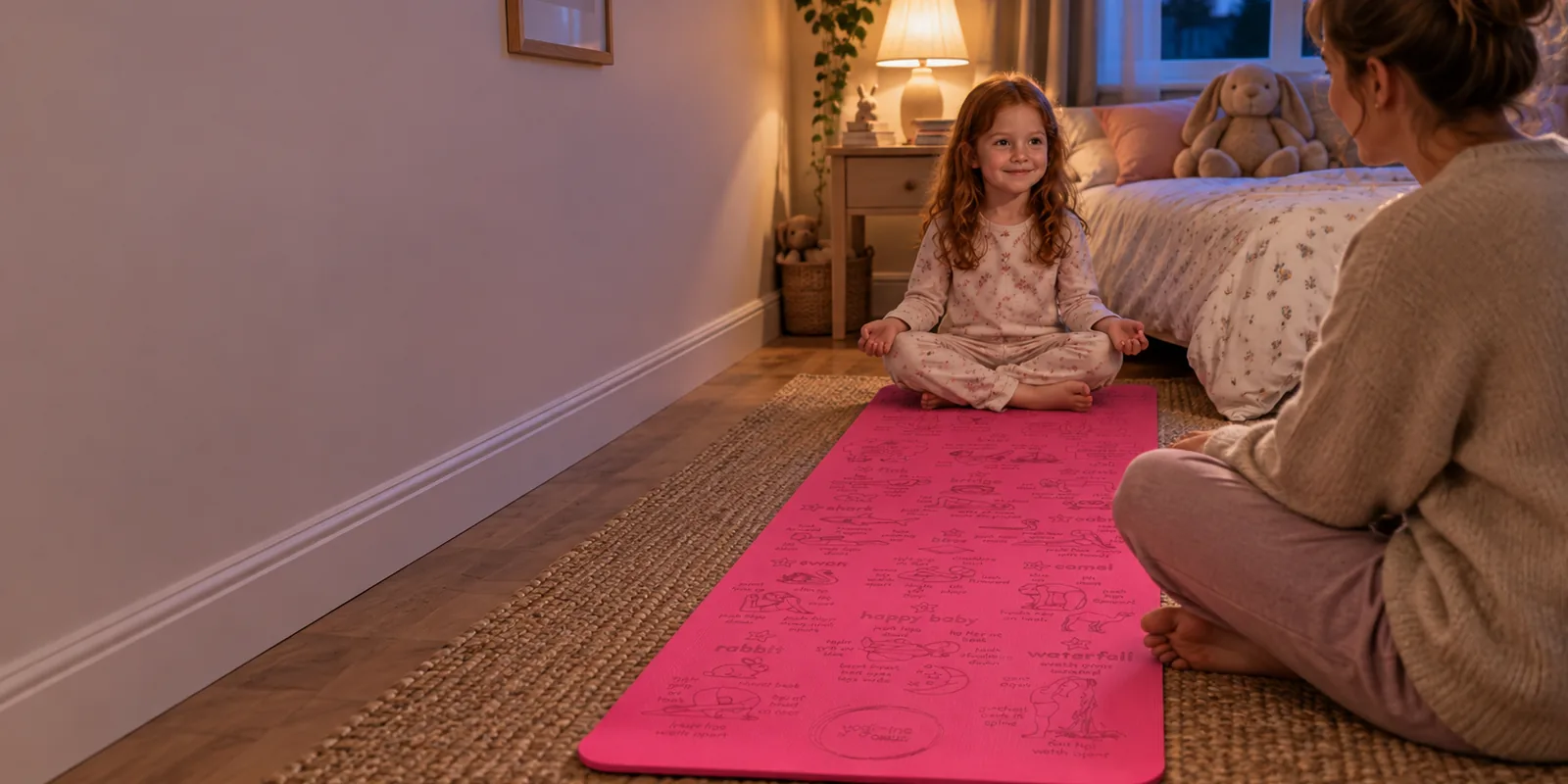
Calm-day practice is easier on a bit of floor that's clearly for it. The Freedom Flow mat has its floor sequence marked into the surface, so you can roll it out, sit at one end with your child at the other, and work through the poses facing each other, with nothing to set up and no screen to follow. It won't do the co-regulating for you. It gives the slow part of the day somewhere to happen.
It's designed for ages 3 to 8. Three- and four-year-olds copy the poses with a little help; older children lead their own sessions, and you can step back bit by bit. Under three, we'd wait. At 183 x 61 cm it's the length of an adult mat, so there's room for you on it too, and they won't outgrow it at eight. The trade-off is that a shorter mat is easier for a three-year-old to carry alone; ours weighs 800 g and rolls up with a carry strap.
It's non-toxic, PVC-free TPE, according to our supplier's specification, with 6 mm of cushioning. Use it on a dry, flat floor. If the bubble breaths get out of hand, wipe it with a damp cloth and a little mild soap, then let it dry flat.
Thinking about Christmas? If you're looking for a present that gets used after Boxing Day, this one comes out on Christmas afternoon when everyone's overtired, and again on a wet January evening. Buying as a grandparent? It's full length, so you can sit at the other end and take the slow breaths too. Our children's Christmas gift guide has more screen-free ideas.
Start the calm-day practice this week: pick a colour from our kids' yoga mats. Every mat is £34.99 with free UK delivery and 30-day returns.
Sources
- Humber Teaching NHS Foundation Trust, Connect NHS - Co-regulation
- Humber Sensory Processing Service - Co-regulation guide for parents, June 2024
- NHS Best Start in Life - Help your toddler with their emotions
- NHS - Temper tantrums, reviewed 7 November 2022
- NHS - Anxiety in children
- GOV.UK, Department for Education - Development Matters, updated 4 September 2023
- Mentally Healthy Schools - Relational games, up regulating and down regulating activities, Resilience Project, May 2020