guides
Listening Games for Kids: 15 Fun Ones for Home and Nursery

15 screen-free listening games for kids aged 3 to 7, for home or nursery, with what to expect at each age and when to get their hearing checked.
These 15 listening games for kids need no screen and no special kit: most use a saucepan, some keys or a picture book. They suit children aged 3 to 7, at home or at nursery, and they're grouped by what the child does with the sound: hear it, move to it or remember it. Each one takes about five minutes, so two or three make a session.
What are listening games?
A listening game is a short game where a child has to hear something, notice what it was, and show you by doing, copying or saying something back. The Department for Education's Help for Early Years Providers puts the difference neatly: "Listening is different to simply hearing."
Most lists of listening games sit children in a circle and ask them to be still. You don't have to. The Department for Education's Development Matters guidance tells nursery staff to notice how children listen well "whilst moving", and to "play movement and listening games that use different sounds for different movements". So six of the fifteen games below get up off the floor.
Sitting, moving or remembering: choosing a listening game
Start with the group that suits your child's mood: sitting games for a quiet afternoon, moving games after a day of sitting still, remembering games once they've got the hang of the others.
You need a saucepan, a wooden spoon, a set of keys and a familiar picture book. Anything small that rattles goes in a pot with the lid taped on, and a grown-up holds it. Keep each game short: Leeds Community Healthcare's NHS speech and language team suggests spending "a short amount of time on any specific activity (5 to 10 minutes maximum)".
Looking after a four-year-old for the afternoon as a grandparent? Nothing here needs more than a kitchen drawer.
15 listening games for kids
Hear it: ears only, sitting or lying down
1. Listening to silence
Sit quietly together for one minute, eyes closed. Say: "Count every sound you hear on your fingers." A clock, a car, a tummy rumbling. Then compare. It's the first game on the NHS Just One Norfolk listening games page. Good from age 3.
2. Guess the kitchen sound
Hide behind the sofa and make a sound: keys, a spoon in a mug, a crisp packet, the tap. Say: "What was that?" Real things beat a recording, because your child can go and check. Then swap. Good from age 3.
3. Loud or quiet?
Tap a saucepan loudly, then gently. Say: "Big hands for loud, small hands for quiet." Then try fast and slow. It's Just One Norfolk's "sorting sounds" game, played with kitchen kit instead of instruments. Good from age 3.
4. Where's that sound?
Your child closes their eyes, no blindfold needed. Move quietly somewhere in the room and jingle your keys. Say: "Point to where it's coming from." Open eyes and check. Go further away or quieter as they get good at it. Good from age 3.
5. A listening walk
On the way to the shop, stop and say: "Listen, what can you hear?" NHS Best Start in Life gives its own example: "Listen, I can hear the ducks quacking." Count the sounds and see who remembers most at home. Good from age 3.
Move to it: the sound tells the body what to do
These are the active listening games for kids: a child shows they've heard by doing something.
6. Sound actions
Sound actions is a listening game where each sound means one movement: a clap means stand tall, a tap on the pan means curl up small. Add a third sound when they're ready. Development Matters calls it "different sounds for different movements". Good from age 3.
7. Number call
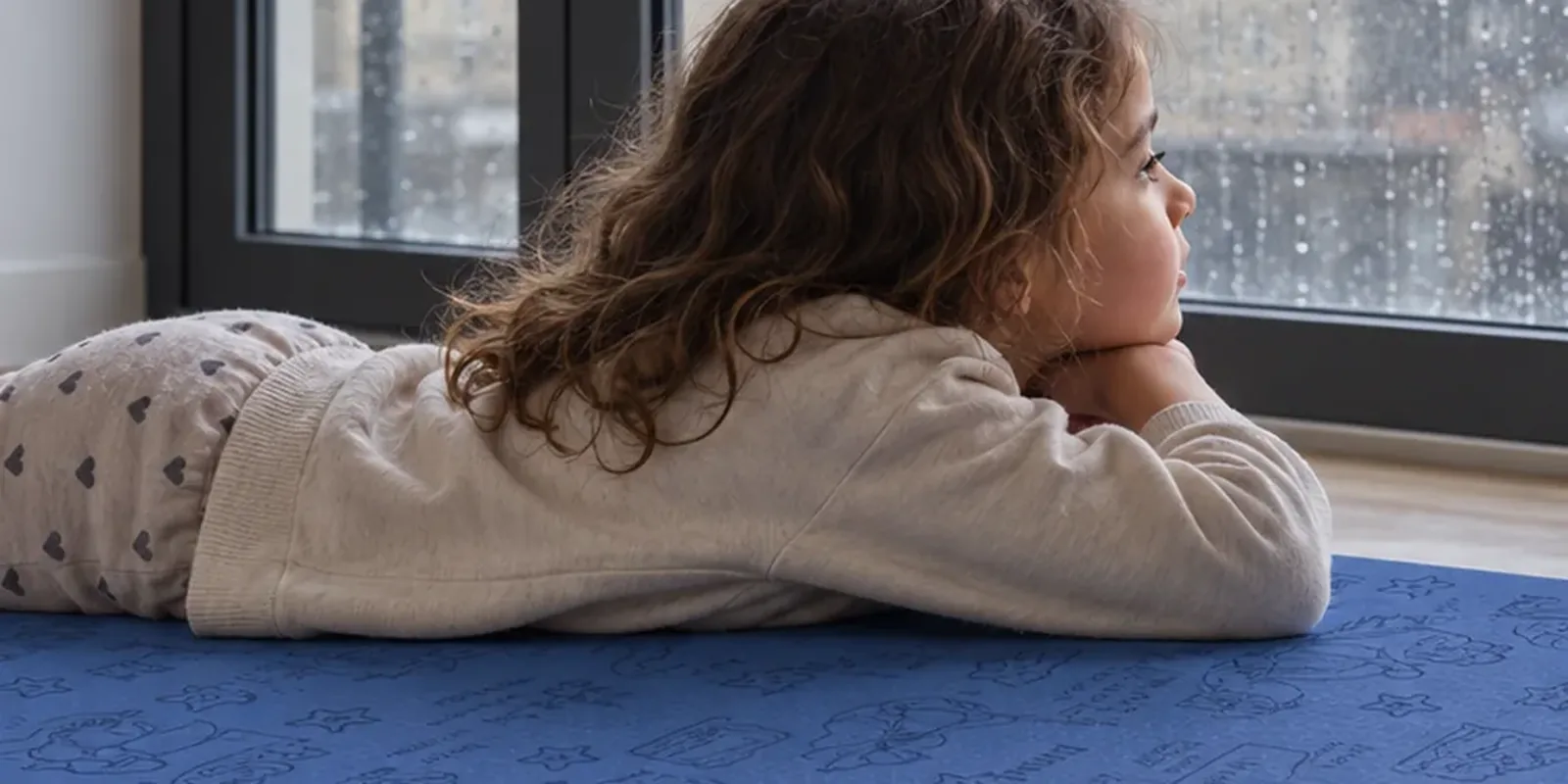
This one is ours. On our Sun Salutation mat the fifteen poses are numbered, so you call a number and your child finds that pose and holds it. A child who can't read yet can still match the numeral. No mat? Draw five numbered shapes on paper. Good from age 3.
8. Musical statues
Music on, everyone dances; music off, everyone freezes. The twist: when the music stops, call an animal and they freeze in that shape. A cat, a frog, a tree for anyone who'd rather be a plant. There are more freeze games with yoga poses too. Good from age 3.
9. March and creep
Bang a saucepan with a wooden spoon and everyone marches. Shake a sealed pot of dried pasta and everyone creeps on tiptoe. Switch without warning. It's Development Matters' own example, "march to the sound of the drum or creep to the sound of the maraca". Good from age 3.
10. Ready, steady... go
Your child waits for "go" before rolling the ball or knocking down a tower. Vary the pause: "Ready, steady..." and hold it. Leeds Community Healthcare's NHS team suggests exactly this. Our waiting games for children stretch the pause further. Good from age 3.
11. Simon says
One player is Simon and calls out actions. Everyone else only moves if the command starts with "Simon says". For under-fives, nobody is out: a wrong move means a wiggle and back in. Run out of commands? Here are 60 Simon says ideas. Good from age 4.
Remember it: copy it, spot it, say it back
12. Copy my clap
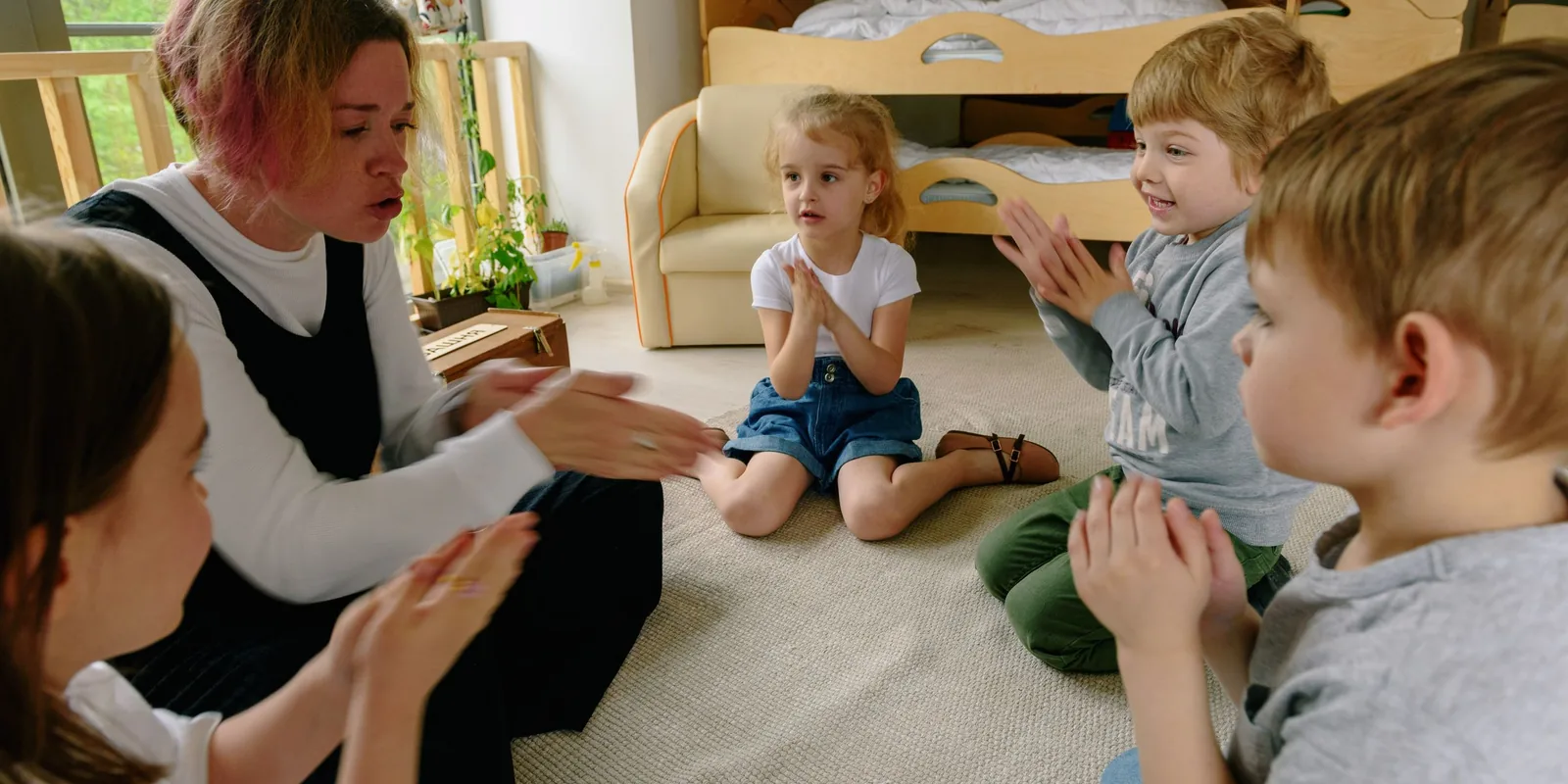
Clap a short rhythm and your child claps it back. Start with two claps, then three, then four with a pause in the middle. Let them make one up for you. Just One Norfolk's NHS page plays it with a drum. Good from age 3, with longer rhythms from 5.
13. Listen for your word
Read a picture book you both know well. Pick one word, such as "bear", and your child jumps up every time they hear it. Then pick a word that comes up less often. It turns story time into a game without changing the story. Good from age 4.
14. That's wrong
Sing a nursery rhyme with one silly mistake: "Twinkle, twinkle, little car." Your child shouts "wrong" and fixes it. Then hide the mistake further in, or put two in one verse. Catching a grown-up out is most of the appeal. Good from age 4.
15. Pass the whisper
Sit in a line and whisper a short sentence to the person next to you. They whisper it on, and the last person says it out loud. It's usually wrong, which is the fun. It needs three or more players and suits children from 5.
Which listening games suit a 3, 4 or 5 year old?
Most games here work from three if you keep them short and join in. What changes with age is how many sounds or rules a child can juggle, and the Department for Education describes the stages.
- Listening games for 3 year olds: two sounds, not four, and you play too. Between 3 and 4, it says, "children pay attention to different things at the same time. However they may still find this difficult and need support." To get their attention, Development Matters suggests: "say the child's name and then: 'Please stop and listen'."
- Listening games for 4 year olds: add a third sound or rule, and let them take a turn as caller.
- Listening games for 5 year olds: the remembering group, and leading a game for a younger sibling. In Reception, children are learning to "understand how to listen carefully and why listening is important".
Games are play, not a concentration programme. If you're after settling to one task at home, that's how to help a child focus.
How do nurseries use listening games in the EYFS?
Listening games in the EYFS sit under communication and language. One of the early learning goals for the end of Reception, in the EYFS statutory framework, is "Listening, Attention and Understanding". Children at the expected level "listen attentively and respond to what they hear with relevant questions, comments and actions when being read to and during whole class discussions and small group interactions."
For listening and attention activities in the EYFS, Help for Early Years Providers suggests "listening treasure boxes": a box of things that make interesting noises, such as crinkly paper and pots and pans, explored in a small group. It also says "do not have music on all the time", which is worth knowing at home too. The moving games here work in a Year 1 hall at KS1 as well. If you'd like a set of mats for a nursery room, there's a page for schools.
Three listening sessions, from five minutes before tea to a wet afternoon
Two or three games make a session. Three that flow:
- Five minutes before tea: listening to silence (1), then sound actions (6), then copy my clap (12).
- A wet afternoon: musical statues (8), number call (7), then listen for your word (13) to calm down with a book.
- A walk and a game: a listening walk (5), then guess the kitchen sound (2) when you get in.
At Christmas, sound actions works with jingle bells. If the moving games are the ones your child asks for, the poses are laser-engraved into our mats with the poses numbered 1 to 15, so any grown-up can be the caller without knowing any yoga. Each mat is £34.99 with free UK delivery, and 10 per cent off two or more if two children want to play at once.
What if your child still doesn't seem to listen?
A child who ignores a voice from the next room may listen perfectly well in a game. Keep the games short, play when they're not tired or hungry, and stop while it's still fun. Some children hate being watched, so try playing alongside them rather than facing them. For days when listening games aren't landing, there are more screen-free activities for 3 to 8 year olds.
Sometimes, though, a child who "never listens" can't hear well. Glue ear is where the middle part of the ear fills with fluid, which can cause temporary hearing loss. The NHS page on glue ear says to see a GP if your child has signs of a hearing problem, such as "asking for the TV or music to be turned up loud", "becoming easily distracted when people are talking" or "finding it hard to concentrate". A GP can refer a child for a hearing test. If you're worried, ask your GP or health visitor.
Frequently asked questions
How long should a listening game last?
About five minutes, and no more than ten. Leeds Community Healthcare's NHS speech and language team suggests keeping activities fun and spending "5 to 10 minutes maximum" on any one. Two or three short games make a better session than one long one, and stopping while your child still wants more makes the next time easier.
What are active listening games for kids?
Active listening games are ones where a child shows they've heard by doing something: moving, copying or answering. Sound actions, number call, musical statues, march and creep, and Simon says are all active listening games. They suit children who find sitting still hard, because the moving is part of the game rather than a distraction from it.
Do you need instruments for listening games?
No. A saucepan and a wooden spoon make a drum, keys jingle, and a crisp packet crackles. If you use something that rattles, such as dried pasta, put it in a pot with the lid taped on and keep hold of it yourself. Kitchen sounds are often better than instruments anyway, because your child already knows what makes them.
How do I get my child to listen to instructions?
Games are practice at listening, but they won't fix not doing as they're told. For instructions, Development Matters suggests a clear prompt: say the child's name, then "Please stop and listen". Give one instruction at a time, get down to their level and make sure they're looking at you before you start.
Sources
- Department for Education: Help for Early Years Providers, listening and understanding
- Department for Education: Development Matters
- Department for Education: Early years foundation stage (EYFS) statutory framework
- Leeds Community Healthcare NHS Trust: Attention and listening
- Just One Norfolk (NHS): Listening games
- NHS Best Start in Life: Learning conversations and telling stories, 3 to 5 years
- NHS: Glue ear
- NHS: Hearing tests