guides
How to Stop Siblings Fighting, and When to Step In
How to stop siblings fighting over turns, toys and the tablet: when to step in, what to say, games that put them on the same side, and when to get help.
You can't stop siblings fighting altogether, and the guidance doesn't ask you to. What helps is staying out of small squabbles, stepping in calmly when it gets physical or cruel, separating them until they've cooled down, then coaching rather than judging. Agree rules for the things they fight over most, such as turns on the tablet, and give them reasons to be on the same side.
Sibling rivalry is the jealousy, competition and squabbling between brothers and sisters as they work out where they stand in the family, and with you. In a house with children aged 3 to 8, it's mostly about turns, toys, space and fairness. It's tiring to live with. It's also, mostly, normal.
Is it normal for siblings to fight this much?
Usually, yes. Place2Be, the children's mental health charity, says arguments between siblings are a normal part of family life, and that they can be a helpful way for children to learn how to manage conflict and disagree without getting too angry. It also says this doesn't mean you're doing something wrong, or that something is wrong with your children.
Coram Family Lives, the parenting charity, goes further: it says the relationship children have with their siblings helps them map out how they'll socialise and deal with disagreements in future.
Both list the same kinds of triggers:
- Feeling less loved. Place2Be says that at some point most children are likely to feel a sibling is more loved than they are.
- Fairness. "He's got more than me." Place2Be notes that children of different ages may resent a younger sibling having the same bedtime or pocket money, and Coram Family Lives that younger children can be jealous of an older one's later bedtime.
- Possessions, privacy and space. Coram Family Lives lists all three.
- Being tired, hungry or bored. Place2Be mentions tiredness after a long day at school, Coram Family Lives boredom and hunger, and the NHS puts a lot of young children's difficult behaviour down to being tired, hungry, overexcited, frustrated or bored.
The NHS also names life changes, including the birth of a new baby, as something that can affect behaviour. If the fighting started when a younger sibling arrived, our ideas for big sister and big brother gifts include ways to give the older child something of their own.
The tablet, the timer and whose turn it is
Here's an illustrative example of how the guidance plays out on a Saturday morning, with a six-year-old and a four-year-old and one tablet.
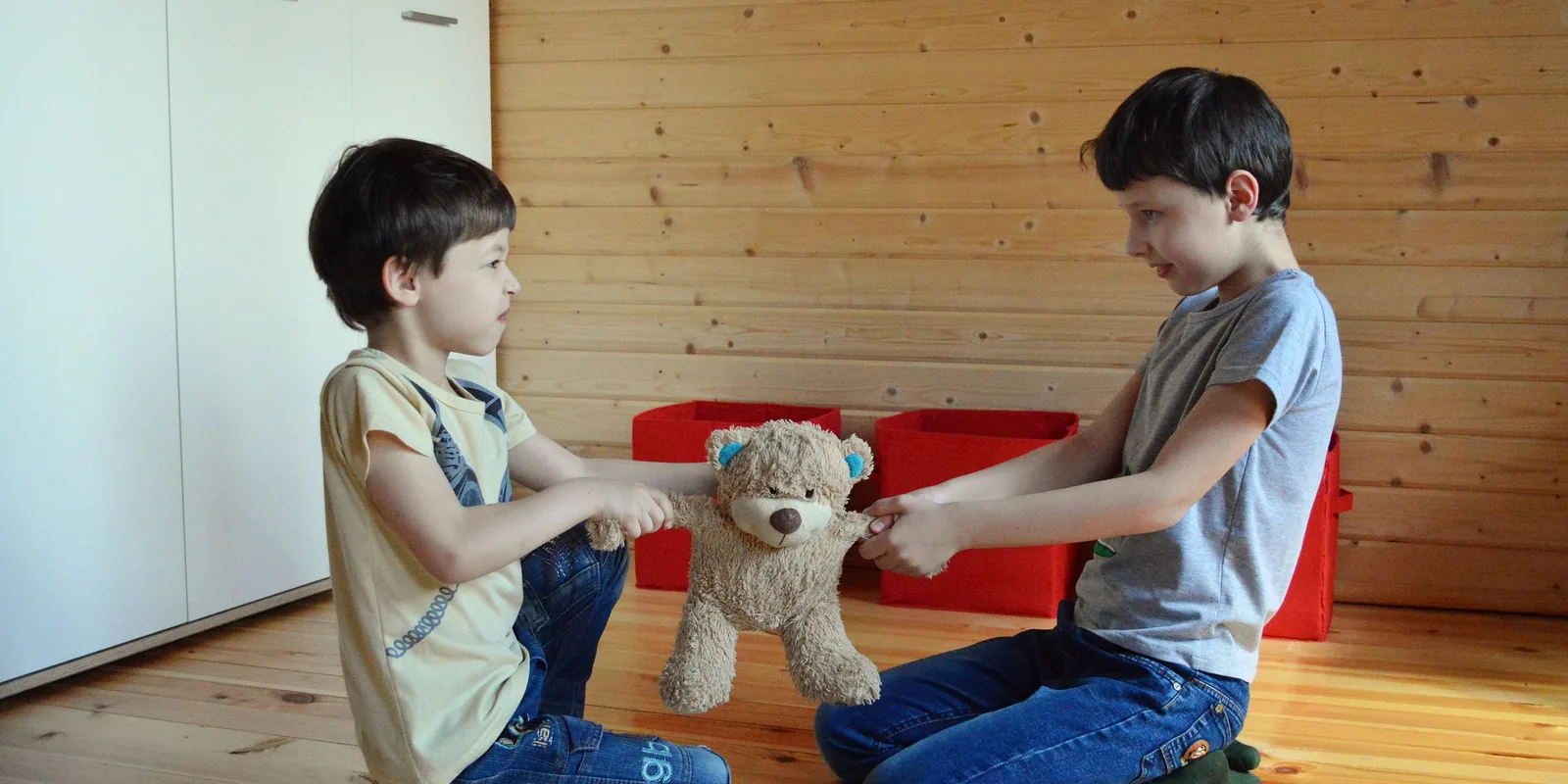
The four-year-old has had "one more minute" three times. The six-year-old snatches it, the four-year-old screams, and somebody gets a foot in the ribs. You're now being asked to rule on who had it longer.
Place2Be suggests that when children argue over an object, you take it away until they're calm, then return it. So the tablet goes on the kitchen counter, without a verdict. You separate them for a few minutes. Once they're calm, the tablet comes back with a rule they can both see, such as a kitchen timer and a swap when it rings, which is less arguable than "one more minute".
Then, later, the bigger fix. Coram Family Lives suggests that if the same arguments come up time after time, a family agreement can address them, and it names taking turns on a device and screen times among the things to include. Agree the order and the length of turns at a calm moment, write it down where both can see it, and stick to it. For more on writing a rule like that, see family screen time rules.
Fair doesn't mean the same
The trap here is trying to make everything exactly equal. Place2Be says not to worry about treating your children differently: that's actually all right, because they're unique and need different things at different times.
What children need is to feel each gets enough of you. One of Place2Be's preventative suggestions is a little special time for each child every day, doing something that child has chosen. It doesn't need to be long. Ten minutes of the four-year-old's game, then ten of the six-year-old's, does more for "it's not fair" than counting out sweets.
For the privileges that do differ, Coram Family Lives suggests explaining to a younger child that they'll get the same ones as they grow up, and pointing out the advantages of being young, such as having fewer jobs around the house.
The other half is not comparing. Place2Be says it's not fair to compare your children and that it can lead to all sorts of trouble. "Why can't you be more like your sister" is one of the quickest ways to make a sister the enemy.
What to say when a fight starts
Most squabbles don't need you. Place2Be advises against becoming the judge of who's wrong, because it can make things worse now and in the long run, and suggests letting children work out minor arguments themselves. Coram Family Lives agrees: don't rush to stop every argument, but do step in if it becomes physically or verbally violent.
When you do step in, Place2Be suggests four things:
- Take a breath, then separate them calmly. Name what you see and the limit, for example: "You're both really cross. Hitting isn't OK."
- Remove the thing they're fighting over until they're calm.
- Give them time to cool down before trying to sort anything out.
- Coach, don't referee. Help each child put what they need into words, for example "I don't like it when you push me" instead of hitting back.
Coram Family Lives adds two things for the sorting-out stage: treat both children equally, because it doesn't necessarily matter who started it, and ask each how they think the other is feeling, which it says helps them empathise.
Your own example counts too. The NSPCC says that how a child sees anger being dealt with is often what a child will mirror. If one child is in the middle of a full-blown rage, start with calming an angry child and come back to the sorting-out later.
Games that put siblings on the same side
Siblings who spend all day competing need some time on the same team. The best games for siblings have a shared goal, no single winner, or one child who has to rely on the other. A few that suit ages 3 to 8:
- Beat the timer. Both of them against the kitchen timer to tidy the lounge before it rings. The clock is the enemy, not each other.
- Back-to-back drawing. One describes a simple picture, the other draws it without looking. Then swap.
- Den building. One den, two builders, a sheet and the sofa cushions. Agree the door before you start.
- Partner yoga. Two children holding hands in a double tree only stay up if both of them balance. Our partner yoga poses for two are written for a grown-up and a child, with a quick safety box, so try double tree with you as one partner first, then let them pair up.
- Teach the little one. Give the older child a skill to teach: a card trick, a song, a yoga pose. Being the expert beats being the rival.
Keep it short, and stop while it's still going well. Ten minutes of being on the same side is worth more than an hour that ends in tears.
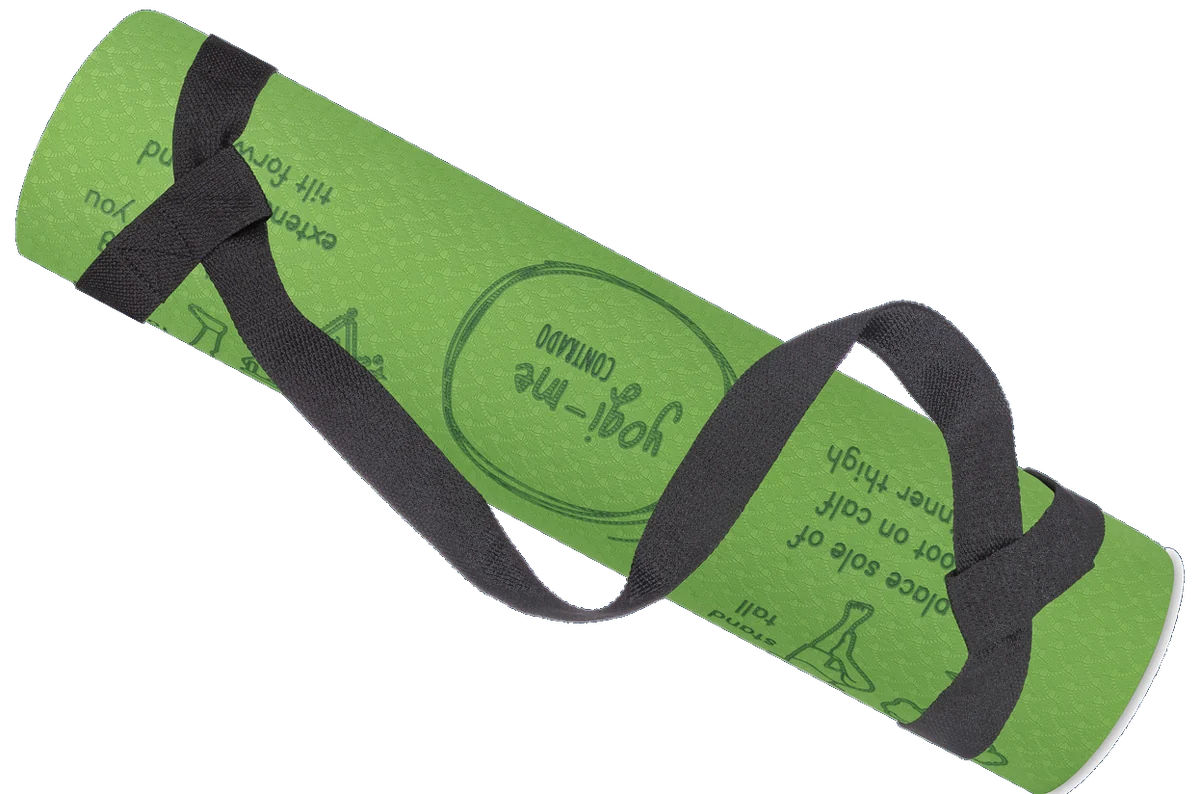
If partner poses catch on, ours are full-length mats, 183 x 61 cm, and if they'd rather have one each, two or more come with 10 per cent off. You'll find them with our other yoga mats for kids.
When sibling fighting needs outside help
Most sibling fighting is ordinary, if exhausting. Coram Family Lives says that if arguments have become unmanageable, violent or out of hand, you can speak to your child's teacher or GP, who may be able to make a referral. Talk to someone if:
- one child is regularly hurt, or frightened of the other
- the fighting is relentless and nothing you try is changing it
- you're struggling to cope yourself
For children under 5, the NHS suggests your health visitor, who can support you and suggest new strategies. The NHS also gives the number for the free Family Lives parents' helpline, 0808 800 2222, now run by Coram Family Lives. If you're ever worried about a child's safety, the NSPCC helpline is 0808 800 5000.
Coram Family Lives also reminds parents to look after themselves. Sibling arguments are draining, and a break, even an hour while a friend or grandparent has the children, helps you come back calmer.
Frequently asked questions
Is sibling rivalry normal?
Yes. Place2Be, the children's mental health charity, calls arguments between siblings a normal part of family life and says they can help children learn to manage conflict. Coram Family Lives says it's natural for siblings to disagree. What needs help is one child being hurt or frightened again and again, and that's when to get help.
Should I punish both children when siblings fight?
Coram Family Lives suggests treating everyone equally, because it doesn't necessarily matter who started it, and taking sides adds to the problem. That doesn't mean a punishment for both. It means one rule for everyone, such as no hitting, and the same consequence for whoever breaks it, applied calmly once things have settled.
How do you deal with a jealous sibling?
Start with time. Place2Be suggests a short special time for each child every day, doing something they chose, and notes that when a new baby arrives, older children often worry about being pushed out or forgotten. Coram Family Lives suggests explaining to a younger child that they'll get the same privileges as they grow, and pointing out the good parts of being younger.
What do you do when siblings fight all the time?
Look for the pattern. Coram Family Lives suggests a family agreement for the arguments that keep coming back, covering things like turns on a device, chores and bath times. The NHS adds that tiredness, hunger and boredom are common reasons for difficult behaviour, so check when the fights happen. If it's relentless or violent, talk to their teacher or GP.