guides
Positive Affirmations for Kids: 50 for School and Bedtime
50 positive affirmations for kids aged 3 to 8, sorted by moment: before school, bedtime, after a hard day. Plus how to say them so they ring true.
Positive affirmations for kids work best when they're short, true, and tied to a moment that already happens: the school run, bedtime, the walk home after a hard day. Below are fifty for children aged 3 to 8, sorted by moment and short enough for a three-year-old to echo, plus how to word them so they don't ring hollow.
It's 8.15am, one shoe is on, and your five-year-old has just announced they're "rubbish at everything". That's the moment this list is for.
What are positive affirmations for kids?
Positive affirmations for kids are short, kind sentences a child says about themselves, such as "I can try hard things", repeated at the same moment each day until they feel familiar. They work best when they're true today, not a wish.
An affirmation is different from praise. Praise is what you say to your child. An affirmation is what they say to themselves, often in your words to begin with. For ages 3 to 8, most of the lines below are three to six words, because a sentence your child can't remember is one they won't say.
Do affirmations work for kids?
We couldn't find NHS or other UK health guidance on affirmations for young children themselves, so we won't promise they do any particular thing. What we can point to is related advice on how children come to feel good about who they are.
YoungMinds, the children's mental health charity, advises focusing on specific things you notice about a child, which it says is "better than general praise like telling them they are 'good'". It suggests you show you "value who they are, not what they do", and lists only being noticed when you achieve something among the messages that damage self-esteem.
So affirmations for kids make most sense as a habit of specific, true, effort-based sentences, said alongside a grown-up who notices. Not as a script.
How do you use positive affirmations with kids?
Use positive affirmations with kids by picking one or two, tying them to a moment that already happens, and saying them together until your child can say them alone. Four wording rules keep them believable:
- Keep it short. Three to six words for most children under six.
- Effort and who they are, not results. "I can try" works. "I am the best" sets up a test they'll fail by Friday.
- Nothing about looks. YoungMinds lists messages about how you should look among those that damage self-esteem.
- Nothing they can disprove by teatime. "I am always calm" lasts until the first argument over the remote.
If your child can't read yet, say the line first and let them echo it. That's all it needs.
50 positive affirmations for kids, by moment
Here are fifty affirmations for kids aged 3 to 8, in seven groups. Pick two from the group that fits your day, and change any word that doesn't sound like your family.
Affirmations for kids before school
For the school run, the reception door or a note tucked into a packed lunch.
- I can say hello first.
- I can ask for help.
- I know who's picking me up.
- I can try something new today.
- It's okay to miss home a bit.
- I can be a good friend.
- I'm ready to have a go.
- I can listen and learn.
Positive affirmations for kids at bedtime
Quiet, kind and looking back. If your child likes a bit of movement before sleep, pair these with a short bedtime yoga routine.
- Today I tried.
- I am safe in my bed.
- I am loved, even on hard days.
- Something good happened today.
- I can let today go.
- My body can rest now.
- Tomorrow is a new go.
- I'm glad I'm me.
On the mat: one for each pose
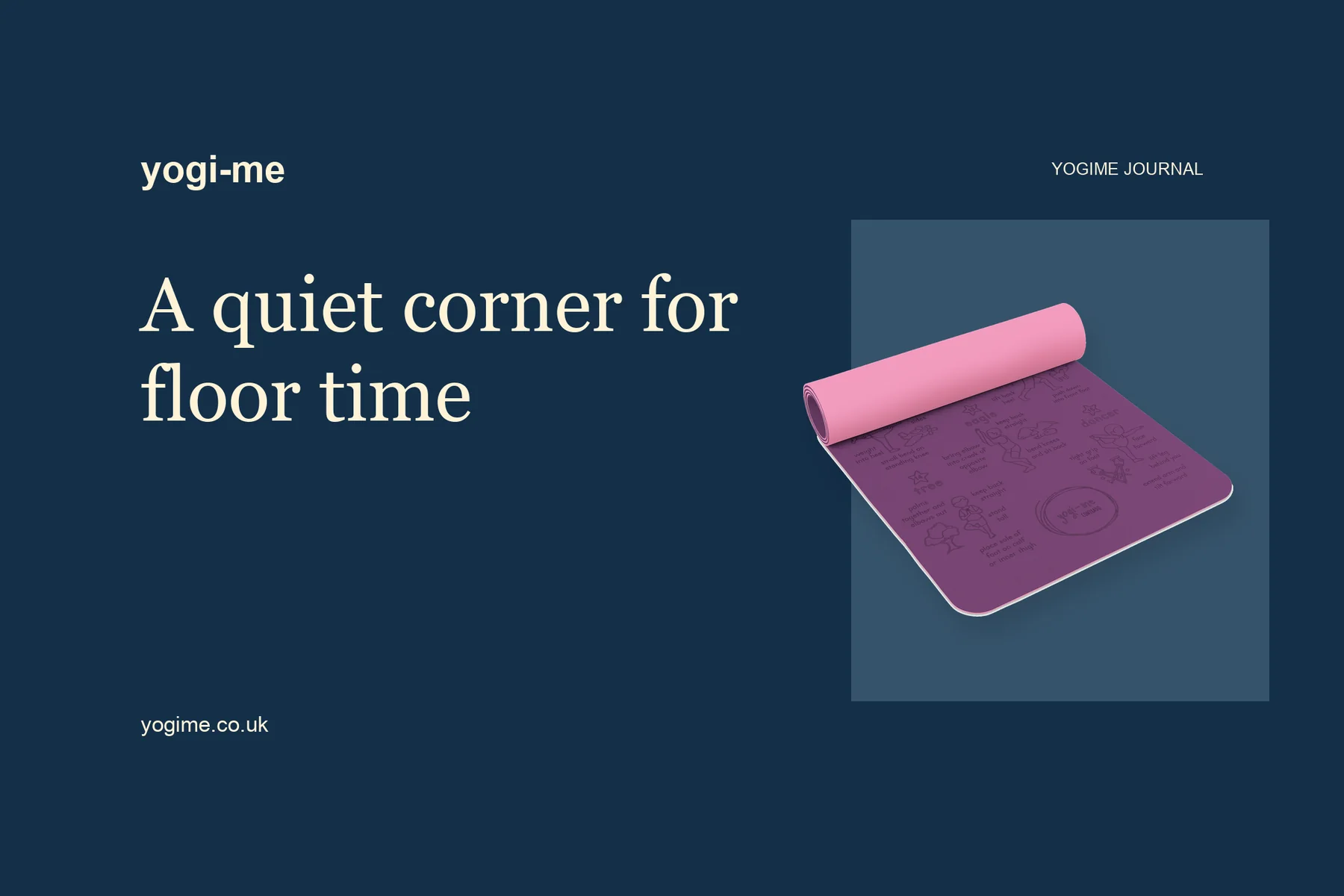
Six floor poses, one sentence each, said slowly while holding the shape for a breath. All six are marked into our Freedom Flow mat, so your child can find them without you showing them. If the poses are new to you, start with kids' yoga at home.
- Flower: "I am growing every day."
- Butterfly: "I can be gentle with myself."
- Star: "There's room for me."
- Boat: "I can stay steady when it wobbles."
- Bridge: "I am strong."
- Crab: "I can find another way."
Because the poses are numbered on the mat, a bedtime set is something your child can lead on their own: see the floor-pose mat.
Affirmations for kids' confidence
About trying, not winning. For the wider picture, here's how to build confidence in a child.
- I can do hard things, a bit at a time.
- My ideas matter.
- I'm still learning, and that's fine.
- I can have a go.
- I can ask a question.
- I'm good at trying.
- I can say what I think.
- I don't have to be first.
After a hard day or a mistake
For the walk home after a tricky afternoon, or a spilt drink.
- Mistakes help me learn.
- I can start again.
- A bad day isn't a bad me.
- I can say sorry and fix it.
- It's okay to feel cross.
- I can try a different way tomorrow.
- Everyone gets things wrong.
- I'm still me, and I'm still loved.
When they're worried
Short and true, so they hold up when your child is anxious. They're a comfort, not a fix: if worry is getting in the way of everyday life, the NHS suggests starting with your GP. For more, see how to calm an anxious child.
- This feeling will pass.
- I can take a slow breath.
- I can tell a grown-up.
- I'm not on my own.
- I can do one small thing.
- Feeling worried is okay.
From parents and grandparents
Affirmations for kids from parents are the ones you say to them. Following the YoungMinds advice, make them specific. Grandparents say these brilliantly, and a grandparent's version often lands hardest.
- "I noticed how kind you were to your friend at the park."
- "You kept going when it was hard."
- "I love being your mum." (Or dad, or grandad.)
- "I like spending time with you."
- "You worked that out yourself."
- "I love you whatever happens today."
How do you make affirmations a habit?
Attach them to something that already happens every day. NHS Every Mind Matters suggests building positive routines for children, including a fixed time for going to bed and getting up, so bedtime is the easiest hook there is.
A simple day might look like this:
- Morning: one line on the doorstep, said together before you leave.
- After school: one from the hard-day group, only if it was a hard day.
- Bedtime: two from the bedtime group, or the six poses in order.
Three a day is plenty. Keep the same lines for a week or two before you swap.
When saying nice things about themselves feels embarrassing
Plenty of children find saying nice things about themselves out loud embarrassing, and that's fine. Don't make it a performance or a test.
Try these instead. Whisper it, or say it in a silly voice. Write it on a sticky note and leave it on the mirror without comment. Say it about yourself first ("I can try again tomorrow"). Or swap words for a breath: one slow breath in and out is a perfectly good start, and our breathing exercises for kids turn that into a game. Some children never say them aloud and still borrow the words later. That counts.
Frequently asked questions
At what age can you start positive affirmations for kids?
From about three, if the lines are short and you say them first for your child to echo. There's no official starting age. By seven or eight, many children enjoy choosing and writing their own, which makes the words feel like theirs rather than yours.
How often should children say affirmations?
There's no official number. One to three a day, attached to the same moments, is easy to keep up. Little and often beats a long list, and repeating the same line for a week or two is fine. Let your child pick which ones stay.
What are good affirmations for an anxious child?
Short, true lines such as "This feeling will pass" and "I can tell a grown-up". They're a comfort, not a treatment. The NHS says that if a child's anxiety is severe, persists and interferes with everyday life, a visit to a GP is a good place to start, and if it's affecting school, talk to their school as well.
Do you need printable affirmation cards?
No. A sticky note on the bathroom mirror works, and so does a pose: say the sentence while holding it. On a mat with the poses marked in, the mat is the card, and it doesn't get lost down the back of the sofa.
Fifteen places to say something kind
If you're looking for a present that gives them fifteen places to say something kind about themselves, our mats have the poses laser-engraved into the surface, numbered, with no screen needed. They're designed for ages 3 to 8 and full length at 183 x 61 cm, so there's room for you too. For more ideas, see our presents that keep them moving.
Roll out the poses tonight with our mats: £34.99 each, with free UK delivery.