practice
Partner Yoga Poses for Two: Kids and Grown-Ups
Partner yoga poses for two, a grown-up and a child: double tree, seated boat and back-to-back breathing, with a safety box and an age guide.
The best partner yoga poses for two, a grown-up and a child, are double tree, seated boat, partner forward fold and back-to-back breathing. None needs lifting: you sit or stand close, hold hands or lean back to back, and the adult supports rather than pulls. Five to ten minutes is plenty, and toddlers can join the seated ones.
Your child wants to climb on you the second you sit on the floor, and you would love that energy to go somewhere calm and useful.
Partner yoga is a simple answer. Two people, a bit of floor space, and a handful of poses you hold together.
It is playful, screen-free, and it gives you both a few quiet minutes of connection at the end of a busy day.
What are partner yoga poses for two?
Partner yoga poses for two are gentle shapes that a grown-up and a child hold together, using each other for balance, support or a light stretch. Think double tree, seated boat or back-to-back breathing. The adult supports the child rather than pulling, and nobody forces a stretch.
The point is not to nail a perfect pose. It is to move together, giggle a bit, and slow down.
Most poses work on any non-slip surface, so you can start today with what you already have at home.
Is partner yoga safe for young children?
Yes, when you keep it gentle. Partner yoga is low-impact and easy to adapt for small bodies. Support your child rather than pull them, never force a stretch, and stop the moment anything pinches or aches. Take extra care with any pose that involves lifting or balancing your child off the ground.
A few simple rules keep it happy for everyone.
Quick safety box
- Support, never pull. Your child sets how far they go.
- No pain, ever. A stretch should feel nice, not sharp.
- Warm up with a wiggle or a walk around the room first.
- Skip lifting poses if you have a back or wrist niggle.
- Let your child stop whenever they want. This is play, not PE.
If your child has a health condition that affects movement, have a quick word with your GP before you start anything new.
What age can you start partner yoga?
You can start simple partner play from toddlerhood, then add more structured poses as coordination grows. Under-5s do best with short, silly, movement-led games. School-age children (5 to 12) can hold poses longer and follow instructions, so double tree and seated boat start to click around then.
It helps to match what you try to your child's stage.
- Toddlers (1 to 4), What works: Short, playful, lots of animal sounds; Try these poses: Back-to-back breathing, partner cat, gentle rocking boat
- Early school (5 to 8), What works: Balance games, holding a shape together; Try these poses: Double tree, seated boat, partner forward fold
- Older children (8 to 12), What works: Longer holds, teamwork challenges; Try these poses: Double downward dog, seated twist, standing partner balance
Movement like this also counts towards daily activity. The NHS says children aged 5 to 18 need about 60 minutes of activity a day, and under-5s need at least 180 minutes spread across the day. A few rounds of partner poses chip away at that total without feeling like exercise.
Which partner yoga poses should you try first?
Start with poses that need no lifting and reward teamwork. Double tree, seated boat, partner forward fold and back-to-back breathing are the classic four. They teach balance, patience and gentle stretching, and they only ask you to sit or stand close and hold on together.
Here is a plain how-to for each.
Double tree
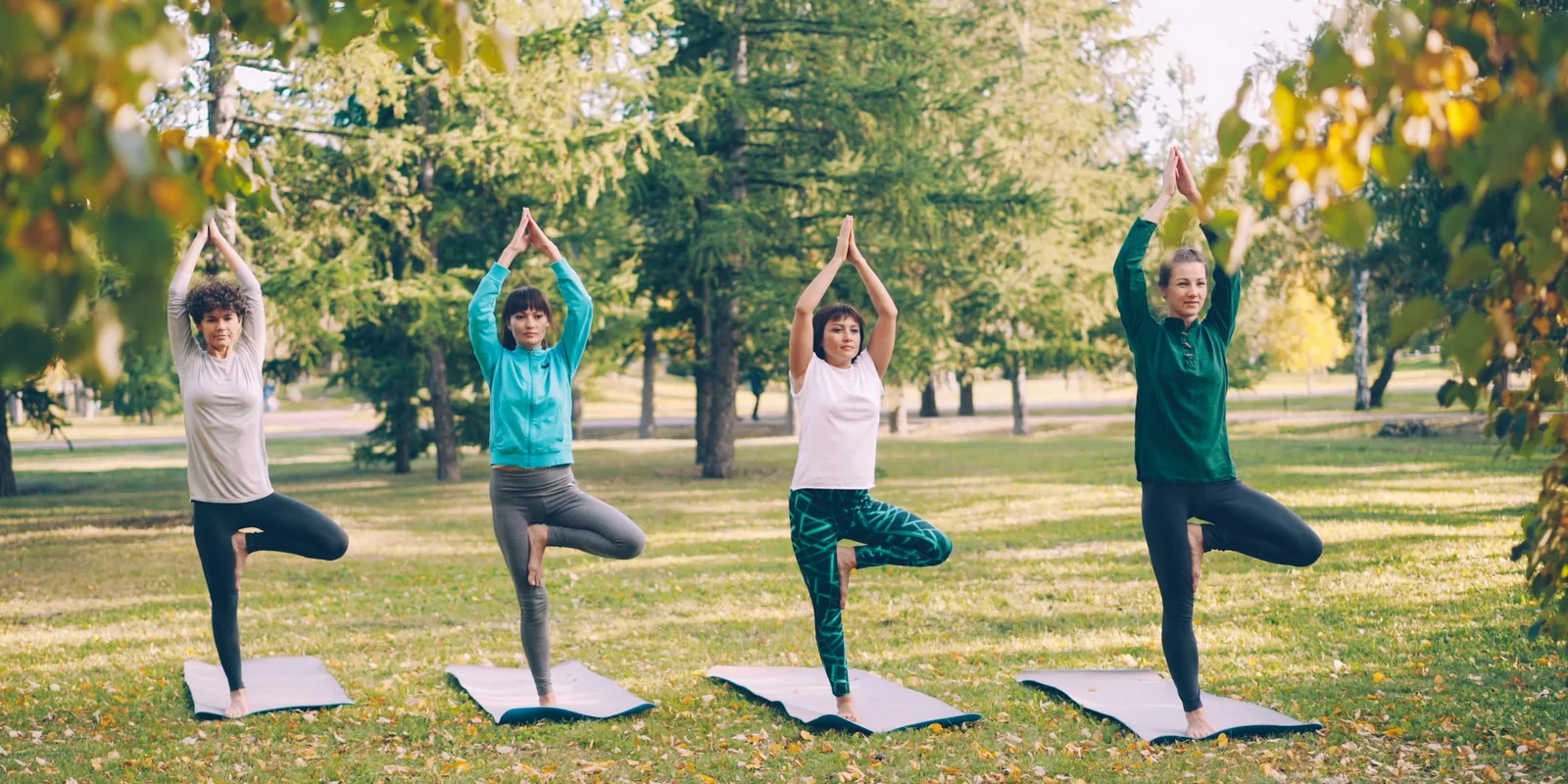
Stand side by side, hips touching. Press your inside arms together like a trunk. Each of you lifts your outside foot to rest on your ankle or calf (never the knee). Wobble, laugh, reset. Balancing and reaching like this practises the balance and coordination that Department for Education early years guidance links to skills such as throwing and catching a ball.
Seated boat
Sit facing each other, knees bent, toes touching. Hold hands, then lift your feet to press soles together and straighten your legs into a V. You become one boat rocking on the sea. Great for giggles and core strength.
Partner forward fold
Sit facing each other with legs wide and feet touching. Hold hands or wrists. One of you leans gently back while the other folds forward, then swap. Move slowly and only go as far as feels comfy.
Back-to-back breathing
Sit cross-legged, backs pressed together. Close your eyes and breathe. Feel your backs rise and fall. This is the calm-down pose, perfect for toddlers and lovely before bed.
For more one-and-two-person ideas, our guide to easy yoga poses for kids has plenty you can fold in. If a second child or another grown-up wants in, try our 3 person yoga poses.
What are the real benefits of parent-and-child yoga?
Partner yoga offers active, screen-free time together. It helps children hit daily movement targets, builds balance and coordination, and gives you a shared calm moment. The WHO frames active play as part of a healthy daily balance alongside limited screen time and good sleep for young children.
No hype needed. It is simply a nice thing to do together. On Mothering Sunday, let your child lead; our Mother's Day activities for kids have more.
The UK Chief Medical Officers note that activity helps children build confidence, social skills and coordination. Doing it with you adds the connection on top.
It also fits the wind-down window. The NHS suggests a calm, regular routine before bed and settling down away from screens as part of it. Slow partner poses slot neatly into that routine. If screens are a daily battle in your house, our post on how much screen time is right for kids puts it in context.
Do you need any equipment?
Not much. The main thing is a non-slip surface so nobody skids mid-pose. A mat helps, especially for younger children who fidget. If you buy one, look for a non-toxic, PVC-free material and a surface that grips on your floor. Beyond that, comfy clothes and a bit of space are plenty.
You do not need to spend a fortune to get started.
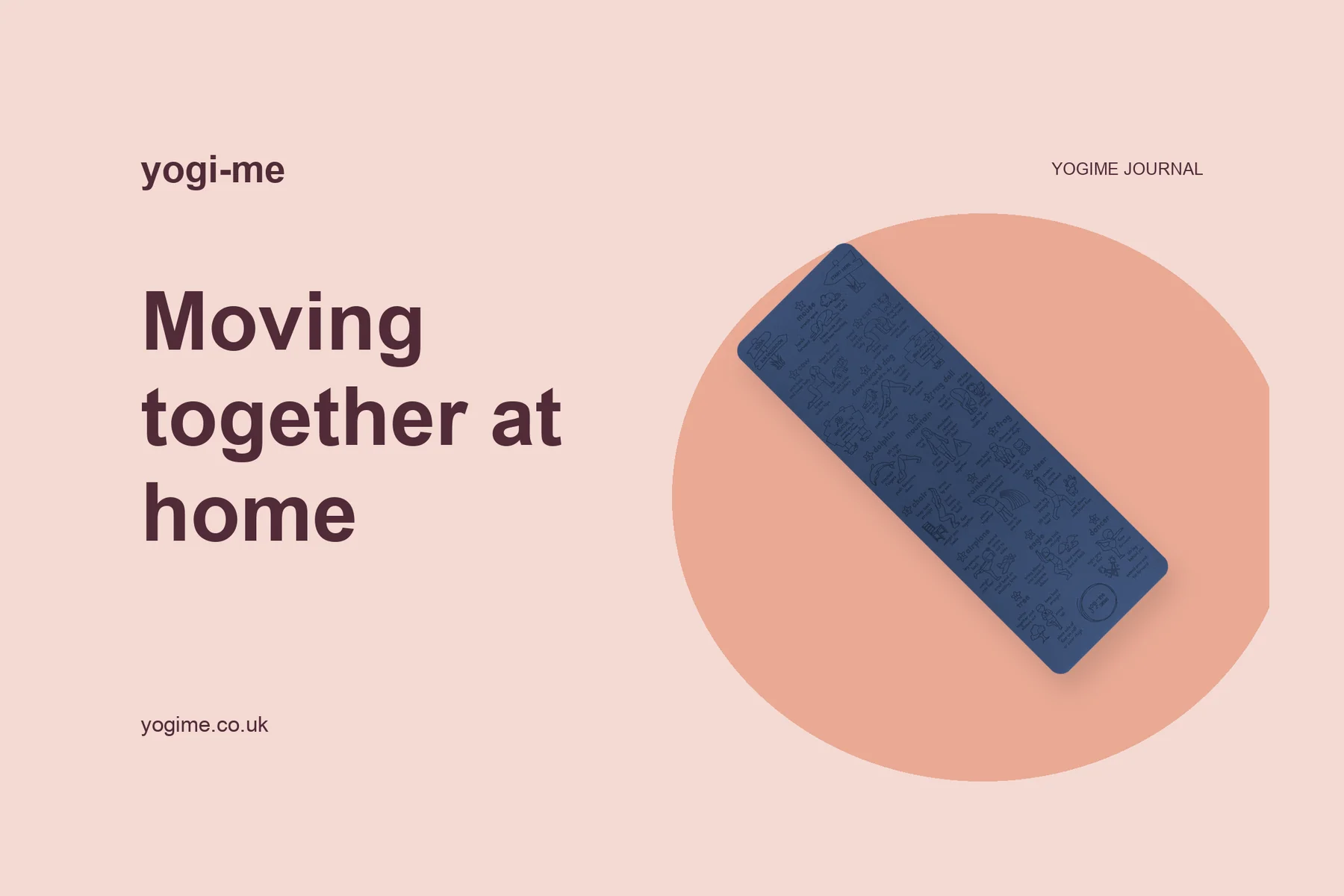
A grippy, cushioned mat does make holds steadier and gives your child a clear spot of their own. Our Yogi-Me mat has 15 numbered poses marked into it, which turns "what shall we do next" into a game your child leads.
Frequently asked questions
How long should a partner yoga session last?
Keep it short and playful. Five to ten minutes is plenty for young children, and even two or three poses count. Let your child's mood set the length. Stop while it is still fun so they ask to do it again.
My child just wants to mess about. Is that a problem?
Not at all. Wobbling, giggling and inventing silly poses is exactly the point at this age. Follow their lead, use animal names, and let the structure be loose. The connection matters more than perfect form, and the calmer poses tend to come once the giggles are out.
Can partner yoga help my child calm down before bed?
Gentle poses like back-to-back breathing can be a soothing part of a wind-down routine. It is not a cure for anything, just a calm, screen-free way to slow down together. Anna Freud offers family wellbeing ideas in a similar spirit.
Is one parent enough, or do we need a class?
One grown-up and one child is all you need. You do not need a class, an app or any training to try the starter poses above. Just clear a bit of floor and have a go. If you get stuck, copy the simplest pose first and add the next one another day.
A little screen-free time, together
You do not need a plan or a spare hour. A couple of poses on the lounge floor is enough to swap a screen for a shared laugh.
If you would like a spot of their own with the poses marked in, browse the Yogi-Me shop and pick a mat your child will want to unroll. For more ideas to try as a household, see our family yoga for the whole family guide.
Sources
- NHS - Physical activity guidelines for children and young people
- NHS - Physical activity guidelines for children (under 5 years)
- WHO - Guidelines on physical activity, sedentary behaviour and sleep for children under 5 years of age
- GOV.UK - Physical activity for children and young people (5 to 18 years)
- NHS - Sleep and young children
- GOV.UK - Help for early years providers: Core strength and co-ordination
- Anna Freud - Resources for Families