practice
Grounding Techniques for Kids: 5-4-3-2-1 and Two More
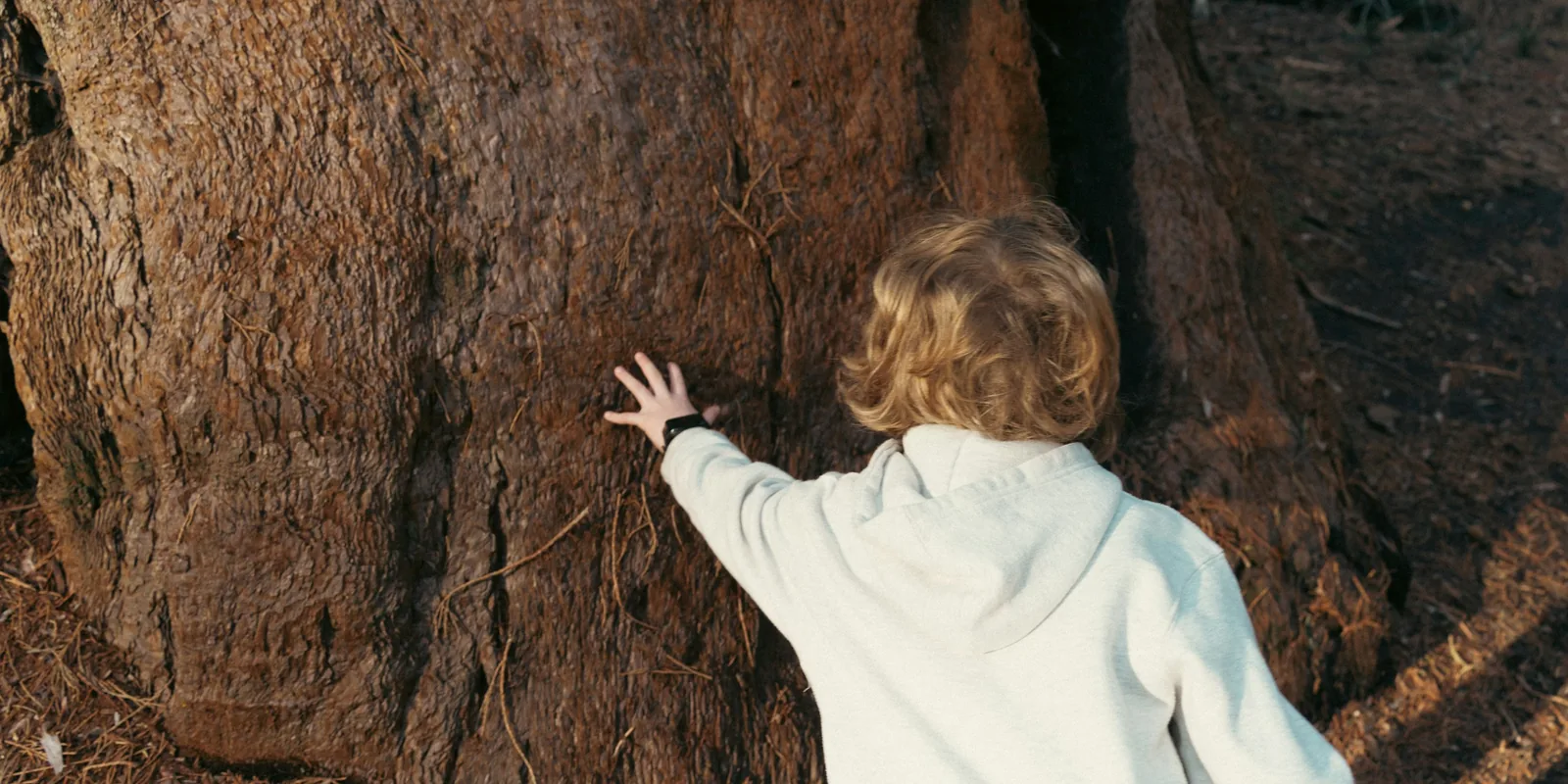
Grounding techniques for kids, written to say out loud: the 5-4-3-2-1 senses game plus two body-based ones, about three minutes for any wobbly moment.
The best-known grounding technique for kids is 5-4-3-2-1: your child names five colours they can see, four soft things they can touch, three sounds, two smells and one taste. Add two body-based steps, pressing heavy feet into the floor first and squeezing something small at the end, and the whole routine takes about three minutes, anywhere.
It's built for the moment just before something: the corridor outside the swimming lesson, the dentist's waiting room, when your child's voice goes tight and they want to go home. You can't fix the thing in front of them. You can bring them back into the room.
What does grounding mean for a child?
Grounding is a way of steadying yourself by paying close attention to what is around you and in your body, right now. YoungMinds puts it like this: "Connecting with what we can see, touch, hear, smell and taste is sometimes called 'grounding'." It says grounding can help us feel more present, bring us back into our body and make an anxious feeling less intense.
For a child, that means a game of noticing. A worry is usually about what might happen next: what if the water's cold, what if nobody plays with me. Naming the yellow coat on the peg and the hum of the drinks machine pulls their attention back to the room they're in.
It isn't a way to make a feeling vanish, or a test they can fail. It sits beside the slower relaxation techniques Anna Freud lists, such as slowing your breathing and tensing and relaxing muscles, which our relaxation techniques for kids page covers for the end of the day.
When should you practise grounding?
Practise it on an ordinary afternoon, before you ever need it. Anna Freud's advice on grounding and breathing techniques is that young people should practise them while they feel calm, before trying to use them when they feel anxious. A game your child already knows will come to mind in a hard moment. A brand-new instruction often won't.
Then use it when you see the wobble starting: shoulders up, fists tight, the questions coming faster. Earlier is easier. Once a child is in full flood, sitting close and saying very little may help more than any game.
How do you do 5-4-3-2-1 out loud with a child?
Get down to their height, slow your voice and keep each question short. Go first if they're stuck.
1. Heavy feet (30 seconds)
"Stand up tall and push your feet into the floor, like they're growing roots. Can you feel how heavy they are?" A few stomps before the feet go still are fine.
2. Five colours you can see (40 seconds)
"Find me five different colours. I'll start: the red fire exit sign." If they rattle off four in one breath, slow them down by asking where each one is.
3. Four soft things, then three sounds (40 seconds)
"Now find four things that feel soft, or bumpy, or cold. Then shut your eyes and tell me three sounds." Younger ones often touch your face or hair for the soft ones, and the sounds may include your own tummy rumbling.
4. Two smells and one taste (30 seconds)
"What can you smell? Your sleeve counts. And what can you taste right now?" YoungMinds suggests something soothing to eat for the last one, so a raisin or a sip of water works.
5. Squeeze the pebble, then let go (40 seconds)
Put something small in their hand, a smooth stone or a shell, and say: "Squeeze it as hard as you can while I count to five. Now let your hand go floppy and breathe out slowly." Do it twice, then sit still together for a few breaths. They may want to keep the pebble, and you can let them.
The pebble comes from YoungMinds, which says that "holding a memento of a relaxing place, like a seashell or pebble, can help". The squeeze and let-go is our addition.
How long does the routine take?
About three minutes: 30 seconds each for heavy feet and for smell and taste, and 40 seconds each for colours, touch and sounds, and the pebble. The quick version for the school gate is heavy feet and five colours, and it counts. If your child wants to do the countdown twice, let them.
What if they say there's nothing to smell?
Then there's nothing to smell, and you move on. The point is the looking, not the score. Other common hiccups:
- They giggle all the way through. That's allowed. Keep going in a quiet voice and let the giggles run out.
- They refuse. Do it yourself, out loud and slowly, and get one wrong on purpose. Many children can't resist correcting you.
- They get cross with the questions. Drop the game and stay close. YoungMinds notes that "Feeling you nearby can be soothing", and that if holding a hand is too much, you can simply sit near them.
- It doesn't seem to help. YoungMinds says it's about finding which strategies suit your child, and that you don't need to use all of them each time. Some children prefer breathing exercises such as tracing round their fingers.
Where does grounding fit in an ordinary week?
A familiar game is the one a child reaches for, so play it often when nothing is wrong. Some easy places to fit it in:
- In the car. Five colours out of the window is a decent game on any journey.
- In a coat pocket. Choose a grounding pebble together on a walk and keep it where they can reach it.
- At home, standing up. A few minutes on a mat after school, feet heavy, then the countdown. Children who like a challenge can finish with tree, pose 14 on our Sun Salutation mat: once your feet feel heavy, can you stand on just one?
That last idea is where our Sun Salutation mat earns its place. There are 15 poses laser-engraved on it, each with its number, so a child who wants to move after all the talking can pick a standing one and try it.
Our guide to ways to calm an anxious child shows where grounding sits among other calming tools, and mindfulness for kids has longer practices.
When is it more than a wobbly moment?
Most children have worried days, and the NHS calls many such worries a normal part of growing up. The NHS advice is that anxiety which is severe, lasting and getting in the way of daily life is worth getting help with, and seeing a GP is a good first step. When school is part of the picture, speak to their teacher as well. You don't need to wait until things are bad before asking.
Frequently asked questions
What is the 3-3-3 rule for kids?
It's a shorter cousin of 5-4-3-2-1: name three things you can see, three things you can hear, then move three parts of your body. None of the UK health bodies we checked sets it out as a rule, so treat it as a quick version of the same idea. It suits a child who loses count halfway through the longer game.
What are five grounding techniques for kids?
The 5-4-3-2-1 senses game, pressing heavy feet into the floor, holding something small like a pebble, tracing round the fingers of one hand while breathing in and out, and picturing a safe place agreed in advance. YoungMinds describes the senses game, the finger tracing and the safe place; Anna Freud describes a similar hand-breathing exercise.
What age can children start grounding exercises?
Any child who can name a colour and point to a sound can do the seeing and hearing parts. With a three-year-old, keep it to colours and one noise and do it together. Older children can usually run the full countdown on their own, and many enjoy being the one who asks the questions.
Is grounding the same as mindfulness?
They're close relations. Both bring attention back to what is happening right now. Grounding is the short, practical version for one moment: a few minutes of noticing to steady a child when a feeling has got big. Mindfulness is the wider habit of paying attention, practised at calm times as well, through things like mindful colouring, walking or yoga.