practice
Chinese New Year Activities for Kids: 12 Ideas
Chinese New Year activities for kids aged 3 to 8: a zodiac animal movement game, a lion dance, lanterns and red envelopes, and why the date moves.
The best Chinese New Year activities for kids mix making with moving: a zodiac animal game, a lion dance under a blanket, red envelopes, paper lanterns and paper-cut windows. Here are 12 that work at home or in an early years setting for children aged 3 to 8, with the background they'll ask about, told accurately and without a date that's out of date by next year.
Chinese New Year, also called Lunar New Year, is the start of the year in the traditional Chinese calendar, and for many cultures across Asia it's the most important festival of the year.
When does Chinese New Year fall?
On a different day every year. Royal Museums Greenwich explains that the festival begins on the first day of the first lunar month and ends with the Lantern Festival on the 15th day. The Chinese calendar is lunisolar, following both the moon and the sun, and the Hong Kong Observatory sets out how each lunar month begins on the day of a new moon.
The result is a new year that lands somewhere between the third week of January and the third week of February. Check the date for the year you're planning, and treat the two weeks after it as the festival, not just the one day.
Lunar New Year or Chinese New Year?
Both are right, and which one you use depends on who's in the room. Royal Museums Greenwich describes Lunar New Year as a festival celebrated by people across Asia, and notes that the zodiac animals are often the same in China, South Korea, North Korea, Singapore and Cambodia.
If a child in your class has a Korean or Vietnamese family, Lunar New Year includes them. If the families you know are Chinese, ask what they call it at home.
Twelve animals, twelve moves
The zodiac gives you a ready-made movement game. Each year is named after one of twelve animals, in a fixed order that Royal Museums Greenwich lists as rat, ox, tiger, rabbit, dragon, snake, horse, sheep, monkey, rooster, dog and pig. The sheep is often called a goat.
- Rat, The move: Scurry on tiptoes, then curl up small
- Ox, The move: Plod with slow, heavy steps, head down
- Tiger, The move: Creep low on hands and feet, then pounce
- Rabbit, The move: Crouch and hop, ears up
- Dragon, The move: Arms high, weave and wiggle across the room
- Snake, The move: Lie on your tummy and slither, then lift your chest and hiss
- Horse, The move: Gallop round the room
- Sheep or goat, The move: Climb an imaginary hill on tiptoes, knees high
- Monkey, The move: Swing your arms and bounce on bent knees
- Rooster, The move: Strut, flap your elbows and crow
- Dog, The move: Walk on hands and feet, and wag
- Pig, The move: Lie on your back and roll side to side in the mud
Holding a pose for a moment is on the list of things three and four-year-olds are learning in the DfE's Development Matters framework for the early years, which uses musical statues as its example. So add a "freeze" between animals.
The 12 Chinese New Year activities
Start anywhere. Most need paper, a pair of scissors and some floor space.
1. The zodiac animal game
Call out the twelve animals in order and everyone does the move from the table above. Then mix them up, or let a child be the caller. Shout "freeze" between animals and see who can hold still. Good from age 3.
2. Act out the animals' race
There's a folk tale, told in many versions, about a race across a river to decide the order of the animals. Read a picture-book version, then act it out with the moves above and a blue blanket for the river. Good from age 4.
3. A lion dance under a blanket
Royal Museums Greenwich describes lion dance troupes as a dramatic part of the festivities, ushering in the new year. Two children share a blanket: one is the head, holding up a box with a face drawn on it, one is the tail. A third bangs a saucepan drum. Good from age 4.
4. A dragon made of children
The dragon is the only mythical animal in the zodiac. Line up, hands on the shoulders of the child in front, and the first child leads the dragon round the room, under the table and back. Everyone must keep hold. Good from age 3, best with five or more.
5. Red ribbon streamers
Tape red and gold crêpe paper strips to a stick and dance with big, sweeping arm movements: circles, waves and figures of eight. Development Matters lists using "large-muscle movements to wave flags and streamers" among the things three and four-year-olds are learning. Good from age 3.
6. Red envelopes with a kind note inside
Royal Museums Greenwich notes that in Hong Kong, married family members give red packets containing money to the children of the family. Fold your own from red paper and put a note inside instead: a compliment, a joke or a promise of a game. Good from age 5.
7. Paper lanterns for the 15th day
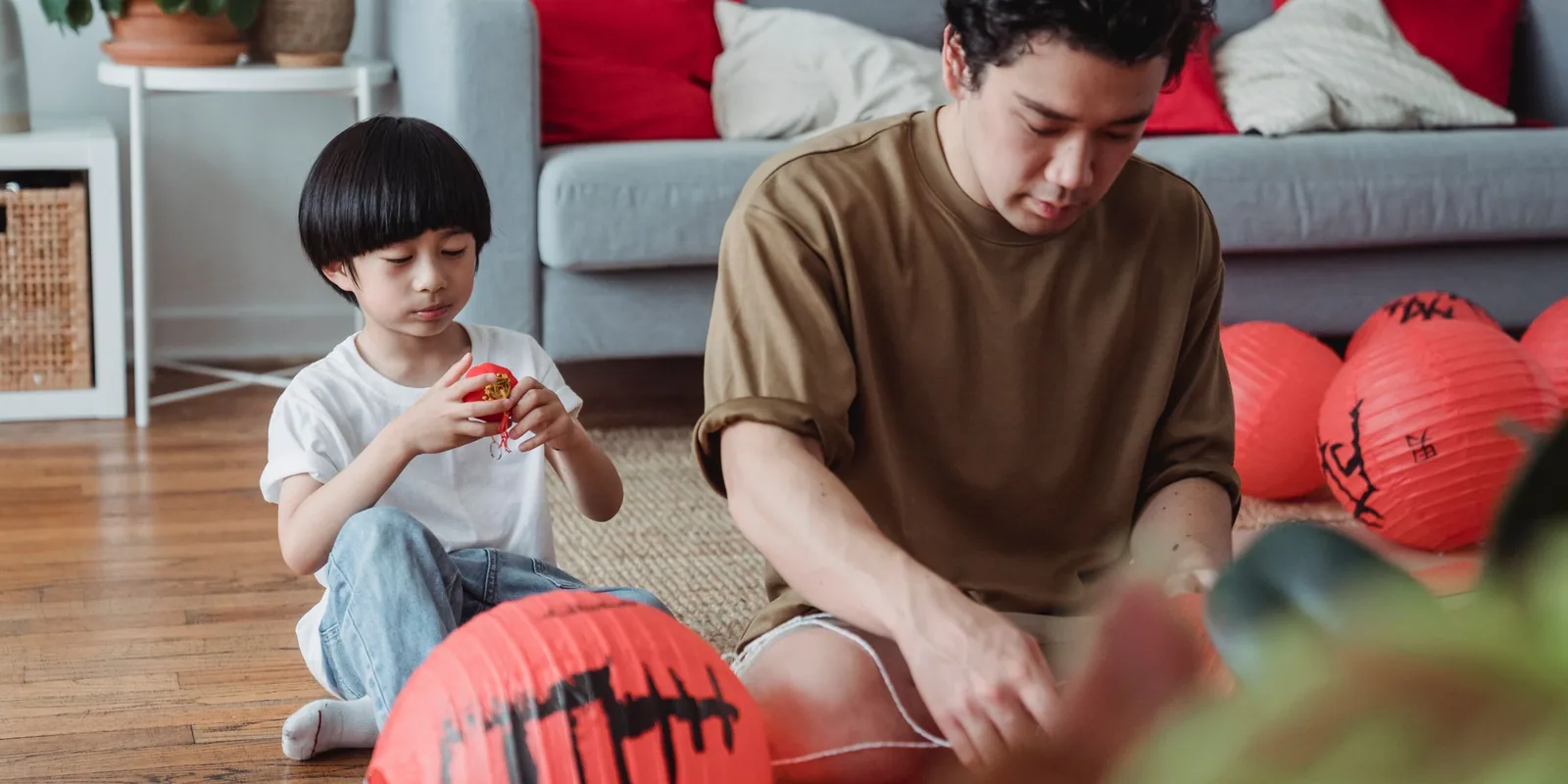
Fold a sheet of paper in half lengthways, cut slits from the fold, open it out and tape it into a tube with a handle. Hang them up for the Lantern Festival on the 15th day of the new year. Good from age 4, with help on the scissors.
8. Paper-cut window decorations
Chinese paper-cut is on UNESCO's list of intangible cultural heritage, used to decorate windows and to mark weddings, birthdays and other occasions. Fold red paper several times, cut shapes along the folds, open it out and stick it to a window. Good from age 5.
9. Brush-paint a character
The Chinese character 福, said "fu", means blessing or good fortune. Show children the character, then paint it with a thick brush, either in paint on paper or in water on a paving slab outside, where it fades as it dries. Good from age 4.
10. Find everyone's animal
Look up which animal each person in the family was born under, using a table of past years. Watch January and February birthdays: the animal changes at the new year, not on 1 January, so someone born in late January may belong to the year before. Good from age 6.
11. Keep a moon diary
Because each lunar month starts on a new moon, the Lantern Festival on the 15th day falls around a full moon. Draw the moon each clear evening from the new year to the Lantern Festival and watch it grow. Good from age 5.
12. Spot the different animal
Royal Museums Greenwich notes that the Vietnamese zodiac has a buffalo instead of the ox and a cat instead of the rabbit, and the Japanese zodiac has a boar instead of the pig. Make two sets of animal cards and let children find the swaps. Good from age 5.
A one-hour Lunar New Year session
For a nursery group or a rainy weekend afternoon:
- 10 minutes: the story of the race, read aloud.
- 15 minutes: the zodiac animal game, then the dragon round the room.
- 25 minutes: lanterns or red envelopes at the table.
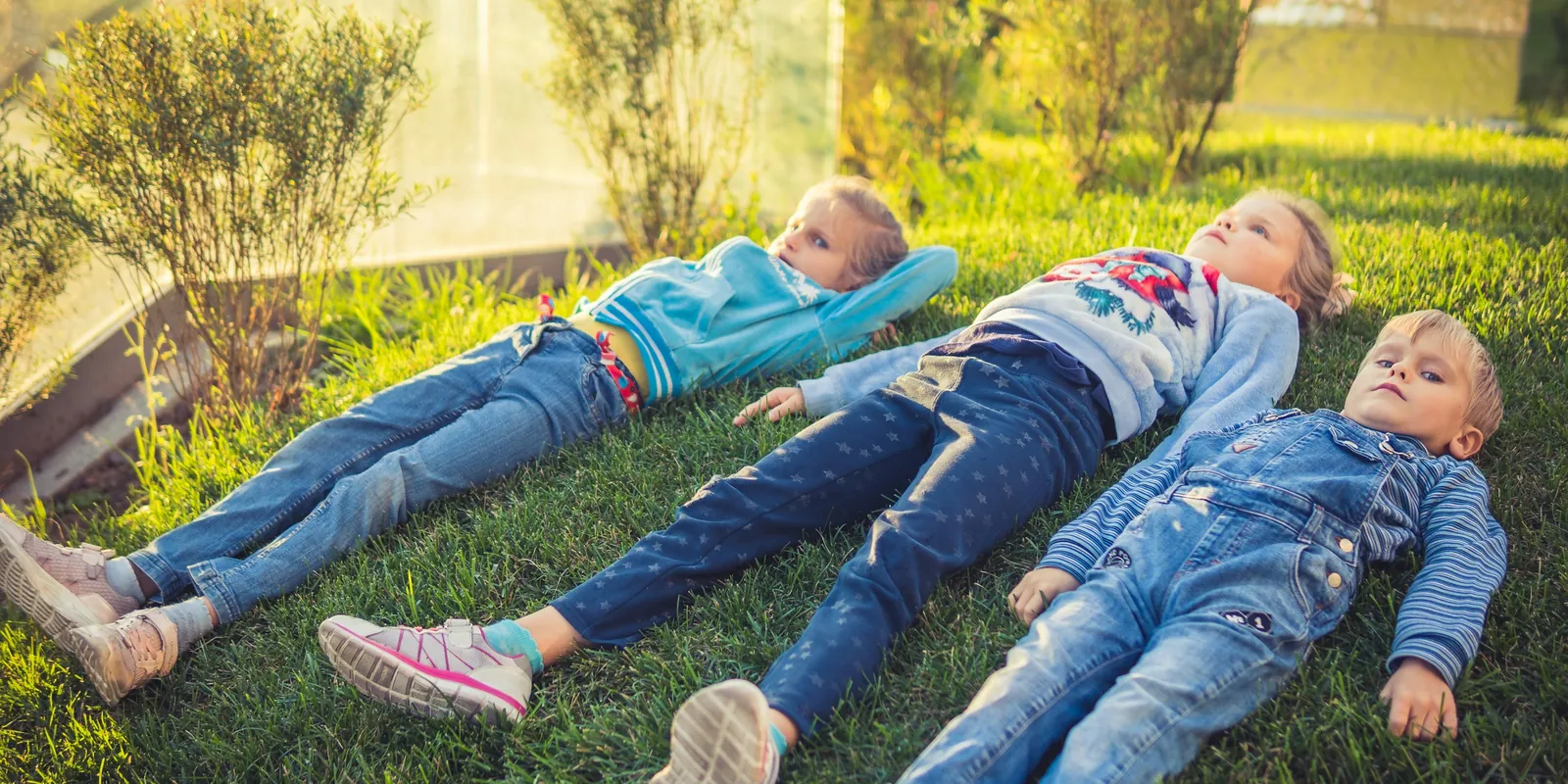
- 10 minutes: lie down and rest, with the room quiet, before home time.
For a calmer version at home, swap the dragon for the moon diary and finish with a bedtime story. Our winter activities for EYFS have more for the same weeks of the year.
Getting it right in an early years setting
Development Matters suggests practitioners "celebrate and value cultural, religious and community events and experiences", and lists, for children in reception, learning to "recognise that people have different beliefs and celebrate special times in different ways". That makes Chinese New Year a natural fit for understanding the world, and the moving activities above cover physical development at the same time. The DfE's physical development page for early years providers links games and play, indoors and out, to children developing their balance, co-ordination and agility.
A few habits keep it respectful:
- Ask families first. If a child in your setting celebrates, invite their family to share a story, a food or a word, if they'd like to. Never make the child the class expert on the spot.
- Use real things where you can. A real red envelope, a real lantern or a recording of a lion dance drum beats a cartoon worksheet.
- Skip the costume shortcuts. Dressing up as a stereotype isn't the same as learning about a festival.
- Say Lunar New Year when it fits. If Korean or Vietnamese families are in the room, they celebrate too.
Frequently asked questions
When is Chinese New Year?
It moves every year, because it follows the moon. Chinese New Year is the first day of the first month in the traditional Chinese calendar, and each month starts on the day of a new moon. In practice that puts it somewhere between the third week of January and the third week of February. Check the date for the year you're planning before you book anything.
What are some fun games for kids to play at Chinese New Year?
A zodiac animal movement game is the easiest: call out the twelve animals in order and everyone moves like each one, from a scurrying rat to a pig rolling in mud. A lion dance under a blanket, acting out the story of the animals' race, and a dragon made of children holding shoulders all get young children moving too.
What are the 12 animals of the Chinese zodiac in order?
Rat, ox, tiger, rabbit, dragon, snake, horse, sheep or goat, monkey, rooster, dog and pig. Each year is named after one of them, and the cycle repeats every twelve years. Some countries swap an animal: the Vietnamese zodiac has a buffalo instead of the ox and a cat instead of the rabbit, and the Japanese zodiac has a boar instead of the pig.
How do you teach Chinese New Year in the EYFS?
Through doing rather than telling. Development Matters suggests practitioners celebrate and value cultural, religious and community events, and lists, for children in reception, learning to recognise that people celebrate special times in different ways. A lion dance, lanterns and a zodiac movement game cover physical development and understanding the world together. If a family in your setting celebrates, invite them to share, without putting their child on the spot.
What is the Lantern Festival?
The last day of the new year celebrations. Royal Museums Greenwich explains that the festival begins on the first day of the first lunar month and ends with the Lantern Festival on the 15th day. Because each lunar month starts on a new moon, the Lantern Festival falls around a full moon, which makes it a good night to look up together.
Ending the animal game on the mat
Two of the zodiac animals are already on our mats. The rat can finish curled up in mouse pose, number 1 on the Sun Salutation design, and the rabbit has its own pose, number 14 on Freedom Flow. Children who like the animal game usually like dinosaur yoga and space yoga too, and there are more ideas in our screen-free activities hub. If you'd like a mat with the numbers on it, see our kids' yoga mats.
Sources
- Royal Museums Greenwich: Lunar New Year dates and animals of the zodiac
- Hong Kong Observatory: No Lunar New Year's Eve on the 30th day for five consecutive years
- Department for Education: Development Matters, non-statutory curriculum guidance for the early years foundation stage
- Department for Education, Help for early years providers: Physical development
- UNESCO Intangible Cultural Heritage: Chinese paper-cut
- Wiktionary: 福