community
Family Game Night Ideas with Kids: 14 Games for Ages 3 to 8
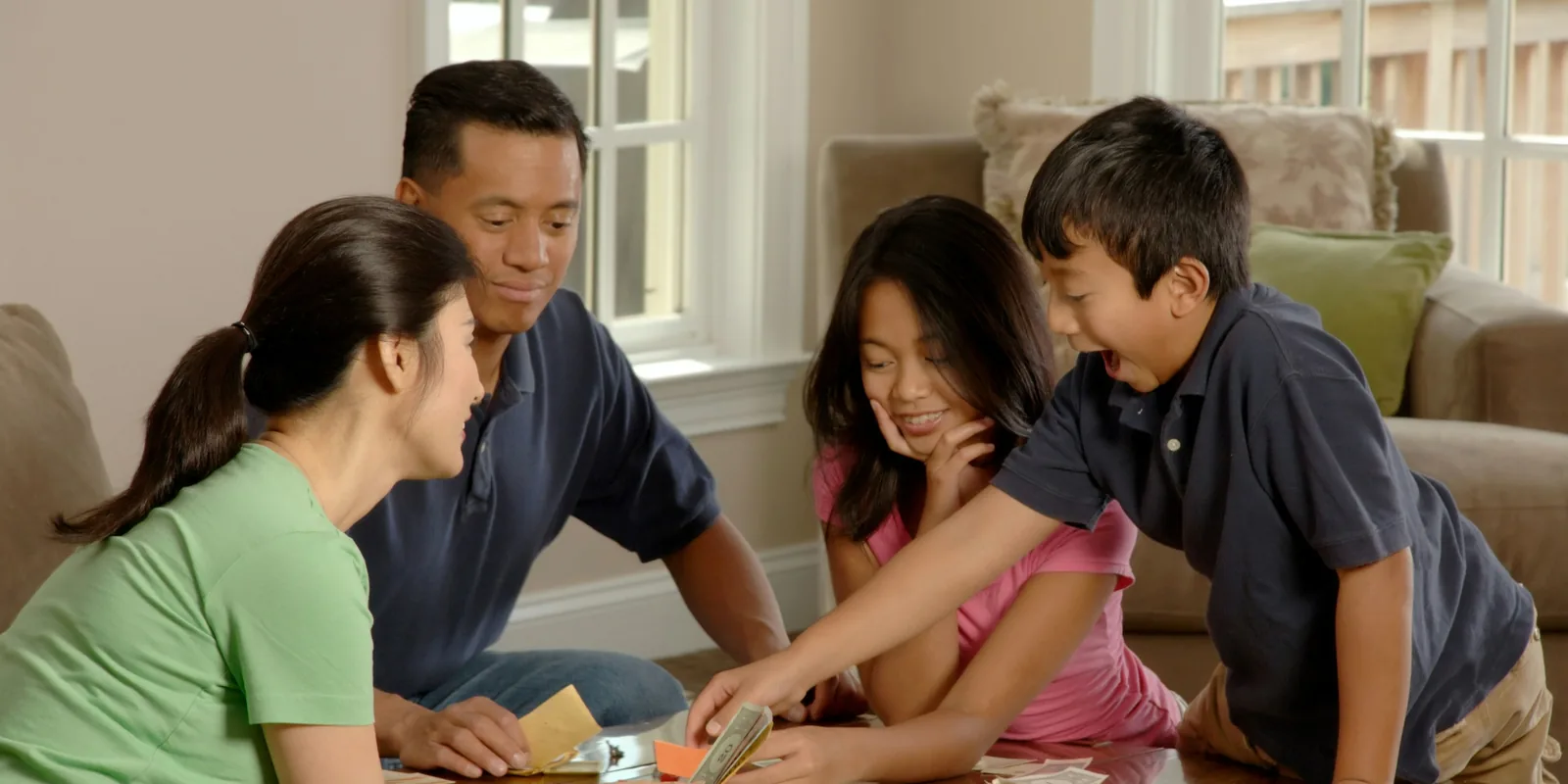
Family game night ideas with kids aged 3 to 8: 14 games the youngest and a grown-up can play fairly, and 12 need no board game.
Fourteen games, twelve of them with no board in sight: these family game night ideas with kids aged 3 to 8 are sorted by what you need, from nothing at all to one board game. Every game has a rule that lets the youngest player and a grown-up play it fairly, without anybody being quietly let win.
A family game night is a regular evening, usually once a week, when everyone in the house plays together with the screens off. Nothing here needs a phone, a television or a trip to the shops.
Sorted by what's already in the cupboard
The games come in four groups: things already in the house, pen and paper, a pack of cards or one dice, and one board game. Start with whichever group matches your cupboard tonight.
Each game ends with a "make it fair" line and the age it works from. These are family game night game ideas for an ordinary week, not a party. For a birthday crowd, our indoor party games for kids are built for ten children in a front room rather than four people round a table.
14 family game night ideas, from nothing to a board game
With what's already in the house
1. Kim's game
A memory game played with a tray. Put eight things from a drawer on it, let everyone look for thirty seconds, then cover it with a tea towel and take one away. Lift the towel: what's gone? Make it fair: under-fives play with five things, grown-ups with twelve. Age 3 and up. Leave out anything small enough to swallow if there's a toddler about.
2. Pose roulette
Spin a pen in the middle of the mat and everyone does the pose it points to. Each spin adds a pose to the chain, so you do cat, then cat and tree, then cat, tree and eagle. Make it fair: children can look at the pictures, grown-ups play from memory. No mat? Call out animals. Age 3 and up. Kit: a rug, or our Sun Salutation mat.
3. Fortunately, unfortunately
A story told round the table, with good luck and bad luck taking turns. "Fortunately, the dog found a sausage." "Unfortunately, it belonged to a crocodile." Keep going until somebody can't stop laughing. Make it fair: there's no winner, so nothing needs levelling. Age 5 and up, and a four-year-old can take the "fortunately" turns.
4. What's in the bag?
Put a few household things in a pillowcase: a sponge, a spoon, a sock, a clothes peg. Take turns to feel one without looking and guess what it is. Make it fair: grown-ups wear oven gloves. Age 3 and up. Leave out food and anything small enough to swallow if there's a toddler about.
5. Two truths and a fib
Each player says three things about themselves: two true, one made up. "I've been on a ferry, I once met a goat, I hate peas." Everyone else guesses which is the fib. Make it fair: a younger child can whisper their three to a grown-up first and get help making the fib believable. Age 6 and up.
6. Would you rather?
Daft choices, answered by everyone in turn, with a reason. Would you rather have a trunk or a tail? Live in a lighthouse or a treehouse? Only eat cold soup, or only eat warm ice cream? Make it fair: there are no right answers, and the youngest asks the first question. Age 4 and up.
7. Button tiddlywinks
Flick a button into a mug by pressing on its edge with another button. Five goes each, a point for every one that lands in. It's harder than it sounds for everybody, which is half the fun. Make it fair: grown-ups flick from twice as far away. Age 4 and up, and keep buttons away from toddlers.
Pen and paper
8. Consequences
Fold a sheet of paper into three. The first player draws a head, folds it over so nobody can see, and passes it on. The next draws a body, the last the legs. Then unfold the monster. Make it fair: nobody can draw well under a fold, grown-ups included. Age 4 and up.
9. Draw and guess
One player draws a word they've picked from a hat, with no letters or numbers allowed, and everyone else shouts guesses. First right answer draws next. Make it fair: grown-ups draw with their other hand, which levels things fast. Age 4 and up to draw, and 3 and up to guess.
10. Categories
Pick a letter. Everyone writes an animal, a food and a name beginning with it, and you score a point for each one nobody else thought of. Then pick a new letter. Make it fair: younger players say theirs out loud, and spelling doesn't count. Age 7 and up, or 5 with a grown-up writing.
A pack of cards or one dice
11. Go Fish
Deal five cards each. On your turn, ask one player for a card that makes a pair with one in your hand. If they haven't got it, they say "go fish" and you take one from the pile. Most pairs wins. Make it fair: a four-year-old plays with their cards face up and a grown-up beside them. Age 4 and up.
12. Pig
One dice. On your turn, roll as many times as you dare, adding the numbers as you go. Stop whenever you like and bank your total, but roll a 1 and you lose everything from that turn. First to 50 wins. Make it fair: luck does most of the work. Age 5 and up, with a grown-up adding for under-sevens.
One board game
13. A race game
Snakes and ladders or ludo: roll, count the dots, move your counter, and hope for a ladder. Make it fair: the dice decides, not the player, which is why a race game is the best first board game for a three-year-old and a grandparent at the same table. Age 3 and up, with help counting.
14. A co-operative game
Any board game where everyone plays together against the game, and wins or loses as one team. Look for the word co-operative on the box. Make it fair: there's nobody at the table to beat. Good for a child who hates losing, too. Age 4 and up.
How do you make a game fair for a 3-year-old and a grown-up?
Family game night ideas for all ages work when the rules, not the grown-ups, do the levelling. Three moves cover almost everything: choose games where luck decides, give the grown-up the handicap rather than the child, and play in mixed-age pairs. The best family game ideas for a wide spread of ages use at least one of the three.
By age, as a guide:
- Age 3: Kim's game, pose roulette, what's in the bag, guessing in draw and guess, and a race game. One rule at a time, with a grown-up beside them.
- From 4 or 5: add fortunately unfortunately, would you rather, button tiddlywinks, consequences, Go Fish, pig and a co-operative game. They can roll for everyone or keep the score.
- From 6 or 7: add two truths and a fib and categories, and let them run the spin in pose roulette and judge the chain.
Mixed-age pairs work for moving games too. Our guide to family yoga has poses a grown-up and a child can hold together.
A Friday and a Sunday, timed
These timings are a suggestion, not a rule. They add up, so you know when to put the kettle on. In December, swap in a few family Christmas games a grandparent can join.
A half-hour Friday with a three-year-old
Kim's game (10 minutes), pose roulette (10) and a race game (10). That's 30 minutes. The moving game sits in the middle on purpose: it uses up the wriggles before everyone sits down for the board.
An hour on Sunday, ages 4 to 8 and a grandparent
Consequences (10 minutes), button tiddlywinks (15), pig (15) and a co-operative game (20). That's 60 minutes. If you're the grandparent hosting, there's room on a full-length mat for your own go at pose roulette. And if a cousin is staying the night, our sleepover ideas carry on where the last game leaves off.
How long should a family game night be?
There's no official guidance, so this is our suggestion: about half an hour with under-fives, and up to an hour by seven or eight. Stop while everyone still wants one more round, and the next week starts with a queue.
Put a game on your feet in the middle. NHS guidance is that under-fives should not be inactive for long periods, except when they're asleep, and that 5 to 18 year olds should break up long periods of not moving with some activity. Pose roulette does that, and so does a round of Simon says or one of the moving listening games.
The sitting games earn their place as well. For under-fives, the WHO says quiet time with a grown-up spent on things like storytelling and puzzles is very important for child development.
How do you play with a child who hates losing?
Lots of children do, and game night is where it shows. Start the evening with a game that has no winner, like fortunately unfortunately, or a co-operative board game where the whole table wins or loses together.
Give them a job that isn't winning: the scorekeeper, the dice roller, the judge of the chain. Lose cheerfully yourself, out loud, and get on with the next round. Short rounds help most of all, because there's always another one coming.
Frequently asked questions
How do you plan a family game night?
Pick the same night each week, with a set start and finish. Phones go in a bowl on the side. Choose three games in advance: one at the table, one on your feet, and a quick one to finish. Let the youngest choose one of the three, so they arrive keen rather than dragged.
What are good family game night ideas without board games?
Kim's game, what's in the bag, consequences, would you rather and Go Fish are five good ones. Most need nothing at all, or a pen and paper, or a pack of cards. In this list, twelve of the fourteen games need no board game, and most use things already in a kitchen drawer.
What's a good first board game for a 3-year-old?
Snakes and ladders, ludo or any other race game where you roll a dice and nobody has to read. Because the dice decides who wins, a three-year-old has as good a chance as a grown-up, and all they need to do is count the dots and move their counter. Play one short round rather than a long one.
Why is family game night important?
No official body says it is, and we won't claim it improves focus, behaviour or anything else. What it does give you is a fixed time each week with the screens off, where everyone in the house turns up, and the youngest gets as many turns as the oldest.
A game the youngest can win
Pose roulette is the one game here where the smallest player has the advantage, because they get to look. If it becomes a Friday habit, our full-length yoga mats for children carry fifteen numbered poses, engraved into a 183 x 61 cm surface that a grown-up can play on as well. They cost £34.99, delivery in the UK is free, and buying two or more takes 10 per cent off.