guides
Sleepover Ideas for Kids: 10 From Arrival to Lights Out
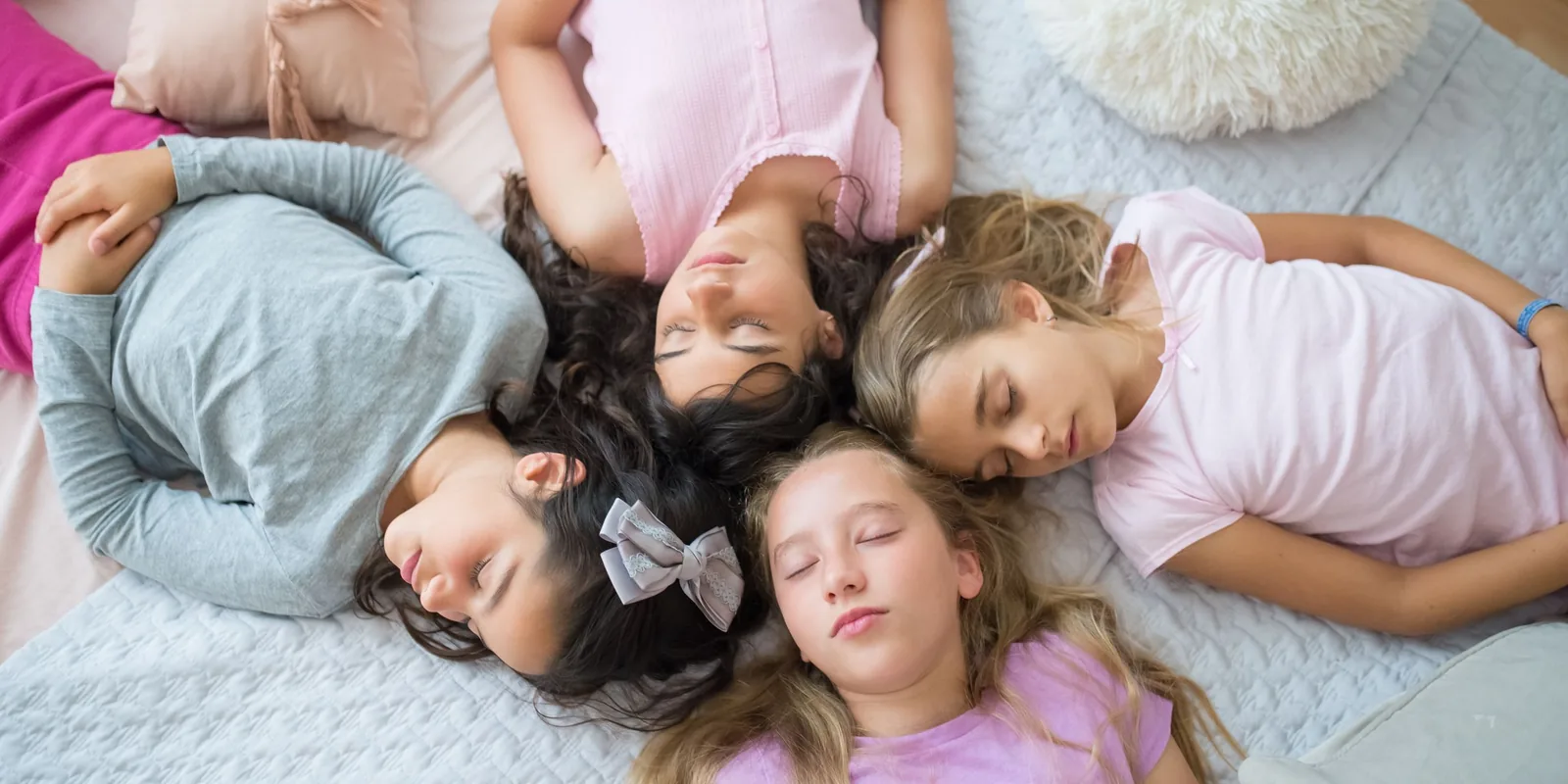
Sleepover ideas for kids aged 5 to 8: ten screen-free activities in the order to do them, ending with a wind-down that has everyone lying still.
The best sleepover ideas for kids come in the right order: loud games first, food in the middle, lying-down ones last, with screens off an hour before lights out. Below are ten for ages 5 to 8, in the order to do them, from the moment guests arrive to breakfast. A sleepover is a night your child spends at a friend's or relative's house, or hosts at yours.
Sleepover ideas for kids at home: what to have ready
The ten ideas run in five stages: arrival, the loud hour, tea, lights low and the morning. Use them in that order and the night winds down on its own schedule rather than yours.
For a first sleepover, two or three guests is plenty. You'll need a torch for each child, a couple of old sheets and some pegs for a den, sleeping bags or duvets, and a rug, towel or mat each for the wind-down. If you know it as a slumber party or a pyjama party, it's the same night. For daytime ideas with the same no-screen approach, try our screen-free activities for children aged 3 to 8.
10 sleepover activities for kids, from arrival to lights out
When they arrive, about 5pm
1. The tour and the bag drop
Before anything else, show every guest where they'll sleep, where the toilet is, and where you'll be all night. Bags go in one corner, with a torch on each pillow. It takes two minutes, and a child who knows the way to the bathroom in the dark has one less reason to want to go home at ten o'clock.
2. Build the camp
Drape sheets over chairs or the back of the sofa, peg the corners and fill the floor underneath with cushions. This is where they'll sleep later, so let them furnish it. Living-room camping turns a front room into somewhere new without anyone leaving the house, and it suits every age from five to eight.
The loud hour, to get it out early
3. A torch treasure hunt
Draw the curtains, turn off the lights and hide eight clues round two rooms, each leading to the next. Clear the floor first and keep the stairs out of it. The children hunt by torchlight, reading the clues out to each other. Younger guests can follow picture clues. It works in any month, since drawn curtains do the job darkness would, and it ends in a small reward.
4. Sardines
Agree which rooms are in, and nobody hides inside anything that shuts or locks. Then one child hides while everyone else counts to fifty. Then they all search, and anyone who finds the hider squeezes in silently beside them. The last child searching finds a heap of giggling guests behind a door. It's at its best now, while noise is still welcome. For more loud games, try our indoor party games.
Tea
5. Make-your-own pizzas
Put out ready-made bases, a jar of tomato sauce and toppings in bowls, and let everyone build their own. It's a meal and an activity at once, and fussy eaters can keep theirs plain. Check allergies with every family before the night, and keep anything a guest can't eat well away from their plate.
6. The early midnight feast
Call it the midnight feast, serve it at half past eight and do teeth straight after. A few snacks in the den, eaten sitting up by torchlight, feel suitably illicit to a six-year-old. They get the name and the excitement; you get a room that has eaten, brushed and changed hours before actual midnight.
Lights low, the last half hour
7. Floor yoga with the lights down
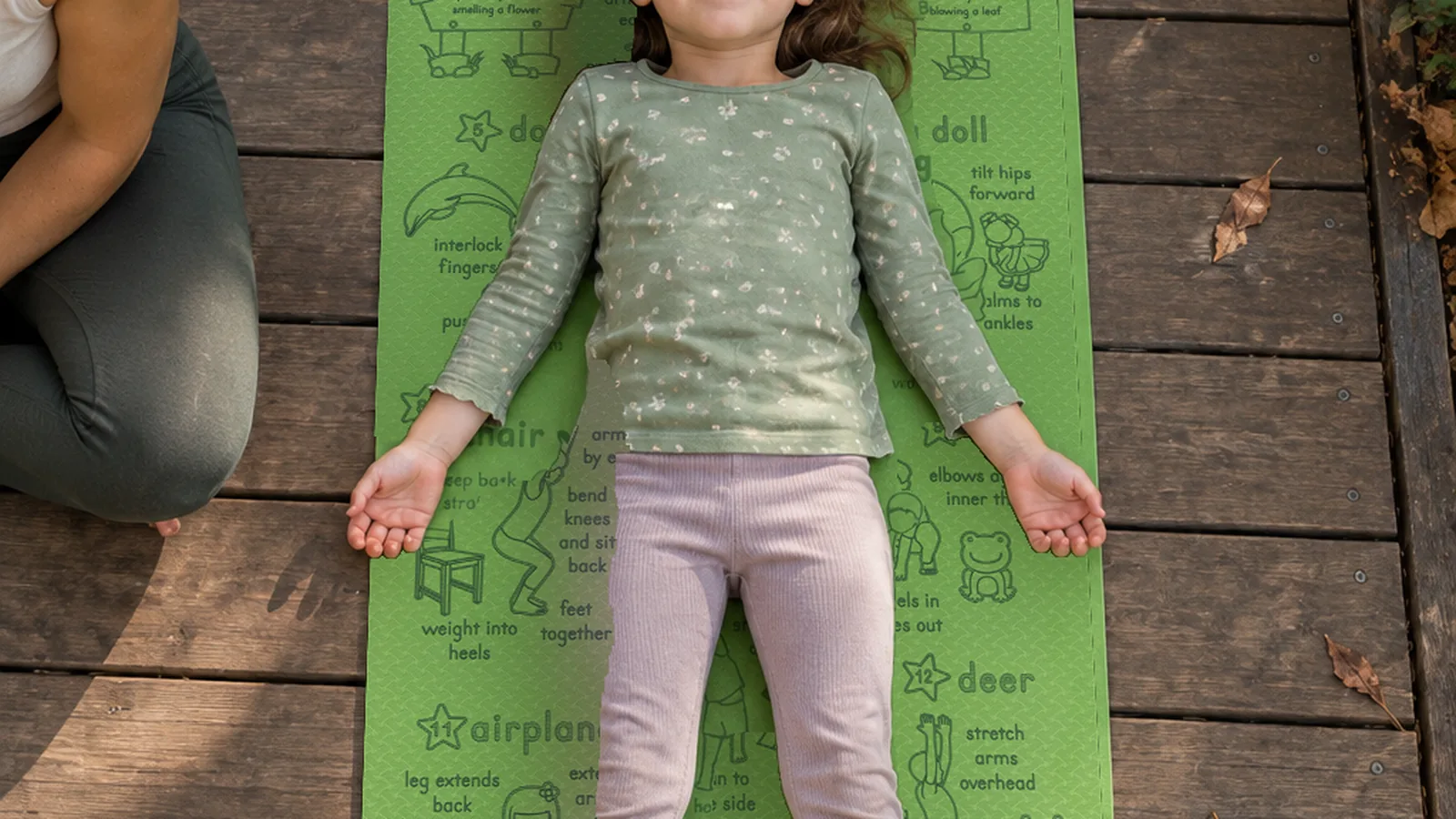
Everyone sits or lies on the floor, lights dimmed, and copies slow shapes. On our Freedom Flow design, a full-length mat with the poses numbered in, you call out a number and everyone finds that pose: 1 is a flower, 3 a star, 13 happy baby, 15 waterfall. Guests without a mat copy on a rug or towel.
8. Torch shadows on the ceiling
Everyone lies on their back in their sleeping bag with a torch. Take turns making shapes on the ceiling with your hands: a rabbit, a bird, a dog, a wobbly spider. The others guess. Then one by one, the torches go off. The game keeps them lying down and looking up, which is where you want them by now.
9. The whispered story round
In sleeping bags, with one torch left on, each child adds one whispered sentence to a story. "Once there was a cat who lived in a lighthouse" can go anywhere. When it reaches the child who started, the last torch goes off and that's the end of the story, and of the night.
The morning
10. Build-your-own pancakes
Make a stack of pancakes and put out toppings in bowls: fruit, yoghurt, a little syrup. Everyone builds their own at the table, slowly, in pyjamas. It's quiet, it's filling, and it gives tired guests something to do until pick-up time, without anyone having to think of a game.
How do you get kids to sleep at a sleepover?
Plan the night backwards from lights out. Put the energetic games early, turn screens off an hour before lights out, dim the lights, and have everyone lying down for the last half hour. Then keep the last activities quiet and dull enough that sleep is the most interesting thing left.
Screens off before bed has backing on both sides of the Atlantic. The NHS's sleep advice for young children, written for under-5s, says not to let them look at laptops, tablets or phones in the 30 to 60 minutes before bed, because the light from screens can interfere with sleep. The American Academy of Pediatrics' healthy sleep habits page says to turn off all screens at least an hour before bedtime and to dim the lights.
A film is part of most sleepovers, and that's fine. Put it early, so it's finished an hour before lights out. For school nights, our guide to a calm bedtime routine covers the everyday version.
A sample sleepover timetable
Illustrative, for guests aged 6 to 8. Move every time together to suit the children's usual bedtime:
- 5pm: arrive, the tour, bags down (1)
- 5.15pm: build the camp (2)
- 5.45pm: torch treasure hunt (3)
- 6.15pm: sardines (4)
- 6.45pm: make-your-own pizzas (5)
- 7.30pm: a film, if you're having one, finished by 8.30pm
- 8.30pm: screens off, the early midnight feast (6)
- 8.45pm: teeth and pyjamas
- 9pm: lights low, floor yoga (7)
- 9.10pm: torch shadows (8)
- 9.20pm: the whispered story round (9)
- 9.30pm: lights out
- 8am: pancakes (10), with pick-up at 10am
Screens off at 8.30pm leaves an hour before lights out, and the lights-low stretch runs half an hour. Lights out at 9.30pm is later than most school nights because it's a sleepover; for the everyday picture, see what time kids should go to bed.
What age do sleepovers start?
There's no official age. No NHS or UK government guidance sets one, and it depends on the child and on whose house it is. Signs a child is ready: they sleep through the night away from you without fuss, they can tell an adult what they need, and they want to go. A late-over, where they come home at bedtime, is a good first step.
A first sleepover at a grandparent's
For many three and four-year-olds, the first night away is with family. The same plan works, just shorter: one loud game, tea, a bath, the floor wind-down and a story. Grandparents, a mat that's always waiting at your house means the wind-down starts the same way every visit. For daytime ideas, see our things to do with grandchildren.
How do I get my child ready for their first sleepover?
The best first sleepover tips for a child of 5 to 8 come down to no surprises. Talk the night through beforehand: where they'll sleep, what happens at bedtime, and that they can ring home or come home at any point. A practice night at a grandparent's helps.
Before the night, ask the hosts about the plan for bedtime and what time to collect, and give them a phone number. Tell them about any allergies, medicines or bedwetting. The NHS says bedwetting is common, so it's an ordinary thing to mention. If you're the host, ask each family the same questions.
If a guest wants to go home
Some children get homesick partway through the night. Try a short phone call home first. If they still want to go, ring their parent and let them go without fuss. Tell them they were brave to try, and suggest a late-over next time. Nobody should leave feeling they failed.
Frequently asked questions
What should a child pack for a sleepover?
Pyjamas, a toothbrush, clothes for the morning, and a sleeping bag or duvet and pillow if the hosts ask for them. Add their teddy or comforter, a torch, and any medicine with written instructions for the hosts. If bedwetting is possible, pack spare pyjamas and a plastic bag, and tell the hosts quietly beforehand.
How many children should you invite to a sleepover?
There's no rule. For a first sleepover, two or three guests are easier to settle than a big group, and easier to fit on the floor. Every extra child adds another voice at lights out. Once your child has done a few, you'll know how many your house, and your patience, can take.
What is a late-over?
A late-over is a sleepover without the sleep: the guests come for tea, games and pyjamas, then go home at bedtime. It's a good first step for five and six-year-olds, or for any child who isn't sure about a night away. They get the fun of the evening and their own bed afterwards.
What if my child wets the bed at a sleepover?
Plan for it quietly. The NHS says bedwetting is common and often runs in families, and that many children under 5 wet the bed. Tell the host in private, pack spare pyjamas and a bag, and let your child know it's all sorted. If it keeps happening at home, the NHS suggests seeing a GP.
The last half hour, already on the floor
If you'd like the wind-down ready before the guests arrive, our children's yoga mats have 15 numbered poses laser-engraved into the surface, so a room of guests can follow along with the lights low and nobody needs to demonstrate. Each suits ages 3 to 8, measures 183 x 61 cm and weighs 800 g, and rolls up with a shoulder carry strap, so a guest can bring their own.
Each is £34.99 with free UK delivery, in two designs and seven colours, and two or more are 10 per cent off.