practice
Dinosaur Yoga for Kids: Roar Early, Then Lie Still as a Fossil
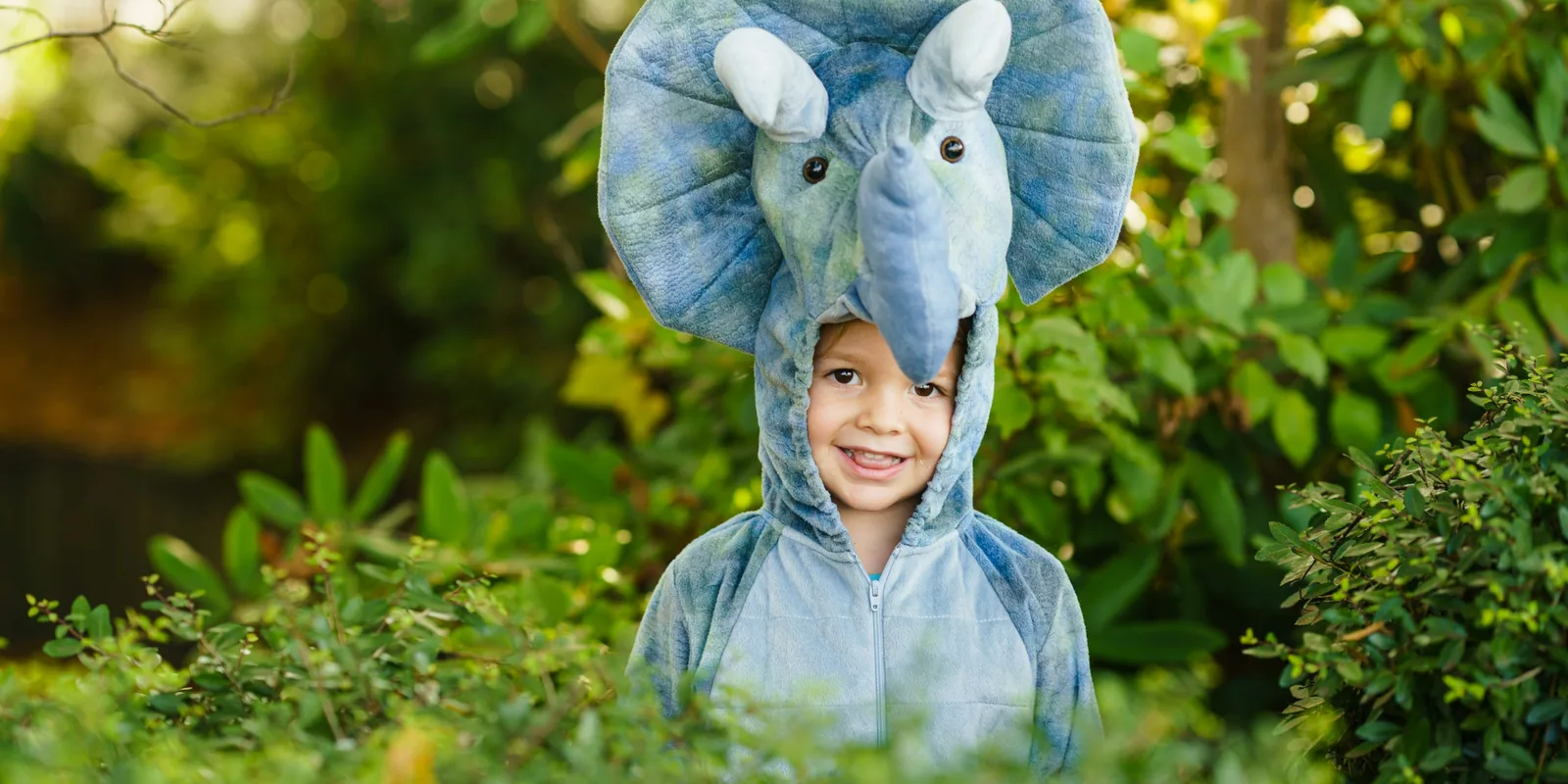
Dinosaur yoga for kids that saves the quiet for last: a pterodactyl, a stampede and one T. rex roar, then a hatching egg and a fossil. Ages 3 to 8.
Dinosaur yoga for kids works best loud first and still last. This 10-minute story for ages 3 to 8 starts with a pterodactyl and a stampede, peaks with a T. rex roar, slows down through a Diplodocus and a hatching egg, and ends with everyone lying as still as a fossil. You need a clear floor, and ideally a mat.
The dinosaur box has been tipped across the living-room floor since lunch, a small T. rex has roared at the cat, and you've just trodden on a plastic stegosaurus in your socks. The roaring needs somewhere to go. Then it needs to stop.
What is dinosaur yoga for kids?
Dinosaur yoga for kids gives every pose a dinosaur to play, so a child flapping their knees in butterfly becomes a pterodactyl coming in to land. A dinosaur yoga story strings those shapes together in an order, so you read and your child moves.
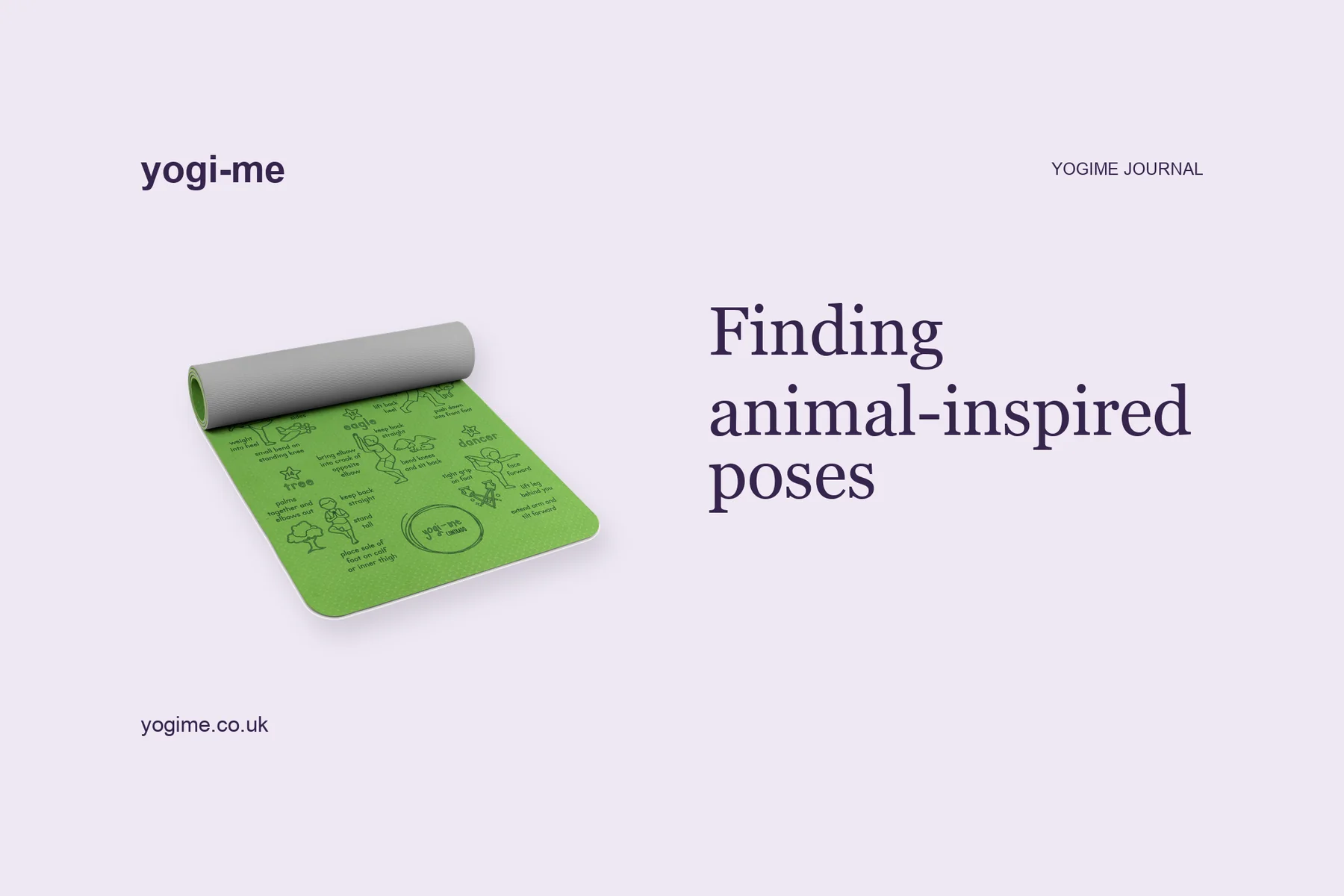
Worth saying plainly: there is no dinosaur on our mats. There's a butterfly, a crab, a waterfall, a rabbit and a happy baby, and this story turns them into dinosaurs. That's the point of pictures on a mat. They're a starting place, not a script. If you'd like to see every pose on our mats, explained, they're all listed there.
When does a dinosaur story work best?
Use it once the roaring has already started, not to start it: after a museum trip, a dinosaur library book, or the week dinosaurs become the topic at nursery or in Reception. The story spends the noise early and finishes quietly, so it fits after a busy spell rather than in place of one.
Stamping and roaring count as moving, but ten minutes is only a slice of the day. The NHS asks pre-schoolers for at least 180 minutes of activity a day, with at least an hour of that moderate-to-vigorous. For 5 to 18-year-olds, the aim is an average of at least 60 minutes of moderate or vigorous activity a day, taken across the week.
What are the best dinosaur yoga poses for kids?
Choose dinosaur yoga poses for kids by what the dinosaur does, not by what it looks like: a pterodactyl flaps, a herd stamps, a T. rex roars, a Diplodocus stretches, an egg curls and a baby hatches. Five of the steps below give one of those jobs to a picture on the mat; the T. rex needs no picture at all. You narrate; your child does the dinosaur.
1. A pterodactyl flaps in to land (butterfly)
Sit by the butterfly on the Freedom Flow mat, tuck your feet in so the soles touch, and flap your knees and elbows as you come in to land. A screech is allowed. Strictly, a pterodactyl was a pterosaur, a flying reptile, and the Natural History Museum says pterosaurs are among the ancient reptiles often wrongly called dinosaurs. A five-year-old will enjoy telling you so.
2. The herd stamps past (crab)
Sit with your hands behind you and your feet flat, then lift your bottom into crab. Now stamp one foot, then the other, so the ground shakes as the herd goes by. Three-year-olds can keep their bottom on the floor and just stamp.
3. The T. rex roars (off the mat)
Stand up, tuck your elbows into your sides and make your hands small at your chest, because a T. rex's arms were famously short. Stomp once round the mat and give one enormous roar. This is the one step off the mat. There's no T. rex yoga pose on it, so your child's whole body becomes one.
4. A Diplodocus reaches the treetops (waterfall)
Back on the mat, find number 15, waterfall. Stand with your feet apart, press your arms together straight up for a long neck, and lean back just a little to reach the highest leaves. A real Diplodocus ate only plants, and the Natural History Museum says its long neck was very flexible, so it could have reached food high among the treetops. Go slowly, because this is where the noise starts to drop.
5. A dinosaur egg (rabbit)
Number 14 is rabbit. Kneeling, reach back for your heels, curl your back round and tip forward until the crown of your head rests lightly on the mat. Now you're an egg. Keep the weight in your knees, never press down on the head or neck, and never push a child further into the curl. Younger children can simply curl up small with their forehead down.
6. The baby dinosaur hatches (happy baby)
Number 13. Roll onto your back, pull your knees up wide and grab the outsides of your feet. The baby dinosaur rocks from side to side, slower and slower, until it stops. The quiet half of the story counts down the mat.
7. Fossil (rest)
Lie flat and still. Take two slow breaths, then stay completely still while a grown-up palaeontologist brushes the dust off with their fingertips. Fossils don't move. They also don't giggle, which is the hard part.
How do you do dinosaur yoga with toddlers?
Keep every dinosaur and swap in easier shapes. Crab becomes sitting and stamping, waterfall becomes reaching up tall without leaning back, and the egg is a simple curl. That's dinosaur yoga for toddlers and under-fives in one line: same story, smaller shapes. For dinosaur yoga at preschool age, a four-minute version works well: pterodactyl, T. rex, the baby hatching and a one-minute fossil.
From about six, children can hold each shape for three slow breaths, pick the next dinosaur, and play palaeontologist for a younger brother or sister. The mats themselves are for ages 3 to 8, so with a two-year-old we'd skip the mat and just stamp and roar together.
How long does dinosaur yoga take?
About ten minutes: roughly a minute per step for the first six, including finding the picture and getting into the shape, then four minutes as a fossil, one to lie down and breathe and three to stay still. That's 6 + 4. The short version takes about four minutes, and two minutes of T. rex still counts.
What if the T. rex won't stop roaring?
Let it roar three times, and on the third roar say that even a T. rex has to lie down eventually. Fossils that giggle can swap places with the palaeontologist. When there are two would-be T. rexes, one roars while the other brushes the fossil, then they swap.
If the noise won't come down, try a game of stamp, stamp, fossil: stamp round the room, and when you call "fossil", everyone freezes on the floor.
How do you keep the dinosaurs coming back?
Let your child choose tomorrow's dinosaur and decide which picture on the mat it should be; a five-year-old will have strong views. When the dinosaurs run out, try animal yoga poses for kids or a space yoga story that ends in a rocket capsule. For a family new to yoga, there's yoga for kids, explained from the beginning.
A mat with no dinosaurs on it, and room for all of them
A child who knows numbers 15, 14 and 13 can lead the quiet half of this story without you. It runs on Freedom Flow, one of our two designs, each with 15 numbered poses laser-engraved into it. The other design, Sun Salutation, has its own fifteen, starting with mouse at number 1.
Both measure 183 x 61 cm, as long as an adult's mat, which means the grown-up can have a go at the butterfly too. If a dinosaur-mad grandchild is coming for the weekend, there are more gifts for grandchildren and screen-free Christmas presents to browse, and a mat unwrapped at Christmas is one they can still be using on a wet February afternoon. Our kids' yoga mats cost £34.99 each, delivered free in the UK, and buying two or more knocks 10 per cent off.
Frequently asked questions
What is the T. rex yoga pose?
There isn't an official one. In this story, the T. rex is a standing stomp with your elbows tucked in and your hands small at your chest, because a T. rex's arms were so short, followed by one big roar. It's the loudest moment of the session, which is why it comes early.
Is a pterodactyl a dinosaur?
No. A pterodactyl was a pterosaur, a flying reptile. The Natural History Museum says pterosaurs are among the ancient reptiles often wrongly called dinosaurs, and that marine reptiles such as ichthyosaurs are not dinosaurs either. A pterodactyl can still fly into a dinosaur yoga story. Just expect a five-year-old to point it out.
Do you need a video for dinosaur yoga for kids?
No. Read aloud, the pace is yours, so you can let the fossil last as long as it's working. The seven steps run flap, stamp, roar, stretch, curl, rock, fossil, which is easy to remember after one go. On Freedom Flow, the quiet half sits at numbers 15, 14 and 13, so your child can count down to the fossil.
What if my child finds the T. rex too scary?
Let them be the one who roars, or make it a friendly T. rex with a small roar. Some younger children would rather be the palaeontologist, watching from the side with a pretend brush. Keep the lights up and your own roar gentle, and skip straight to the hatching egg if they'd prefer.