practice
Boredom Busters for Kids: 30 Ideas, No Screens

30 boredom busters for kids aged 3 to 8, sorted by how much energy they have and how much you have left. Write them on slips and start a boredom jar.
Boredom busters are quick, screen-free ideas to hand a child who has run out of their own. Here are 30 for ages 3 to 8, sorted two ways: how much energy your child has, and how much you have left. Each one fits on a slip of paper, so you can write them out, fold them into a jar and let your child draw one.
A bit of boredom does children good, and our piece on why boredom is good for kids makes that case. This list is for when it's gone on long enough and nobody is having an idea, least of all you.
How does a boredom jar work?
Write each idea below on its own slip, using four colours of paper, one for each section, or a letter in the corner. You choose the colour, because you know whether the afternoon needs running about or calming down. Your child chooses the slip.
One rule saves a lot of arguing: draw two, keep one, and no third draw. Three- and four-year-olds need the slip read to them; by six or seven most children can read their own. Almost everything uses what's already in the house.
What if they're full of beans and you've got nothing left?
These keep a child moving while you stay put.
1. Sock basketball into the washing basket
Ball up pairs of socks and shoot from the doorway. Every basket earns one step further back.
2. The carpet is lava
Scatter the sofa cushions and cross the room without touching the carpet. Time the first go, then try to beat it.
3. Crab, bear and frog races
Cross the room as each animal: crab walks tummy up, bears go on hands and feet, frogs jump from a squat.
4. Paper plane runway
Fold three paper planes, launch them down the hall and mark where each one lands with a strip of masking tape.
5. You're the DJ, they're the statues
You pause the music from the sofa. Whoever wobbles when it stops has to invent the next dance move.
6. Child says
Like Simon Says, but your child gives the orders and you obey from your seat. Watch how fast the power goes to their head.
7. A three-song dance party
Pick three songs. They dance through every second of all three, and freeze in a shape in each gap.
8. An obstacle course they build
Cushions to jump, a chair to crawl under, a line to walk along. They build it, you time three runs. More obstacle course ideas if they're hooked.
What if you both have energy to burn?
These are the ones to save for when you can join in. They also count towards the activity children need. The NHS wants 3 and 4 year olds active for three hours or more a day, an hour of it moderate to vigorous. Its quick test for moderate, given for 5 to 18 year olds, is that you can still talk, but not sing.
9. Mr Wolf, with you as the wolf
You're the wolf, back turned. They creep closer with every answer until you shout "dinner time" and give chase.
10. Tree pose wobble-off
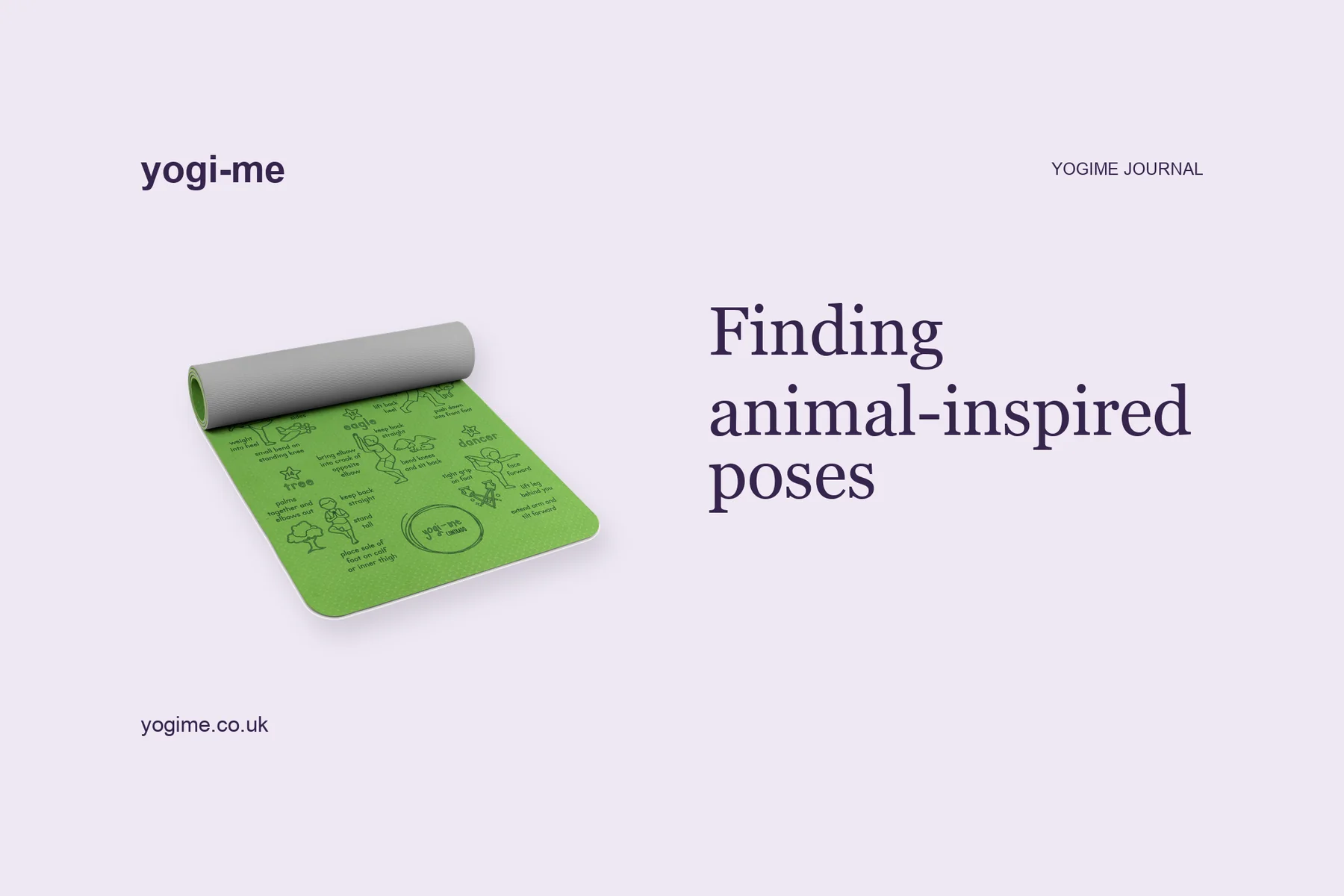
Stand on one leg, other foot against your ankle or calf, hands together. Last one still balanced wins. It's pose 14 on our Sun Salutation mat.
11. Hotter, colder
Hide one small toy and call "warmer" or "colder" as they search. Then swap, and let them hide it from you.
12. Four races in the garden
Hop, skip, walk backwards, then crawl: four races end to end, with a new way of moving each time.
13. Copy my move
Take turns inventing a dance move. The other copies it and adds one, until nobody can remember the whole routine.
14. Pose 1 to pose 15, then back
Start at pose 1, the mouse, on our Sun Salutation mat and work up to the dancer at 15, then race back down. No mat? Number 15 animal shapes of your own.
15. The red-things walk
Walk round the block counting everything red: doors, cars, berries, post boxes. Guess the total before you set off.
What if they're flat and you need ten minutes?
Low energy is not the same as doing nothing. The UK Chief Medical Officers describe a pre-schooler's daily activity as spread throughout the day, and a gentle ten minutes is part of that day too. These need almost nothing from you.
16. A story under a blanket
Put an audiobook on a speaker, hand over a blanket and let them listen lying down, with no screen in sight.
17. Sort the Lego by colour
Tip out one box and sort it into bowls by colour. It's oddly absorbing, and the tidying is done at the end.
18. Draw your street from memory
Every house, car and lamp post they can remember. Then go to the window and check what they missed.
19. An animal for every letter
Draw or write an animal for each letter of the alphabet. X is allowed to be a cheat.
20. Happy baby and a rock
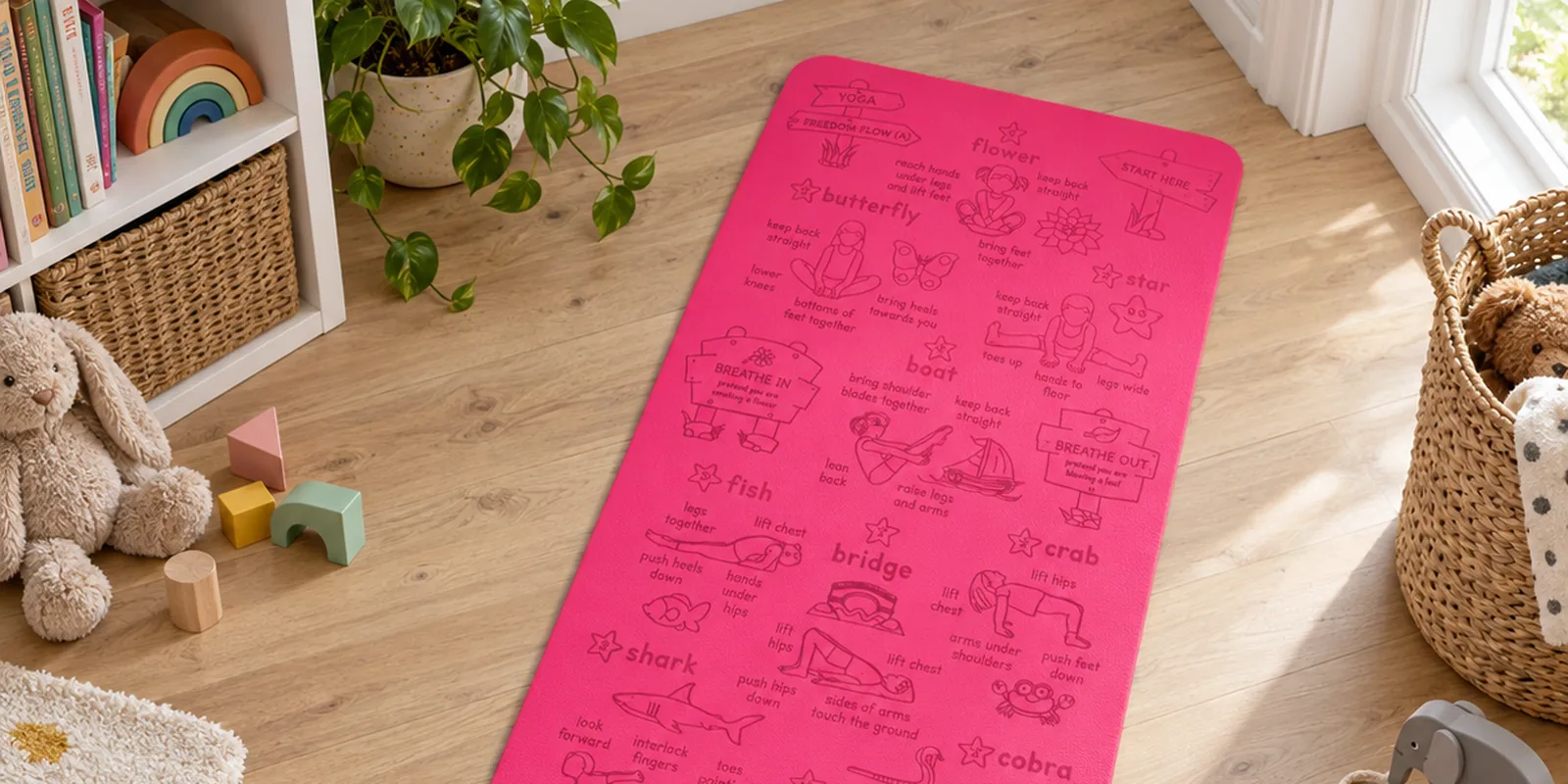
On your back, knees towards your chest, take hold of the outsides of your feet and roll slowly from side to side. It's pose 13 on our Freedom Flow mat.
21. Window counting
Choose one thing to count from the window for ten minutes: dogs, buses or people with umbrellas.
22. Hand animals
Draw round a hand and turn it into something: a turkey, a hedgehog, a spider with one leg missing.
23. A jigsaw on a tray
A tray means the puzzle moves off the table at teatime and comes back after, so a bigger one is worth starting.
What if they're flat and you can sit with them?
Sometimes "I'm bored" means "sit with me". These are for when you can.
24. Cushion den, then a book inside
Sofa cushions, a sheet and two chairs. Once it's built, take a torch and a book in with you.
25. Back drawing
Draw a shape or a letter on their back with one finger. They guess, then it's your turn.
26. A letter for someone who'd love one
Draw or write a letter to a grandparent or friend, do the envelope together and post it on your next walk.
27. Snap, then pairs
Play snap, then pairs with the same pack. Two games, one set of cards and no setup.
28. Old photos, new stories
Get out printed photos from before they were born and let them ask about every one.
29. A floor picnic
Spread a blanket on the living room floor, invite the teddies and eat a snack down there.
30. Shop, café or vet's
They run the shop, café or vet's surgery with toys and a notepad for the bill. You're the customer.
Three draws that fill an afternoon
One slip might fill ten minutes. Three in a row, chosen so each one leads into the next, can carry you to teatime.
- The wet afternoon: 2, the carpet is lava, then 24, a den from the same cushions, then 16, a story inside it.
- The day you're shattered: 6, child says, then 7, the three-song dance party, then 21, window counting while you sit down.
- Two children, one afternoon: 13, copy my move, then 11, hotter, colder, then 27, snap and pairs at the table.
For a whole wet day planned out, our rainy day activities go further. And if you'd like the three pose slips to have somewhere to happen, our kids' yoga mats carry all fifteen, numbered and laser-engraved, so a child who finishes the slip can keep going without asking what comes next.
What if every slip gets a no?
Some children turn down anything that looks like a plan, and a jar can feel like one. A few things help.
Let them write slips of their own, in pictures if they're three or four. A slip they made is much harder to refuse. Add one slip that just says "your choice", which costs you nothing and gives them a way to win.
If they still say no to everything, that's fine too. Being bored for a bit longer isn't a problem to solve, and the jar will still be there tomorrow. What helps least is offering a screen as the reward for picking one, because then the slip becomes the thing standing between them and the tablet. If screens are the bigger worry, we've written about reducing screen time step by step. For more slips, there's a longer list of screen-free play sorted by age.
Frequently asked questions
What is a boredom buster?
A boredom buster is a quick idea for a child who has run out of their own: something that starts in under a minute, needs little or no setup and doesn't involve a screen. The best ones are open-ended, so once you've got a child going, they can carry on without you.
What can I buy to cure boredom?
Less than you'd think. Most of the 30 ideas here use what's already in the house: socks, cushions, paper, masking tape and a pack of cards. If you do buy something, choose things a child can use a hundred ways, like chalk, a roll of masking tape or a big tub of crayons, rather than a toy that does one trick.
How many slips should go in a boredom jar?
Enough that the same slip doesn't come up every day, and few enough that you can keep them all good. Thirty covers a month of single draws. Take out any that never work in your house, and add your child's own ideas as they think of them, because a slip they wrote gets fewer complaints.
Do boredom busters work for toddlers?
A jar of written slips is a bit abstract under 3. Hold up two real things instead, a ball and a book, say, and let them point. The NHS guidance for under-5s is that they shouldn't spend long stretches inactive while awake, so for a toddler the moving ideas, like crawling through a cushion course, tend to land best.