guides
Activities for 3 Year Olds: 15 Ideas for Home, No Screens

15 screen-free activities for 3 year olds, sorted by energy level and time: five-minute fixes to a morning out, mostly with things you already have.
The best activities for 3 year olds are short, hands-on and mostly on the move. Three-year-olds need a lot of physical play, and the NHS says 10 or 20 minutes here and there all counts towards the day's total. Mix that with some making, talking and pretending, and keep anything sit-down short.
Below are 15 screen-free things to do with a 3 year old at home or nearby, sorted by energy level and time, and most of them use things you already have. For the next age up, see our activities for 4 year olds.
What activities should a 3 year old be doing?
A three-year-old should be doing lots of active play, some making and messing, plenty of talking and pretending, and stories to share. The NHS physical activity guidelines say children aged 3 to 4 need at least 180 minutes of physical activity a day, including at least 60 minutes of moderate-to-vigorous intensity activity.
Development Matters, the Department for Education's early years guide for England, has a check pinned to this age: around their third birthday, can the child climb confidently, catch a large ball and pedal a tricycle?
How do I entertain my 3 year old at home?
How to entertain a 3 year old comes down to their energy and your time. A fizzing three-year-old needs to move, a pottering one wants something for their hands, and a flagging one needs something gentle. Pick from the matching section.
The NHS tip is to be the narrator, not the director: say what they're doing rather than telling them what to do. You can start something off, then follow their lead.
What can a 3 year old do to burn off energy?
A three-year-old with energy to burn needs big movements: running, crawling, jumping and dancing. Animal walks, a streamer dance-off, hide and seek, a den with a tunnel and the park all get them moving, and count towards the 180 minutes the NHS recommends.
1. Animal walks (5 minutes)
Race across the room as animals: slither like a snake, gallop like a horse, then a frog jump and a bear crawl. Development Matters suggests modelling words like "gallop" and "slither" at this age.
2. Streamer dance-off (5 minutes)
Tie a ribbon to a wooden spoon, put music on and have a dance-off. The NHS suggests a dance-off at home, and Development Matters lists waving flags and streamers for 3 and 4 year olds.
3. Hide and seek (15 minutes)
Count to ten while your child hides, then look in the wrong places. Swap so they count. The NHS suggests it for getting toddlers moving.
4. A den with a tunnel (30 minutes)
Drape a sheet over two chairs, add a cushion tunnel, and crawl in with a torch. Development Matters says young children are learning to fit themselves into tunnels, dens and large boxes.
5. Ball games and a trike at the park (an hour or more)
Take a large ball and a trike to the park. The NHS says simple ball games teach co-ordination, balance and agility, and catching and pedalling are both in the third-birthday check.
What are good hands-on activities for 3 year olds?
Good hands-on activities for 3 year olds give them real jobs and real materials: water, food, leaves, seeds and teddies. These classic preschool activities each practise something Development Matters lists for 3 and 4 year olds.
6. Paint the wall with water (15 minutes)
Give your child a bucket of water and a big paintbrush and let them paint the garden wall. It dries, so there's no mess. Development Matters suggests making marks with water on large upright surfaces.
7. Little chef (15 minutes)
Let your child pour and stir while you make lunch, then count banana slices onto each plate together. The NHS suggests both, and calls helping with food a fun way to learn words like "pouring" and "stirring".
8. A teddy tea party (15 minutes)
Set out cups and a few teddies and let your child pour pretend tea. A wooden block can be the cake: Development Matters says 3 and 4 year olds are learning to use one object to stand for another.
9. A nature collection (30 minutes)
Collect leaves, sticks and pine cones on a walk, then sort them at home: big and small, rough and smooth. Development Matters lists exploring natural materials and collections for 3 and 4 year olds.
10. Grow cress (10 minutes, then a minute a day)
Sprinkle cress seeds on damp cotton wool and put it on a windowsill. Your child waters it each morning. Development Matters says 3 and 4 year olds are learning to plant seeds and care for them.
What are calm activities for a tired 3 year old?
A tired three-year-old still wants your attention but has little energy left. Acting out a story, I spy, rhymes, drawing and two slow floor poses all work on the sofa, at the table or on the floor.
11. Act out a story (10 minutes)
Act out a picture book they know well. If there's a tree in it, both be trees and wave your arms. The NHS suggests this for 3 to 5 year olds.
12. I spy with colours (5 minutes)
Play I spy with colours: "I spy something red." The NHS suggests I spy for 3 to 5 year olds, and the government's screen time guidance suggests it at mealtimes in place of a screen.
13. Rhymes and claps (5 minutes)
Find words that rhyme with something you can see: cat, hat, mat. Then clap the beats in everyone's name. Development Matters says 3 and 4 year olds are learning to spot rhymes and clap syllables.
14. Draw everyone in the house (15 minutes)
Ask your child to draw everyone at home. Development Matters says 3 and 4 year olds are learning to draw a face as a circle and add details.
15. Butterfly and boat (5 minutes)
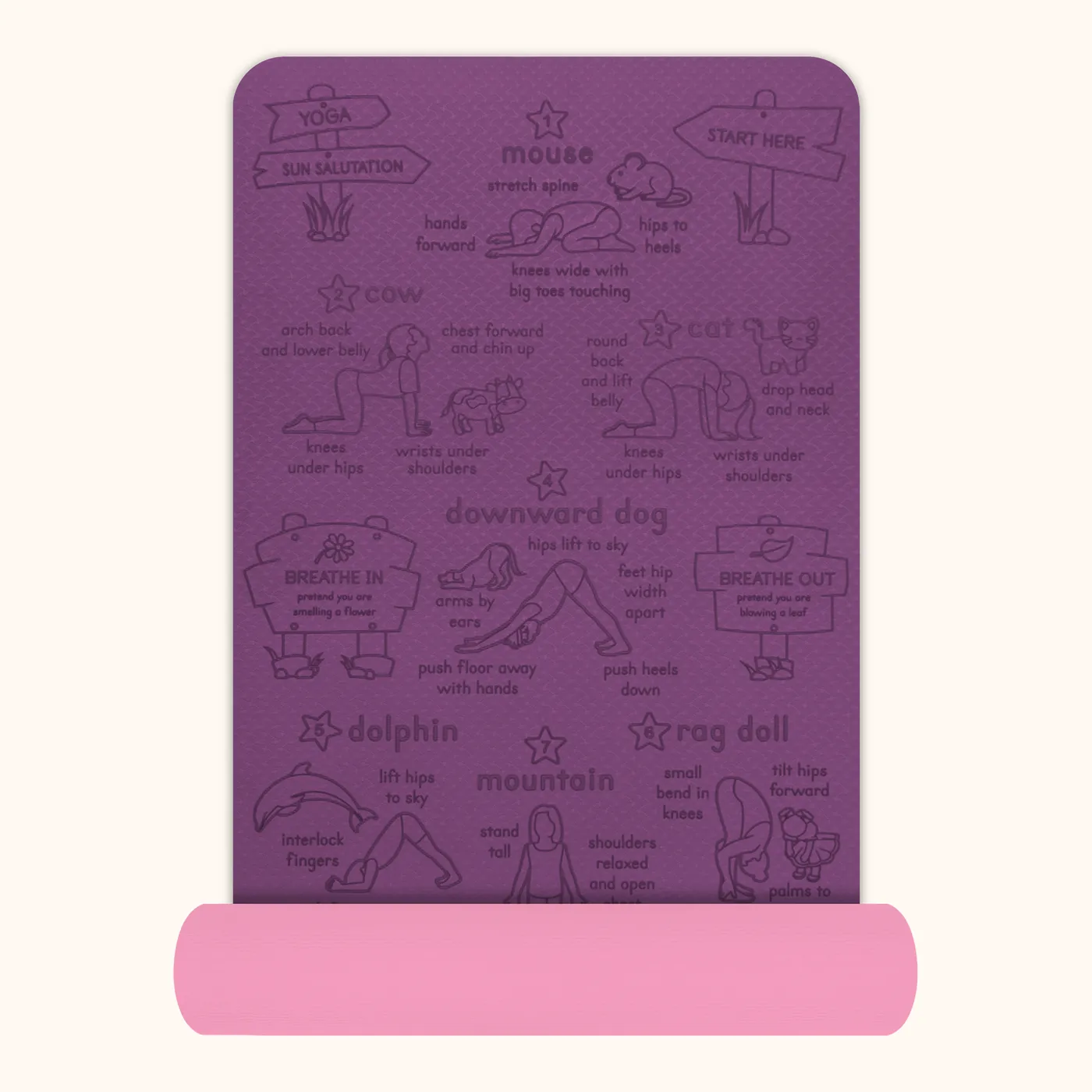
For butterfly, sit with the soles of your feet together and flap your knees. For boat, lean back and lift your bent legs. Development Matters says 3 and 4 year olds are learning to stand on one leg and hold a pose. These are a sitting-down way to practise holding still. Both are engraved on our Freedom Flow mat, so a three-year-old can find them by their pictures.
Which activity fits the time you've got?
Pick by the time you have.
- Five minutes: animal walks, a streamer dance-off, I spy, rhymes and claps, or butterfly and boat.
- Ten to fifteen minutes: hide and seek, painting with water, little chef, a teddy tea party, acting out a story, drawing, or setting up the cress.
- Half an hour or more: a den with a tunnel, a nature collection, or the park.
Two or three in a row make a morning; follow a loud one with a quiet one. Our rainy day activities for kids has more, and our screen-free activities for 3 to 8 year-olds covers the whole age range.
What if your 3 year old isn't interested?
Don't push. Development Matters notes that young children generally focus on an activity of their own choice and find it difficult to be directed by an adult, so start it yourself and see if they join in. If they're busy, say their name first: Development Matters' check for around age 3 is whether a child can switch tasks once you have their full attention.
If it's a screen they want, aim for balance, not a ban. The government's Best Start in Life screen time guidance suggests keeping children aged 2 to 5 to one hour a day, less if possible.
For more ideas, the NHS points parents to BBC CBeebies Parenting. Our yoga for toddlers guide has more simple poses, and our beginner's guide to kids' yoga explains how to start.
Frequently asked questions
What are good indoor activities for 3 year olds?
Most of this list works indoors: animal walks, a streamer dance-off, hide and seek, a den with a tunnel, little chef, a teddy tea party, acting out a story, I spy and butterfly and boat. Only painting with water, the nature walk and the park need you outside.
Is 3 the hardest toddler age?
There's no official answer to whether 3 is the hardest toddler age. The NHS says tantrums usually start at around 18 months and are very common in toddlers, that children are less likely to have them once they can talk more, and that by the age of 4 they're far less common.
What are red flag behaviours for 3 year olds?
Red flag behaviours are a question for a professional who can see your child. The NHS says that if you're seriously concerned about your child's behaviour, talk to your health visitor or GP, and if you're worried about their talking, your health visitor or nursery key worker can help.
How long can a 3 year old concentrate on one activity?
Not long, and that's normal. NHS speech and language guidance suggests keeping activities for young children short, 5 to 10 minutes at most, and stopping when your child loses interest. That's why most of the ideas here take 5 to 15 minutes, with the den and the park as the exceptions.
A mat of their own for butterfly and boat
Our mats give a three-year-old 15 numbered poses, laser-engraved into the surface, so there's nothing to set up and no screen to follow. Freedom Flow has the floor poses, butterfly and boat among them. The Sun Salutation mat has standing ones, for a child who'd rather be on their feet.
- Is three too young? The mats are designed for ages 3 to 8. Three- and four-year-olds copy the animal poses with a little help; older children lead their own sessions. Under three, we'd wait.
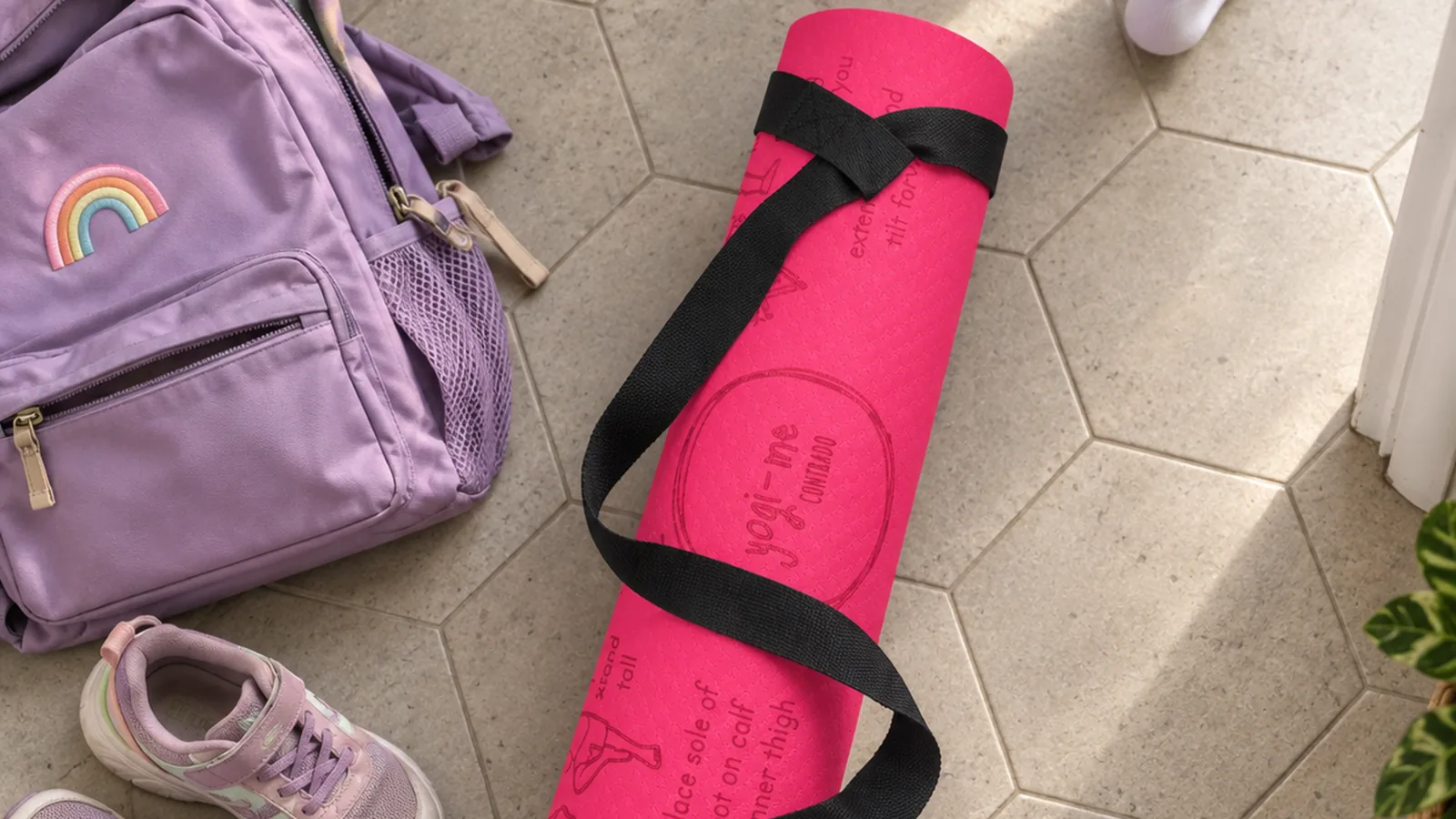
- Isn't it too big? It's 183 x 61 cm, full length so there's room to stretch out at three and still at eight, and you can join in. It weighs 800 g and rolls up with a carry strap, but if your three-year-old wants to carry their own mat to nursery every day, a shorter one is easier.
- Cleaning and materials: wipe it with a damp cloth and a little mild soap, then let it dry flat. It's 6 mm of non-toxic, PVC-free TPE, according to our supplier's specification. Lay it on a dry, flat floor.
Buying for a third birthday or for Christmas? It's a present with a life after Boxing Day: on a wet January Saturday, it just needs rolling out. Buying as a grandparent? It's full length, so you can have a go too. Two or more mats, for a brother, sister or cousin, are 10 per cent off. Our gift guide has more presents that keep them moving.
Roll out butterfly and boat on a mat of their own: choose a colour. Each mat is £34.99 in any of seven colours, with free UK delivery and 30-day returns.
Sources
- NHS: Physical activity guidelines for children under 5 years
- NHS Best Start in Life: Playtime activities and bonding with your toddler
- NHS Best Start in Life: Learning conversations and telling stories, 3 to 5 years
- Department for Education: Development Matters, non-statutory curriculum guidance for the early years foundation stage (updated 4 September 2023)
- NHS: Temper tantrums (reviewed 7 November 2022)
- Best Start in Life: Screen time guidance for under 5s
- BBC CBeebies Parenting
- NHS (Leeds Community Healthcare): Attention and listening