guides
What Time Should Kids Go to Bed? UK Bedtimes by Age 3 to 8
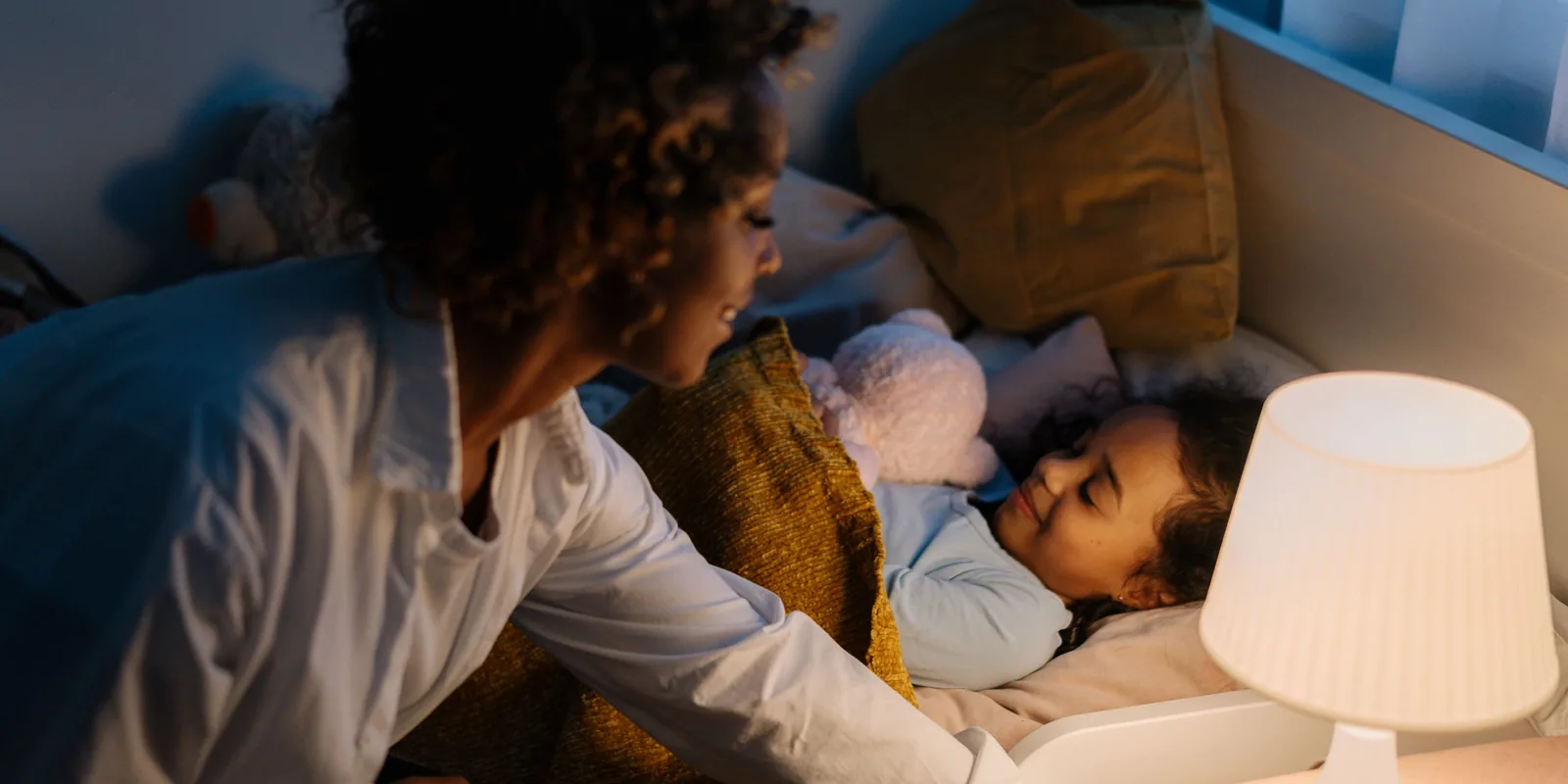
What time should kids go to bed? A UK chart for ages 3 to 8, worked back from wake-up time, using the sleep hours the WHO and others publish.
For a child who wakes at 7am, the published sleep hours put a 3 to 6 year-old asleep between 7pm and 9pm, and a 7 or 8 year-old asleep between 8pm and 9pm. These are ranges, not targets: children vary, and the time that counts is when they fall asleep, not when they go upstairs.
That's the short answer to what time should kids go to bed. The rest of this page shows where every number comes from, so you can work out a bedtime by age for your own child, whatever time your mornings start.
What does the guidance say about bedtime by age in the UK?
We couldn't find a UK health body that publishes a bedtime for each age. What they publish is hours of sleep, so a bedtime is a sum: wake-up time minus the hours your child needs. A child's bedtime is the time they need to be asleep, worked back from the time they have to wake up.
The NHS's page on sleep and young children doesn't give hours or a bedtime by age. It says to decide what time you want your child to go to bed, and to start a winding-down routine around 30 minutes before the time they usually fall asleep. So if you've searched for bedtimes by age from the NHS, that's what its page offers.
The hours come from four places, and they don't quite agree:
- World Health Organization: 10 to 13 hours of good-quality sleep for 3 and 4 year-olds, which may include a nap, with regular sleep and wake-up times (WHO guidance).
- American Academy of Pediatrics: 10 to 13 hours, including naps, for 3 to 5 year-olds, and 9 to 12 hours for 6 to 12 year-olds, counted over 24 hours. These are the American Academy of Sleep Medicine's figures, which the AAP publishes in a chart (AAP sleep hours).
- The Sleep Charity: no hard and fast rule, but a general guide of 10 to 12 hours a night for children aged three to six, and 10 to 11 hours for seven to 12 year-olds (Sleep Charity).
- Cambridgeshire and Peterborough NHS: 10 to 14 hours of sleep every day for toddlers and preschoolers (sleep routines).
Where they overlap is the useful bit: 10 to 12 hours for ages 3 to 6, and 10 to 11 hours for ages 7 and 8. That's what the chart below is built on.
What time should a 5 year old go to bed?
For a 7am wake-up, a five-year-old should be asleep between 7pm and 9pm, which gives them 10 to 12 hours. The same window applies from age 3 to 6, because the published ranges overlap at 10 to 12 hours for the whole span. Earlier in the window suits a child who's tired after school.
Worked from the published hours, for a child who wakes at 7am:
- Bedtime for a 3 year old: asleep 7pm to 9pm (a nap counts towards the total, see the FAQ)
- Bedtime for a 4 year old: asleep 7pm to 9pm
- Bedtime for a 5 year old: asleep 7pm to 9pm
- Bedtime for a 6 year old: asleep 7pm to 9pm
If your child wakes at 6.30am, slide the window to 6.30pm to 8.30pm. At 7.30am, it's 7.30pm to 9.30pm.
There's no source for a different time at each birthday, so we haven't invented one. A three-year-old and a six-year-old with the same wake-up time sit in the same window, and you know better than any chart where your child sits in it.
What time should a 7 year old go to bed in the UK?
For a 7am wake-up, a seven or eight-year-old should be asleep between 8pm and 9pm, which gives them 10 to 11 hours. That's the Sleep Charity's general guide for seven to 12 year-olds, and it sits inside the AAP's 9 to 12 hours for 6 to 12 year-olds.
- Bedtime for a 7 year old: asleep 8pm to 9pm
- Bedtime for an 8 year old: asleep 8pm to 9pm
For a 6.30am wake-up, that's 7.30pm to 8.30pm. For 7.30am, it's 8.30pm to 9.30pm.
For a timed evening that ends with your child asleep by 8pm, our bedtime routine for kids has the seven steps and a 20-minute version for late nights.
Why does the wake-up time matter more than the bedtime?
Because the wake-up time is the one you can actually fix, and the bedtime follows from it. The Sleep Charity advises a set wake-up time each morning, including at weekends, and the AAP says keeping the same waking time helps with a smooth bedtime.
A long lie-in on Saturday makes Saturday's bedtime later, which makes Sunday's harder, which is how Monday mornings go wrong. Keeping the wake-up time within half an hour or so at weekends is our rule of thumb, not guidance, but it's the one that saves Monday. After a long holiday, our back to school routine moves the wake-up time and bedtime back together.
Light summer evenings make an early bedtime harder. The Sleep Charity says blackout blinds can help in the summer months to avoid early waking.
Then there's the clock change. The clocks go back an hour at 2am on the last Sunday in October, according to GOV.UK. A child who usually wakes at 7am will wake at 6am by the new clock for a few days. There's no NHS plan for the clock change itself. Its general method for shifting a bedtime is to move the routine 5 to 10 minutes a week. Our guide to children's sleep when the clocks go back covers the change in more detail. If school mornings are the bigger battle, our school-morning routine works the same sum from the other end.
What helps a child be asleep on time?
A routine that starts at the same time every night, with the screens off first. The NHS's sleep tips for under-5s say no laptops, tablets or phones in the 30 to 60 minutes before bed, because the light from screens can interfere with sleep. The Sleep Charity suggests turning screens off at the start of a routine that begins about an hour before sleep.
After the screens go off, something calm needs to take their place: a jigsaw, colouring, a bath, a story. Our guide to screens and sleep covers the screen-free hour in more detail.
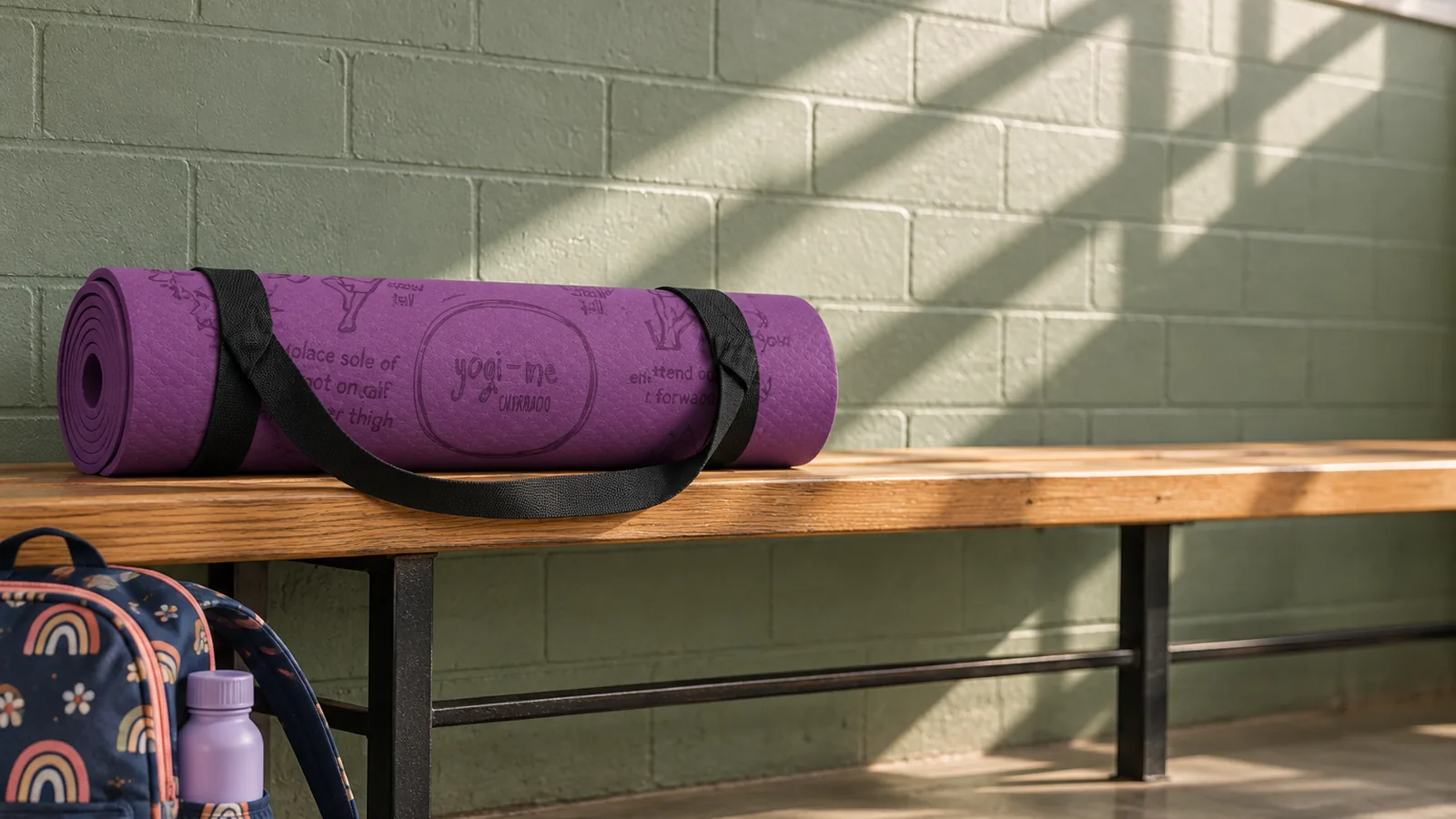
One calm option is a few slow floor poses in pyjamas: butterfly, star and happy baby, then lying still and breathing slowly. Keep it slow and on the floor, because Cambridgeshire and Peterborough NHS advises avoiding exercise directly before bedtime. Our Freedom Flow design has its floor poses marked into the surface, so a child can do a few on their own while the bath runs: see the floor-pose mat. For the full slow sequence, see a slow bedtime yoga routine, and you can browse our mats at £34.99 each with free UK delivery.
What if your child still seems tired?
Speak to someone if your child often seems tired during the day despite enough time in bed, or if bedtimes are wearing the whole family down. For under-5s, the NHS suggests talking to your health visitor, who may suggest a children's sleep clinic if there's one in your area. For any age, speak to your GP or health visitor.
The National Sleep Helpline, listed on the Sleep Charity's bedtime routines page, is 03303 530 541.
Frequently asked questions
Is 9pm too late for a 7 year old bedtime?
Asleep at 9pm with a 7am wake-up is 10 hours. That's the latest time that fits, at the bottom of the 10 to 11 hours the Sleep Charity gives as a general guide for seven to 12 year-olds and inside the AAP's 9 to 12. Fine now and then, but short if they're up at 6.30am.
Is 10pm too late for a 6 year old?
For a child who wakes at 7am, asleep at 10pm leaves 9 hours. That's below the 10 to 12 hours the Sleep Charity gives as a general guide for children aged three to six, and at the very bottom of the AAP's 9 to 12. On a school night, it's late for most six-year-olds.
What time should a 9 year old go to bed, according to the NHS?
The NHS's page on sleep and young children doesn't give bedtimes by age. The Sleep Charity gives 10 to 11 hours as a general guide for seven to 12 year-olds and the AAP gives 9 to 12 hours for 6 to 12 year-olds. For a 7am wake-up, asleep between 8pm and 9pm fits both.
Does a 3 year old who still naps need a later bedtime?
It can. The WHO's 10 to 13 hours for 3 and 4 year-olds may include a nap, and the AAP's figures are a 24-hour total, so count the nap and the night can be that much shorter. Keep it early: Cambridgeshire and Peterborough NHS suggests naps before 3pm, and the NHS says avoid long naps in the afternoon.
Sources
- NHS - Sleep and young children, last reviewed 31 March 2023
- World Health Organization - To grow up healthy, children need to sit less and play more, 24 April 2019
- American Academy of Pediatrics, HealthyChildren.org - Healthy sleep habits: how many hours does your child need?
- The Sleep Charity - How much sleep does my child need?
- The Sleep Charity - Bedtime routines
- The Sleep Charity - Bedroom environment
- Cambridgeshire and Peterborough NHS - Sleep routines for toddlers and children, last reviewed 1 November 2023
- GOV.UK - When do the clocks change?