practice
Dough Disco: A 5-Minute Routine for Little Hands
Try dough disco without a video: five minutes of squeezes, rolls, pinches and pats, with spoken prompts, a recipe link and a standing stretch.
What is dough disco, and can you skip the video?
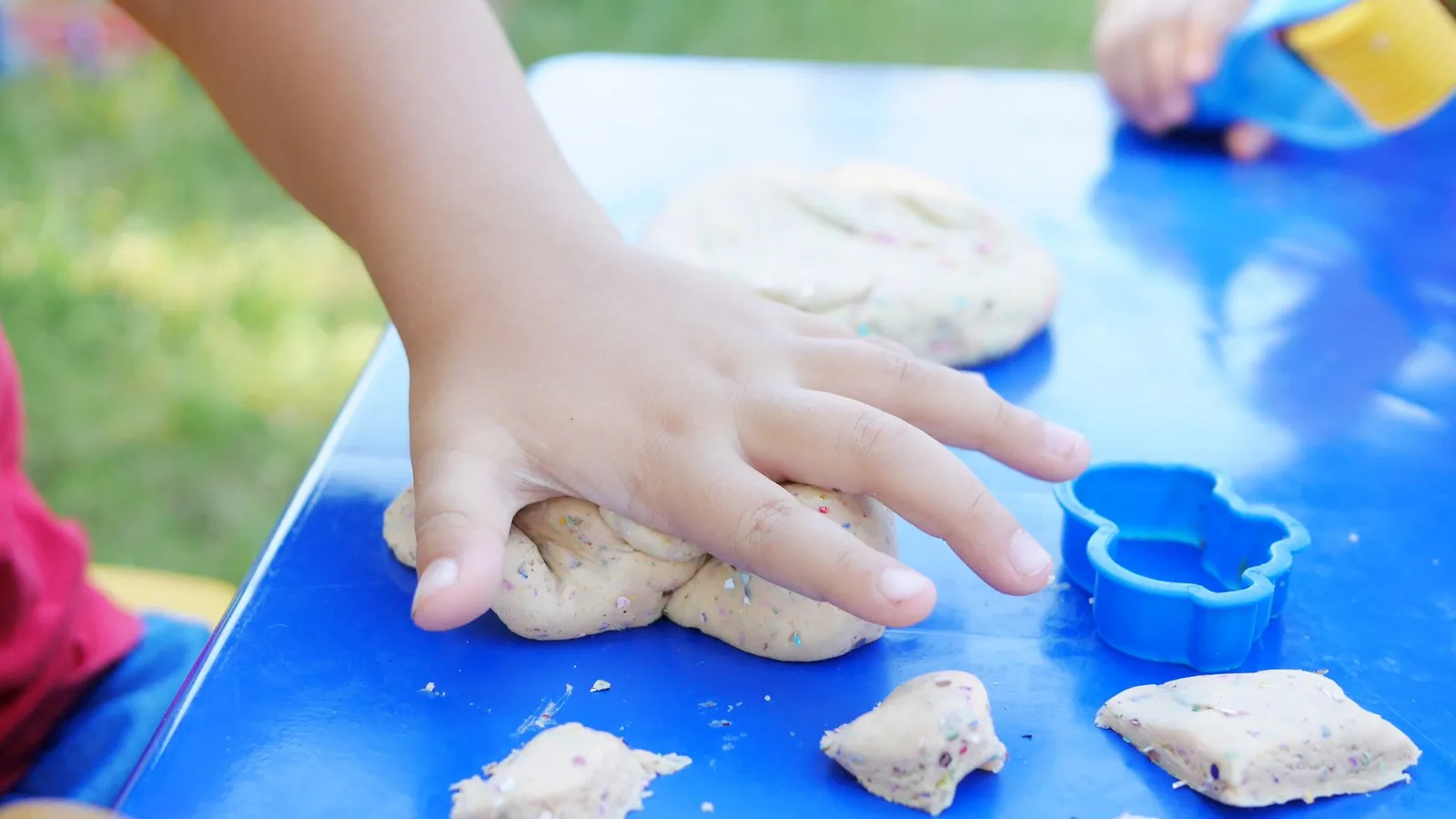
Dough disco is playdough play to a beat: you squeeze, roll, pinch and pat while a grown-up calls out the moves. For that restless gap between nursery pickup and tea, try the five-minute sequence below. You'll need soft dough, a wipe-clean surface and a song or your own steady count, with no video to follow.
Think of it as a little dough gym. The Department for Education describes rolling and flattening dough as ways to practise coordinating both hands. Our guide to early years physical development explains where these small movements fit alongside whole-body play.
What goes out before the music starts?
Give each person a palmful of soft dough and a clear space to work. Use ready-made playdough or follow the NHS cooked playdough recipe, making it ahead and letting it cool before play. Leave cutters and decorations in the cupboard: this routine uses hands.
Before you start: stay beside your child and check the ingredients for known allergies. Keep dough out of mouths, and wash hands before and after handling it, following Food Standards Agency guidance for England, Wales and Northern Ireland. Leave out beads and buttons, particularly with under-3s nearby: the Child Accident Prevention Trust warns about small objects that can choke.
When could you fit a dough disco into your day?
Try it after lunch, before a drawing activity or during the gap before tea, whenever you can sit alongside your child. Have the dough ready before you invite them over, and choose the music first so the activity starts with squeezing rather than scrolling through tracks.
There's no need to follow it with pencil practice. Let the dough session stand on its own if that's what your child wants. If they're asking to jump and march instead, our wake and shake routine gives you a different set of spoken movement prompts.
Which moves fill the five minutes?
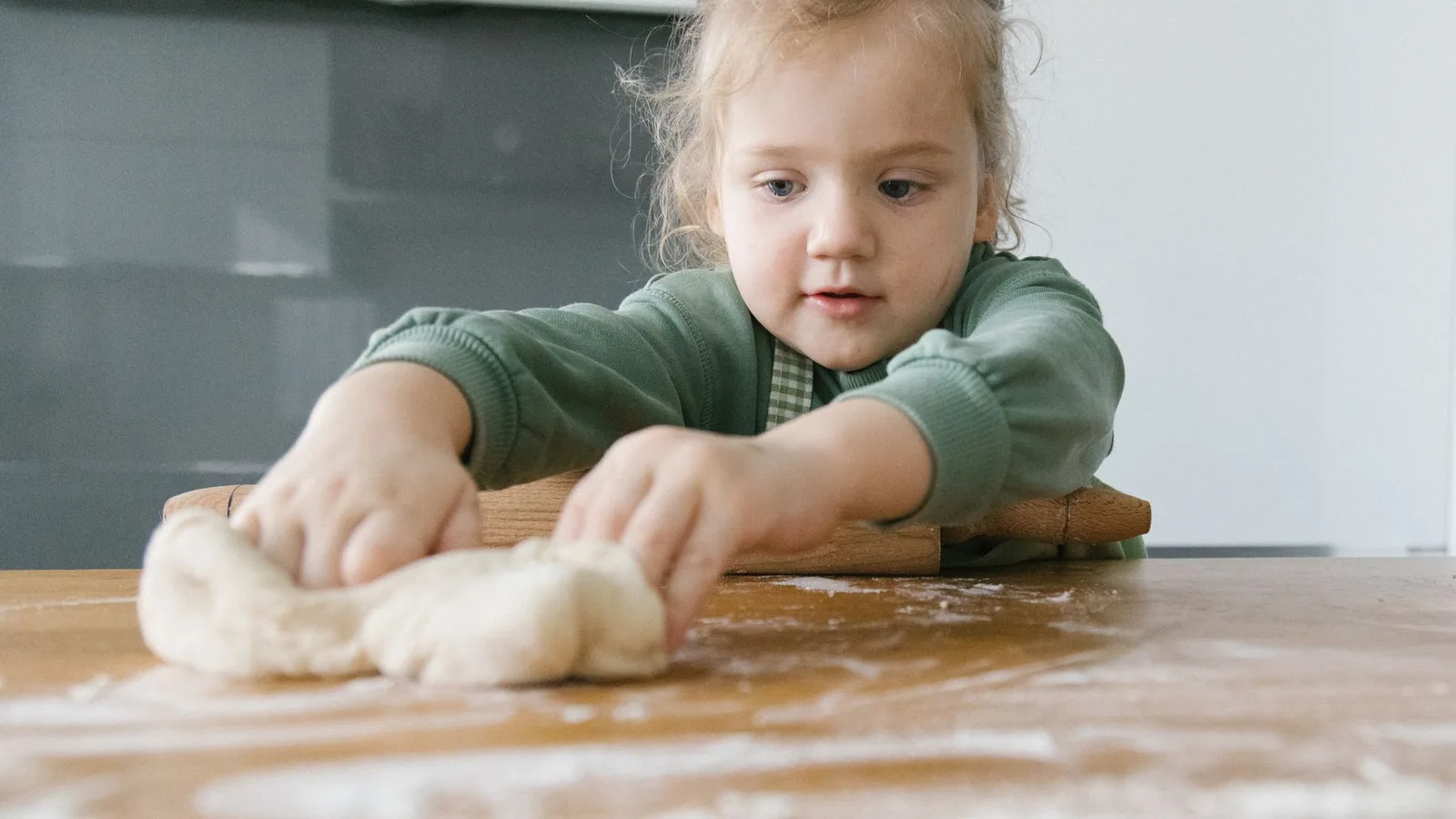
Spend 40 seconds on each of the first six moves, then 30 seconds putting the dough aside and 30 seconds on the standing finish. Show each action with your own dough, then repeat the short instruction while your child has a go.
1. Squeeze and swap, 40 seconds
Say: "Hold your dough in one hand, squeeze it, open your fingers, then give the other hand a turn." If it squishes out between their fingers or they use both hands together, let them gather it back into a lump and carry on.
2. Roll a ball, 40 seconds
Say: "Put the dough between your palms and move your hands round each other to make a ball." If their ball looks more like a potato, leave it that way; you can both roll it on the table instead of holding it up.
3. Make a long roll, 40 seconds
Say: "Put your ball down, lay both palms on top and roll forwards and backwards to make it longer." If the ends break off or the middle gets thin, push the dough together again and start another roll without trying to repair every crack.
4. Pinch along the top, 40 seconds
Say: "Use your thumb and pointing finger to pinch a ridge along the top, then give your other hand a turn." If a whole handful comes away, show a small pinch on your own piece and let your child decide whether to copy.
5. Pat it flat, 40 seconds
Say: "Curl your long roll into a lump, then pat it flat with one palm and then the other." If the pats turn into enthusiastic thumps, try making your own pats quieter and slower, or let your child choose the rhythm for you to follow.
6. Poke little dents, 40 seconds
Say: "Press your pointing finger into the dough, lift it out, then try another finger and your other hand." If several fingers land together, that's fine for the game; demonstrate slowly on your own dough rather than moving your child's fingers for them.
7. Gather the dough, 30 seconds
Say: "Bring all your dough back together, put it in its tub and finish the music." If your child wants to keep their creation, let them set it aside while you gather yours; the next move starts with empty hands, not a spotless table.
8. Grow into a tree, then pause, 30 seconds
Say: "Stand tall, rest one foot beside your other ankle, grow your arms like branches, then swap sides and finish with both feet down and hands still." If balancing interrupts the game, keep both feet down throughout; Youth Sport Trust suggests the ankle-level foot position for an easier tree pose.
Does it have to last the full five minutes?
Five minutes is the planned playing time, with the dough already made and everyone ready. Mixing, cooling, washing hands and cleaning the table sit outside that total. Use a clock if the timing helps, but don't interrupt a happy game just because a slot has ended.
If your child has had enough sooner, put the dough aside and finish there. You can bring it out for another short go tomorrow.
What if your child won't copy the moves?
Let them change the game. You can keep rolling while they make a dough snail, or swap roles and copy their actions. The sequence gives you something to say when you're stuck; it doesn't need to become another set of instructions to enforce.
- Won't touch it: offer watching or calling the moves, with no pressure to handle the dough.
- Wants to rush: repeat the same action instead of adding more instructions.
- Keeps asking what comes next: name the next move before you demonstrate it.
- Wants more: let them choose a favourite move to repeat after the timed routine.
If you're worried about your child's hand skills beyond this game, speak to your GP or health visitor. A dough disco isn't an assessment.
How often should you bring the dough out?
Try offering a short session a few days a week, and keep the moves familiar before adding variations. That's a practical starting point, not a required schedule. After a gap, simply bring the dough back out and start with a squeeze.
Keep drawing, dressing, building and outdoor play in the mix: Department for Education guidance emphasises varied opportunities for small and large movements.
For children who want to continue the standing finish, explore our Sun Salutation mat. It has 15 numbered poses laser-engraved into the surface, including tree, for choosing another movement together after the dough is put away.
Frequently asked questions
Who invented dough disco?
Shonette Bason created Dough Disco. South Cumbria Multi-Academy Trust names her as its creator in a newsletter reporting on her work with early years staff. The sequence here uses familiar dough movements with our own timings and spoken prompts, so you can lead it without a video.
What music works for dough disco?
Choose dough disco songs with a steady beat that leaves room for your voice. A familiar song or an instrumental track is enough; you don't need a special playlist. Turn it down so your child can hear the next move, or skip the music and count a steady beat together.
Can you do dough disco at home?
Yes. Use a kitchen table, soft playdough and enough room for your hands to work. Sit beside your child with your own piece, show each movement and say its name. You can run the whole routine yourself; there's no need for a class, video or special dough tools.
What age is dough disco for?
This routine is written for ages 3 to 8, with an adult leading. Offer just the squeeze and pat to begin with, then add other moves if your child wants them. An older child could call the actions while you copy. Treat these as options, rather than skills to achieve at particular birthdays.
Sources
- Starcatchers: Dough Disco
- Department for Education: Fine motor skills
- NHS Just One Norfolk: Cooked playdough recipe
- Anaphylaxis UK: Guidance for early years settings
- Food Standards Agency: Handling flour and flour products safely
- Child Accident Prevention Trust: Safe from choking
- Youth Sport Trust: Primary yoga activity
- NHS Healthier Together: Hand skills
- South Cumbria Multi-Academy Trust: Autumn newsletter