practice
Dance Games for Kids: Freeze Dance and 11 More
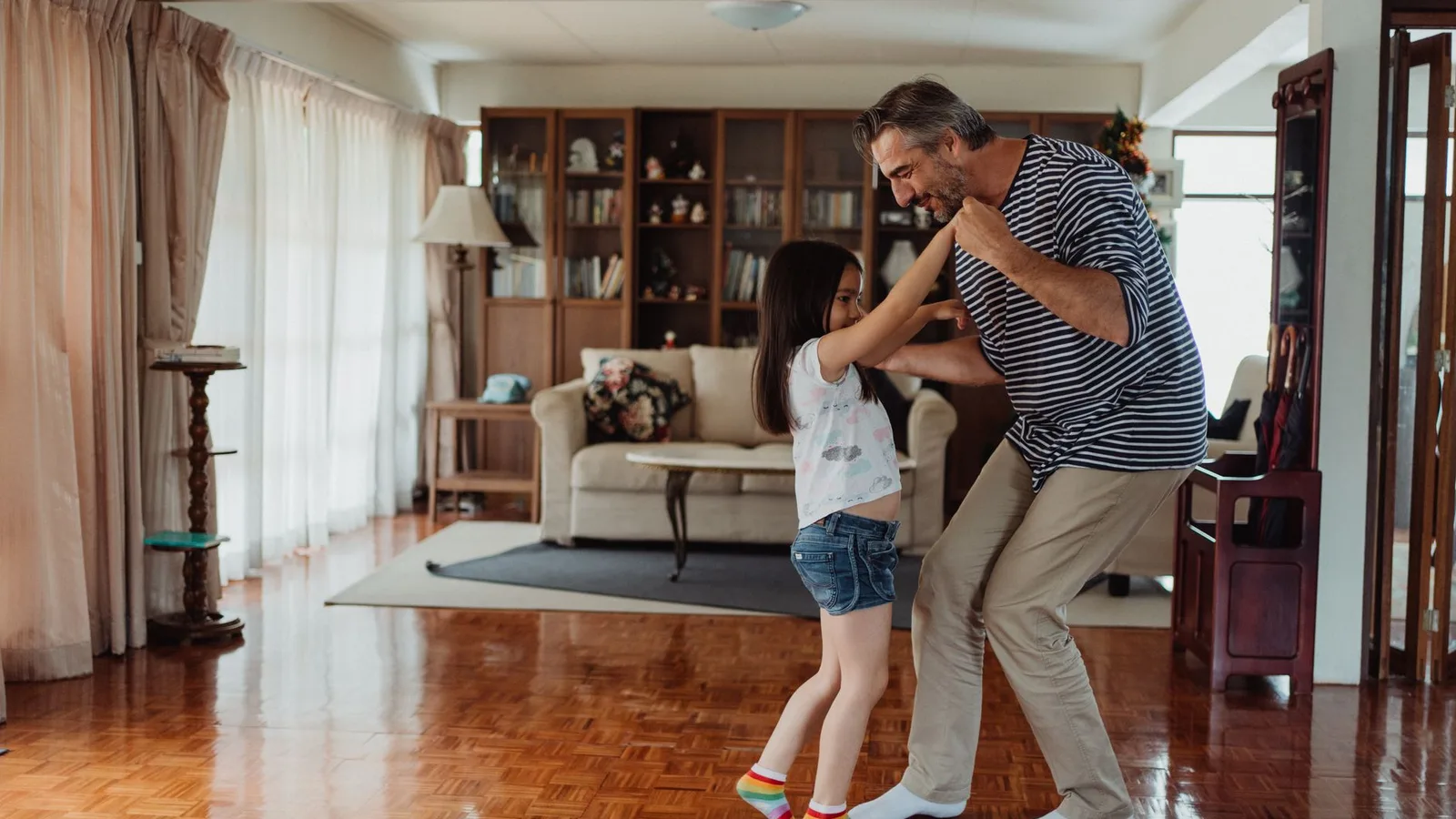
Play freeze dance, musical statues, musical bumps and more with 12 living-room dance games, clear rules and ways to keep every child involved.
How do you play freeze dance at home?
Freeze dance is a music game: dance while the song plays, then stop and stay still when it pauses. Start moving again when the music returns. It uses the same stop-and-start rule as musical statues. For children aged 3 to 8, try short rounds and let everyone carry on after a wobble.
These are party games you lead yourself, with no console or dance video needed.
In this guide: room setup, the 12 games, short sessions, reluctant dancers and FAQs.
Which games fit your living room?
Choose by the space you've got, then start anywhere in the list. For ages 3 to 5, offer a demonstration and a single rule. For ages 6 to 8, offer a turn leading or an extra instruction. Those are starting suggestions, so follow your child's interest.
- Very little floor space: freeze dance, mirror dance or body-part dance.
- A group staying on their own spots: copy the leader, dance echo or pass the move.
- Room for chairs: musical chairs with a seat for everyone.
- A seated game: body-part dance or mirror dance.
Before starting, clear the floor and check everyone can move their arms without touching another person, as Scouts recommends. Remove trailing cables and wipe up spills, following RoSPA's advice on preventing falls. Keep a grown-up running the game.
For a party with other activities between songs, see our indoor party games.
What are 12 dance games you can play?
Start with the familiar stop-the-music games, then try copying, taking turns or making up a story. Freeze dance and musical statues share their basic rule; the themed version below changes the challenge. Each game includes a way to keep everyone involved, without a long wait on the sidelines.
1. Freeze dance
Dance freely until the music pauses, then hold your position. Say, "When the song stops, turn into a statue. When it starts, dance again."
Try about 20 seconds of music followed by a 3-second freeze. Change the moment you pause so it stays a surprise. If someone wobbles, simply restart together. The pause is the challenge, and nobody has to leave the dance floor.
2. Musical statues with a theme
Give the statues a shape before the song starts: a robot, a star or a tall tree. Say, "Dance while the music plays. When it stops, show me your robot."
Demonstrate the shape first, then let children invent their own versions. Choose a new theme for the next round. Everyone's interpretation counts, and children can keep both feet down. Familiar standing yoga poses can be another theme.
3. Musical bumps
In musical bumps, children sit down when the music stops, as Lincolnshire's movement games guide explains. Say, "Dance on your spot, then sit down gently when the song stops."
Show a slow sit first. Invite a different child to choose the next dance move instead of eliminating the last sitter. Anyone who prefers can stay seated throughout, moving their hands to the music and freezing them at the pause.
4. Musical chairs with a seat for everyone
In traditional musical chairs, chairs are removed and the player without a seat is out. For this home version, keep a sturdy chair for each child.
Say, "Dance beside your chair, then sit when the music stops." Keep every chair throughout, so everyone stays in. Let children suggest a new seated pose each round, such as hands on knees or arms folded. Choose another game if chairs crowd the room.
5. Copy the leader
One dancer chooses the moves and everyone copies from their own spot. Say, "Copy my shoulder wiggle, then my hand wave. Now you choose what we do."
Give each leader about 20 seconds before swapping. Work around the group in order, with the option to pass, so the loudest voice doesn't choose every move. There's no routine to remember: everyone follows whatever the leader is doing now.
6. Mirror dance
Partners face each other and move as though they're looking in a mirror. Say, "I'll move slowly. See if you can make your hands follow mine."
Start with hand waves or shoulder movements, then swap leaders after about 30 seconds. You can both sit down to play. Treat a muddled movement as a reason to slow down together, rather than a mistake to score. Both partners get a turn.
7. Body-part dance
The caller chooses which part of the body gets to dance. Say, "Only your hands are dancing. Now your shoulders. Now let your whole body join in."
Keep the music running while you change the instruction. Offer everyone a turn choosing the body part, and accept a movement that feels comfortable to them. This is a seated option too: hands, elbows and shoulders give you plenty to choose from.
8. Traffic-light groove
Use spoken colour cues to change the dance: green means stepping on the spot, amber means swaying, and red means freezing. Say, "Listen for the colour, then change your move."
Start with green and red if you'd like fewer instructions, then add amber. Take turns calling the colours. A missed signal just means trying again at the next cue, with no points lost and nobody sent out.
9. Dance echo
Show a short movement, then let everyone repeat it after you. Say, "Watch my clap, clap, shoulder wiggle. Now send it back to me."
Unlike copy the leader, the group watches first and moves afterwards. Begin with a single action, then try a short sequence if they want more. If the echo gets muddled, repeat it together. Children can volunteer a sequence, but passing is allowed.
10. Pass the move
Stand in a circle, each in your own space, and send a dance move around by naming the next person. Say, "Here's my hand wave. Your turn."
Everyone copies the move while it travels. When it returns to the starter, the next person introduces a new move. There's nothing to catch or remember from earlier rounds. Each child gets the same chance to choose, without anyone becoming a judge.
11. Dance a story
Tell a pretend adventure while everyone dances it out. Say, "We're putting on our space boots. Now we're walking on the moon. Look, our fingers are floating."
Stay on your own spots and change the scene while the music plays. Invite each child to add an idea, or let them keep following yours. There's no answer to guess: someone can be a moon explorer while someone else is a rocket.
12. Slow-motion dance
Keep the music playing but make every movement deliberately slow. Say, "Lift your arms as though you're moving through thick honey. Now give me your slowest wave."
Count slowly to 10 while everyone finishes a movement, then let another person lead. You can add a "rewind" cue and reverse the hand movement. Nobody wins for being slowest; the group tries the same playful challenge together. Use it as the final round.
How can you turn a few games into a session?
Choose a game to start, a different kind in the middle and a final round everyone recognises. You don't need to finish the whole list. These suggested running orders give you a place to begin; repeat a favourite or stop early if that suits the group.
- A 5-minute break: 2 minutes of freeze dance, 2 minutes of body-part dance and 1 minute of slow-motion dance. Keep the music controls with you so the changes are quick.
- A 10-minute party slot: 3 minutes of copy the leader, 3 minutes of themed musical statues, 2 minutes of pass the move and 2 minutes of slow-motion dance. Announce the final game before it begins.
For shorter gaps between other activities, our movement-break ideas offer more choices.
For statue games with familiar yoga poses, explore the Yogi-Me mat. It has 15 numbered poses laser-engraved into the surface, for ages 3 to 8. Choose a familiar standing pose before starting the music.
What if your child would rather watch?
Let your child watch, choose a move or help you stop the music. Scouts suggests these alternative ways to join in for people who aren't comfortable dancing in front of others. Keep their place open, so joining later doesn't require an announcement or a performance.
Try dancing side by side with them. If choosing moves is the sticking point, songs with actions to follow give you something ready to do together. If they still say no, leave it there.
If a health condition makes you unsure about exercise, speak to your GP or health visitor; the NHS advises getting medical advice in that situation.
Frequently asked questions
What is the difference between musical statues and freeze dance?
Freeze dance and musical statues usually mean the same game: dance while the music plays, then stay still when it stops. Either can be played with or without elimination. In this list, themed musical statues adds a shape to copy, giving you another way to play the same basic game.
What music works for dance games?
Use any song your child loves and that you're happy to play. You don't need a special freeze-dance track: pause it yourself. Choose the song before starting and keep the controls with the grown-up, so music selection doesn't interrupt every round.
Are dance games good exercise?
Yes. The NHS lists dancing as physical activity. For ages 5 to 18, it recommends averaging at least 60 minutes of moderate or vigorous activity a day across the week. For your game, let everyone join each round instead of sitting out after a wobble.
How many children do you need for dance games?
One child and a grown-up can play freeze dance, body-part dance or a dance story. Mirror dance needs a pair, which can include you. For a group, use the same games and take turns leading. With just siblings, let each choose the music in turn.